


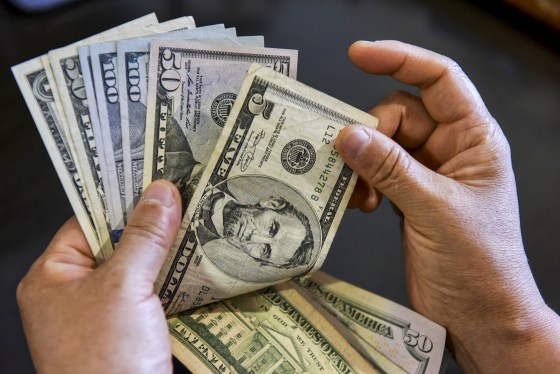
A hidden force is quietly driving up the cost of everything from your summer vacation to your weekly grocery bill: a weak US dollar.
The dollar has fallen about 10% against other major currencies since President Donald Trump returned to the White House, potentially playing a role in Americans’ concerns about affordability.
“It’s a kind of hidden tax,” says Thomas Savidge, an economist at the conservative-leaning American Institute for Economic Research. “What your dollar will be able to buy is going to shrink.”
This article examines the current state of the dollar and its implications for you.
Historic decline in dollar
The US dollar index, which measures the greenback against other major currencies, saw the biggest decline in six months in more than 50 years in the first half of 2025. Although the decline has not been deep, the dollar index is still about 10% lower than at the beginning of Trump’s term.
A stronger dollar makes imports cheaper and can help keep inflation under control. A weak one could raise prices on foreign goods but boost US exports.
US presidents have long voiced support for a stronger dollar, although they have pursued policies that have pushed the currency lower at times. Trump has suggested that a strong dollar hurts America and a weak dollar helps American industry. And as is the case with Trump, he has been forthright in his messaging.
“You make a lot more money with a weak dollar,” he said last year, one of several public statements reflecting his preference for seeing the dollar decline.
Big multinational companies benefit
Trump isn’t alone in seeing the benefit of a weak buck.
In recent months, corporate earnings calls have been abuzz with discussion of how the weak dollar has helped companies from Philip Morris to Coca-Cola, with executives pulling out C-suite phrases like “favourable currency impact” to note how the decline brought tailwinds outside the U.S. that added to bottom lines.
“In many cases, we’ve got a weak dollar that has value,” Elie Malouf, CEO of InterContinental Hotels, said in a February call. The company announced higher profits and revenues.
For large multinationals doing business overseas, a weak dollar could drive up sales of products that suddenly become cheaper. But most American businesses are not operating in all areas. For those serving domestic customers, the situation is different, especially if they rely on imported goods.
Fourth-generation lobsterman Travis Madeira, who founded the lobster-shipping business Lobsterboys with his brother, makes about 80% of his sales to Americans, unlike some competitors that primarily export.
“Exporters will benefit if the dollar weakens,” says Madeira, which is paying more to import feed and buy Canadian lobster. “These guys are going to put some pressure on us.”
Small companies suffer losses
Even companies that have a presence outside the US could feel the impact of a declining dollar. While many large companies hedge currencies to protect themselves or increase more sales abroad, smaller businesses are often more sensitive to turbulence.
David Navazio, CEO of Pennsylvania-based Gentel, which makes bandages and other medical supplies, operates plants in Brazil, Paraguay, Canada, New Zealand and the United Kingdom. At each location, the dollar has fallen, driving up the cost of gentel.
Gentel has had to raise some prices to reflect currency fluctuations, based on tariffs and war-related spikes in fuel costs, among other challenges.
“A year ago, none of this was a concern,” he says. “And that always hurts the consumer.”
other currencies rise
For the American consumer, the reality of the declining dollar is most apparent when travelling abroad or purchasing directly from an international seller.
Cross the border into Mexico, Americans’ top foreign destination, and your dollar is about 16% weaker against the peso than it was at the start of 2025. Elsewhere, the Swiss franc, South African rand, Danish krone, Swedish krona and euro have fallen by about 10% to 17%.
As far as goods imported into the US are concerned, they have an impact, but it is difficult to assess. Many economists estimate that, in advanced countries such as the US, only 5% to 10% of currency declines are passed on to consumers.
But they add extra stress when other factors already influence prices.
Grab one of the grocery items, coffee, which has seen the biggest increase in prices in the last year. Brazil is the largest source of coffee for the US and the dollar has fallen about 13% against the real. Currency fluctuations can have a greater impact on developing economies and, while only a fraction of the change may contribute to the rising price of coffee, everything can add up. According to government data, coffee prices in the US have increased by about 19% last year.
expect more movement
Currency values have been rising steadily and, while the dollar’s recent decline is notable, it has reached lower levels during the presidencies of each of Trump’s predecessors than during the creation of the dollar index in 1973, when Richard Nixon was at the helm.
Kenneth Rogoff, Harvard University economist and former chief economist of the International Monetary Fund, says that “a lot of the policies Trump is doing are like cancer to the dollar”; he believes it was destined to collapse no matter who is in charge.
“The dollar was at a 15-year high,” he said. “I would argue that the dollar is still highly valued, and over the next maybe five or six years, it could fall 15%.”
What does this scenario mean for American consumers? Rogoff says commodity prices are likely to rise, especially with the impact of the Iran war on fuel prices.
“They’re just going to go up,” he says, “no matter what the dollar is.”


[…] How a weak dollar is quietly making life more expensive […]