

Trump Wants Venezuelan Oil: Will His Plan Work?
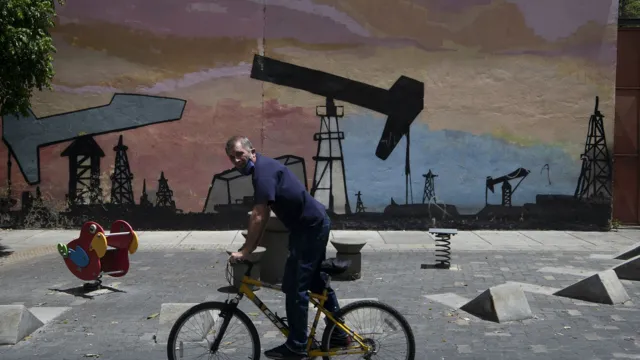
We are conducting an analysis to determine the effectiveness of Trump’s plan to secure Venezuelan oil, taking into account the sanctions, production capacity, and geopolitical implications of this energy strategy. Trump wants Venezuelan oil as part of a broader energy agenda.
As energy security remains a top-tier economic and geopolitical issue in the United States, a significant policy shift appears to be taking shape. Former President Donald Trump has signalled a clear strategic intent: Trump wants Venezuelan oil to flow more freely to American refineries, reversing years of restrictive sanctions. But beyond the headline-grabbing statements, critical questions remain about feasibility and consequence. Will his plan work? The answer depends on a complex web of geopolitical manoeuvring, economic realities, and Venezuela’s crippled production capacity.
The Strategic Goal: Why Venezuela?
The core reasoning behind why Trump wants Venezuelan oil is multifaceted, blending energy policy with broader strategic aims.
1. Energy Security & Diversification
Reducing reliance on Middle Eastern oil and, more recently, Russian energy has been a longstanding U.S. goal. Venezuela possesses the world’s largest proven oil reserves, estimated at over 300 billion barrels—even larger than Saudi Arabia’s. Tapping into this nearby resource would geographically diversify the U.S. supply chain and provide a stable source for specialised Gulf Coast refineries built to process Venezuela’s heavy crude.
2. Economic Leverage & “Cheap Oil”
A central promise is lowering prices at the pump. The theory is straightforward: increasing global supply by adding Venezuelan barrels to the market would exert downward pressure on prices. Furthermore, securing a favourable trade deal could give the U.S. preferential pricing, directly benefiting consumers and industry.
3. Geopolitical Chess: Countering Russia & China
Under stringent U.S. sanctions, Venezuela’s President Nicolás Maduro has deepened ties with the U.S. adversaries. Russia provides military and political support, while China has become a crucial financial lender and oil customer, often through opaque deals. By reintegrating Venezuela into the Western oil market, the U.S. could weaken these alliances and reassert influence in its hemisphere.
The Central Question: Will His Plan Work?
Whether the plan for Trump to want Venezuelan oil will succeed is not a simple yes or no. Its viability hinges on several interconnected factors.
Factor 1: Lifting or Easing Sanctions
The primary tool for re-engagement would be a significant rollback of the strict oil and financial sanctions imposed during the Trump administration and tightened under Biden. However, this is politically fraught.
- Pros: Would immediately allow U.S. companies like Chevron (which already has a limited licence) to invest heavily and restart trade.
- Cons: It could be portrayed as rewarding the authoritarian Maduro regime without securing concrete democratic concessions, drawing bipartisan criticism.
Factor 2: Venezuela’s Crumbling Infrastructure
This is arguably the biggest practical hurdle. Decades of mismanagement, corruption, and lack of investment have devastated Venezuela’s oil industry.
- Production Reality: Output has plummeted from over 3 million barrels per day (bpd) in the 1990s to roughly 800,000 bpd today.
- Investment Need: Experts estimate it would require billions of dollars and 5–10 years of sustained Western investment and expertise to restore production to a level that would meaningfully impact global markets. PDVSA, the oil giant, has completely collapsed.
Factor 3: The Political Settlement
A lasting deal requires stability. The U.S. would likely demand guarantees for free elections and protections for opposition figures. Maduro, however, has a history of backtracking on agreements. A failed political deal could strand billions in the U.S. investment and leave the policy in tatters.
Factor 4: The Global Market & OPEC+ Reaction
Flooding the market with new supply would anger OPEC+ members, particularly Saudi Arabia and Russia, who have coordinated cuts to prop up prices. They could respond with increased production of their own, potentially triggering a price war that could hurt U.S. shale producers.
Factor 5: Domestic U.S. Political Backlash
Both political factions and the influential Venezuelan exile community in Florida could fiercely oppose any perception of “making a deal with a dictator“. Legal challenges could also delay or complicate the process.
Potential Scenarios & Outcomes
Scenario 1: The “Limited Deal” (Most Likely)
A partial sanctions relief tied to specific electoral roadmaps and limited to certain U.S. companies. This would lead to a modest, gradual increase in Venezuelan output (perhaps 200,000–400,000 bpd), providing a marginal boost to supply but not dramatically altering global markets. This is the most probable short-term outcome.
Scenario 2: The “Grand Bargain” (High Risk/Reward)
Full sanctions relief in exchange for a verifiable democratic transition. If successful, this could unlock massive investment and, over a decade, significantly increase global supply. However, it carries the highest risk of political collapse and betrayal.
Scenario 3: Policy Reversal & Failure
Political pressure or Venezuelan non-compliance leads to a reinstatement of sanctions. The plan collapses, leaving the status quo of strained relations, continued migration crises, and stronger ties between Caracas, Moscow, and Beijing.
Conclusion: A High-Stakes Gamble
The declaration that Trump wants Venezuelan oil outlines a clear geopolitical ambition with potential economic benefits for Americans. Will his plan work? In its most ambitious form—rapidly lowering gas prices and replacing Russian barrels—it faces immense, perhaps insurmountable, obstacles rooted in Venezuela’s broken industry.
A more limited version, focused on incremental gains and geopolitical realignment, stands a better chance. Ultimately, the plan’s success depends less on American desire and more on navigating Venezuela’s internal ruin, securing a stable political deal where none has existed, and managing the ripple effects across the global oil cartel. It is a high-stakes gamble where the prize is immense energy resources, but the path is strewn with political, economic, and logistical landmines. The world will be watching to see if the gamble pays


One thought on “Trump Wants Venezuelan Oil: Will His Plan Work?”
Comments are closed.