

48 hours to Armageddon? Inside global energy crisis, Trump issues ‘contempt’ ultimatum to Iran
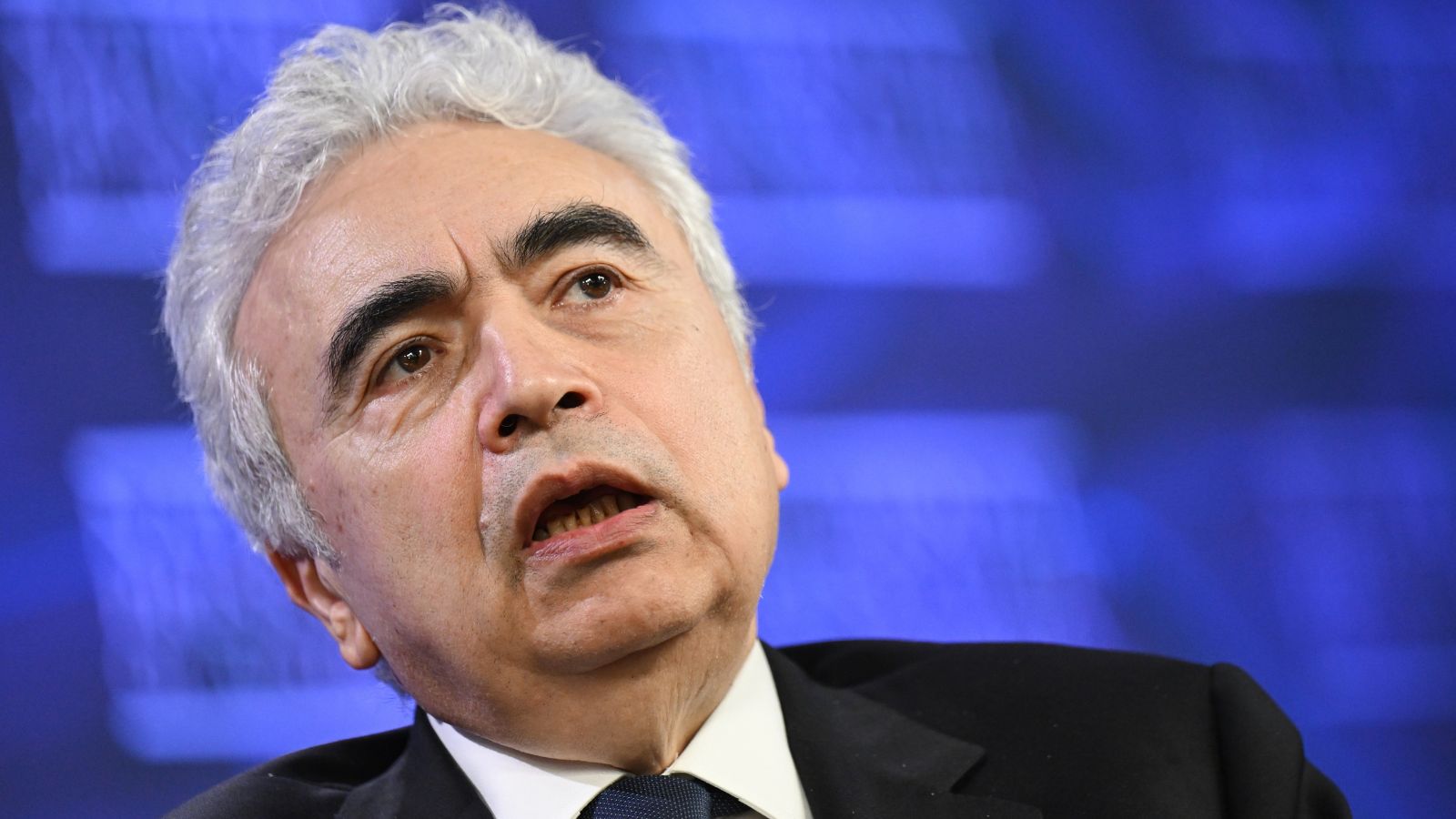
The head of the International Energy Agency (IEA) on Monday said the energy crisis caused by the ongoing war in West Asia is worse than the 1970s oil crisis and the Ukraine war, as Iran holds a fifth of the global energy supply hostage due to its blockade of the Strait of Hormuz.
The world is losing 11 million barrels of oil per day, more than the energy shocks of 1973 and 1979 combined. The Guardian reported, quoting Fatih Birol.
Tehran blocked the maritime chokepoint between the Persian Gulf and the Gulf of Oman after the US-Israeli attack on February 28, sending fuel prices rising around the world. Benchmark Brent crude rose from $73 a barrel before the war to an average of $100 a barrel.
Last week, prices soared to $119.50 as both sides engaged in tit-for-tat attacks, damaging each other’s energy installations, while Washington’s Gulf partners found themselves caught in the crossfire.
To deal with the crisis, the body representing a coalition of 32 countries decided earlier this month to release 400 million barrels of oil from its reserves. In 2022, after Russia invaded Ukraine and the West imposed sanctions on Moscow’s oil, the coalition released only 182 million barrels.
The United States agreed to provide 172 million barrels from its strategic petroleum reserve as part of the IEA’s ruling this month.
Exemption from sanctions for opponents
Struggling with rising domestic fuel prices, the US lifted sanctions on 130 million barrels of Russian crude oil stranded at sea and later lifted sanctions on 140 million barrels of Iranian oil in ships, effectively funding its adversaries amid the conflict.
However, experts have argued that the move does not come close to compensating for the disruption caused by the Strait of Hormuz closure, believing that the only credible solution is to reopen the Strait of Hormuz, Newsweek reported.
On the other hand, the Iranian parliament is considering taking advantage of its holdings by imposing tolls and taxes for ships passing through the strait. Reuters reported earlier.
Another big increase likely
Fuel prices may see another big jump as stability in the Gulf depends on Tehran’s compliance with the recent ultimatum issued by US President Donald Trump.
Late Saturday night the Republican president gave Iran a 48-hour deadline to open the Strait, threatening to destroy all of Iran’s power plants. The deadline ends today.
“If Iran does not fully open the Strait of Hormuz, without any threat, within 48 hours from this exact time, the United States will attack and destroy their various power plants, beginning with the largest,” Trump wrote on Truth Social.
However, clashes broke out between Israel and Iran after the threat was issued.
Following Trump’s statement, Khatam al-Anbiya, the Iranian military’s operational command, said that Tehran would retaliate with an attack on “all energy, information technology and desalination infrastructure related to the regime in the US and the region”. Fars, the news agency, reported.
Last week, the Pentagon reportedly sought $200 billion in additional funding from Congress for the war and greenlit a large-scale deployment of naval assets and troops to the theatre.
Tehran’s selective approach
Tehran is selectively allowing ships to pass through Hormuz. Iran’s representative to the International Maritime Organization (IMO) said the strait is “open to all except enemies”. CNN: The report was made citing local media.
To deal with the LPG crisis, New Delhi got some relief last week when two tankers – Shivalik and Nanda Devi – from the Gulf safely reached Gujarat ports around March 16 and 17, bringing about 92,700 metric tonnes of LPG to Indian shores.
Two more tankers from Sharjah, United Arab Emirates—Pine Gas and Jag Vasant—reportedly transited the strait on Monday.
Before the conflict, the Strait accounted for almost half of India’s total oil imports, 60 per cent of its LNG imports and 90 per cent of its LPG.
Currently an associate member, India is seeking full membership in the IEA.
alternative route
Meanwhile, Saudi Arabia, the world’s largest exporter of crude, is sending its oil into the Red Sea, bypassing Tehran’s blockade.
We expect Yanbu’s terminal, which also faced an attack on Thursday, to boost output by 3.8 million barrels per day (bpd). The outlet can pump up to 7 million bpd. Earlier, attackers also targeted Saudi Aramco’s Ras Tanura oil refinery, the largest of its kind in West Asia.
On Thursday, Prime Minister Benjamin Netanyahu suggested that pipelines should be built to transport oil and gas from the Arabian Peninsula to Israeli ports to avoid threats from Iran in the Strait of Hormuz and other Gulf waters.
“There are just oil pipelines and gas pipelines going west through the Arabian Peninsula, to Israel, to our Mediterranean ports and you have eliminated choke points forever,” Netanyahu was quoted as saying by the news agency. Reuters.