
Home Blog Page 3

Repairing Brexit Economic Damage Should Be Burnham’s Top Priority, Business Chief Says

0
Repairing Brexit Economic Damage Should Be Burnham’s Top Priority, Business Chief Says

Repairing Brexit economic damage should be one of Prime Minister Andy Burnham’s main priorities, according to a leading British business representative who has warned that the UK’s current trading relationship with the European Union is creating difficulties for companies.

Shevaun Haviland, director general of the British Chambers of Commerce (BCC), has welcomed Burnham’s decision to reconsider the government’s approach to Brexit and its relationship with the EU.

Her comments come as the prime minister prepares for a major UK-EU summit in November 2026, where both sides are expected to discuss new trade arrangements and opportunities for closer cooperation.

The debate has renewed questions about the long-term economic consequences of leaving the European Union and whether the government should consider deeper integration with Europe’s single market.

Business Chief Calls for Action on Brexit Economic Damage

Haviland believes the government needs to address the problems British businesses have experienced since the UK left the European Union.

Speaking to The Guardian, she argued that the current trading arrangements were failing to deliver the benefits many businesses had hoped for.

According to the BCC, more than half of business leaders surveyed said the trade agreement introduced in 2021 was not helping their companies.

Businesses initially expected that the difficulties associated with new customs procedures and regulations would become easier to manage over time.

However, Haviland said many companies continued to experience problems years after the agreement took effect.

The findings have increased pressure on the government to simplify trading arrangements and reduce unnecessary costs.

For businesses that rely on European customers and suppliers, even relatively small administrative barriers can affect profitability and competitiveness.

Shevaun Haviland calls for improvements to UK EU trading arrangements

How Has Brexit Affected the UK Economy?

Brexit has had a significant impact on Britain’s economic relationship with its largest neighbouring trading bloc.

Before leaving the European Union, the UK participated in the single market and customs union, allowing many goods to move across borders with fewer administrative requirements.

The introduction of new trading arrangements created additional customs declarations, regulatory checks and compliance obligations.

These changes have particularly affected smaller businesses that may lack the resources to manage complex international trading requirements.

The Office for Budget Responsibility estimates that Brexit will reduce the UK’s long-term productivity and economic output by approximately 4% compared with a scenario in which Britain remained in the EU.

This is a forecast of the difference between two economic scenarios, rather than a claim that the economy has literally contracted by 4% since Brexit.

Other economic studies have estimated larger effects, although researchers continue to debate the precise impact.

Businesses also face challenges unrelated to Brexit, including inflation, energy prices, weak investment and global economic uncertainty.

Nevertheless, reducing barriers to European trade has become an important part of the discussion about improving Britain’s economic performance.

UK EU trade and Brexit customs challenges for businesses

Andy Burnham Signals a New Approach to the European Union

Prime Minister Andy Burnham has indicated that the government should take a fresh look at the UK’s relationship with Europe.

Speaking at the Labour Party conference in September, Burnham acknowledged that Brexit had caused economic harm and argued that Britain needed a clearer long-term strategy.

He has also suggested that the country should consider a wider range of options for its future relationship with the European Union.

However, Burnham has not announced a decision to rejoin the EU.

His immediate focus is on securing practical agreements that could improve trade, strengthen cooperation and support economic growth.

The prime minister has emphasised that any fundamental change to Britain’s relationship with the European Union would require public support.

His approach represents a shift from the more cautious position taken by his predecessor, Keir Starmer.

UK-EU Summit Scheduled for November 2026

The next major opportunity for progress will come at the UK-EU summit scheduled for 20 November 2026.

Burnham hopes to negotiate agreements covering several areas of economic cooperation.

One proposal involves aligning food and agricultural standards to reduce checks on goods moving between Britain and the European Union.

Such an agreement could benefit food producers, supermarkets, farmers and businesses involved in international supply chains.

Another proposal involves linking the UK’s emissions trading system with the EU’s equivalent arrangement.

This could reduce complications for businesses affected by carbon pricing and related trade rules.

The government is also discussing a youth mobility arrangement that could make it easier for eligible young people to live, work or study abroad for limited periods.

Government estimates suggest that the proposed agreements could eventually provide a substantial economic benefit, although the final impact will depend on the terms negotiated.

European Union headquarters ahead of UK EU trade negotiations

Why British Businesses Want Easier Trade With Europe

The European Union remains an important market for British exporters and a major source of imported goods.

Companies in manufacturing, agriculture, retail and professional services maintain close commercial relationships with their European partners.

Since Brexit, some businesses have reported higher costs associated with paperwork, customs procedures and regulatory differences.

Smaller exporters can be particularly vulnerable because administrative costs may represent a larger proportion of their revenue.

For example, a small British food producer exporting products to Europe may need additional documentation and certification.

These requirements can make exporting less attractive, especially when businesses operate on narrow profit margins.

Supporters of closer UK-EU trade arrangements argue that simplifying these procedures could help companies expand and invest.

However, the potential benefits would depend on the extent of regulatory cooperation and whether both sides can agree on acceptable terms.

Could Britain Rejoin the European Union?

The possibility of Britain eventually rejoining the EU has returned to political debate.

Burnham has declined to rule out discussing membership as part of a longer-term national conversation.

However, rejoining would be a major political and economic decision requiring negotiations with European governments.

Questions would include Britain’s financial contributions, regulatory obligations, immigration arrangements and participation in European institutions.

There would also be debate about whether the UK should seek membership of the single market or customs union without immediately pursuing full EU membership.

Supporters of closer integration argue that it could reduce trade barriers and improve economic opportunities.

Opponents emphasise the importance of national sovereignty, independent trade policy and maintaining control over domestic regulations.

The government’s immediate proposals do not amount to a commitment to reverse Brexit.

Conservatives Criticise Burnham’s Brexit Strategy

The government’s approach has attracted criticism from the Conservative opposition.

Conservative leader Kemi Badenoch has argued that simply moving closer to the EU would not resolve Britain’s wider economic difficulties.

She has also questioned whether publicly discussing future concessions could weaken the UK’s negotiating position.

Critics of deeper integration argue that Britain should make greater use of its ability to establish independent trading and regulatory policies.

They point to agreements with countries outside Europe and opportunities to develop new industries.

Supporters of Burnham’s approach respond that closer cooperation with the EU does not necessarily prevent Britain from pursuing wider international trade relationships.

The disagreement reflects a continuing debate over how the UK should balance economic integration with regulatory independence.

What Would a Better Brexit Deal Mean for Ordinary People?

Changes to the UK’s trading relationship with the EU could have consequences beyond large businesses.

Reduced administrative costs could make it easier for some companies to import products and export goods.

Increased trade could also support employment and investment in industries with strong European connections.

Consumers might benefit if lower business costs were passed on through prices, although such savings would not be guaranteed.

Young people could also gain further opportunities through a negotiated mobility programme.

However, closer regulatory cooperation might involve new obligations or restrictions on Britain’s ability to change certain rules independently.

The overall effects would depend on the specific agreements reached and how businesses respond.

What Happens Next?

The government will continue preparing for negotiations ahead of the November summit.

Business organisations are expected to press ministers to prioritise practical improvements that reduce costs and support economic growth.

European leaders will also need to decide how far they are willing to go in developing a closer relationship with Britain.

One possible difficulty involves proposed EU industrial policies that could give European manufacturers advantages in certain markets.

British manufacturers are concerned that such measures could affect their access to European supply chains.

Burnham has indicated that protecting British industry will be part of his discussions with European leaders.

Any agreements will require negotiations, and their economic effects may take time to become clear.

Conclusion

The call for repairing Brexit economic damage has become a central part of Britain’s renewed debate about its relationship with the European Union.

Shevaun Haviland and the British Chambers of Commerce argue that the current arrangements continue to create difficulties for businesses and that the government should take action.

Prime Minister Andy Burnham has responded by reopening discussions about Britain’s long-term European relationship while pursuing more immediate trade agreements.

The November UK-EU summit will provide an important test of whether the government can translate its proposals into practical economic improvements.

Although political disagreements over Brexit remain, the debate now focuses heavily on trade costs, business investment, productivity and economic growth.

The outcome of the negotiations could influence Britain’s economic relationship with Europe for years to come.

Frequently Asked Questions

What is Brexit’s economic damage?

Brexit economic damage refers to negative economic effects associated with leaving the European Union, including additional trade barriers, administrative costs and reduced investment or productivity compared with a scenario in which the UK remained a member.

Who has urged Andy Burnham to prioritise the economic damage from Brexit?

Shevaun Haviland, director general of the British Chambers of Commerce, has called for action to improve the UK’s trading relationship with the EU.

When is the next UK-EU summit?

The next UK-EU summit is scheduled for 20 November 2026.

Does Andy Burnham want Britain to rejoin the EU?

Burnham has indicated that the UK should reconsider its longer-term relationship with the EU, but he has not committed his government to seeking full membership.

How much has Brexit affected the UK economy?

The Office for Budget Responsibility estimates that Brexit will reduce long-term UK economic output by around 4% compared with remaining in the EU.

Could a new EU trade deal help British businesses?

It could reduce some trading costs and administrative barriers, although the benefits would depend on the final agreement and how businesses use the new arrangements.

Suspicious Letters Sent to US Election Offices as FBI Investigates Nationwide Security Threat

0
Suspicious Letters Sent to US Election Offices as FBI Investigates Nationwide Security Threat

Suspicious letters sent to US election offices have triggered a nationwide federal investigation, raising security concerns ahead of the November 2026 midterm elections.

The Federal Bureau of Investigation (FBI), US Postal Inspection Service and US Capitol Police are investigating a series of mailings addressed to election officials, state government offices and members of Congress.

Some of the letters reportedly contained unidentified powdery substances, prompting evacuations and emergency responses in several locations.

The incidents have occurred less than three weeks before Americans vote in elections that will determine control of Congress and decide numerous state and local races.

Although authorities are treating the letters as potentially hazardous, investigators have not confirmed that every substance is dangerous.

What Happened at US Election Offices?

On Thursday, 15 October 2026, federal authorities confirmed that they were investigating suspicious letters delivered or addressed to government and election offices across the United States.

Some mailings contained white powder or other unidentified materials.

The discovery of these substances triggered security procedures, including evacuations and the isolation of suspicious packages.

The FBI said it was working with the US Postal Inspection Service and other law enforcement agencies to respond to each incident.

Investigators are also attempting to identify whoever sent the letters and determine whether the incidents are connected.

Officials warned that additional suspicious mail could still reach government offices despite efforts to intercept it.

Which US States Have Been Affected?

Reports indicate that election offices and government officials in several states have been targeted.

Louisiana

An election office in Louisiana was evacuated after a suspicious package containing a powdery substance was discovered.

Emergency procedures were activated while authorities assessed the potential danger.

Oklahoma

A suspicious mailing prompted an evacuation at the Oklahoma State Capitol complex.

State troopers subsequently determined that the substance was not hazardous.

Ohio

The Ohio secretary of state’s office reported that the US Postal Service intercepted a package containing white powder before it reached its intended destination.

Officials also indicated that similar packages had been addressed to election offices in other states.

Wisconsin

The Wisconsin Elections Commission confirmed receiving a suspicious letter.

Testing established that the powder contained in the mailing was not hazardous.

Wisconsin election administrator Meagan Wolfe said the incident would not prevent election officials from carrying out their responsibilities.

Other states, including Idaho and Florida, have also reported suspicious mailings or interceptions.

Authorities are continuing to determine the full extent of the incidents.

US election workers prepare for the 2026 midterm elections

Congressional Offices Also Targeted

The investigation is not limited to state election offices.

Several congressional offices have also received suspicious mail.

The office of Democratic Senator Lisa Blunt Rochester of Delaware reported that US Capitol Police had intercepted a letter containing a suspicious substance.

Senator Alex Padilla’s office also received notification that a suspicious letter addressed to one of its locations had been intercepted.

The Senate Sergeant at Arms circulated a warning to congressional offices, advising staff to exercise caution when handling incoming mail.

The House of Representatives was also monitoring the situation.

These developments suggest that the investigation involves threats directed at both election administrators and elected officials.

FBI and Postal Inspectors Launch Investigation

Federal investigators are working to identify the substances found in the letters and establish who sent them.

The FBI has confirmed that it is investigating suspicious mailings addressed to government offices across the country.

The US Postal Inspection Service is helping intercept packages and examine evidence associated with the mailings.

US Capitol Police are involved in responding to suspicious letters addressed to congressional offices.

Investigators will need to determine whether the incidents represent a coordinated campaign or separate acts.

Authorities have not publicly identified a suspect or established a motive.

Until further evidence becomes available, it would be premature to attribute the letters to any political party, organisation or foreign government.

US Postal Inspection Service investigates suspicious mailings

Why Are the Letters Particularly Concerning?

The timing of the suspicious mailings has raised concern because the United States is approaching an important national election.

The midterm elections are scheduled for 3 November 2026.

Voters will choose members of the House of Representatives and fill Senate seats, alongside numerous state and local positions.

Election offices are responsible for essential administrative duties, including voter registration, ballot processing and election preparations.

Even when suspicious substances turn out to be harmless, emergency responses can interrupt normal operations.

Evacuations, security checks and temporary office closures may delay routine work.

The incidents can also create fear among employees who are responsible for administering elections.

Maintaining secure and reliable election operations is therefore a major priority for state and federal authorities.

Have Similar Threats Happened Before?

The latest investigation is not the first time election officials have received suspicious letters.

During the 2023 election cycle, election offices in six states received mailings containing white powder.

Some letters contained threatening messages, while traces of fentanyl were detected in certain cases.

Those incidents led to additional security precautions and interruptions at election offices.

During the 2024 election period, at least 14 election offices also received suspicious mail.

Some substances were later identified as harmless materials, including flour.

These earlier incidents demonstrate why authorities treat unidentified powders seriously, even when subsequent testing finds no dangerous material.

The discovery of a suspicious substance does not automatically mean that a toxic or biological agent is present.

Election Organisations Condemn Threats Against Workers

Two national organisations representing election officials have expressed concern about the latest incidents.

The National Association of Secretaries of State and the National Association of State Election Directors issued a joint statement condemning threats against election workers.

The organisations emphasised that election administrators should be able to perform their duties without fearing for their personal safety.

Election workers perform a wide range of responsibilities, from preparing polling stations to handling ballots and responding to voter enquiries.

Security incidents can place additional pressure on these employees during an already demanding period.

Officials say they are coordinating with law enforcement agencies to maintain essential election operations.

What Should Officials Do if They Receive Suspicious Mail?

The US Postal Inspection Service provides guidance for anyone who encounters potentially dangerous mail.

Recipients should avoid opening or handling a suspicious package unnecessarily.

If an item contains an unknown substance, it should be isolated, and people should move away from the immediate area.

Individuals who may have touched the material should wash their hands with soap and water.

Authorities should then be contacted so trained personnel can assess the situation.

People should not attempt to identify an unknown powder themselves.

Following established emergency procedures helps protect staff and allows investigators to preserve evidence.

Could the Incidents Disrupt the 2026 Midterm Elections?

The suspicious letters have raised concerns about possible disruption to election administration.

However, there is currently no verified evidence that the mailings have compromised ballots or altered election results.

The incidents are primarily being investigated as potential threats to the safety of public officials and election workers.

The US Postal Service has said it is prepared to handle millions of ballots during the upcoming election period.

Federal and state authorities are continuing to coordinate security measures.

The overall effect on election preparations will depend on whether additional letters are discovered and whether offices experience further interruptions.

What Happens Next?

Investigators are expected to continue examining the suspicious substances and tracing the origins of the letters.

The FBI and Postal Inspection Service will also work to determine whether the mailings are connected.

Security screening at government and election offices may remain heightened as Election Day approaches.

Officials are likely to continue sharing information about suspicious packages and advising staff on appropriate safety procedures.

The most important unanswered questions concern the identity of those responsible, the nature of the substances and whether the letters were intended to intimidate public officials.

Conclusion

The discovery of suspicious letters sent to US election offices has prompted a major investigation involving federal law enforcement agencies.

Mailings containing unidentified substances have been reported in multiple states, while several congressional offices have also been targeted.

Some incidents have caused evacuations and temporary disruption, although testing has confirmed that certain substances were harmless.

With the 2026 midterm elections approaching, authorities are focusing on protecting election workers, identifying those responsible and ensuring election preparations continue safely.

The investigation remains ongoing, and further information about the substances and possible suspects may emerge in the coming days.

For now, officials are urging vigilance while emphasising the importance of maintaining safe and secure election operations.

Frequently Asked Questions

Why is the FBI investigating US election offices?

The FBI is investigating suspicious letters containing unidentified substances that someone sent to election offices and congressional officials across the country.

Which states received suspicious letters?

Reported incidents or interceptions include Louisiana, Oklahoma, Ohio, Wisconsin and several other states.

Were the substances dangerous?

Some materials remain unidentified, but testing in Wisconsin and Oklahoma found that the substances examined there were not hazardous.

When are the 2026 US midterm elections?

The elections are scheduled for Tuesday, 3 November 2026.

Has anyone been arrested?

No suspect or arrest had been publicly confirmed in the reporting available on 15 October.

Could the suspicious letters affect voting?

The incidents have caused security concerns and some office evacuations, but there is no verified evidence that ballots or election results have been compromised.

Elon Musk Suggests US Government Was Behind Starlink Restrictions in Ukraine as Tensions Rise

0
Elon Musk Suggests US Government Was Behind Starlink Restrictions in Ukraine as Tensions Rise

Latest development

Elon Musk has suggested that decisions about restrictions affecting Ukraine’s military satellite communications system fall under the authority of the United States government rather than SpaceX.

The comments follow reports that Ukrainian military units experienced sudden speed restrictions and connectivity problems involving Starlink and its military counterpart, Starshield.

Ukrainian officials say the disruptions affected drone operations and air defences during ongoing Russian attacks.

However, no independent source has established the US government’s direct responsibility for imposing the reported restrictions. Musk’s explanation of who controls Starshield is not, by itself, confirmation that President Donald Trump personally ordered the changes.

In a statement on X, Elon Musk explained that Starshield, the military-focused satellite service developed by SpaceX, operates under US government control.

He distinguished it from Starlink, the company’s commercial satellite internet service.

According to Musk, decisions about Starshield’s operating restrictions ultimately belong to the American military and the US president.

He also emphasised that the company designed commercial Starlink services for civilian and defensive purposes rather than offensive military operations.

His comments raised questions about whether the reported limitations were connected to the Trump administration’s changing approach to Ukraine.

However, American officials have offered differing explanations. A senior US official told Axios that the Trump administration was not responsible for the alleged restrictions.

Russian System Targets Starlink in Tactical Operations | Военное дело

Satellite communications have become an essential part of Ukraine’s military operations since Russia launched its full-scale invasion in February 2022.

Starlink allows users to access satellite internet in areas where conventional telecommunications infrastructure has been damaged or destroyed.

Ukrainian forces use satellite connections for communications, logistics and certain drone operations.

Starshield, meanwhile, is designed for military and intelligence applications, providing specialised capabilities for government customers.

The distinction between the two services is important because their permitted uses and control arrangements differ.

Both have contributed to Ukraine’s ability to communicate across a battlefield where electronic interference and infrastructure damage create significant challenges.

The latest restrictions demonstrate the risks of depending heavily on technology controlled or supplied by foreign partners.

How Have the Restrictions Affected Ukrainian Drones?

Ukrainian officials reported that satellite connections were disrupted when some drones travelled above certain speeds.

The restrictions reportedly affected both reconnaissance and attack operations.

According to reporting by the Associated Press, some connectivity was restored by Wednesday evening, but a speed limit of approximately 160 kilometres per hour remained in place.

Ukrainian officials said that was insufficient for certain interceptor drones designed to pursue faster Russian aircraft.

These systems are particularly important because Russia frequently uses attack drones against Ukrainian cities and energy infrastructure.

If an interceptor drone loses its communications link, it may struggle to track or engage an incoming threat.

The consequences can extend beyond the battlefield, as air defence systems also help protect civilian populations.

Nevertheless, the exact number of affected drones and missions has not been independently established.

Zelenskyy Says He Feels Betrayed by Trump’s Decisions

Ukrainian President Volodymyr Zelenskyy has expressed frustration over recent developments involving Washington.

During an interview with Piers Morgan, Zelenskyy said he felt betrayed by decisions made by the Trump administration and was concerned about Ukraine losing an important international partner.

His comments followed disagreements over American policy towards Russia, including energy-related sanctions and military assistance.

Ukraine has also raised concerns about receiving insufficient advance warnings of Russian ballistic missile attacks.

Zelenskyy has warned that limitations affecting military communications could have serious consequences for Ukrainian civilians.

The Ukrainian government continues to seek assurances that essential defensive capabilities will remain available.

BRITAIN-UKRAINE-FRANCE-RUSSIA-GERMANY-CONFLICT-DIPLOMACY

Suggested image placement: After the section discussing Zelenskyy’s reaction. Alt text: Ukrainian President Volodymyr Zelenskyy discusses US military support and Starlink restrictions.

Is Donald Trump Behind the Restrictions?

This remains the central unanswered question.

Musk’s statements indicate that the US government controls Starshield’s military operating arrangements.

However, there is a difference between identifying who has authority over a system and proving who ordered a particular restriction.

Axios reported that Ukrainian officials suspected the limitations might be connected to political disagreements with Washington.

The same report quoted a senior American official denying that the Trump administration was responsible.

The Pentagon and US Space Force had not provided a definitive public explanation in the reporting reviewed.

Therefore, it would be premature to conclude that Trump personally ordered the restrictions or that they were deliberately introduced to punish Ukraine.

Russia Continues Attacking Ukrainian Energy Infrastructure

The communications dispute has emerged during renewed Russian attacks on Ukraine’s electricity infrastructure.

Ukrainian authorities reported extensive missile and drone strikes against power facilities, including infrastructure serving Kyiv.

The attacks have caused electricity outages and created additional pressure on emergency services.

Zelenskyy said that recent strikes left hundreds of thousands of residents without electricity.

The situation is particularly concerning as Ukraine approaches winter, when reliable electricity and heating are essential.

Washington has also been involved in discussions about limiting attacks on energy infrastructure.

However, disagreements over the proposed arrangements and continued Russian strikes have complicated diplomatic efforts.

European Leaders Discuss Ukraine’s Future

Council of EU - Newsroom

The Starlink controversy comes as European leaders gather in Brussels for discussions about the European Union’s priorities.

Ukraine is expected to play a prominent role in the talks, particularly as concerns about the reliability of American military support grow.

European governments face difficult questions about defence spending, military assistance and the development of independent technologies.

Ukraine’s dependence on satellite communications has highlighted the importance of maintaining reliable access to critical systems.

European countries may therefore face greater pressure to invest in alternative satellite services and military communications infrastructure.

However, developing comparable capabilities would require substantial funding, technical expertise and time.

The immediate priority remains ensuring that Ukrainian forces retain the communications systems needed for their existing operations.

Replacing Starlink would be challenging.

SpaceX operates a large satellite network that provides internet connectivity across extensive geographical areas.

Building an alternative with similar coverage and performance would require significant investment.

European governments already support satellite communications programmes, but not all of them provide the same military capabilities as Starshield.

Ukraine could potentially reduce its dependence on one supplier by combining different communications technologies.

However, diversification would not necessarily provide an immediate solution to the reported restrictions.

The latest developments have therefore raised wider questions about technological independence and the role of private companies in modern warfare.

What Happens Next?

Several developments will be important in determining how the dispute unfolds.

  • Whether the Pentagon provides a detailed explanation of the reported restrictions.
  • Whether Starshield’s previous operating capabilities are fully restored.
  • Whether Ukraine receives assurances about future access to satellite communications.
  • Whether European governments increase investment in alternative military communications systems.
  • Whether diplomatic discussions between Washington and Kyiv reduce the uncertainty surrounding American support.

For Ukraine, the immediate concern is maintaining the communications required to protect its forces and civilian population.

The controversy raises questions for the United States and its European allies about military cooperation and the reliability of shared defence technology.

Conclusion

The controversy surrounding Elon Musk, Starlink restrictions and Ukraine has highlighted the country’s dependence on American satellite technology.

Musk has said that the US government controls military Starshield systems and ultimately determines their operating limits.

Ukrainian officials, meanwhile, have reported disruptions to drone operations and air defences.

Although questions remain about who authorised the restrictions, their reported consequences have already raised concern in Kyiv and among European policymakers.

The dispute also comes during a difficult period in US-Ukraine relations, with disagreements over military assistance, Russian energy sanctions and diplomatic negotiations.

As the war continues, reliable communications will remain essential for Ukraine’s defence.

The most important unanswered question is whether the reported restrictions were a technical or operational decision or part of a wider change in American policy towards Ukraine.

Until additional evidence becomes available, that distinction remains unresolved.

Frequently Asked Questions

Did Elon Musk shut down Starlink in Ukraine?

Musk has denied that SpaceX was responsible for the reported military Starshield restrictions, saying that the US government controls that system. The precise cause and authorisation of the disruptions remain disputed.

What is the difference between Starlink and Starshield?

Starlink provides commercial satellite internet connectivity, while Starshield is designed for military and government applications, including secure communications.

How did the restrictions affect Ukraine?

Ukrainian officials reported problems with drone communications, particularly for systems operating at higher speeds. Some services were subsequently restored.

Has Donald Trump confirmed ordering the restrictions?

No. The reporting reviewed does not establish that Trump personally ordered the restrictions, and a senior US official denied administration involvement.

Why does Ukraine depend on Starlink?

Satellite internet helps Ukrainian forces maintain communications and operate certain drone systems where conventional networks are unavailable or vulnerable to disruption

Seafood can turn back the clock on ageing, Stanford researchers find

0
Seafood can turn back the clock on ageing, Stanford researchers find

Ageing often makes itself visible in familiar ways, from grey hair and wrinkles to lapses in memory. That has fuelled a longstanding scientific question: could some of those changes eventually be slowed, prevented, or even reversed?

Research involving a group of scientists from Xi’an Jiaotong-Liverpool University, Stanford University, Shanghai Jiao Tong University, and the University of Chinese Academy of Sciences points to an intriguing possibility. In experiments with aged mice, researchers found that dietary supplements containing compounds associated with Ascidiacea, commonly known as sea squirts, reversed several signs linked to ageing.

An Unusual Source of Anti-Ageing Compounds

Sea squirts are marine animals that people eat in parts of Asia, including Korea (where they are known as meongge, or 멍게) and Japan (hoya, or ホヤ). They can be eaten raw and contain high levels of compounds called plasmalogens.

Plasmalogens are a type of lipid, or fat molecule, that forms an important part of cell membranes. They occur naturally throughout the human body and are especially abundant in the brain, heart, and immune cells. Their levels tend to decline as people grow older.

Reduced plasmalogen levels have also been observed in several neurodegenerative diseases, including Alzheimer’s disease and Parkinson’s disease. That connection has led researchers to investigate whether restoring plasmalogens could help protect the brain from some of the changes associated with ageing.

To explore that possibility, the team added plasmalogens to the diets of aged mice and examined how the supplements affected both their behaviour and their bodies.

The results were striking. The treated mice showed substantial improvements in learning and displayed visible physical changes as well.

Professor Lei Fu, the corresponding author of the study, says, “Our research suggests that plasmalogens may not just stop cognitive decline but may reverse cognitive impairments in the ageing brain. Additionally, aged mice fed with the plasmalogens grow new black hair that is thicker and glossier than aged mice not fed the supplement.”

According to the researchers, the work provides the first detailed look at how plasmalogens may influence the ageing brain.

Seafood can turn back the clock on ageing

Ageing Mice Show Improved Memory

To measure learning and memory, the scientists used a common laboratory experiment called the Morris water maze. In this test, mice are placed in a pool containing a hidden platform where they can rest.

Because mice generally prefer to escape the water, they gradually learn where the platform is located. After several days of training, younger mice typically remember its position and swim toward it quickly. Older mice often need more time to locate the platform, reflecting the decline in learning and memory that can accompany ageing.

After five days of training, aged mice receiving plasmalogens performed much more like younger animals. They reached the platform significantly faster than aged mice that had not received the supplement.

The researchers then examined the animals’ brains to determine what might explain the improvement.

They found that mice given plasmalogens had more synapses, and these synapses appeared to be in better condition than those in untreated aged mice.

Synapses are the tiny junctions through which nerve cells communicate. They allow signals to pass through neural networks and are essential for learning, memory, and many other brain functions.

Restoring Connections in the Ageing Brain

Synapses are highly adaptable early in life. This ability to change and form new connections, often called neural plasticity, helps the brain learn new information and skills.

With age, however, synapses can become less numerous and less effective. Similar deterioration is also associated with neurodegenerative diseases and can contribute to declining cognitive abilities.

In the experiment, aged mice receiving plasmalogen supplements appeared better able to form new neural connections and learn new tasks than mice eating a normal diet. The findings suggest that increasing dietary plasmalogens may help protect synapses from some forms of age-related deterioration.

The researchers also identified another important difference between the groups: inflammation in the brain was substantially lower among mice receiving plasmalogens.

Inflammation is part of the body’s normal immune response, but chronic or excessive inflammation in the brain can become harmful. As the brain ages, immune activity can become dysregulated, potentially damaging nerve cells and disrupting communication between synapses. Persistent inflammation is also considered an important contributor to several neurodegenerative disorders.

The reduction in inflammation seen in the plasmalogen-treated mice could therefore help explain why they performed better on tests of learning and memory.

Restoring Connections in the Ageing Brain

How Plasmalogens Might Work

Scientists do not yet know exactly how dietary plasmalogens produce these effects. Professor Fu outlined several possible mechanisms.

“We found that plasmalogens significantly increase the number of molecules that aid the growth and development of neurones and synapses in the brain. This suggests that plasmalogens can promote neuroregeneration.

“There is also an increasing body of evidence that plasmalogens directly affect the structural properties of synapses. Plasmalogens may increase the fluidity and flexibility of synaptic membranes, affecting the transmission of impulses between neurones.”

Neuroregeneration refers to the repair, renewal, or regrowth of nerve cells and their connections. If plasmalogens support that process, they could potentially help the ageing brain maintain or rebuild some of the neural circuitry needed for memory and learning.

The researchers also believe that the effects may extend beyond what happens directly inside the brain.

Professor Fu points to the gut-brain connection as another possible pathway.

“Some studies have shown that dietary plasmalogens affect the microorganisms in the gut. It has been widely reported that the connection between the organisms in our gut and our brain influences neurodegeneration. It may be the plasmalogen’s effect on this connection that causes the improvements in learning and memory seen in this study.”

The gut contains enormous communities of bacteria and other microorganisms, collectively known as the gut microbiome. Research increasingly suggests that these microbes can influence the brain through immune signals, metabolism, and other biological pathways. Scientists often refer to this two-way communication system as the gut-brain axis.

Could Plasmalogens Eventually Help People?

Professor Fu has such confidence in the findings that he personally takes a plasmalogen supplement every day.

“For the first time, we show that plasmalogen supplements might be a potential intervention strategy for halting neurodegeneration and promoting neuroregeneration.

“The oral intake of plasmalogens could be a feasible therapeutic strategy to improve cognitive function in older people.”

The findings are intriguing, but they come from an animal model. Improvements observed in mice do not necessarily mean that eating sea squirts or taking plasmalogen supplements will reverse ageing in humans. Additional research would be needed to determine whether similar effects occur in people, what doses might be effective, and whether long-term supplementation is safe.

Still, the results raise an unusual possibility. A compound found in an edible marine animal may offer scientists a new way to investigate how ageing affects the brain and whether some of those changes can eventually be reversed.

Burnham promises the public will be the ‘boss’ of the UK’s relationship with the EU.

0
Burnham promises the public will be the ‘boss’ of the UK’s relationship with the EU.

Mr Burnham said he believed the 2016 Brexit referendum was legitimate

Andy Burnham has pledged the “public will be the boss” as he tries to undo Brexit, giving his clearest hint to date of a new referendum on the UK rejoining the EU.

“I will use a key UK-EU summit in Brussels next month to push for a Brexit reset aimed at improving relations with the bloc and perhaps look to rejoin as part of an attempt to get a better deal,” the prime minister said in a statement to parliament.

He warned MPs that “sticking with the status quo is not good enough” and insisted that the “public backs my pragmatic approach.”

Calling on MPs to rethink Brexit to secure a deal with Brussels, Mr Burnham said it would be a “dereliction of duty” to ignore an opportunity to seek a new deal with the EU, insisting the public supported his approach.

And, when asked if he would honour the 2016 referendum outcome, the PM said he would be prepared to “set out options that I think … Britain should consider”.

His intervention comes after a weekend where the European Movement UK published a plan for the UK to rejoin the EU by 2036 at the latest.

Meanwhile, as the prime minister took questions in the Commons, a debate was taking place at the same time in Westminster Hall with MPs, led by Labour’s Folkestone and Hythe’s Tony Vaughan, on a petition calling on the UK to rejoin.

Burnham told the Commons it would be a ‘dereliction of duty’ to ignore an opportunity to seek a new deal with the EU, insisting the public supported his approach
Burnham told the Commons it would be a ‘dereliction of duty’ to ignore an opportunity to seek a new deal with the EU, insisting the public supported his approach (Parliament TV)

During his address, Mr Burnham said he believed the 2016 Brexit referendum was legitimate, despite acknowledging Russian interference, and that he would respect the result. He also gave a strong hint that he will seek to persuade the public to allow him to reverse the decision.

Last month, he told the BBC an in-out referendum on the EU could be part of a future Labour election manifesto.

In response to a question, Mr Burnham said, “I’m also going to lead and be prepared to set out options that I think are options Britain should consider. If she [the questioner] is saying she is content with the status quo, she is in a minority in this country. People know Britain can do better than this. I’m determined to secure better for Britain.”

Confirming the date of the EU-UK summit in Brussels on 20 November, which was postponed because Sir Keir Starmer resigned, Mr Burnham told the Commons he will “work harder over the next five weeks” to strike a deal.

“I believe our chances of doing so will be enhanced by being open to discussion about our relationship with the EU in the longer term,” he said.

The two sides will seek to sign a new post-Brexit food and drink deal, a youth mobility scheme and an agreement on emissions trading to avoid European carbon taxes on British business.

He told MPs that the British public will “be the boss” of the negotiations, saying, “I am clear; the public opinion currently supports a pragmatic approach like the one I am suggesting. If we go into this further phase, we will proceed with care and complete transparency.”

Mr Burnham said the upcoming summit “presents an opportunity to make progress on two crucial issues: boosting UK growth and controlling illegal immigration.”

He said deals on the table for the UK-EU summit could provide a £10 bn-a-year boost to the British economy.

But he acknowledged there could be a row with Brussels over the protectionist “Made in Europe” scheme.

Just before Mr Burnham gave his statement, representatives of British motor manufacturers – including Honda, Jaguar Land Rover and the Society of Motor Manufacturers & Traders (SMMT) – joined a forum to discuss the damage done to supply chains in the UK and EU by the EU’s plans for Made in Europe rules.

They called for both sides to agree on closer alignment as a matter of urgency.

Mr Burnham told MPs: “This summit presents an opportunity to make progress on two crucial issues: boosting UK growth and controlling illegal immigration.

“On the table is a trade deal on food and drink products, a deal on emissions trading, progress towards linking our energy systems, a new youth experience scheme and deeper co-operation on immigration.

“The summit will also be an opportunity to raise our concerns about Made in Europe and it is clear to me that there is an opportunity to make progress in all of these areas.

“Together, these deals will add the equivalent of over £10bn per year to the UK economy by 2040, with the potential to add significantly more.”

But Kemi Badenoch accused Mr Burnham of revealing his hand before the UK-EU summit, adding, “This is not how you conduct negotiations.”

The Conservative Party leader said that the prime minister is “not going to get a better deal” and told the Commons, “What has the prime minister chosen to focus on today?” Brexit.

Kemi Badenoch accused Andy Burnham of revealing his hand before the UK-EU summit
Kemi Badenoch accused Andy Burnham of revealing his hand before the UK-EU summit (AFP/Getty)

‘His exact words earlier this year were, “The last thing we should do right now is re-run those arguments.” ‘And yet here he is unpicking the deal this country signed with the EU a decade after the referendum.

“He is not going to get a better deal. The EU are tough negotiators, and it’s not just that they are tough negotiators; he has already revealed his entire negotiating hand. He has just blurted out everything he wants in this statement and I will tell him now, as a former trade secretary, this is not how you conduct negotiations.”

Responding, Mr Burnham said: “She says that, oh, I’ve revealed what I want to do and this isn’t any way to negotiate it. Because the Tories were so good at negotiating deals with our partners, weren’t they?”

The prime minister also said it was “inconceivable” that Russia did not seek to interfere with the Brexit vote.

On The Rest is Politics podcast over the weekend, the prime minister revealed he had asked, on his arrival in No. 10 this summer, whether Moscow had been involved in the vote and was given “the clear answer that yes, there was”.

But on Monday, a Foreign Office minister said Russian attempts to interfere in the Brexit referendum were not successful.

No 10 echoed the comments, saying the government does not believe Russian attempts to interfere with the referendum were successful.

Ukraine claims Russia has attacked its energy infrastructure despite Trump calling for a ceasefire

0
Ukraine claims Russia has attacked its energy infrastructure despite Trump calling for a ceasefire
ywAAAAAAQABAAACAUwAOw==

Russia Continues Energy Attacks Despite the US Ceasefire Announcement

Russia attacks Ukrainian energy infrastructure despite US President Donald Trump’s announcement that Moscow and Kyiv had agreed to stop targeting each other’s energy facilities.

On Sunday, 11 October 2026, Trump declared that an immediate energy ceasefire was in effect. However, Ukrainian President Volodymyr Zelenskyy said Russian forces continued striking power facilities, including a heating and electricity plant in Kharkiv.

The announcement initially raised hopes that both countries might reduce attacks on essential infrastructure as winter approaches.

However, the Kremlin had not publicly confirmed the agreement, and Ukrainian officials said they were still waiting for details from Washington.

The continued strikes have raised questions about whether an enforceable ceasefire actually exists.

What Did Donald Trump Announce?

On 11 October, Trump announced on his Truth Social platform that Russia and Ukraine had agreed to an immediate halt to attacks on energy infrastructure.

The US president described the arrangement as an energy ceasefire but did not provide details about its duration, monitoring measures or enforcement.

An energy ceasefire would differ from a complete ceasefire because it would focus specifically on power stations, electricity networks, oil refineries and other energy facilities.

Military operations elsewhere could potentially continue.

Trump’s announcement followed growing international concern about rising fuel prices and the economic consequences of the war.

However, Zelenskyy indicated that he had not received any information about a completed agreement before Trump’s announcement.

Ukraine subsequently welcomed the possibility of a ceasefire while emphasising that Russia must also comply

Donald Trump announces proposed Russia Ukraine energy ceasefire

Russian Strikes Hit Power Facilities in Kharkiv and Kyiv

Ukrainian officials reported further attacks on energy facilities following Trump’s statement.

In Kharkiv, Russia reportedly struck a combined heat and power plant, affecting infrastructure essential for electricity and heating.

There were also reports of drone strikes affecting energy facilities in Kyiv, resulting in electricity disruption.

The attacks are especially concerning because Ukraine is preparing for colder weather.

Electricity and district heating systems are vital for hospitals, schools, homes and businesses.

Damage to these facilities can leave entire communities without reliable power and heating.

Zelenskyy said Russia had carried out more than 200 attacks on Ukrainian electricity-generating facilities over the preceding week, alongside 17 strikes on oil and gas infrastructure.

Ukrainian authorities reported these figures, which illustrate the scale of the country’s concerns about continued attacks.

Zelenskyy Says Ukraine Supports a Genuine Energy Ceasefire

Ukrainian President Volodymyr Zelenskyy has expressed support for an agreement that would protect energy infrastructure on both sides.

However, he stressed that any arrangement must involve reciprocal commitments.

Ukraine has conducted strikes against Russian oil refineries and other energy facilities as part of its campaign to weaken Russia’s capacity to sustain the war.

Zelenskyy said Ukraine would be prepared to stop attacking Russian refineries if Moscow stopped targeting Ukraine’s electricity system.

He also argued that protecting Ukraine’s power grid must be central to any energy ceasefire.

This distinction matters because a limited agreement focused only on oil refineries would not necessarily protect Ukrainian civilians from electricity and heating outages.

Kyiv wants an arrangement that provides meaningful protection for essential infrastructure rather than a one-sided restriction on its military operations.

Zelenskyy responds to Russia Ukraine energy ceasefire proposal

Why Is Russia Targeting Ukraine’s Energy Infrastructure?

Russia has repeatedly attacked Ukraine’s electricity generation and distribution systems since launching its full-scale invasion in February 2022.

Energy infrastructure has become a major target because electricity is essential to everyday life and economic activity.

When damage occurs to power plants and substations, the consequences can extend far beyond temporary power cuts.

Hospitals may need emergency generators, businesses can lose production capacity, and households may struggle to heat their homes.

Ukraine has accused Moscow of deliberately using attacks on energy infrastructure to put pressure on civilians.

Russia has defended its military operations by arguing that some energy facilities support Ukraine’s military capabilities.

Under international humanitarian law, civilian infrastructure is protected from attack unless it qualifies as a military objective. Even attacks against military objectives must comply with the rules of proportionality and precautions to protect civilians.

Why Is an Energy Ceasefire Important Before Winter?

Winter presents particular challenges for Ukraine because millions of people depend on electricity and district heating to survive freezing temperatures.

Repeated attacks have already placed pressure on Ukraine’s energy network.

A genuine energy ceasefire could provide time for engineers to repair damaged facilities, restore electricity supplies and strengthen infrastructure before colder weather arrives.

It could also reduce the risk of prolonged blackouts that affect hospitals, schools and residential buildings.

However, the effectiveness of any agreement would depend on both sides respecting its terms.

Without monitoring arrangements or clear commitments, attacks could continue despite diplomatic announcements.

How Has Europe Responded to Trump’s Ceasefire Claim?

European leaders have reacted cautiously to the announcement.

European Union foreign policy chief Kaja Kallas questioned whether Russia was genuinely prepared to respect an energy ceasefire.

Ukraine’s European partners have emphasised that any agreement must lead to measurable improvements in security and civilian protection.

The continued attacks have reinforced concerns that diplomatic announcements alone cannot guarantee a reduction in violence.

European governments also remain concerned about the wider consequences of the war, including energy security, economic disruption and regional stability.

Could the Energy Ceasefire Lead to Peace Talks?

An effective energy ceasefire could provide an opportunity for further diplomatic discussions.

A limited agreement protecting electricity and fuel infrastructure would not end the war, but it could establish a basis for negotiations on other issues.

However, significant disagreements remain between Russia and Ukraine over territory, security guarantees and the conditions for ending hostilities.

Ukraine has repeatedly called for international security guarantees to prevent renewed attacks.

Russia continues to pursue its territorial and security demands.

These differences mean that a limited energy agreement should not be confused with a comprehensive peace settlement.

The immediate question is whether Washington can secure clear commitments from Moscow and Kyiv and establish a credible system for monitoring compliance.

What Happens Next in the Russia-Ukraine War?

The coming days will be important for determining whether Trump’s proposed energy ceasefire can become a functioning agreement.

Several developments deserve close attention:

  • Whether the Kremlin formally confirms or rejects the proposed ceasefire.
  • Whether Russian attacks on Ukrainian electricity facilities decrease.
  • Whether Ukraine suspends strikes against Russian oil refineries.
  • Whether the United States provides further details about the agreement is also a key question.
  • Whether international mediators establish a mechanism for monitoring compliance.

For Ukrainian civilians, the immediate concern remains the safety and reliability of electricity and heating supplies.

Even if diplomatic negotiations continue, engineers and emergency workers must address the damage the conflict has already caused.

Conclusion

The latest Russian attacks on Ukrainian energy infrastructure have raised serious doubts about President Donald Trump’s announcement of an immediate energy ceasefire.

Although Ukraine has expressed its willingness to support a reciprocal agreement, Moscow had not confirmed the arrangement as of the reporting reviewed on 12 October.

Strikes affecting power facilities in Kharkiv and Kyiv demonstrate the continuing dangers facing Ukraine’s electricity system.

As winter approaches, protecting essential infrastructure is becoming increasingly important for millions of civilians.

A meaningful ceasefire would require clear commitments from both countries, reliable monitoring and an end to attacks on the facilities covered by the agreement.

Until those conditions are established, Ukraine’s energy security remains uncertain.

Frequently Asked Questions

Has Russia agreed to stop attacking Ukraine’s energy infrastructure?

President Trump announced an agreement on 11 October 2026, but Russia had not publicly confirmed it in the latest reports reviewed.

Did Russia attack Ukraine after Trump’s ceasefire announcement?

Yes. Ukrainian officials reported further strikes on energy facilities, including a power plant in Kharkiv, following the announcement.

Does Ukraine support an energy ceasefire?

Yes. President Zelenskyy has expressed support for a reciprocal agreement under which Russia stops attacking Ukrainian energy infrastructure and Ukraine stops targeting Russian energy facilities.

Why are Ukrainian power plants being attacked?

Energy infrastructure is important to civilian life, industry and military operations. Russia has repeatedly targeted parts of Ukraine’s energy network during the war.

Could an energy ceasefire end the Russia-Ukraine war?

Not by itself. It would be a limited agreement addressing attacks on energy facilities, rather than a comprehensive settlement of the conflict.

Liverpool 0–3 Manchester City: Haaland, Doku and Cherki Fire City to Stunning Anfield Victory

0
Liverpool 0–3 Manchester City: Haaland, Doku and Cherki Fire City to Stunning Anfield Victory

Manchester City beat Liverpool 3–0 at Anfield on Sunday, 11 October 2026, producing a clinical second-half performance to maintain their perfect start to the Premier League season.

Goals from Erling Haaland, Jeremy Doku and Rayan Cherki secured all three points for Enzo Maresca’s side after Liverpool midfielder Ryan Gravenberch was sent off in the 62nd minute.

The result extended City’s winning run to six league matches and moved them three points clear of Arsenal at the top of the table.

For Liverpool, it was a disappointing afternoon as Andoni Iraola’s team suffered their first Premier League defeat of the campaign.

Manchester City Overcome Hostile Anfield Atmosphere

Manchester City arrived at Anfield facing enormous pressure following an independent commission’s decision concerning alleged breaches of Premier League financial regulations.

City have appealed the commission’s findings and continue to deny any wrongdoing.

Liverpool supporters made their feelings clear throughout the match, creating an intense atmosphere with loud chants directed at the visiting team.

However, City remained composed despite the pressure.

Liverpool started strongly, pressing the visitors and attempting to control the tempo.

The home side showed determination during the opening 45 minutes, limiting City’s attacking opportunities and preventing Haaland from finding space inside the penalty area.

The first half ended goalless, leaving the match finely balanced.

Ryan Gravenberch Red Card Changes the Match

The match changed in the 62nd minute.

Liverpool midfielder Ryan Gravenberch received a second yellow card for a challenge on Jeremy Doku.

The referee’s decision reduced Liverpool to ten players and immediately changed the balance of the game.

Before the dismissal, Liverpool had competed effectively against the league leaders.

However, losing a central midfielder created additional space for City’s attacking players.

Liverpool manager Andoni Iraola later questioned the referee’s decision, arguing that Gravenberch’s earlier booking had been harsh.

The sending-off became one of the most discussed incidents of the match.

Ryan Gravenberch sent off against Manchester City

Erling Haaland Opens the Scoring in the 65th Minute

Manchester City needed only three minutes to take advantage of their extra player.

In the 65th minute, Jeremy Doku attacked down the left and drove into Liverpool’s penalty area.

His attempted shot was blocked, but the ball fell to Erling Haaland.

The Norwegian striker reacted quickly and fired a powerful left-footed finish beyond Liverpool goalkeeper Alisson.

It was an important goal for Haaland, who had missed an earlier opportunity.

The striker celebrated with City’s travelling supporters as the visitors took control of the match.

Liverpool suddenly faced a difficult challenge: finding an equaliser while playing with ten men against one of the Premier League’s strongest attacking teams.

Jeremy Doku Scores Spectacular Second Goal

Only three minutes after Haaland’s opener, Manchester City doubled their advantage.

Jeremy Doku, who had come off the bench earlier in the second half, produced a brilliant individual effort.

The Belgian winger moved inside from the left, created space outside the penalty area and curled a superb shot into the far corner.

Alisson had little chance of stopping the strike.

Doku’s goal was a major moment in the match because it gave City a two-goal advantage and left Liverpool with an increasingly difficult task.

His pace, close control and direct attacking approach caused problems for Liverpool’s defence.

The winger’s introduction proved particularly influential, helping City turn a competitive contest into a convincing victory.

Jeremy Doku scores for Manchester City against Liverpool

Rayan Cherki Completes the Victory

Manchester City added their third goal in the 78th minute.

Rayan Cherki combined with Josko Gvardiol before moving into the penalty area and finishing the move.

The goal completed an impressive attacking display from the visitors.

By this stage, Liverpool were struggling to contain City’s movement and creativity.

The home supporters had watched their team compete strongly for more than an hour, but the red card and City’s clinical finishing changed the match completely.

Cherki’s goal confirmed that all three points would be heading back to Manchester.

Enzo Maresca Praises Manchester City’s Mental Strength

Manchester City manager Enzo Maresca praised his players for remaining focused despite the difficult atmosphere.

The city had entered the match under intense scrutiny because of the club’s ongoing financial-rules case.

Maresca emphasised the importance of focusing on performances rather than letting outside criticism distract the squad.

The manager also recognised that his team had faced challenges in the opening stages.

However, City’s second-half improvement and ability to capitalise on Liverpool’s dismissal demonstrated their attacking quality.

The victory was particularly significant because it maintained the team’s perfect Premier League record.

Liverpool Manager Andoni Iraola Questions Referee’s Decision

Liverpool manager Andoni Iraola expressed frustration at the red card shown to Ryan Gravenberch.

The Spanish coach believed his team had performed well before the dismissal and argued that the referee’s decisions affected the contest.

Liverpool had managed to restrict City for much of the opening hour.

However, the numerical disadvantage made it extremely difficult to defend against City’s attacking players.

Iraola acknowledged that Manchester City were the stronger team after the sending-off.

The result leaves Liverpool with questions about their response to setbacks and their ability to compete against the league’s leading sides.

What Does the Result Mean for the Premier League Table?

Manchester City’s victory strengthened their position at the top of the Premier League.

After six matches, City had collected 18 points from a possible 18.

The result moved them three points clear of Arsenal and maintained their perfect start under Enzo Maresca.

For Liverpool, the defeat dropped them to ninth place.

Although it is still early in the campaign, a defeat at home to a major rival is a setback.

City will hope to maintain their momentum, while Liverpool must recover quickly to avoid dropping any more points.

What Can Liverpool Learn From the Defeat?

Despite the disappointing scoreline, Liverpool can take some encouragement from their performance before the red card.

For more than an hour, they competed strongly against Manchester City.

Their pressing, midfield organisation and defensive effort helped keep the match goalless.

However, the dismissal exposed the difficulty of playing against City’s attacking quality with ten men.

Liverpool will need to improve their discipline and their ability to reorganise after unexpected setbacks.

The coaching staff will also examine how the team defended during the period when City scored three goals in just 13 minutes.

Manchester City Show Their Attacking Quality

The victory demonstrated the variety of attacking options available to Manchester City.

Haaland remains a powerful presence inside the penalty area.

Doku provides pace, dribbling ability and the confidence to attack defenders directly.

Cherki adds technical quality, movement and creativity.

Together, these players give City several different ways to create scoring opportunities.

The second-half performance also showed how quickly City can punish opponents when space becomes available.

Liverpool’s red card undoubtedly influenced the match, but City still needed to take their chances.

They did so with impressive efficiency.

Rayan Cherki celebrates Manchester City's third goal at Anfield
Rayan Cherki celebrates Manchester City’s third goal at Anfield

Conclusion

Ryan Gravenberch’s second-half dismissal transformed the Liverpool 0–3 Manchester City match.

Liverpool competed strongly during the opening hour, but Manchester City took control after the midfielder was sent off.

Erling Haaland opened the scoring in the 65th minute before Jeremy Doku produced a superb second goal just three minutes later.

Rayan Cherki completed the victory in the 78th minute.

For Manchester City, the result maintained their perfect Premier League start and strengthened their position at the top of the table.

For Liverpool, the defeat served as a reminder of the importance of discipline and the need to respond effectively to difficult situations.

The result will be remembered for City’s attacking quality, Doku’s outstanding contribution and the controversial red card that changed the direction of the match.

Frequently Asked Questions

Who won Liverpool vs Manchester City on 11 October 2026?

Manchester City defeated Liverpool 3–0 at Anfield.

Who scored Manchester City’s goals?

Erling Haaland scored in the 65th minute, Jeremy Doku in the 68th minute and Rayan Cherki in the 78th minute.

Why did Liverpool receive a red card?

Ryan Gravenberch was sent off in the 62nd minute after receiving a second yellow card for a challenge on Jeremy Doku.

Who is Manchester City’s manager?

Enzo Maresca was Manchester City’s manager for the match.

Who is Liverpool’s manager?

Andoni Iraola was Liverpool’s manager for the match.

Where are Manchester City in the Premier League table?

Following the victory, City were top with 18 points from six matches, three points ahead of Arsenal.

Deadly Houthi Attacks Hit Saudi Arabia’s Riyadh Airport: Death Toll Rises as Regional Tensions Escalate

0
Deadly Houthi Attacks Hit Saudi Arabia’s Riyadh Airport: Death Toll Rises as Regional Tensions Escalate

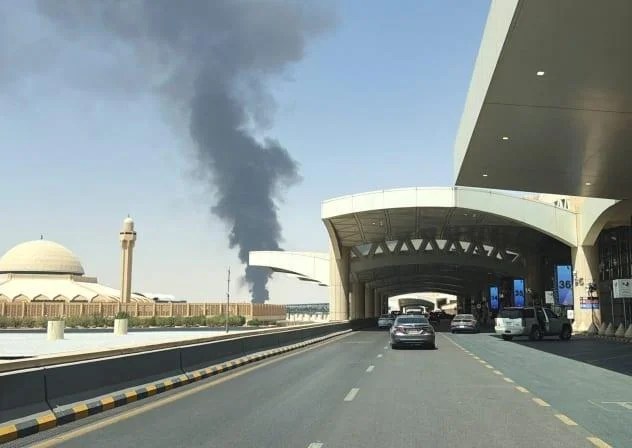
Houthi attacks on Riyadh airport have left at least 14 people dead across Saturday and Sunday, with more than 300 others injured, according to Saudi authorities and international news reports.

The strikes targeted King Khalid International Airport in Saudi Arabia’s capital, causing significant disruption to flights and raising concerns about the safety of civilian aviation.

The attacks come amid escalating fighting between Saudi Arabia and Yemen’s Iran-aligned Houthi movement, which has launched repeated missile and drone strikes against Saudi infrastructure.

Saudi authorities have condemned the attacks and promised a response, while international governments have expressed concern about the possibility of a wider regional conflict.

What Happened at Riyadh Airport?

On Saturday, 10 October 2026, a missile struck King Khalid International Airport, killing 12 people and injuring 309, according to Saudi Arabia’s General Authority of Civil Aviation.

The victims included Saudi citizens and foreign nationals, reflecting the airport’s importance as a major international transport hub.

Saudi authorities reported that several injured people were in critical condition and were receiving hospital treatment.

The attack caused damage to airport facilities and forced authorities to suspend operations while emergency teams assessed the situation.

On Sunday, 11 October, another projectile struck the airport, killing a Pakistani resident and injuring 11 people.

Indian officials also confirmed that an Indian national died from injuries sustained in Saturday’s attack, bringing the reported toll from that strike to 13.

The attacks have raised serious questions about aviation security and the potential consequences of further strikes.

Who Is Responsible for the Attacks?

Yemen’s Houthi movement has claimed responsibility for attacks targeting Saudi airports.

The group, which controls significant parts of Yemen, has used missiles and drones in its confrontation with Saudi Arabia and other regional opponents.

The Houthis say their operations are connected to Saudi military activities in Yemen.

Saudi Arabia, however, has condemned attacks on civilian infrastructure and accused the group of endangering innocent people.

The Saudi-led coalition has described the strikes as violations of international humanitarian law and warned that it will take measures to protect the kingdom.

The latest attacks represent another escalation in a conflict that has already caused extensive suffering in Yemen and heightened tensions throughout the Middle East.

Why Is King Khalid International Airport Important?

King Khalid International Airport is one of the most important aviation centres in Saudi Arabia.

Located in Riyadh, it serves millions of passengers and connects the Saudi capital with destinations across the Middle East, Europe, Asia and other parts of the world.

The airport plays a central role in business travel, tourism and international connections.

Any prolonged disruption can therefore affect thousands of travellers, airlines and businesses.

The attacks are particularly concerning because civilian airports are essential infrastructure used by people travelling for work, family visits, religious purposes and other activities.

Damage to terminals, aircraft or surrounding facilities can create serious safety risks even when airport authorities activate emergency procedures.

King Khalid International Airport in Riyadh Saudi Arabia

Flights Cancelled as Airlines Review Security

The attacks have caused major disruption to commercial aviation.

Several airlines suspended or cancelled services to Riyadh following the missile strikes.

Passengers have been advised to contact their airlines before travelling and to monitor official airport announcements.

Saudi aviation authorities have been conducting safety inspections and assessing damage to airport facilities.

The situation remains uncertain because further attacks could affect decisions about reopening terminals and resuming normal operations.

International travellers should not assume that a scheduled flight will operate until the airline confirms its status.

Saudi Arabia Responds to the Houthi Attacks

Saudi Arabia has strongly condemned the attacks and indicated that it intends to respond.

The Saudi-led coalition has already been conducting military operations against Houthi positions in Yemen.

Saudi officials argue that protecting civilian infrastructure and national security is essential.

However, further military action also raises concerns about escalation and the possibility of additional civilian casualties in Yemen.

The conflict has already created serious humanitarian problems, including displacement, economic disruption and pressure on essential services.

International observers are watching whether military action will intensify or whether diplomatic negotiations can reduce tensions.

Yemen's Houthi movement amid Saudi Arabia conflict
Yemen’s Houthi movement amid Saudi Arabia conflict

Could the United States Become Involved?

The attacks have also attracted attention in Washington.

US President Donald Trump has indicated that he is considering whether American forces should become more directly involved in operations against the Houthis.

The United States has longstanding security relationships with Saudi Arabia and other Gulf countries.

However, direct American military involvement could increase the scale of the conflict.

Washington must also consider the consequences for regional stability, international shipping and relations with Iran.

At the time of writing, discussion about possible additional US military involvement should not be confused with confirmation that a new intervention has begun.

What Does This Conflict Mean for Global Oil Prices?

Saudi Arabia is one of the world’s largest oil producers, making security developments in the kingdom important to international energy markets.

The attacks have increased concerns about the vulnerability of airports, energy facilities and transport networks.

The Houthis have also threatened shipping routes connected to the Red Sea and the Bab al-Mandeb Strait.

These routes are important for international trade and energy transportation.

If commercial shipping faces additional restrictions, transport expenses and insurance premiums could increase.

However, oil prices depend on many factors, including global demand, production levels, available supplies and the duration of any disruption.

A single attack does not automatically determine the direction of energy markets.

Saudi Arabia oil facilities and Middle East energy security

International Reaction to the Riyadh Airport Attacks

The attacks have drawn condemnation from several governments.

Turkey, Pakistan, Egypt and Saudi Arabia issued a joint statement criticising the strikes and calling for an end to attacks on civilian infrastructure.

The governments expressed support for Saudi Arabia’s security and its right to protect its territory.

International concern has also focused on the safety of foreign nationals working and travelling in the kingdom.

Diplomatic efforts to prevent further escalation remain important, particularly because the Saudi-Houthi conflict is closely connected to wider tensions involving Iran and the United States.

What Happens Next?

The immediate priorities are medical care for the injured, airport safety inspections and the restoration of secure flight operations.

Saudi authorities are also reviewing the security situation, as the possibility of additional missile or drone attacks remains a concern.

Airlines will need to assess whether operations can resume safely.

Meanwhile, international governments are monitoring the conflict and considering diplomatic and security responses.

The coming days will be important in determining whether the attacks lead to further military escalation or renewed efforts to reduce hostilities.

Conclusion

The Houthi attacks on Riyadh airport have caused significant loss of life, injured hundreds of people and disrupted one of Saudi Arabia’s most important transport hubs.

The strikes on 10 and 11 October demonstrate how quickly regional conflicts can affect civilian infrastructure and international travel.

Saudi Arabia has promised to protect its security, while the Houthis continue to threaten further operations.

The situation also raises wider concerns about Yemen, Iran, international shipping and global energy supplies.

For now, the main priorities remain protecting civilians, treating the injured, restoring safe airport operations and preventing further escalation.

As the situation develops, accurate casualty figures, official aviation announcements and verified diplomatic statements will be essential for understanding what happens next.

Frequently Asked Questions

How many people were killed in the Riyadh airport attacks?

Reports available on 12 October indicate at least 14 deaths across the attacks on Saturday and Sunday, including a person who later died from injuries sustained on Saturday.

Who carried out the attacks?

Yemen’s Houthi movement claimed responsibility for strikes targeting Saudi airport facilities.

Is Riyadh Airport open?

Airport operations have been severely disrupted. Travellers should check directly with airlines and Saudi aviation authorities for the latest operational status.

Why are the Houthis attacking Saudi Arabia?

The continuing conflict involving the Houthis, Saudi Arabia, and other regional actors, including disagreements over military operations in Yemen, connects the attacks.

Could the attacks affect oil prices?

Further disruption to regional infrastructure and shipping routes could influence energy markets, although price movements depend on several economic and geopolitical factors.

National March for Palestine: What time is the London protest today and what is the route?

0
National March for Palestine: What time is the London protest today and what is the route?

Pro-Palestine protesters are marching through central London today to mark three years since the start of the war in Gaza.

The National March for Palestine, organised by the Palestine Solidarity Campaign, is taking place on Saturday, October 10.

Organisers are calling for an immediate end to military action in Gaza, a complete halt to UK arms exports to Israel and the introduction of sanctions.

Coaches are being organised from cities across the UK, including Bristol, Manchester and Coventry, to bring demonstrators to central London.

LONDON, ENGLAND – JANUARY 31: Protesters march along Whitehall during a national march for Palestine on January 31.

The National March for Palestine, organised by the Palestine Solidarity Campaign
Israeli airstrikes killed at least five Palestinians in Gaza on Saturday

When will the protest take place?

The protest will take place on Saturday, October 10, beginning at midday and finishing at 5pm.

Protesters will gather at Victoria Embankment, with the Trade Union Bloc assembling near Cleopatra’s Needle.

The procession will then make its way through central London before concluding with a rally in Whitehall.

What route will protesters take?

Similar to previous marches, protesters will begin assembling at noon near Northumberland Avenue on the Embankment.

The march will make its way from the Embankment towards Westminster Bridge, along the South Bank to Waterloo Bridge and the Strand, before ending with a rally in Whitehall.

A counter-protest by Stop the Hate is also expected. ywAAAAAAQABAAACAUwAOw==

A map of the route protesters will take on Saturday

National March for Palestine

Has the Metropolitan Police imposed any restrictions on the march?

The Metropolitan Police has announced that it will impose conditions relating to the timing, route and assembly points for Saturday’s march.

Deputy Assistant Commissioner James Harman said several hundred officers would be deployed, with specific legal conditions under the Public Order Act due to be communicated ahead of the weekend.

“The policing presence on the day is expected to be significant, with several hundred officers involved in ensuring disruption is kept to a minimum and any crime or disorder is dealt with swiftly and robustly,” he said.

Since October 2023, the groups that make up the Palestine Coalition have organised 35 large protests. Those taking part all have their own varied motives and allegiances. The majority of attendees participate peacefully and lawfully, but a small minority has faced arrests at these protests for racially and religiously aggravated public order offences, for stirring up racial hatred, and for supporting terrorist organisations.

The march, which starts at midday, must travel via Westminster Bridge, York Road, Waterloo Bridge and the Strand to Whitehall.

The rally at Whitehall must end by 6.30pm, police say. ywAAAAAAQABAAACAUwAOw==

Protesters must follow the route as set out by Met Police.

Protesters must remain in designated areas before the procession begins and follow an agreed route through central London, including Victoria Embankment, Westminster Bridge, York Road, Waterloo Bridge, Strand and Whitehall.

Marchers are prohibited from entering a designated emergency access lane on Westminster Bridge and Westminster Bridge Road.

Speeches and music must end by 5.30pm, with the assembly required to disperse by 6.30pm. ywAAAAAAQABAAACAUwAOw==

The Section 60AA designated area map

Met Police

Police have also been given powers under Section 60AA, allowing officers to require the removal of face coverings where they reasonably believe they are being worn to conceal someone’s identity.

What has the Met Police said about chants and banners?

The Met has also reiterated its approach to chants and wording on banners that officers believe could incite hatred or indicate support for terrorism or other forms of extremism.

“We have arrested and charged individuals for calling for an intifada at protests, with those cases working their way through the courts,” Mr Harman added. ywAAAAAAQABAAACAUwAOw==

Anyone attending the rally must remain in the shaded area.

Met Police

“Our officers will take firm action when they see or hear antisemitism, anti-Muslim abuse, incitement to violence, or language that clearly points to support for terrorists or proscribed groups, for example, Palestine Action.

“We will arrest for those offences when we see them at protests and marches in the coming week. We will investigate post-event where necessary.

“And specialist investigators will work at pace to present the cases to the Crown Prosecution Service to ensure those responsible are swiftly put before the courts.”

Is there a counter-protest?

A pro-Israel Stop the Hate demonstration is also planned nearby, starting at 11am.

The Metropolitan Police have also imposed conditions on that protest that will take place outside New Scotland Yard on Victoria Embankment.

The force has also imposed conditions on the demonstration, “to minimise the risk of serious disruption.”

The demonstrators must remain within a designated area outside the Met’s headquarters, with the assembly concluding at 2.30pm.

Middle East News Today: Gaza Strikes, Saudi Airport Attacks and Rising Regional Tensions

0
Middle East News Today

The latest Middle East news is dominated by renewed violence in Gaza, missile attacks targeting Saudi Arabia, tensions involving Iran-backed groups, and diplomatic developments in Lebanon.

Here are the major developments reported today, with background and explanations suitable for your news website.

1. Israeli strikes kill at least five Palestinians in Gaza.

Israeli airstrikes killed at least five Palestinians in Gaza on Saturday, according to medical officials cited by Reuters.

Four people were reported killed near Panda Mall in Gaza City, while another person died in the Tuffah neighbourhood.

The Israeli military said it had targeted militants. Israel accuses Hamas of rebuilding its military capabilities and violating the ceasefire, while Hamas denies those allegations and accuses Israel of undermining the agreement.

The violence comes one year after a US-brokered ceasefire intended to bring an end to the war.

2. Saudi Arabia faces renewed Houthi attacks on Riyadh airport.

مطارات المملكة.. مطار الملك خالد الدولي يتصدر الأداء في نوفمبر 2024 - أريبيان بزنس

Saudi Arabia is facing a serious security challenge after further attacks on King Khalid International Airport in Riyadh.

The Associated Press reported that attacks claimed by Yemen’s Houthi movement killed three Saudi citizens, including an airline pilot, earlier in the week. Further strikes have damaged aircraft, injured people and disrupted international flights.

US President Donald Trump said he was considering whether American forces should join Saudi military operations against the Houthis.

Saudi Arabia has launched retaliatory attacks on Houthi positions in Yemen. The conflict also threatens shipping routes near the Red Sea and the Bab el-Mandeb Strait.

3. Gaza ceasefire faces growing uncertainty one year later

Israeli strikes kill at least five Palestinians in Gaza.

The October 2025 Gaza ceasefire has not delivered all the changes originally promised.

According to an Associated Press assessment published today, the agreement helped secure the release of hostages and increased humanitarian access, but key provisions remain unfulfilled.

Disagreements continue over Hamas disarmament, Israeli military control, Palestinian governance and reconstruction.

Large parts of Gaza remain devastated, and well over two million Palestinians continue to face severe humanitarian difficulties.

4. Nearly two million people in Gaza urgently need shelter.

PALESTINIAN-ISRAEL-CONFLICT-GAZA
Gaza urgently need shelter.

The United Nations has warned that almost the entire population of Gaza needs emergency shelter assistance ahead of winter.

The International Organization for Migration said nearly two million people require support, but humanitarian organisations have met only about 17% of the need for winter shelter supplies.

The agency warned that heavy rainfall associated with El Niño could cause flooding in areas where drainage systems have been severely damaged.

More than 3,600 buildings have been identified as dangerous or at risk of collapse.

The UN says restrictions on supplies entering Gaza are making it difficult to prepare for winter. Israel cites security concerns regarding some restricted materials.

5. Lebanon welcomes the US decision to lift the decades-long flight ban.

Lebanon has welcomed President Donald Trump’s decision to remove restrictions on direct flights between Lebanon and the United States.

The restrictions were introduced in 1985 following the hijacking of TWA Flight 847.

Lebanese President Joseph Aoun described the decision as a sign of American confidence in improvements to aviation security.

The announcement represents a significant diplomatic development as Lebanon continues dealing with the economic and security consequences of its conflict with Israel.

6. Iran reportedly provides $200 million to Hezbollah.

Reuters reported on 7 October that Hezbollah had received approximately $200 million from Iran to support Lebanese families displaced by conflict with Israel.

Sources familiar with the arrangements said the money would assist around 50,000 families.

The US State Department disputed the reported funding.

The development highlights continuing disagreements over Iran’s regional influence and the challenges facing Lebanon’s reconstruction.

7. Palestinian elections postponed until September 2027

Palestinian President Mahmoud Abbas has postponed legislative and presidential elections until September 2027, according to the Associated Press.

The decision comes amid disagreements between Palestinian factions and concerns about the organisation of elections in Gaza and East Jerusalem.

Supporters of postponement argue that political and security conditions are unsuitable for voting.

Critics say another delay risks weakening public confidence in Palestinian political institutions.

What to watch next in the Middle East

The region faces several interconnected challenges. Further violence in Gaza could undermine efforts to implement the ceasefire, while continued Houthi attacks could threaten Saudi infrastructure, as well as international aviation and shipping.

Humanitarian organisations are increasingly concerned about Gaza’s approaching winter, as shelter shortages and damaged infrastructure put displaced families at risk.

Meanwhile, diplomatic discussions involving Lebanon, Iran, Israel and the United States remain important to regional security.

Conclusion

The latest Middle East news on 10 October 2026 shows that the region continues to face serious military, humanitarian and diplomatic challenges.

From renewed Israeli strikes in Gaza to attacks on Saudi Arabia and efforts to rebuild diplomatic relationships, developments across the region are closely connected.

The coming weeks will be important for ceasefire negotiations, humanitarian assistance, international aviation and regional security