
Why are Chile’s wildfires spreading faster and getting hotter?
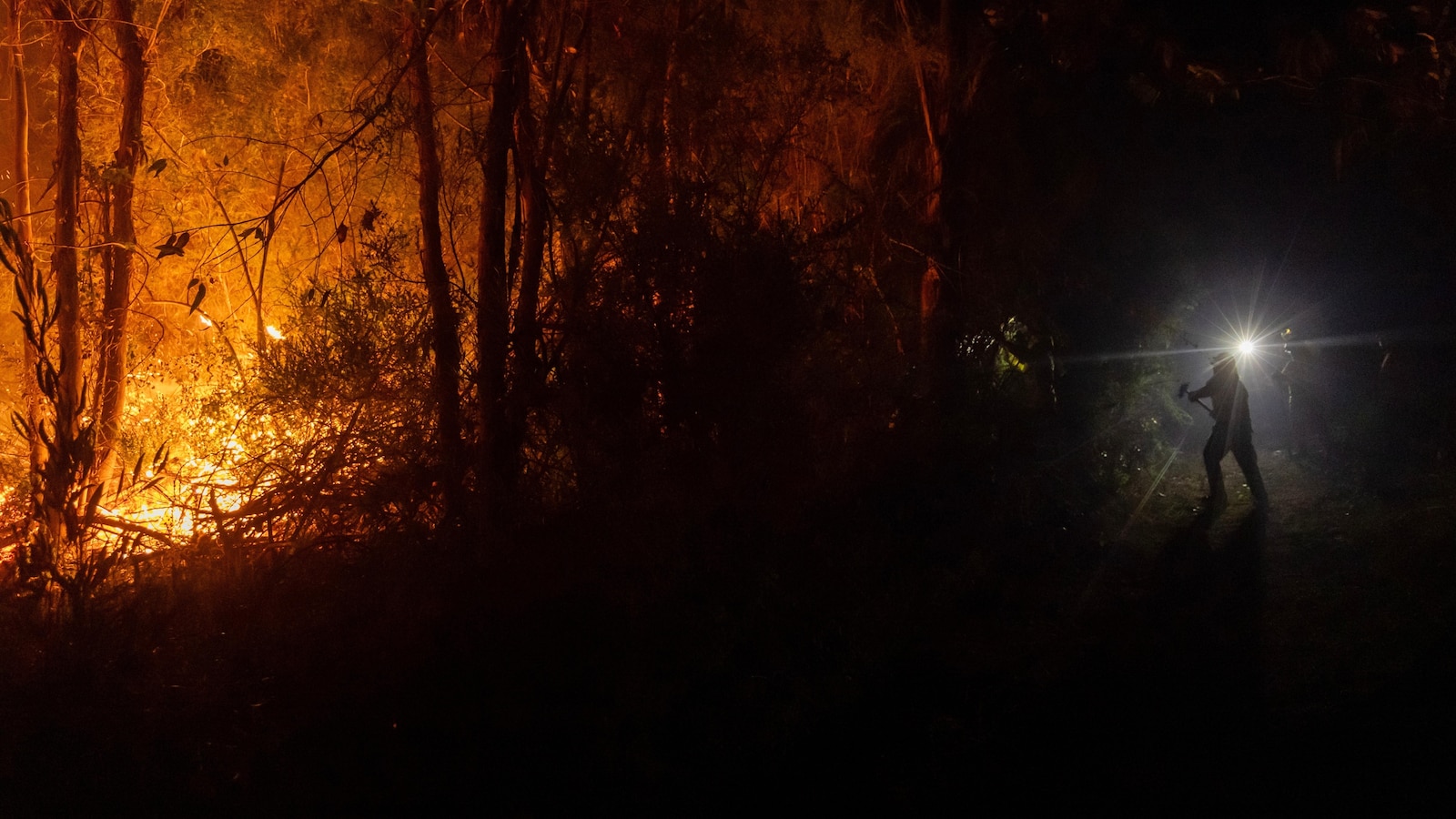
Bogota Colombia — Chile is battling one of the most serious wildfire emergencies in years.
Deadly flames sweeping through central and southern parts of the South American country have reduced vast swathes of forest and towns to ashes, killing at least 20 people, forcing thousands from their homes and leaving families searching through charred debris.
Fire scientists say that these flames are driven not only by extreme heat, drought, and wind, but also by the interaction of human-shaped landscapes with a changing climate – a deadly mix that makes fires harder to control.
The fires began in mid-January in the Biobío and Nublar regions, about 500 kilometres (300 mi) south of the capital, Santiago. In a few days, more than 50,000 inhabitants had vacated And firefighters were battling more than a dozen active fires. The government declared a state of disaster—a rare emergency designation that allows the military to coordinate firefighting efforts.
The fire destroyed forests, fields and hundreds of houses. In towns like Penco and Lirquen, families faced scenes of destruction – roofs collapsed, vehicles melted into crumpled frames and community buildings reduced to debris.
What stands out about Chile’s current fire?
season is not the unusual increase in the number of fires but the amount of land burning.
“We are living in a particularly severe situation that is far from the normal average that is usually observed in wildfire seasons,” said Miguel Castillo, director of the Forest Fire Engineering Laboratory at the University of Chile.
Castillo said Chile has “almost tripled the amount of affected area”, even though the number of fires so far is “within the normal margin, less than average”. This means fewer fires are causing far more damage – a pattern increasingly seen in extreme wildfire seasons around the world.
“This is a huge challenge for firefighters,” Virginia Iglesias, a fire scientist and statistician and director of the Earth Lab at the University of Colorado Boulder, told The Associated Press.
Iglesias said the emergency involves fires of different sizes, which often move toward communities at the same time.
Chile is emerging from a severe drought that has lasted more than a decade, leaving vegetation unusually dry. High summer temperatures and strong, variable winds further increase the risk.
“The hotter and drier things get, the more fuel is available to burn,” said Mark Cochrane, a fire ecologist at the University of Maryland’s Environmental Science Center who studies wildfires globally.
“Wind bends the flames and transfers more heat downwind. It also gives oxygen to the fire, so the fire burns more fuel and increases the intensity.”
Iglesias described wildfire risk as a simple “recipe” with three ingredients: ignition, fuel, and dry conditions. While fire has long been part of Chile’s ecosystem, human activity has altered all three elements, he said.
“Those winds are very irregular and very intense,” he said, adding that this affects not only how big a fire gets but also “how fast it will move across the landscape.”
Alejandro Miranda, a researcher at Chile’s Center for Climate and Resilience Research, said wildfire behaviour depends on several interrelated factors: the amount and persistence of fire, climate conditions, topography and burnable vegetation.
Chile’s long drought – now lasting more than a decade – has drained forests and plantations alike, helping fires spread faster, Miranda said. Recent extreme fire seasons, including 2017 and 2023, have resulted in record high temperatures and rainfall deficits of more than 30% below the historical average, he said.
“These are conditions that are projected to become more intense in the future,” Miranda said.
Large areas of central and southern Chile are dominated by industrial pine and eucalyptus plantations, which are grown for lumber and pulp. Fire experts say these scenarios play a major role in how a fire behaves after it starts.
“Fires spread quickly through plantations,” Castillo said.
Miranda said plantations tend to have high fuel loads, large continuous areas of similar-aged trees and abundant dead vegetation on the ground. When plantations are not actively managed, branches below the canopy can form a vertical “ladder”, allowing flames to climb to the tops of trees and produce high-intensity crown fires.
Cochrane said pine and eucalyptus “are very flammable and will build up more fuel over time,” and these fires often send burning embers far beyond the main fire.
“It’s not typically a direct fire that burns down homes,” Cochrane said. “It’s embers landing everywhere.”
Castillo said wind-blown embers could ignite new fires behind the line of control, making suppression extremely difficult, especially in steep terrain and strong winds.
In contrast, native forests are more diverse and, in many areas, more humid, which may slow fire spread.
Experts say almost all wildfires in Chile are caused by human activities, whether intentional or negligent. Iglesias said humans add ignition through power lines, recreation and infrastructure, and human-caused ignitions can extend fire seasons because they are not limited to lightning or storms.
The environmental impact extends far beyond burnt trees. Iglesias said the smoke degrades air quality and poses serious health risks, especially for vulnerable populations, who often live far from the flames. After a fire, soils can become water-repellent, leading to increased runoff, flooding, and landslides – what scientists call “cascading hazards”. Sediment can also pollute rivers and increase the cost of treating drinking water.
Miranda warned that the fires could permanently alter ecosystems. After severe burns, invasive species such as pine can regenerate rapidly, replacing native forests and increasing the risk of future fires.
Looking ahead, Iglesias stressed that although firefighting is essential, prevention matters more.
He said reducing fires, managing fuels, addressing climate change and redesigning communities – including creating safer spaces around homes – are all important steps.
“These are very concrete steps we can take to reduce the fire problem,” Iglesias said.
___
The Associated Press’ climate and environmental coverage receives financial support from several private foundations. AP is solely responsible for all content. find api standards A list of philanthropies to work with, supporters and funded coverage areas at ap.org.