

Solar Financing: Renewable Energy Ministry Issues Clarification on Lending Guidelines
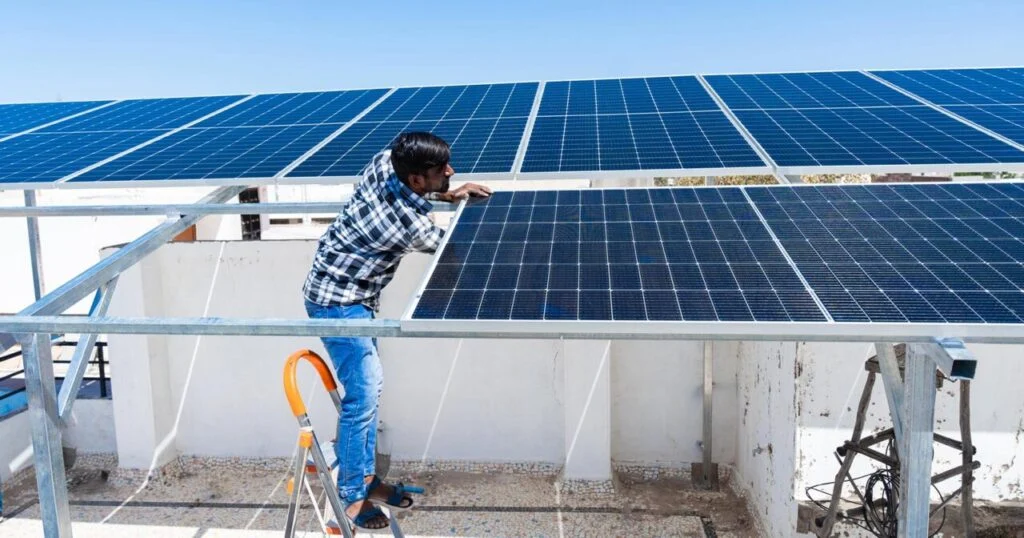
Here’s a clear, easy-to-understand summary of the recent developments on “solar financing,” following the statement from the Ministry of New and Renewable Energy (MNRE).
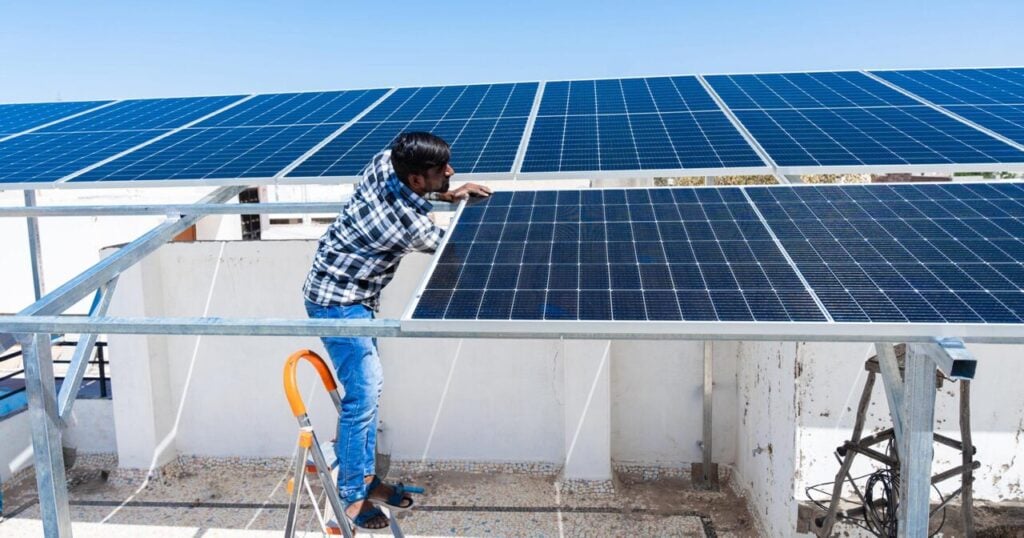

🔎 What happened: the “solar financing” clarification
In response to recent market speculation, the Ministry of New and Renewable Energy (MNRE) has issued a crucial clarification regarding solar financing.
The ministry has explicitly stated that it has not issued any formal advisory, directive, or communication to banks or financial institutions instructing them to restrict or reconsider lending for solar power projects.
This clarification comes amid concerns and unverified reports circulating in the renewable energy sector, which had suggested that the government was advising lenders to be cautious about solar financing. The MNRE’s statement aims to dispel these rumours and provide certainty for developers, investors, and financial institutions.
✅ What did MNRE actually say?
- MNRE said lenders — including banks and non-banking financial companies — should not treat the communication as a directive to stop funding. The Times of India + 1
- Rather than halting financing, the ministry has shared data on existing domestic manufacturing capacity (solar modules, cells, wafers, polysilicon, and ancillary equipment) with relevant financial authorities. The idea is to encourage a calibrated, well-informed approach when evaluating new financing proposals.
- The Hans India and Business Standard both reported that the MNRE reaffirmed the government’s commitment to growing India’s solar-PV manufacturing ecosystem—not just module assembly but also upstream manufacturing (cells, wafers, polysilicon, etc.) to strengthen the overall “solar value chain”.
- MNRE reaffirmed that the government remains committed to growing India’s solar-PV manufacturing ecosystem—not just module assembly but upstream manufacturing (cells, wafers, polysilicon, etc.) to strengthen the overall “solar value chain.”. Business Standard + 2 The Financial Express+2
🌍Why the changes matter: Implications for solar-sector stakeholders
- For investors, developers and banks: The clarification removes uncertainty. We should no longer view projects and manufacturing proposals as risky due to the alleged “government freeze”.
- For the solar manufacturing industry: The push to support upstream manufacturing—cells, wafers, polysilicon—could encourage investment in more advanced domestic production instead of limiting focus to module assembly.
- For the renewable-energy ambition: The move aligns with broader efforts to reduce dependence on imported solar components and build a self-reliant domestic supply chain.
📌 What this is not
- It is not a signal of financing slowdown. MNRE explicitly denied issuing any advisory to pause or stop funding. ETManufacturing.in+1
- It is not a ban on new solar or renewable-energy projects. Existing and future projects remain eligible for financing, subject to the usual evaluation process by lenders.
🧑💡 Bottom line (focus keyword: solar financing)
The recent buzz around “solar financing”—that the renewable-energy ministry had instructed banks to stop lending—is incorrect. The truth is exactly the opposite: the ministry clarified that no lender advisory was issued. Instead, the government is encouraging a smart, informed financing approach to support not just project deployment but also a robust, domestic solar-PV manufacturing ecosystem.
Key Points of the Clarification
- No Official Advisory: The MNRE confirmed that no such lender advisory was issued. All existing policies supporting solar financing and renewable energy projects remain unchanged.
- Banks should proceed as usual, basing their credit appraisal and solar financing decisions on their internal risk assessment frameworks and the merits of the project.
- Continued Policy Support: The government reiterates its commitment to achieving its ambitious renewable energy targets, for which robust solar financing remains a critical pillar