

America is losing millions of dollars due to measles. The actual loss cannot be calculated.
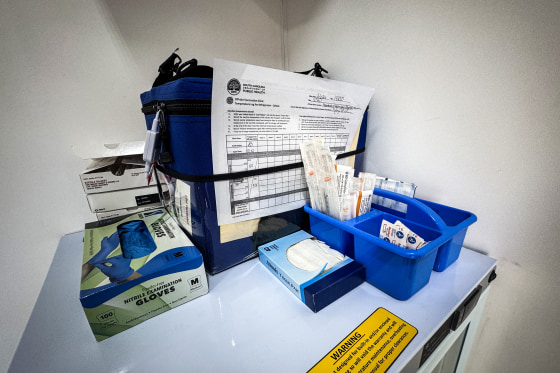
In early 2025, as a measles outbreak begins in West Texas, Katherine Wells knows she needs money.
Although the outbreak was centred in Gaines County, a community an hour away, Wells, who heads Lubbock’s public health department, needed more staff to respond to the multiple exposures at local pediatricians’ offices, urgent care centres, restaurants and daycares.
“We really relied on employees who weren’t hourly, because I could make them work 80 hours if I had to, which is horrible,” Wells said. In emergency planning meetings with the Texas Department of State Health Services, she asked for nearly $100,000 to hire temporary workers to help her exhausted staff.
“I was like, can I have money so that if I need a few hours of work from a retired school nurse that we’ve worked with before, I can pay them?” Wells said.
The answer, he said, was consistently “no”. The state sent some travel nurses from other areas to help but received no additional funding.
To prevent measles outbreaks from spiralling out of control, public health workers must spring into action, contacting everyone who may have been exposed to the virus as quickly as possible, determining their vaccination status or health risk, and then trying to convince them to get vaccinated or quarantine at home for three weeks.
Wells assigned at least half of its staff to work on the outbreak response in addition to their other daily duties.
What is the real cost of a measles outbreak?
Wells could not estimate how much it cost the Lubbock Health Department to contain the virus before the outbreak, which began in a mostly unvaccinated Mennonite community in late January last year and ended months later.
An NBC News/Stanford University investigation found that since 2019, more than two-thirds of counties and jurisdictions have reported significant declines in vaccination rates. In the state that tracks MMR rates, more than half of the counties—67%—are below the level needed to prevent measles outbreaks.
A shocking new report calculates the price tag for the US if rates continue to fall.
If measles vaccination rates continue to decline by just 1% annually for the next five years, the cost to the US could reach $1.5 billion per year, according to a new report. Yale School of Public Health.
Armed with existing county-level vaccination coverage data, Yale researchers used mathematical models to calculate the projected increase in measles cases, hospitalisations, and their associated medical and social costs.
Based on their estimates, $41.1 million would be needed each year to cover patients’ basic medical needs, including health insurance, and $947 million would be required for public health response efforts such as surveillance and contact tracing. The report found that lost productivity in the workforce could reach $510.4 million each year.
Dr Dave Chokshi, president of the Common Health Coalition, a nonprofit, nonpartisan public health group that partnered with Yale on the project, said measles outbreaks span all parts of the “health ecosystem”.
Chokshi, who was previously the health commissioner of New York City, said, “It is important for us to confront the humanitarian consequences of the measles outbreak.” “But we also wanted to make clear that this also has economic consequences, including lost work for employees, public health departments that are overburdened to respond, and health care systems straining to shoulder the burden of emergency response.”
Measles was declared eliminated in the United States in 2000. Since then, sporadic outbreaks have generally stopped quickly. But declining vaccination rates have increased the risk of a large-scale outbreak and now threaten the country’s measles elimination status.
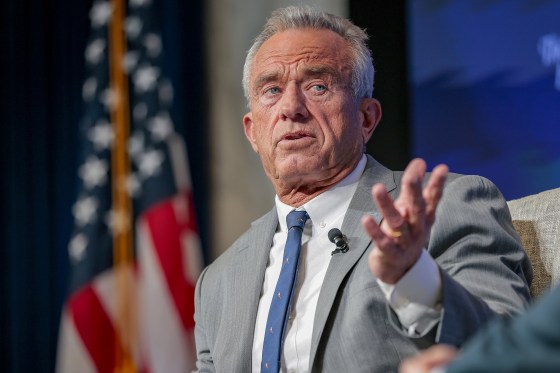
In late January 2025, as President Donald Trump was taking his second oath of office, measles cases began to spread in West Texas. Under his presidency, following the guidance of Health Secretary Robert F. Kennedy Jr, the administration has not strongly endorsed vaccines as a way to end such outbreaks.
Instead, messaging on childhood vaccination focuses on “personal choice” rather than a public health necessity.
In the first two months of 2026, there are More than 1,000 confirmed cases of measles Nearly half of the total of 2,281 in 2025. 94 per cent of those infected were not vaccinated.
According to a recent analysis from the Johns Hopkins Bloomberg School of Public Health, the initial financial loss to a community from a measles outbreak is approximately $244,480. Brian Patenaude, study author and associate professor of health economics, said local and state public health departments can expect this money to pay for resources like vaccine clinics and staffing until the outbreak is over.
“We know what elements are required in dealing with measles outbreaks and how many cases become severe and demand care because they have to be really well traced and documented,” Patenaude said.
The report, which was posted in October on medRxiv, a site that releases research before it undergoes peer review, has tracked measles outbreaks in 18 states since 2004 (not including 2025 cases in Texas, Utah, and Arizona).
Each additional case of measles incurs an average cost of $16,000 per case for contact tracing, medical expenses, and quarantine monitoring, in addition to the upfront costs. The Johns Hopkins report estimates that the cost of five cases of measles could reach $324,480, while an outbreak of 50 could cost $1 million.
In 2019, an outbreak of 72 measles cases occurred in Clark County, Washington. Health officials spent hours making sure people followed the quarantine.
“We’ve brought in personnel from the state, the CDC, and even other jurisdictions like Idaho to help with case investigation and contact tracing,” said Dr Alan Melnick, Clark County public health director. The team contacted the quarantined people daily. Ultimately, isolation resulted in 87% of subsequent measles cases, according to Melnick.
An assessment found that productivity losses from a relatively small outbreak in Clark County exceeded one million dollars.
The measles vaccine is free in America
Melnick stated that the public should be aware of the value of vaccines, as they not only save lives but also significantly reduce costs.
As a former California legislator, paediatrician Dr Richard Pan helped strengthen the state’s vaccine requirements after a measles outbreak linked to Disneyland in 2015. “People need to understand that these outbreaks come at a heavy cost,” he said. “By the way, American families are bearing that cost.”
South Carolina is struggling to contain the nation’s largest single outbreak in more than a generation. Spartanburg County has been on high alert since the fall, with at least 1,000 cases and possible exposures at fast food restaurants, stores, medical clinics, and government offices.
The South Carolina Department of Public Health will not disclose how much the contact tracing, mobile vaccine clinics and increased staffing are costing.
The Centers for Disease Control and Prevention has approved a request to redirect several million dollars previously allocated for the emergency, a department official said.
“Additionally, South Carolina requested and received $100k from the CDC available for vaccine-preventable disease reactions,” Louis Eubanks, deputy incident commander for the South Carolina Department of Public Health, said in a statement to NBC News. “South Carolina and CDC continue to discuss additional funding needs and resource support.”
A senior U.S. Department of Health and Human Services official said the CDC sent $8.5 million to seven areas of the country with measles outbreaks last year but declined to specify where or provide additional details.
“Funds were awarded based on state or local health agency requests and the availability of funds at CDC,” the person said.
As the South Carolina outbreak spreads into North Carolina, Dr David Wohl, a global health and infectious disease expert at the University of North Carolina at Chapel Hill, has sought to stem the surge beyond the 23 already confirmed cases.
“There are a lot of people in my healthcare system working on this,” Wohl said. “I can’t tell you how many calls, how many hours there are, how stressed people are.”
intangible, indirect costs
The potential economic burden of a measles outbreak can be easily calculated. It is impossible to measure the personal cost of keeping children unprotected from the world’s most contagious virus.
Hundreds of people infected with measles in the past year — more than 1 in 10, according to the CDC — have been hospitalised with dangerously high fevers, pneumonia, trouble breathing and dehydration.
Mothers and fathers have spent countless hazy hours at their child’s bedside. Most recovered. Some people survive the long-term consequences of encephalitis—an inflammation of the brain that can lead to seizures, blindness, deafness, and learning disabilities.
Measles may remain hidden in the body for up to a decade before reemerging by attacking the brain and nervous system. A condition called subacute sclerosing panencephalitis is almost always fatal.
Two little girls in Texas, ages 6 and 8, died from measles within weeks of diagnosis.
Chokshi said while the economic consequences of the measles outbreak are real, the human impact cannot be ignored. “Behind each number is a child battling a devastating disease, or a family facing an unexpected hospitalisation, and, in the worst circumstances, a death or long-term outcome from a preventable disease.”

One thought on “America is losing millions of dollars due to measles. The actual loss cannot be calculated.”
Comments are closed.