
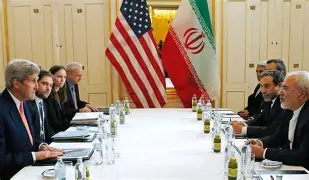
As diplomatic clocks run down and military options remain on the table, Iran-U.S. tensions have once again become the central flashpoint of global security. In May 2026, the world is watching closely as the two nations stand at a precarious crossroads. With the United States warning that only “days” remain for a negotiated settlement and Iran promising “surprises” if pressured further, the stakes are at an all-time high. This article breaks down the current situation, the key players, and what might come next.
The Looming Deadline
According to multiple official statements, U.S. President Donald Trump has issued a stark warning regarding the ongoing nuclear talks. He stated that the window for a renewed nuclear agreement is down to just days, adding that he came “within an hour” of ordering fresh military strikes against Iranian positions. This admission alone reveals how close the situation has come to open conflict.
Vice President J.D. Vance offered a slightly more cautious tone, acknowledging that talks are making “good progress” but clarifying that the United States remains “locked and loaded”. This dual messaging—diplomatic openness paired with military readiness—has become a hallmark of the current administration’s approach to managing Iran-US tensions.
Iran’s Response: Defiance and Warning
On the other side, Tehran has not remained silent. Iran’s chief nuclear negotiator accused the United States of actively seeking a new war in the region. In a pointed statement, he claimed that Iran has prepared “surprises” that would make any military action costly for American forces and their allies.
These comments are not mere rhetoric. They reflect a deeper reality: after years of sanctions, assassinations of key scientists, and what Iran views as broken promises from Western powers, Tehran has little trust left in the diplomatic process. However, it also understands that a full-scale war would be devastating. This paradox—mutual distrust combined with mutual fear of war—is what continues to define Iran-U.S. tensions in 2026.
The Military Dimension: Operation Epic Fury
One of the most significant revelations to emerge this week is a casualty report from the earlier phase of conflict known as “Operation Epic Fury”. According to disclosed figures, the United States lost 42 aircraft during operations against Iranian targets. While the Pentagon has not confirmed the full details, the number suggests a level of attrition that will inevitably factor into current decision-making.
No nation can absorb such losses without reconsidering its strategy. For military planners, these figures serve as a sobering reminder that any renewed engagement with Iran would not be a quick or low-cost affair. This reality may be pushing both sides back toward the negotiating table—even as public statements grow sharper.
The Strait of Hormuz: A Global Chokepoint
Adding another layer of complexity is the ongoing disruption in the Strait of Hormuz, through which approximately 20% of the world’s oil passes. United Nations Secretary-General António Guterres has made an urgent appeal for the reopening of the strait, warning that continued blockage could trigger a global energy crisis.
The strait’s closure has already contributed to volatile oil prices, though markets briefly calmed on hopes of a US-Iran peace deal. However, Goldman Sachs has cautioned that if supply disruptions persist, prices could spike dramatically. In this sense, Iran-US tensions are no longer just a regional issue—they are a direct threat to the global economy.
What Comes Next?
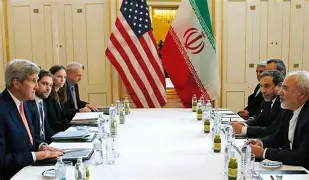
Several scenarios are possible in the coming days:
- A Last-Minute Deal: The most optimistic outcome would be a renewed nuclear framework that provides Iran with limited sanctions relief in exchange for verifiable caps on enrichment. Given the tight deadline, such an agreement would require major concessions from both sides.
- Continued Stalemate: The talks could collapse, leading to an extended period of non-agreement. In this case, the U.S. would likely intensify sanctions, while Iran might accelerate its nuclear programme, increasing Iran-U.S. tensions further without direct war.
- Military Conflict: The worst-case scenario remains a US or Israeli preemptive strike on Iranian nuclear facilities. Such an event would almost certainly trigger Iranian retaliation via proxies in Lebanon, Syria, Iraq, and Yemen, along with potential direct missile attacks.
Conclusion
Iran-US tensions in May 2026 are defined by a dangerous mix of tight deadlines, military readiness, and deep-seated mistrust. While diplomacy has not yet failed, it is running out of time. The world can only hope that cooler heads prevail—because the alternative, as both sides have hinted, would be catastrophic for the region and beyond.