

How the White House is Shaping Gaza’s Future
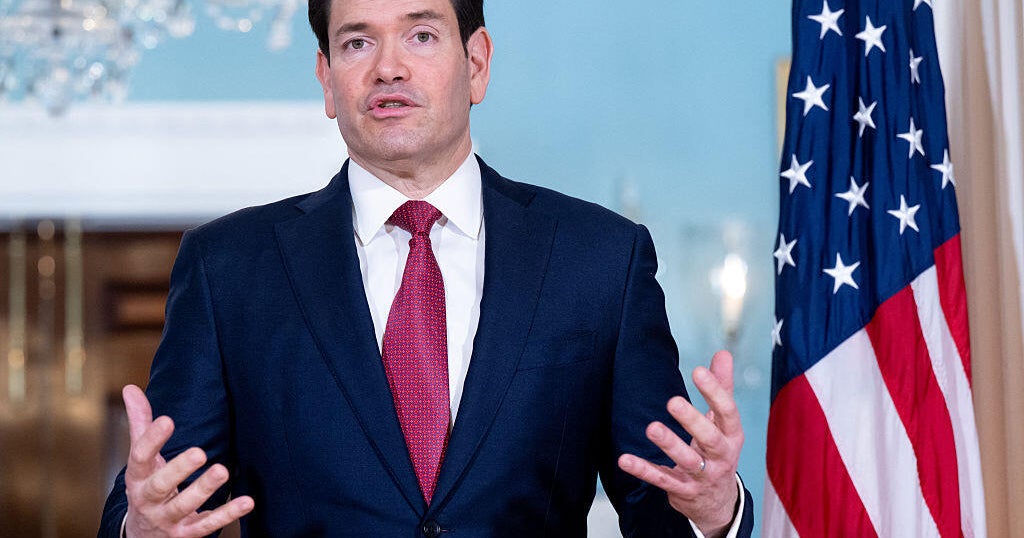
The White House released the names of some leaders who will play a role in its supervision. Next steps in Gaza: the first meeting of the Palestinian committee set up to rule the territory under US supervision was held in Cairo on Friday.
The committee’s leader, Ali Shaath, an engineer and former Palestinian Authority official from Gaza, promised to work quickly to improve conditions. They expect reconstruction and recovery to take about three years and plan to focus first on immediate needs, including shelter.
“The Palestinian people were waiting for this committee’s establishment and its work to save them,” Shaath said in a televised interview with Egypt’s state-owned Al-Qahera News after the meeting.
Under President Trump’s plan, Shaath’s technical committee will manage day-to-day affairs in Gaza, supervised by a “peace board” led by Trump, whose members have not yet been named.
The White House said an executive board would work to carry out the peace board’s vision.
Executive board members announced Friday include Secretary of State Marco Rubio, White House special envoy Steve Witkoff, Trump’s son-in-law, Jared Kushner, former British Prime Minister Tony Blair, Apollo Global Management CEO Mark Rowan, World Bank President Ajay Banga, and Mr. Trump’s deputy national security adviser, Robert Gabriel.
Nikolay Mladenov, a former Bulgarian politician and UN Middle East envoy, is to serve as the representative on the executive board responsible for daily operations.
Mr Trump supports the group’s efforts to rule Gaza after a two-year war between Israel and Hamas. Israeli troops withdraw from parts of Gaza after the armistice. It took effect on October 10, while thousands of displaced Palestinians have returned to their remaining homes.
Kushner and Witkoff were the chief negotiators, helping Israel and the terrorist organisation Hamas reach a ceasefire agreement that was based on the White House’s 20-point blueprint. in an interview Appearing on “60 Minutes” in October, Kushner said that the success or failure of the peace plan would depend on whether Israel and the international partners involved could create a “viable alternative” to Hamas’ violent tactics.
“If Israel and its international partners succeed, Hamas will fail, and Gaza will no longer pose a threat to Israel in the future,” Kushner told “60 Minutes.”
Earlier this week, Witkoff announced the US was moving forward with what the White House called phase two of the Gaza peace plan. In a post from X, Witkoff said this included Hamas returning the remains of the last dead hostage still in Gaza.
“Failure to do so would have serious consequences,” Witkoff wrote.
Now, there will be major challenges ahead, including the deployment of an international security force to monitor the ceasefire agreement and the difficult process of disarming Hamas.
The White House’s role in Gaza’s reconstruction is significant.
The White House also announced the members of another board, the “Gaza Executive Board”, which will work with Mladenov, the Technical Committee, and the International Stabilisation Force.
Witkowski, Kushner, Blair, Rowan, and Mladenov will also sit on the board. Additional members include Turkish Foreign Minister Hakan Fidan; Qatari diplomat Ali al-Thawadi; Hassan Rashad, director of Egypt’s General Intelligence Agency; Emirati minister Reem al-Hashimi; Israeli businessman Yakir Gabay and former Deputy Prime Minister of the Netherlands and Middle East expert Sigrid Kaag.
The White House is playing a proactive role in shaping Gaza’s future by establishing the Gaza Executive Board, which will collaborate with various international leaders and organisations. This board is tasked with overseeing the implementation of the ceasefire and the complex disarmament of Hamas. Key figures on the board include prominent diplomats and experts from Turkey, Qatar, Egypt, UAE, Israel, and the Netherlands, reflecting a diverse coalition aimed at stabilising the region. As these efforts unfold, the White House’s influence will be critical in dealing with the problems that lie ahead.




One thought on “How the White House is Shaping Gaza’s Future”
Comments are closed.