

Pet owners will not have to pay more than £21 for prescriptions after major investigation
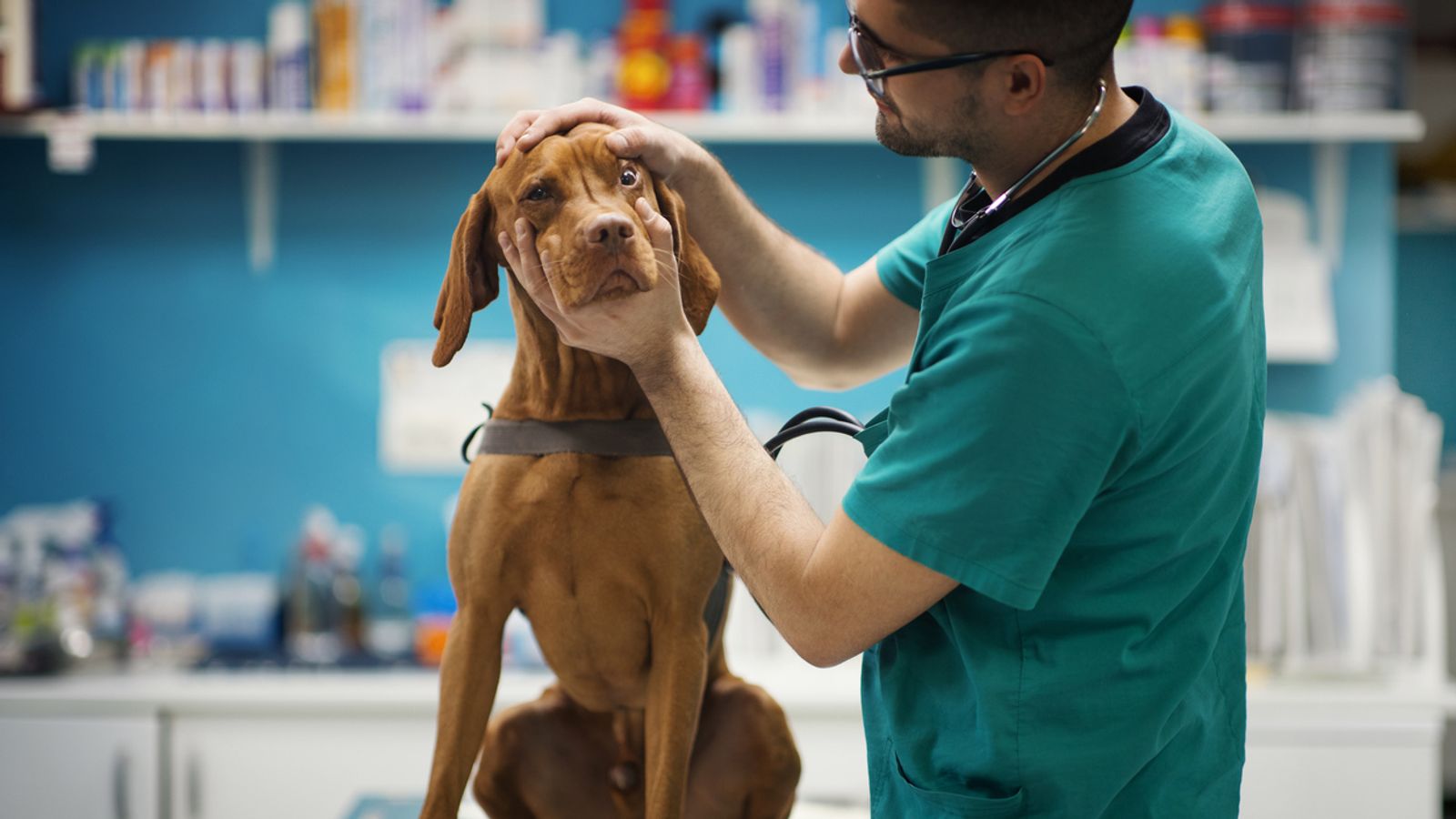
A price cap will be imposed on pet prescriptions, the Competition and Markets Authority has announced after a three-year investigation.
Under the changes, pet owners will have to pay a maximum of £21 for their first prescription and £12.50 for any other medication within the same consultation, after the CMA found that vets were being charged more for some commonly prescribed medications.
Money Blog: Follow the Latest
Vets must also inform clients of the savings they can get by buying prescriptions online.
The report predicts a 63% increase in average prices for veterinarian services between 2016 and 2023, significantly outpacing general inflation.
Martin Coleman, chairman of the independent investigative group, said the reforms would “make a real difference for the millions of pet owners who want the best for their pets but struggle to find a practice, treatment, and price that meets their needs.”
What else is changing?
Practices will be required to publish a comprehensive price list for standard services – including consultations, routine procedures, diagnostics, written prescriptions and cremation options.
A comparison site will also be set up to allow pet owners to more easily assess different veterinary practices.
Vets must make it clear with on-site and online signage whether they are part of a group or an independent business.
Practices must provide a written estimate in advance for any treatment costing £500 or more – as well as an itemised bill. The only exception to this rule will be emergency situations.
All these changes will be legally implemented by 23 September.
These are CVS, IVC, Linnaeus, MediVet, Pets at Home, and VetPartners.
The investigation found that some issues were “specific” to the six large veterinary groups. These are CVS, IVC, Linnaeus, MediVet, Pets at Home, and VetPartners.
Coleman said, “We’re not backing away from this issue. Most of them have higher average prices than independent practices, and, in at least three out of five cases, larger groups buying up independent practices have created higher average prices at those practices.
“Some of these groups are making huge profits
That would be more than would be expected in a well-functioning competitive market.”
He said today’s changes would mean that large vet groups will be held to account by an independent regulator for the first time.
“Pet owners are left in the dark about prices, even when they are costing them thousands of pounds; many are paying far more than they need to for medicines; pet owners often have no idea who they are purchasing services from; and the big businesses that control most veterinary practices and provide vital services are not held to account by an independent regulator,” they said in their summary.
“And this ultimately impacts pet owners’ ability to get care for their animals. This has to change.”
What did the vets say?
We asked every major veterinary group for their thoughts on the reforms and this is what they told us:
Veterinarian for Pets, which is part of Pets at Home, said it was a “challenging time” for its teams but was pleased to hear that the system would be modernised.
A spokeswoman said it was the only large group whose average prices were found to be no higher than independent practices.
“Our network of more than 600 practice owners is dedicated to providing the best quality and value pet care in the communities they serve,” she added.
“This has been a challenging time for the dedicated veterinary teams who work tirelessly to care for the nation’s pets, but we are pleased that this process has identified the need to modernise the legislation and regulatory systems underpinning the sector.”
Read more:
What it’s really like to be a zookeeper
‘People forget that pets are a luxury.’
Pets can be classified as luggage on airlines
CVS, which has hundreds of practices, said in a statement to investors that it believed some of the CMA’s reforms were not “fully appropriate” but that they were “comfortable” and “viable”.
It added, “We are already compliant with several treatments and are well advanced in compliance with others, with price lists published on our practice websites in late 2025 and 117 CVS UK companion animal practices already jointly branded.”
IVC Evidence: The company, which has more than 2,200 clinics, hospitals, and out-of-hours sites, said it welcomed the report and remained focused on providing “excellent care for animals” and “excellent support for customers”.
mediumweight, which has more than 350 clinics nationwide, said it was pleased to see that many of its existing practices were already in line with the CMA’s findings.
A spokesperson said, “We also welcome the fact that the CMA’s analysis has shown that Medivate does not make excess profits. We look forward to focusing on delivering exceptional care to our patients.”
The British Veterinary Association, a national body that represents the veterinary profession and was not one of the big six vets named by the CMA, said the changes were a “really positive step” to increase transparency but noted that vets have been dealing with higher costs recently.
Dr. Rob Williams, chairman of the group, said, “Providing highly skilled veterinary care is expensive, and while we recognise that prices have increased rapidly in recent years, the increase is due to a number of factors, including the high costs experienced by all businesses—and vet practices are not immune.”


