Looking for vacation inspiration? Whether you’re interested in a grand European adventure or just a weekend away on the coast, Tripadvisor is a handy tool to help you narrow down where to stay, what to do, and where to eat while you’re there. Thanks to its more than one billion reviews—and eight billion businesses to search across—there’s a breadth of information at your fingertips in almost every city in the world.
Personally, one of my favourite things about Tripadvisor is how you’re able to scroll through thousands of reviews from real people (usually with big opinions), so you can be well-informed on exactly what to expect from that new museum or restaurant halfway across the world. Plus, you can use the search tool at the top of the reviews section to look for important amenities, like pet-friendliness and ADA compliance, to ensure that wherever you go, stay, or eat, you’ll be comfortable and well taken care of. Read on for top tips for securing the best stay, dining experience, or activity using Tripadvisor coupons and discounts.
Earn 5% trip cashback on all app bookings in 2026 and score $30 off Things to Do when you sign up
Download the Tripadvisor app to increase your savings ahead of your next trip. Those who download the app will immediately get $30 off things to do, which can be used on things like a tour of the Colosseum, a hot-air balloon tour in Mexico City, or an architecture river cruise in Chicago.
You’ll apply this trip credit to the first activity booking you make in the app.
Plus, once you download and join the free app, you’ll gain access to a host of rewards, including 5% back in Trip Cash on both stays and experiences (which can be applied to equally luxury lodging and local tours), a price match guarantee, and bonus Trip Cash which is earned by being active on Tripadvisor or completing challenges—as long as you do so in the app. You’ll also be able to help inform the rest of the TripAdvisor community by sharing photos and reviews, commenting in forums, and earning badges which are displayed on your profile.
Trip Cash can be redeemed dollar for dollar on future bookings you make in the app. Best of all? These perks are free—there’s no internal tier system, no hidden fees, and no point total you have to meet to qualify.
Claim special offers of up to 20% off Things to Do for your next vacation
TripAdvisor regularly releases new coupon codes for travellers looking to score big on tours, activities, and hotel stays. As long as you know where to look, you’ll be able to take advantage of great savings across the world.
Interested in doing an authentic sushi-making class in Tokyo? Right now, guests can score up to 20% off when they book on TripAdvisor. Is a tour of Notre-Dame more your speed? Enjoy this small-group tour led by a licensed guide for 10% off the original price.
Headed to Marrakech? Take this day-long group tour that will whisk you around the Atlas Mountains, Ourika Valley, and more. No matter where you’re headed, there are incredible deals to take advantage of, which are easy to browse directly on the TripAdvisor page. Simply head to the Things to Do page for your city and toggle on the “special offers” filter.
You can also get $25 off your next activity when you use the code ENJOYTTD25. Book by July 31 to qualify for a discount on sales of $200 or more. Keep an eye out on the website for any flash sales, which usually will happen around major travel holidays like Memorial Day and Travel Tuesday.
Germany’s recent decision to summon the Chinese ambassador following reports that Russian soldiers may have been trained in China has renewed scrutiny of Beijing’s support for Moscow’s war against Ukraine.
For Christopher Walker, vice president of the Center for European Policy Analysis (CEPA), the reported training does not represent an isolated development. Rather, he argues, it reflects a broader pattern of cooperation among authoritarian governments that increasingly work together across diplomatic, economic, military and information domains, even without a formal alliance.
In an interview with RFE/RL, Walker discusses China’s support for Russia’s war effort, the evolving relationships among Moscow, Beijing, and Tehran, and why democracies need a sustained, long-term strategy to compete with authoritarian powers.
Germany has summoned the Chinese ambassador over intelligence reports that Beijing may have trained Russian soldiers. Does this move represent a significant new development?
Christopher Walker: I think it’s fair to say that China has afforded the Russian war effort in Ukraine systematic backing, and so it probably shouldn’t come as such a giant surprise that the Chinese authorities apparently have elected to provide support of this kind to the Russian war effort. As other observers have noted, China’s support really has been pivotal to Russia’s war effort.
Does Beijing’s role now extend well beyond diplomatic support to becoming an essential economic and logistical partner for Moscow?
Walker: I think China has tried to have it both ways by signalling through its information and propaganda channels that it seeks to operate as an honest broker or as some sort of bystander, but its actions and support betray that idea, both in terms of this latest news relating to the apparent support for Russian soldiers who were trained and then went on to fight in Ukraine and also in economic terms, in the provision of spare parts, diplomatic backing, and information and propaganda support.
I think these regimes, in part because they lack the democratic consent of their own populations, fear their own populations.
This development is, in a sense, part of a package of support that China has been providing to Russia effectively since the full-scale attack on Ukraine began [in February 2022]. Moreover, the relationship that has evolved between Russia and China dates back even further. One could argue about Xi Jinping’s arrival as general secretary of the Chinese Communist Party and other top leadership positions in 2012 and Vladimir Putin’s return to the Russian presidency around the same time.
Over time, they forged a very close relationship… They have met quite possibly up to about 70 times, either in person or virtually, since Putin returned to office and Xi Jinping assumed the top leadership position in China. They really have reached what we’ve described as a shared consciousness in the way they approach the wider world.
A recent CEPA report examines the evolving relationship between Russia, China, and Iran. To what extent have these governments developed a coordinated strategic partnership, and how does that affect the US-led alliance system?
Walker: Well, they may not be extensively synchronised. What they’ve arrived at is a working relationship where they provide support on an as-needed basis among these different powers.
As we note in the report, it isn’t always seamless cooperation, and it isn’t limitless. But on important tracks of activity relating to economic support, energy support, or, in certain instances, military support — we can’t forget that Iran was providing drones to Russia at scale to attack Ukraine over an extensive period of time.
All of these regimes, I think, see the benefit of working together in a meaningful way. In many respects, certainly from the vantage point of 15 or 20 years ago, I think this relationship has evolved in an unanticipated way to the extent that the regimes in Tehran, Moscow, and Beijing work quite effectively together, even if it isn’t technically synchronised.
Your report notes that these governments often cooperate without the kind of formal institutional structures found in NATO. Should policymakers view that flexibility as a weakness, or would it be a mistake to assume that the absence of a formal alliance limits their ability to cooperate effectively?
Walker: Well, it is in its own ways a bit of both.
I think these regimes, in part because they lack the democratic consent of their own populations, fear their own people. Let’s not forget that the Iranian regime has, in recent months, killed thousands and thousands of its own people. Russia brutalises its own citizens in various ways, leading tens of thousands to choose to leave the country. China likewise runs arguably the most efficient techno-authoritarian machinery of any country on the planet.
So, these are countries whose leadership clearly fears their own publics. In that sense, they are fragile.
But at the same time, it would be irresponsible for the US and other free societies to take lightly the arrangement that has developed among these countries. In a sense, they are providing each other with surge capacity [the ability to quickly provide support when needed] and the kinds of benefits that come through collaboration — benefits that democratic countries themselves should seek to achieve.
Some policymakers argue that Russia’s growing economic dependence on China could eventually create tensions within their relationship, effectively making Moscow the junior partner. Do you see that imbalance as a vulnerability the West can exploit, or is their shared opposition to the US likely to outweigh those differences?
Christopher Walker: Well, I think the current picture of the relationship between the leaderships in Beijing and Moscow is that their antipathy toward the West and desire to see the US weakened are both present and likely to endure.
At the same time, Vladimir Putin is mortgaging his country’s future in part by making it a far weaker, dependent partner in the relationship with China.
Russian President Vladimir Putin (right) walks with Chinese President Xi Jinping during meeting in Beijing in May.
So, to the extent that creates fissures within the ruling elites in Russia, I think that’s desirable in this context. Whether we can expect things to develop quickly in the near term, I think that would be imprudent and irresponsible, because these regimes are there for life. They have no intention of leaving, and they behave accordingly.
Such an approach requires, in my view, the sort of long-term, sustained commitment from the West and the US to contest these rivals that we face. These competitors are investing on multiple levels with an eye toward weakening the US. I think we and our natural allies need to prepare for that competition over the longer haul.
Beyond military and economic cooperation, both Beijing and Moscow continue to invest heavily in global media and information activities. Analysts have often described Russian and Chinese information strategies as distinct, with Russia focused on disruption while China promotes a longer-term narrative about governance and international order. Increasingly, however, are their information efforts reinforcing one another?
Walker: I think the relationship that has evolved over a protracted period of time between the information apparatuses in Russia and China now has overlap, whether that’s by design or simply by coincidence, and we have to take it seriously in either case.
Christopher Walker, vice president of the Center for European Policy Analysis (CEPA).
For example, in Latin America today there is significant overlap in narratives promoted by both Chinese state media and Russian state media. Those narratives have, over recent years, also reinforced messaging coming from the regimes in Caracas and Havana.
In that sense, you are clustering media activity operating from authoritarian sources across Spanish-speaking countries throughout the region.
We see versions of this playing out in parts of sub-Saharan Africa as well as the Middle East.
We have to take this issue seriously because if you’re not competing, it almost stands to reason that the team that’s on the field, investing resources and playing harder, is going to have an advantage.
These narratives, which include consistent questioning of US prestige, come in different forms from both Russian and Chinese state media sources. This works to the strategic disadvantage of the US and deserves greater attention and sustained commitment.
How successful have Russia and China been in shaping public opinion in regions such as Africa, Latin America, and the Middle East, particularly regarding Russia’s war against Ukraine?
Walker: If we use Russia’s war against Ukraine as one indicator, it’s striking to see the extent to which audiences in different parts of the world — including but not limited to sub-Saharan Africa and Latin America — view that conflict.
Russia is unambiguously the aggressor. It launched an unprovoked attack against Ukraine. Yet that is not the perception in large parts of the world. That is due, at least in part, to the systematic dissemination of information and arguments from sources directed and managed by Beijing and Moscow that almost invariably frame events in that way.
I think we must take this seriously, because if it can happen in that instance, it can certainly happen with other issues, including how the US is portrayed.
This behaviour is not new. The Chinese and Russian states have been undertaking these global efforts for years — going back well over a decade in the modern context — and I think this is something we need to take very seriously.
Make sure our latest headlines always appear at the top of your Google searches by adding us as a favourite source. Click here to activate. Or add us as your preferred source to your Google Search settings.
Zutphen is full of gorgeous architecture that always makes me feel back in time. dana marin
I’ve lived in Amsterdam for over a decade, and I love it here – but it’s always packed with tourists.
When friends ask for offbeat recommendations, I recommend four other Dutch cities.
Utrecht is aneffortlessy day trip from Amsterdam, and Zutphen has plenty of history and culture.
I’ve loved Amsterdam since my first visit as a tourist – so much so that 15 years ago, I moved here.
As someone who now lives in Amsterdam, I can honestly say you won’t find another city like it in the Netherlands. However, recently, I have noticed an increasing number of crowds coming to love Amsterdam.
It feels like everywhere I turn, there is someone else taking the same photo I was planning. The red light district is packed with tourists, and social media-generated queues form on some of the city’s most beautiful bridges.
So, when my friends visit Amsterdam, I always recommend they take a day- or weekend trip to one of these other Dutch cities, where they’ll find historic centres, waterways, museums, and café culture, all with few of the crowds.
Utrecht has cool canals and delicious food
I think the canals of Utrecht are some of the coolest canals in the country. dana marin
About 20 minutes from Amsterdam by train, Utrecht has distinctive canals and heart-warming charm. The mediaeval wharves are well below the road, so the old cellars that once housed goods now house cafés and restaurants with terraces right at the water’s edge.
Climb the Dom Tower – the tallest church tower in the Netherlands – for a panoramic view, then descend and have lunch with your feet above the canal.
For some additional layers of history, check out DOMunder, an interactive experience that takes you on an underground tour through archaeological remains.
Utrecht’s food scene reflects its large student population, with a thriving speciality coffee culture led by independent restaurants, creative brunch spots and favourites like Blackbird Coffee and Vintage. (Blackbird’s flat white color is best!)
For tons of charm and history, head to Leiden
A visit to Leiden is incomplete without a meal at its floating restaurant. dana marin
Leiden is home to the country’s oldest university, and the large number of students adds a lot of life and energy to the beautifully preserved old centre. In addition to the university, Leiden is known internationally as Rembrandt’s birthplace and has many other treasures.
One of my favourite things to do in Leiden (and other Dutch cities) is to explore the hofjes, or hidden courtyards behind small houses. Look up as you explore, and you’ll see more than 100 wall poems painted on the facades in dozens of languages.
After walking on cobblestone streets for a few hours, I always love to relax in one of the floating restaurants moving slowly on the city’s canals. Don’t miss the Botanical Garden either – it’s where tulips were first grown in the Netherlands.
For the most part, though, you can’t go wrong with just hanging out. With a mediaeval fortress at its centre and old city gates at its edges, Leiden offers more pleasure in aimless wandering than almost any other place I know.
Zutphen, known as the city of towers, is a hidden gem without the crowds
Zutphen has a relaxed atmosphere and a lot of history. dana marin
When a friend tells me they want to get off the beaten path, I send them east to Zutphen, a former trading town on the IJssel River. Its skyline of mediaeval towers has barely changed over the centuries, and as you wander the streets, it’s easy to start dreaming of knights and princesses.
Inside the Walburgis Church, you’ll find the Librije, one of the few surviving chained libraries in Europe, its 16th-century books still preserved on the reading desks exactly as they were when knowledge was worth locking away.
Don’t miss the Berkelport, a mediaeval water gate on the river, and the place where you can board a silent “whisper boat” for a cruise along the city’s canals.
For a delicious taste of Dutch food, head to Den Bosch
Den Bosch feels effortlessly attractive. dana marin
Officially, it’s ‘s-Hertogenbosch, but everyone here agrees that the short version is perfectly fine. This southern city is the heart of North Brabant, a Dutch region known for its food.
It is also home to the Gothic St John’s Cathedral, one of the country’s most notable sites. On the cathedral’s soaring pillars, you’ll find whimsical, carved statues that seem straight out of a storybook.
A boat tour in this city is also uniquely special, as it will take you on mediaeval canals that run partly under the streets, in dark tunnels, where your guide won’t be able to resist telling a ghost story or two.
Finally, when it comes to food, you can’t go wrong with most restaurants here – but don’t leave town without eating a Bossche Bol, an oversized chocolate-covered cream puff that will give you a good sugar boost.
The southern heat here is real, and it’s a side of the Netherlands that most tourists never get to see.
Make sure our latest headlines always appear at the top of your Google searches by making us a favourite source. Click here to activate. Or add us as your preferred source to your Google Search settings.
In this photo from 2022, three university students check their smartphones. In June, the Taliban announced a ban on the devices in some sectors of society. Students are afraid to bring their smartphones to school because of the ripple effect.
Farzana, 40, is a midwife who covers 10 villages in the Mokor district in Afghanistan’s Ghazni province. Until recently, worried mothers would often send him photos of newborns with rashes, swelling or skin infections so he could decide who needed immediate help.
But since the Taliban began banning smartphones in June, Farzana says she has stopped using her smartphone out of fear. It can now only be reached through a regular phone line – a more expensive option in a country where people rely heavily on WhatsApp for calls, messages, photos and instant coordination.
“I can’t be everywhere at the same time,” said Farzana, who like many Afghans goes by one name. “Sometimes a photo or message helps me understand if the mother or the newborn needs immediate help.”
Across Afghanistan, smartphones have become part of a fragile aid system. Families use them to consult doctors remotely, arrange transportation to distant clinics, send photographs of wounds and symptoms, solicit money from relatives, document abuse, and access schooling that is no longer available in person for many girls and women. That delicate network is now in danger.
demolished and seized
Taliban officials in Afghanistan have ordered government employees, judges, police and members of the military to stop using smartphones under a directive effective June 16. The order threatens violators with confiscation, destruction of their equipment, and unspecified punishment.
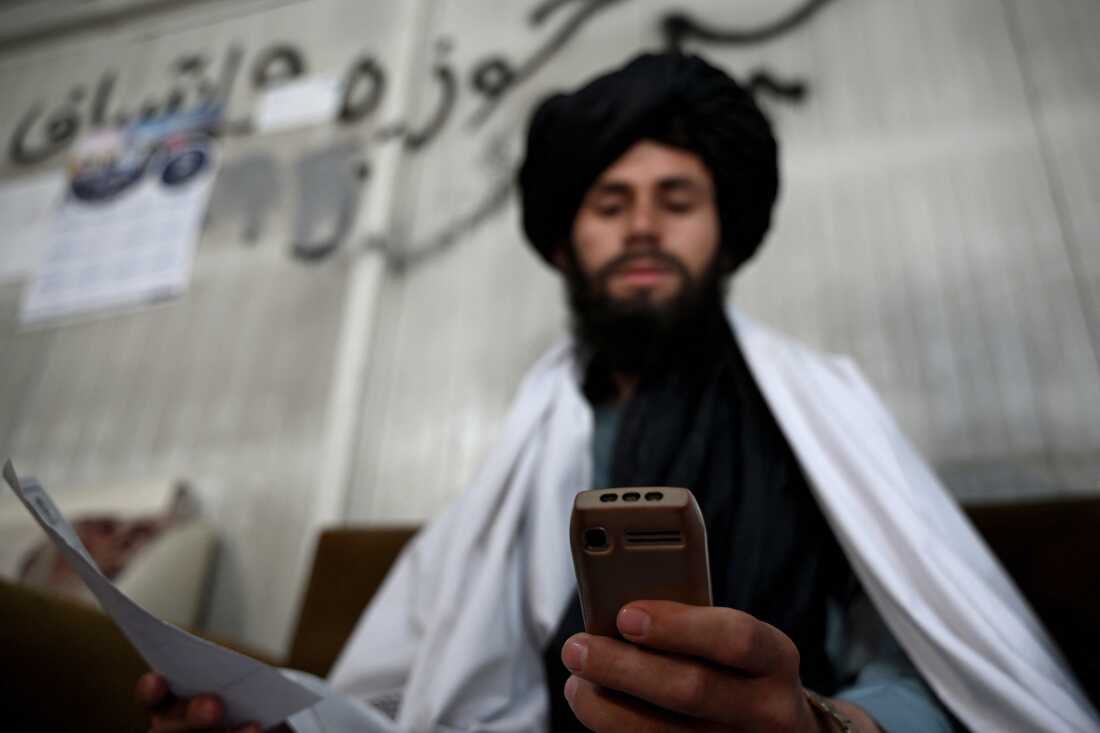
The use of phones known as ‘feature phones’ is permitted – these have calling and texting options but no touch screen and no photo or recording capabilities.
The ban does not yet apply to private phone ownership by ordinary Afghan citizens. But in some provinces, the restrictions have already extended beyond government offices to hospitals, schools and universities, raising fears that the policy could become an early test for broader limits on public smartphone use.
The restrictions began as a verbal order from Taliban supreme leader Hibatullah Akhundzada and were later formalised in a military court directive circulated to court chiefs, police commanders and intelligence chiefs in the country’s eight administrative regions. The directive states that anyone caught using a smartphone will have the device dismantled and will face “legal and Sharia punishment.” Exemption requires a written decree from Akhundzada himself. A separate court order applies to “all officials of the military and civilian institutions, including judges.”
The Taliban also created surveillance lists recording names, positions, workplaces, mobile carriers and phone numbers of employees. Security officials have instructed members to destroy their smartphones and submit evidence on a specified form.
A government employee in Herat, who requested that NPR not use her name out of fear of retaliation by the Taliban, says the phone ban had been quietly in place in her office for months before the June order took effect nationally. When he and his colleagues protested, officials confiscated and broke their phones, he said.
A possible trigger for the ban
The timing of the order came after protests in Herat in early June, when Taliban forces arrested women and girls on charges of “improper hijab,” which means failing to meet the dress code of covering the face and body in the prescribed manner and not wearing makeup. Witnesses said Taliban forces fired on the protesters, killing at least one person. Video of the shooting spread online even before the Taliban could control it.
The Taliban administration did not respond to a request for comment.
Taliban employees relied on smartphones. Since the ban was announced, they have been using feature phones – also known as “dumb phones” – that do not have screens and are designed for calls and texts. This Taliban administrator is using such phones in the Department of Information and Culture building in Kandahar.
The restrictions reach deep into education, where phones are not only a means of communication but also part of how students study, save lessons, contact teachers and stay connected with their families.
In Kandahar province, an 18-year-old madrasa student named Baryalai, who requested anonymity due to fears of Taliban reprisals, said his school has completely transformed. “Now there is a complete ban,” he said. “Nobody brings a smartphone anymore.”
Omar Istanikzai, 30, a teacher at the same school, said he had left his phone at home that morning without telling him. He said, “I think it is a good decision because it allows students to focus more on their studies.”
Others see the policy very differently.
How are schools responding?
At Kabul University, the leadership council ordered a complete smartphone ban for professors, staff and students from June 21. The decision was announced at an Academic Council meeting, where members were not allowed to ask questions. At Herat University, notices posted at the entrance warn that no one can enter with smartphones, and the ban extends to student dormitories, where Wi-Fi service has also been suspended. In Baghlan province, students carrying smartphones have been turned away from the university gate.
A student at Kabul University said the restrictions have also made it difficult for pupils to stay in touch with their families during the emergency. He requested that his name not be used because he has been targeted by the Taliban in the past and he fears retaliation if they can identify him and he speaks out. His family lives in Badakhshan province, he said, and after a security incident involving students on July 4, his mother was nervous because she could not easily reach them.
“She was distressed,” he said. “If something happens, our families need to know if we are safe. Without our phones, we are cut off from them.”
For many students, the phone is a classroom and a library. They use it to take pictures of texts written on the board, receive assignments, download books, search educational materials, use dictionaries, and contact instructors outside of the classroom. For girls and women barred from secondary school and university, this may be one of the last ways to continue studying privately.
In Kandahar, the provincial education department said its own ban on students and teachers was rooted in a “Sharia perspective” and warned that smartphones threatened “the destruction of future generations.” The Taliban’s higher education minister has called smartphones “one of the three main enemies of Muslims” and last October restricted their use on university campuses to only the most senior administrators.
what can be lost
However, for many Afghans, the phone is not destroying their future. This may be one of the few devices they still have for protection.
This is especially true in healthcare, where distance, poverty and Taliban restrictions already make treatment difficult. Afghanistan’s health system is under severe strain, with many hospitals and clinics facing shortages of staff, medicines and funding. Patients in rural provinces often travel for hours to receive treatment, sometimes across several districts or provinces. The barriers are even greater for women. Taliban restrictions on movement, education and employment have limited women’s access to care and jeopardised the future pipeline of female doctors, nurses and midwives.
In that environment, a phone can connect patients with help. A pregnant woman may call relatives to arrange transportation. A mother may ask the midwife if her newborn baby needs immediate care. The patient can send a photo of the injury before deciding whether to make the expensive trip to the hospital. A healthcare worker can consult colleagues through messaging apps.
For Farzana, those messages are part of everyday work. They help him decide when a situation cannot wait.
“Due to the restrictions, it has become difficult to take care of every woman in every village,” he said.
Faridoun Farzad, 29, grew up in a village in the Malistan district of Ghazni province, where access to a doctor was never straightforward. Now doing a PhD in artificial intelligence, they have developed a system that analyses smartphone photos of wounds for signs of infection – redness, discolouration and changes in tissue – that can help flag when a patient needs medical care.
The project won a special prize at Moscow’s Archimedes Innovation Exhibition this year. It is still in the research phase and will require larger datasets and clinical validation before widespread use, Farzad said.
“Mobile phones are widely available, affordable and easy to use,” he said. “In many areas, particularly rural communities, people may not have quick access to specialists, but they often have access to smartphones. A mobile-based tool can provide initial guidance and encourage patients to consult health care professionals sooner.”
Farzad’s project is not ready for widespread use. But it shows what mobile technology can make possible in a country where access to medical care is already fragile.
Esmat Khan Amiri, 26, from Daykundi province, used her phone for a different kind of health action. When his father was repeatedly brought to the operating room of a hospital in Kandahar and turned away without surgery, Amiri posted a video describing the ordeal.
“I didn’t have electricity, money or a connection, but I had a phone,” he said. “I wanted people to know what was happening.”
The video spread on social media and Amiri said that the hospital ultimately had to operate on her father due to the resulting pressure.
To call
“Smartphones are not just a means of entertainment or communication,” Amiri said. “It can be a voice for those who are ignored, silenced or discriminated against.”
Since the Taliban returned to power in 2021, phone footage has repeatedly captured images the government cannot control: protests, arrests, public punishments and complaints from inside hospitals. The same tools that help families seek medical advice can also uncover abuse.
This visibility is part of what makes smartphones a threat to the Taliban. They allow information to move beyond official control – from a village, a classroom or a hospital ward to the wider public.
For Afghans who have few other ways to seek help, it matters. A phone can connect a mother to a babysitter, a student to a lesson, a patient to a doctor, or a family to an audience when institutions ignore them.
Now, as the Taliban moves to ban smartphones, the country’s most popular device has become one of its most controversial.
Fatima Faizi is a journalist based in New York. He previously reported for the New York Times in Afghanistan, and his work focuses on the impact of the Taliban regime on human rights, women, education, and daily life.
England take on Norway in the quarter-finals of the 2026 World Cup on Saturday and bettors can back the Three Lions at 40/1 to qualify for the next round via the latest Paddy Power World Cup offer.
Paddy Power has raised the price for England to qualify from a tie in Miami either way – normal time win, extra time win, or penalty shootout glory, with punters receiving the majority of their winnings as World Cup free bets if Thomas Tuchel’s men reach the World Cup semi-finals.
Paddy Power World Cup Free Bets: 40/1 for England to qualify against Norway
Last time out against him, England ignored the disadvantages of altitude and home comfort and sent a man down to beat Mexico 3-2 in the Azteca.
Next up is a meeting against a Norwegian side who shocked the competition by beating Brazil 2-1 in their round of 16 encounter, with both goals scored by Erling Holland.
New customers can claim the Paddy Power Free Bet offer by signing up using one of the links on this page and entering promo code YFBDHY during registration. –
After completing the registration process and making an initial deposit of £5 or more via an accepted payment method, punters must place a maximum of £1 on England to qualify for the Norway vs England market at standard World Cup odds.
If England progress to the semi-finals, the £1 bet is settled in cash at the normal price, with the additional winnings paid as a free bet, for a total payout of up to 50/1 to bettors.
Free Bet Builder Tokens are credited after a qualifying bet has been placed and are valid for 30 days, meaning they can be used at a later World Cup.
How to claim Paddy Power Welcome Offer
Click on one of the PaddyPower links on their website to register an account.
Be sure to enter promo code YFBDHY during signup.
After confirming your ID, deposit at least £5 using a debit card, Apple Pay or Pay by Bank.
Bet up to £1 on England to qualify in the Norway v England market before kick-off on Saturday 11th July at 10pm.
If the bet wins, the winnings are paid out at normal value and a top-up of up to 50/1 is collected in free bet builder tokens.
Key terms of the Paddy Power offer
The offer applies only to new customers who must be over 18 years of age and resident in the UK and Republic of Ireland.
Promo code YFBDHY is required at time of registration.
A maximum qualifying stake of £1 on England is required to qualify in the Norway vs England market.
Deposit a minimum of £5 via debit card, Apple Pay or Pay by Bank. Deposits made via PayPal, Skrill, Paysafe and Neteller are not eligible for the offer.
Cash Out, Partial Cash Out and Power Prize Bets do not count towards the promotion – using a Cash Out on a qualifying bet also voids eligibility.
Cash wins are paid out at normal odds on £1 stakes.
Additional winnings are credited as free bet builder tokens for a total payout of 50/1, valid for 30 days.
The best odds guarantee does not apply to bets placed with a free bet or a partial free bet.
Most World Cup betting sites make England the odds-on favourite to reach the final four in 90 minutes. At the time of writing, Paddy Power lists England as 17/20 favourites to win, with the odds falling to 2/5 for England to qualify either way.
Paddy Power World Cup Football Presentation
Bettors can enjoy a free bet builder bet for every England game in the tournament. The value of the free bet will vary per customer, from £0.50 to £50, and qualifying bettors must have at least three legs and minimum odds of 2/1.
PowerPrices are a selection of enhanced PaddyPower World Cup odds on markets for a game or matchday, available through the PaddyPower site and app.
Paddy Power is having money-back specials or bet-and-get offers during the World Cup. A special money-back feature is when betting sites refund the bettor’s stake if the bet does not win, while Bet & Win gives punters a free bet to use.
2UP can be an enormous help, especially with multiples and accumulators. If the team you have backed goes two goals ahead at any point in the match, your bet is paid out immediately, regardless of the final result.
Paddy Power’s Super Sub promotion will also continue during the World Cup. The offer allows customers to bet on a player in a match (first goal scorer, card, shot on target, etc.) and if they are substituted, any unsettled bets carry over to their substitute.
Of course, Paddy Power’s ongoing loyalty promotion, Paddy’s Rewards Club, will continue throughout the tournament. Opt in and place at least five £5 bets a week to claim a free bet.
Alternative World Cup betting offers
Paddy Power is likely to prove popular with football bettors due to its range of World Cup offerings, but there is plenty of choice available for those seeking an alternative.
Here’s what’s available at rival online bookmakers, while bettors keen to keep up to date with the latest World Cup betting offers and odds can visit our Tournament Hub.
Bookmaker
World Cup Promotions
Ladbrokes World Cup offer
Bet £5, get £30 in free bets. Refunds on losing collectors, England promotes the World Cup.
Betway World Cup Presentation
Bet £10, get £40 in free bets. Free Bets Club Free-to-play prediction games
Sky Bet World Cup Presentation
Bet £5, get £30 in free bets. Free £1 bet on every England game: Acca Freeze Sky Bet Club
Coral World Cup presentation
Bet £5, get £30 in free bets. Daily Bonus from Rewards Shaker Money back to losing bettors
Betfred World Cup offer
Bet £10, get £50 in free bets. Bet £10, get £10 in free bets for England. £5 Free Bet Refund on Losing WC Bet Builders
Tout the World Cup offer.
Bet £10, get £40 in free bets. Money back for losing WC bet builders. Penalty shootout insurance for outright wage earners
Bet365 World Cup offer
Bet £10, get £30 in free bets. Super promotion All on, let’s go
William Hill World Cup Presentation
Bet £10, get £30 in free bets. Epic promotion Effect Sub
Betfair World Cup offer
Bet £10, get £30 in free bets. 90-minute guarantee
BetMGM World Cup betting offer
Bet £10, get £40 in free bets. A free bet from a golden spin increases the odds.
Spreadex World Cup Presentation
Bet £10, get £60 in free bets. Refer a friend.
BOYLE SPORTS WORLD CUP BETTING OFFER
Bet £10, get £40 in free bets. Acca Rewards
We aim to offer every online gambler and reader of The Standard a safe and fair platform through unbiased reviews and offers from the UK’s best online gambling companies.
Gambling can be addictive; always play responsibly and only bet what you can afford to lose. Gambling sites have several tools to help you stay in control, including deposit limits and timeouts. Advice and help are available to you now if you think you have a problem. BeGambleAware or Game Care.
Any offers or odds listed in this article are correct at the time of publication but are subject to change. Terms and conditions apply to all offers.
Whenever it’s time to refresh my capsule wardrobe with new seasonal staples or pick up a few last-minute things before a trip, I turn to Old Navy. offering online shoppers deals all across the site for up to 70% off without the need for a promo code. The classic American fashion brand has been designing affordable clothing for the whole family for over 30 years.
There’s a reason Old Navy is a go-to for me and shoppers across the country for everyday clothing, shoes, and handbags. The brand is nothing if not reliable—the styles are on-trend, the colourways and sizes available are plentiful, and the prices are difficult to beat. I’ve been buying a fresh pair of Old Navy flip-flops every summer for more than two decades—with no plans of stopping.
Whether you need a breathable sundress for a tropical vacation or a matching travel set to wear on the plane, Old Navy has you covered with hundreds of cute and comfy options that won’t break the bank. And to help you save some cash on your next purchase, I’ve rounded up all the best Old Navy discounts and promo codes on offer right now. Start shopping and thank me later!
Get up to 70% off in the Old Navy summer sale
Old Navy’s summer sale is in full swing, offering online shoppers deals all across the site for up to 70% off without the need for a promo code. From everyday dresses and linen shorts to tank tops and tees, Old Navy’s sale section is your one-stop shop for summer essentials.
My favourite oversized button-down is even marked down to 30% off right now. I practically lived in this thing on a recent beach trip to Kiawah Island, South Carolina, when the weather was a bit windier than expected. Scroll through the sale section to find deals on clothing for women, men, and kids. Even better, some sale items are eligible for an additional discount at checkout.
Sign up for Old Navy emails or texts and get a $10 discount
Here’s a quick way to save some money on your next purchase: Sign up for Old Navy’s email list and instantly receive a $10 signup discount. These emails will keep you updated on the latest sales and Old Navy promo codes so you never miss out.
Head to Old Navy’s website to sign up for emails and unlock your exclusive discount. The $10 off promo code can be used sitewide, whether you’re shopping for new tops, dresses, or sandals.
Become an Encore credit card member and get an Old Navy promo code for 30% off
If you already love Old Navy, consider becoming part of its membership programme—this way, you’ll be rewarded every time you shop. There are a few different tiers in the program that determine your status. Core is free to join, and you earn five points for every $1 spent. The Premier tier is for shoppers who spend at least $350 annually; they’ll earn five points for every $1 spent and gain access to an extended return window.
For the ultimate Old Navy loyalists, there’s the All-Access tier, where members earn 25 points per $1 spent, an extended return window, free shipping on orders of $35 or more, and even more perks. To be a part of the All-Access tier, though, you must have an Encore card. After your application is approved, members will receive a 30% off promo code to save on their next purchase.
Free shipping for Rewards members at Old Navy
There’s nothing worse when you’re online shopping than getting smacked with hefty shipping fees. Old Navy offers free shipping on all orders of $50 or more to all Rewards members, even if you’re a part of the Core tier, which is free to join.
To maximise your savings, combine this free shipping perk with another active Old Navy discount code. With so many stylish summer essentials available at Old Navy right now, reaching the $50 minimum needed to unlock free shipping will be easy.
Russian ultra-fast ballistic missiles continued to create havoc in Ukrainian cities, combining with drones and guided bombs to kill at least six people in the latest attacks, prompting Ukrainian President Volodymyr Zelenskyy to urge Western allies to speed up the delivery of air defence weaponry.
“Civilian infrastructure was hit even before the air raid alert was issued,” Zelensky said on Telegram, adding that Russia launched more than 120 drones and 12 missiles overnight on July 11.
“Our defenders managed to shoot down most of the targets, but not the ballistics.”
“Residential buildings, offices, and a theological seminary were damaged in the capital,” he added, while posting videos of emergency teams working in the rubble of buildings struck in the attacks.
Kyiv Mayor Vitali Klitschko said at least 12 people, including children aged 10-11, were injured in the capital, while AFP journalists in the city reported hearing multiple explosions in the early morning hours, with an air alert siren sounding minutes after the first blast.
Patriot Licences Promised
Zelenskyy repeated his call for Western allies to send additional military aid and urged Washington to follow through on its vow to make licenses available for Ukraine to produce Patriot defence systems.
Zelenskyy, on July 9, said Kyiv and Washington had reached an agreement on licences for the production of PAC-3 Patriot interceptors, adding that parts for the missiles were expected to arrive in the next few days.
“We’ll give them the right to make Patriots,” US President Donald Trump said, sitting alongside Zelenskyy on the sidelines of a NATO summit in Turkey.
“We’re going to be giving you a licence to make Patriots,” he said. This way, you can’t complain we’re giving them too much. I’ll say: ‘Well, make them yourself.’”
The US-designed Patriot’s PAC-3 interceptor is one of the few Western weapons capable of shooting down the ballistic missiles Russia has been firing at Ukrainian cities.
US Army handout photo shows an artilleryman conducts maintenance on an MIM-104 Patriot missile system.
Zelenskyy also said talks were proceeding with Washington on a “drone deal” and possible joint production.
In his nightly video address, Zelenskyy said, “Agreements reached by national leaders must be implemented much more quickly and completely,” without being specific.
Kyiv has regularly been the target of attacks involving waves of Russian drones and cruise and ballistic missiles. On July 2, an attack killed more than 30 people, one of the deadliest strikes since the start of the full-scale invasion in February 2022.
Only 30 Per Cent Interception Rate
The London-based Centre for Information Resilience estimated that it intercepted 80-90 per cent of Russian long-range drones and cruise missiles fired at it.
However, it said that of the 522 Russian ballistic missiles fired this year at Ukraine, only 30 per cent were intercepted.
Russia’s ground-launched Iskander-M ballistic missile — with a range of about 500 kilometers — can travel at speeds up to Mach 7, allowing it to reach targets within minutes. Reuters quoted experts as saying Russia is producing at least 700-800 Iskander and Kinzhal hypersonic air-launched ballistic missiles a year.
Russian forces have been firing missiles and drones into Kyiv almost daily since it launched its full-scale invasion in February 2022.
Moscow denies that it targets residential sites despite widespread evidence of such attacks.
Elsewhere on July 11, Sumy Mayor Artem Kobzar said a guided bomb killed four people, including a young girl, while a separate missile strike on the southern city of Odesa killed two others, regional Governor Oleg Kiper said.
The attacks come as Ukraine has intensified its own campaign of devastating strikes deep inside Russia on energy assets, exacerbating widening fuel shortages inside the country.
Kyiv also continued to strike Russian “shadow fleet” tankers in the Sea of Azov.
Ukraine said it struck 21 tankers overnight on July 10-11 and has hit numerous others recently in a bid to disrupt fuel supplies to Russian forces fighting in Ukraine.
Make sure our latest headlines always appear at the top of your Google searches by adding us as a favourite source. Click here to activate. Or add us as your preferred source to your Google Search settings.
A bipartisan group of US senators said they had reached an agreement with the Trump administration to advance long-delayed legislation aimed at imposing tougher economic penalties on Russia and countries that continue to support Moscow’s war economy.
The breakthrough, announced on July 10 as Republican Senator Lindsey Graham visited Kyiv for talks with Ukrainian President Volodymyr Zelenskyy, could give President Donald Trump a powerful new tool to pressure Kremlin leader Vladimir Putin as Washington seeks an end to Russia’s war, now in its fifth year.
Graham said the agreement with the White House clears the way for the bill to move forward, arguing that the legislation would allow the United States to punish countries helping Russia evade Western sanctions while creating leverage for negotiations.
“We’ve reached an agreement with the White House on a version of the Russian sanctions bill that they will support. It means it’s going to become law,” Graham told reporters in Kyiv after concluding his 10th wartime visit to Ukraine.
The legislation, known as the Sanctioning Russia Act, has been under negotiation for months by Graham and Democratic Senator Richard Blumenthal of Connecticut, along with Democrat Jeanne Shaheen of New Hampshire and Republican Roger Wicker of Mississippi.
In a joint statement, the four senators said they expected to release the updated legislation soon, describing the agreement as a major step toward strengthening pressure on Moscow.
“As Russia intensifies its slaughter of civilians, it is imperative that the legislative and executive branches work together to create tools to exact a heavy price on those who buy Russian oil and natural gas, fuelling the Putin war machine,” they said.
Targeting Russia’s Sanctions Escape Routes
At the heart of the bill is an effort to close what US lawmakers describe as a major weakness in the existing sanctions regime: Russia’s ability to continue earning billions of dollars from energy exports through third countries.
While many Western nations have restricted direct purchases of Russian oil and other commodities, Moscow has redirected exports through intermediaries, particularly major buyers in Asia.
Graham said the revised legislation would target countries that continue purchasing discounted Russian oil and then helping Moscow maintain revenue streams that support its military campaign.
The senator said the bill specifically focuses on five countries that have been circumventing sanctions by purchasing Russian energy for resale.
“This bill has 85 co-sponsors,” Graham said, referring to the bipartisan support it has attracted in the Senate.
“We’ve been working with the administration, with Senator Blumenthal and Senator Shaheen, to make sure it was acceptable to the administration and written in a way they could support.”
The original version of the legislation introduced in 2025 included provisions allowing the president to impose sweeping tariffs, including a proposed 500 per cent tariff on countries purchasing Russian-origin petroleum and uranium, as well as a similar tariff on remaining Russian imports into the United States.
It remains unclear what changes were made to the legislation during negotiations with the White House.
Graham said the goal was not only to punish Russia’s supporters but also to encourage countries to move away from Russian energy supplies.
“I’ve never been more optimistic than I am today,” Graham said. “We have the formula to end this war. Help Ukraine be more lethal. Let those supporting Russia know that they will pay a price if they keep doing it. And try to find an off-ramp, not to humiliate Putin, but to end this war so that Ukraine will thrive and survive.”
From Tensions To Cooperation
The renewed sanctions push comes as relations between Trump and Zelenskyy appear to have shifted significantly after months of uncertainty.
The two leaders met earlier this week on the sidelines of the NATO summit in Ankara, where they discussed military cooperation and efforts to end the war.
The meeting represented a sharp contrast to their confrontation in the Oval Office in February 2025, when Trump criticised Zelenskyy and accused him of failing to show sufficient gratitude for US support.
Ukraine’s President Volodymyr Zelensky (left) meets with US President Donald Trump on the sidelines of the NATO Summit in Ankara on July 8.
Speaking alongside Zelenskyy in Ankara, Trump said the relationship between the two leaders had improved dramatically.
“We’ve actually developed a good relationship,” Trump said. “It’s difficult to believe, right? From the Oval Office to now, I think we’ve developed an excellent relationship.”
During the meeting, Trump gave Kyiv political support for two long-sought initiatives: allowing Ukraine to co-produce Patriot missile interceptors and moving forward with a bilateral drone agreement.
Senior US officials told RFE/RL on July 10 that Trump has expressed support for the updated sanctions legislation, though the White House has not publicly released details of the agreement.
The shift marks a notable change after Senate Majority Leader John Thune of South Dakota previously delayed movement on the bill to give Trump room to pursue diplomatic talks with Putin.
The sanctions effort had also faced resistance in Congress. A previous attempt to advance the bill in December stalled after Democrats raised concerns about granting the president broad tariff authority while a related Supreme Court case was pending.
The legislation gained renewed momentum after frustration grew over Moscow’s refusal to halt its offensive and after earlier peace proposals faced criticism from some lawmakers who argued they offered excessive concessions to Russia.
Kyiv Welcomes New Pressure On Moscow
Ukrainian officials welcomed the congressional breakthrough, arguing that economic pressure on Russia is essential to weakening Moscow’s ability to sustain the war.
Vladyslav Vlasiuk, Zelenskyy’s commissioner for sanctions policy, told RFE/RL on July 10 that Russia’s energy revenues remain one of the main pillars supporting its military operations.
“Russia has earned roughly $58 billion from oil and petroleum product exports to China and India in the first half of this year alone,” Vlasiuk said.
“Those revenues are financing Russia’s war against Ukraine, paying for missiles, drones, and continued aggression. If the Kremlin loses these oil revenues, it will have a much stronger incentive to negotiate, and this bill is clearly aimed at achieving that.
After meeting with Graham in Kyiv, Zelenskyy said battlefield strength and economic pressure must work together to bring about a diplomatic solution.
“The stronger Ukraine is on the battlefield, the greater the chances that diplomacy will ultimately succeed,” Zelenskyy wrote on social media.
He also called for the rapid implementation of agreements reached with Trump on Patriot missile production and other defence cooperation.
‘Important Signal’ To Moscow
US-based advocacy groups that have pushed for tougher sanctions against Russia said the agreement between Congress and the White House sends a warning to Moscow that sanctions evasion will become increasingly costly.
Daniel Balson, advocacy director for the nonprofit Razom for Ukraine, told RFE/RL that the legislation would make it harder for Russia to sustain its military campaign through global energy sales.
“This welcome announcement sends an important signal to the Kremlin: No amount of creative financial shenanigans will allow it to fund its illegal war in perpetuity,” Balson said.
“Ukraine has changed the situation on the battlefield. Now Ukraine’s partners are increasing economic pressure. We urge the Senate to move quickly and pass this important legislation.”
Balson said supporters of Ukraine believe the combination of military assistance and economic pressure could force Moscow to reconsider its strategy.
“Russia is going to lose this war,” he said. “The Ukrainian people know it. America’s allies know it. President Trump knows it. And the United States Congress knows it. It’s time Vladimir Putin figured it out and brought what’s left of his occupying army home.”
The next test for the legislation will come in Congress, where lawmakers must finalise the text and determine how quickly the measure can move toward a vote.
Make sure our latest headlines always appear at the top of your Google searches by making us a favourite source. Click here to activate. Or add us as your preferred source to your Google Search settings.
No wonder Spain boss Luis de la Fuente can’t resist keeping Mikel Marino on the bench.
Now two World Cup knockout games are deadlocked, with two World Cup knockout games won by the Arsenal midfielder’s left boot. On Monday, it was against Portugal in Dallas; here in the California sun, he was the quickest to anticipate a mistake by the Belgian goalkeeper. Firing the ball into the roof of the net two minutes from time, he sent his country into a thrilling semi-final clash with European heavyweights France on Tuesday.
But it was not meant to be for this brave Belgian team. A cruel turn of the tide came 20 minutes from the end when Thibaut Courtois, one of the world’s finest goalkeepers, was ruled out after sustaining a thigh injury. A very capable No. 2 in Man Utd’s Senne Lammens replaced him but it was his fault, his failure to keep up with Pau Cubarsi’s long-range efforts and his inexplicable spilling of the football into Merino’s path, that would be the lasting image of their World Cup campaign.
And so the European champions, Spain, move on. It was far from convincing and Belgium will rue a few half-decent openings in the second half. But almost 16 years after the 2010 generation dominated the world stage in South Africa, this 2026 squad took another step closer to their country’s second victory. Now it will be Kylian Mbappe and the unbeaten French attack over four days at the air-conditioned Dallas Stadium. Some match, that.
Sean Lemons threw straight into the path of Mikel Merino in the 88th minute. (Getty)
Spain’s incredible run now extends to 36 consecutive matches unbeaten in competitive matches. Although he broke his clean sheet record by conceding for the first time in 650 World Cup minutes, the main goal of the summer remains unchanged. The 70,000-strong crowd in Los Angeles, dominated by Spain supporters, applauded the team, and they would be satisfied with their progress, even if their position here were precarious for a period.
The two had not played for a decade, while Spain went 11 games unbeaten against their European rivals, dating back to a World Cup quarter-final shootout defeat in the Mexican city of Puebla 40 years ago. With the match starting at noon, under similar conditions in Inglewood, could the underdog story repeat itself here?
The weight of history perhaps explains why Belgium boss Rudy Garcia drafted back his big guns, Jeremy Duko and Kevin De Bruyne, after they were surprisingly forgotten from the starting line-up that torpedoed the USA in the final round. However, just 12 minutes before kick-off, captain Yuri Thiel suffered a hamstring injury in the men’s warm-up, dealing them a hammer blow.
In a baking-hot first quarter, Belgium more than held its own, reflecting the way sports are integrated at this World Cup. Doku, whose headlines so far at the tournament have been for his farcical story about going home to birth his baby, looked a constant threat on the break, aided by a couple of defenders at a time, while Lamin Yamal, the first of several visitors, flew over comfortably, cutting in on his left foot at 20 minutes. But losing focus against this Spain team is a mistake you will regret. Half an hour later, the Red Devils fell behind – and they remained behind.
Pedro Porro exchanged a quickfire one-two with Yamel before finding Dani Olmo in the box. His shot was saved by Courtois, but the Belgian No. 1 could only pass it to Fabian Ruiz, who was deputising for Padre in midfield, before Ruiz tapped it home. The Paris Saint-Germain midfielder had not lost any of the 48 games he had played in Spain. It seemed that La Roja were well on their way.
Fabian Ruiz gave Spain the lead in the 30th minute (Getty)
Yamal dazzled for the next 10, got away from Belgium left-back Maxime de Kuper, and went close with a free-kick, which Courtois again palmed away. But then, four minutes before the break, Spain did something they had never done before: they conceded a goal.
The goalscorer was Charles de Catellier; the crosser was Timothée Castagne, but the chief architect, inevitably, was De Bruyne. The stand-in captain first slotted the neatest pass up the pitch to Belgian right-back Castagan. His near-post cross found Belgian marksman De Catellier, who got across the Cubbers and, like all-time top scorer Romelu Lukaku, slotted beautifully past Antoine Simeone.
For the Spain keeper, it was his first goal in 650 minutes of the World Cup. The impeachable rearguard is no more.
Charles de Catellier scored for Belgium just before half-time. (Getty)Merino celebrated his second late win in two games (Getty)
After the break, it was nip and tuck. De Kuper should have done better in the box after a powerful shot into the side netting, while Yamal, who was generally wasteful, fired a shot just wide of the post. Spain certainly didn’t have it all their own way and, on 55 minutes, coach Luis de la Fuente had seen enough, bringing on Ferran Torres and Pedri in a bold double substitution. As the second period wore on and Lukaku came on, Belgium looked a real threat on the counter-attack, with a cross deflected off Rodri’s hands. No penalty was given.
Then, turn. Courtois went down clutching his left thigh and cried when he realised his race was on, as Lemmons stepped into the spotlight. A cramping De Bruyne then opened with Simeone 40 yards out, but Rodri – as he often does for club and country – parried the goal-bound strike.
But the Belgians were falling deeper and deeper as extra time beckoned. So much so that Cubarsi went unchallenged when he shot at goal and Lemmens inexplicably let the ball slip from his grasp. And it was Merino, the man again after a stoppage-time winner against Portugal, who roared home to send Spain into Tuesday’s date with Texas alongside their French neighbours.
Make sure our latest headlines always appear at the top of your Google searches by adding us as a favourite source. Click here to activate. Or add us as your preferred source to your Google Search settings.
Manchester City have completed the signing of Jeremy Monga from Leicester City.
The winger, who turns 17 on Friday, has signed a five-year contract until the summer of 2031 and will join for a fee of £10m plus add-ons. Sky Sports News understands
Monga is the third-youngest player to play in the Premier League and Leicester’s second-youngest, having made his top-flight debut against Newcastle United in April 2025 aged just 15 years and 271 days.
The England Under-19 international played 30 times in all competitions for Leicester in 2025/26, scoring one goal and providing two assists. In total he made 37 senior appearances for the Foxes, including seven in the Premier League.
“When I found out Manchester City were interested, I immediately knew it was the right choice for me,” Monga told City’s website.
Image: The England Under-19 international made 30 appearances for Leicester in all competitions in 2025/26.
“For any young footballer, it’s a dream to be part of this great club. It’s been the best club in England for the last 10 years. And they’ve also provided opportunities to academy players like Phil Foden and Nico O’Reilly, which shows there’s a way forward.
“It’s an honour to be here, and I’m delighted to be a part of it.”
Monga becomes the third English player to join new head coach Enzo Maresca’s squad this summer following the goalkeeper’s arrival. Pierce Charles and a £116m record signing, Elliot Anderson.
‘We think he will only continue to improve.’
Meanwhile, City director of football Hugo Viana added: “Jeremy is an exciting player who has already made great strides in his young career.
We were already very aware of him as a club and have seen his potential firsthand since his time at Leicester. At 17, we think he is only going to improve and this is the right next step in his career.
“We look forward to supporting him every step of the way on his journey.”
5 Youngest Premier League Players
Ethan Nwaneri (Arsenal) – 15 years, 181 days old
Max Domin (Arsenal) – 15 years, 235 days old
Jeremy Monga (Leicester City) – 15 years, 271 days
Harvey Elliott (Fulham) – Aged 16 years, 30 days
Matthew Briggs (Fulham) – Aged 16 years, 68 days
He was wanted by Arsenal but is now at Man City – just how good is he?
He turns 17 this summer but has already been part of a transfer saga involving two of England’s best clubs.
Jeremy Monga: They looked ready to go.weapons.He was keen to join after talks with the Gunners.
But such transfers reflect the fast-paced nature of the market. Manchester City, in the 11th hour, entered to sign him for £10m plus add-ons – a valuation Arsenal were unwilling to pay.
It’s a hefty fee for such a young man, but Monga’s potential is just as significant. Ever since he made his Premier League debut last year at the age of 15 years and 271 days, clubs have been watching him.
He was so young on his Premier League debut that he was not legally allowed to have Leicester’s front-of-the-shirt batting sponsor on his jersey.
Monga’s young age puts him in elite company. He is the third-youngest Premier League player of all time behind Arsenal duo Ethan Nwaneri and Max Domin. No wonder the Gunners were keen on him.
Even after a season with Leicester’s first team in the Championship, which ended in relegation, the best teams in the land have seen enough to recognise Monga’s talent.