

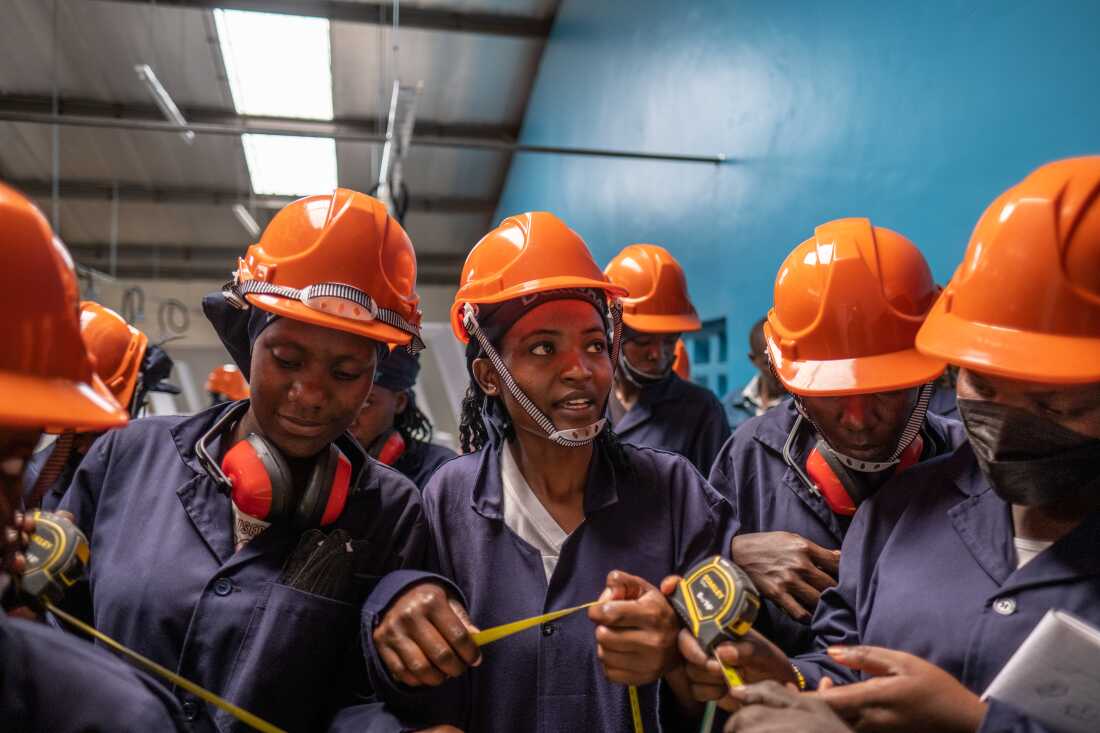

Students take part in a tiling class at the Buildher training facility in Nairobi, Kenya.
On the busy workshop floor at Furniture International on the outskirts of Nairobi, women often have to shout to be heard over the din of circular saws, hammers and machinery. “At first, I was very shy,” says 24-year-old machine operator Diana Ojiambo — slight, with a blue bandana tied over long braids — as she feeds cabinet panels through a PVC edger. “I didn’t know how to stand in front of people and speak up. But now I can.”
Nearby, amid a sea of male coworkers, three other women sand and assemble cabinetry, while 23-year-old supervisor Jane Mwangi moves between stations, checking measurements and overseeing progress. Barely a year ago, none of these women had ever worked in the industry. Ojiambo had never worked alongside men before.
Women remain a rarity across Kenya’s building trades, even as a frenetic construction boom, particularly in Nairobi, has helped turn the sector into a multi-billion-dollar industry. According to figures from Kenya’s National Construction Authority, women accounted for just 3% of the country’s accredited construction artisans.
Those who do enter the sector are mostly confined to lower-paid informal jobs — carrying water, hauling sand or cleaning sites — rather than being trained for more specialised roles. Women are also typically saddled with the vast majority of unpaid caregiving and household work in a country that continues to battle long-held assumptions about gender roles.
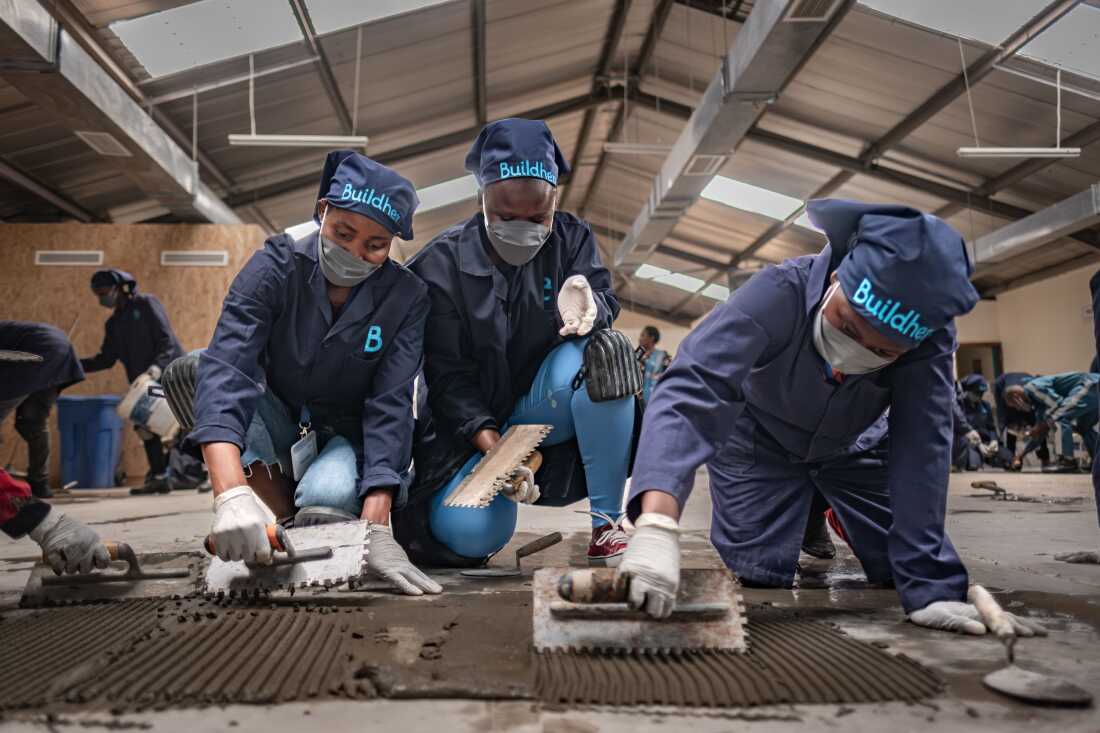
Women take part in year-long training and internship programmes in tiling (above), carpentry, painting and other finishing trades.
Buildher, a Nairobi-based nonprofit, is trying to change that. The organisation runs year-long training and internship programmes in carpentry, tiling, painting and other finishing trades, helping women access steadier, better-paid work in the sector. Since its inception in 2019, Buildher says it has trained more than 1,000 women, with graduates increasing their average daily earnings roughly five- to sixfold within a year of training — from about $1.50 to between $11 and $12.
A 2024 study by Dalberg, a global development advisory firm, found that around 65% of Buildher graduates were still working in construction 12 months after completing the programme.
“I had seen women get stuck in low-paying jobs, and it was like a mental barrier where they couldn’t see the potential right in front of them,” says architect and Buildher cofounder Tatu Gatere. “So I wanted to help women see that.”
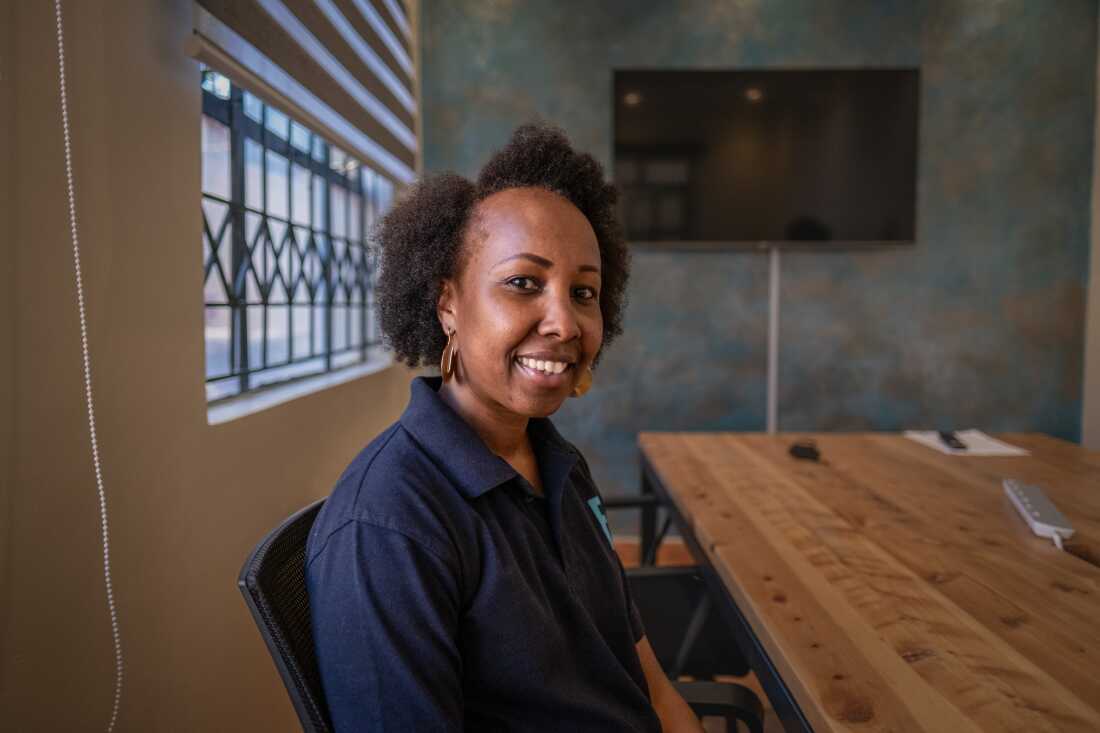
Buildher’s founder, Tatu Gatere, wants to give women the skills and confidence they need to enter and advance in the construction field.
For many women, Gatere says, simply hearing about others succeeding in the trades can make the idea feel possible. As a result, much of Buildher’s growth has spread through word of mouth, as graduates encourage friends and neighbours to apply.
Ojiambo, a single mother of two young children, was unemployed and having difficulty supporting her family when she first heard about Buildher from a friend in the informal settlement of Kibera, where she lives. “My life was so challenging,” she says. “But now I can support myself; I can support my kids.”
Ojiambo is already looking to the future. Within the next year, she hopes to start her carpentry business in Kibera. “Inside this company, some of the men still think we ladies are not fit for this kind of work,” she says, gesturing toward some of her coworkers.
“But if you know what you want and believe in yourself, you show them that whatever they can do, you can do better.”

Diana Ojiambi, 24, at her workplace in the Furniture International factory in Nairobi, Kenya. She is one of several former Buildher students who have found work with the company.
Sticking to it
Early on a clear weekday morning, clusters of young women gather outside the cobalt-blue doors of Buildher’s training centre inside Spectrum Business Park, a network of warehouse buildings with green corrugated roofs in Nairobi’s bustling Baba Dogo industrial area.
Orientation for a new intake of students has just wrapped up. In a conference hall near the entrance, 16 trainees settle into plastic chairs for an introductory presentation on solar installation, a course launched this year as Buildher expands into additional technical trades.
In a neighbouring warehouse unit, trainees crouch over a concrete floor, spreading tile adhesive into thin grey patches before dragging notched trowels through it to create neat ridges. Trainer Robert Ndungu moves between them, occasionally kneeling to demonstrate the correct technique. The women scrape the adhesive back into buckets, and the exercise begins again.
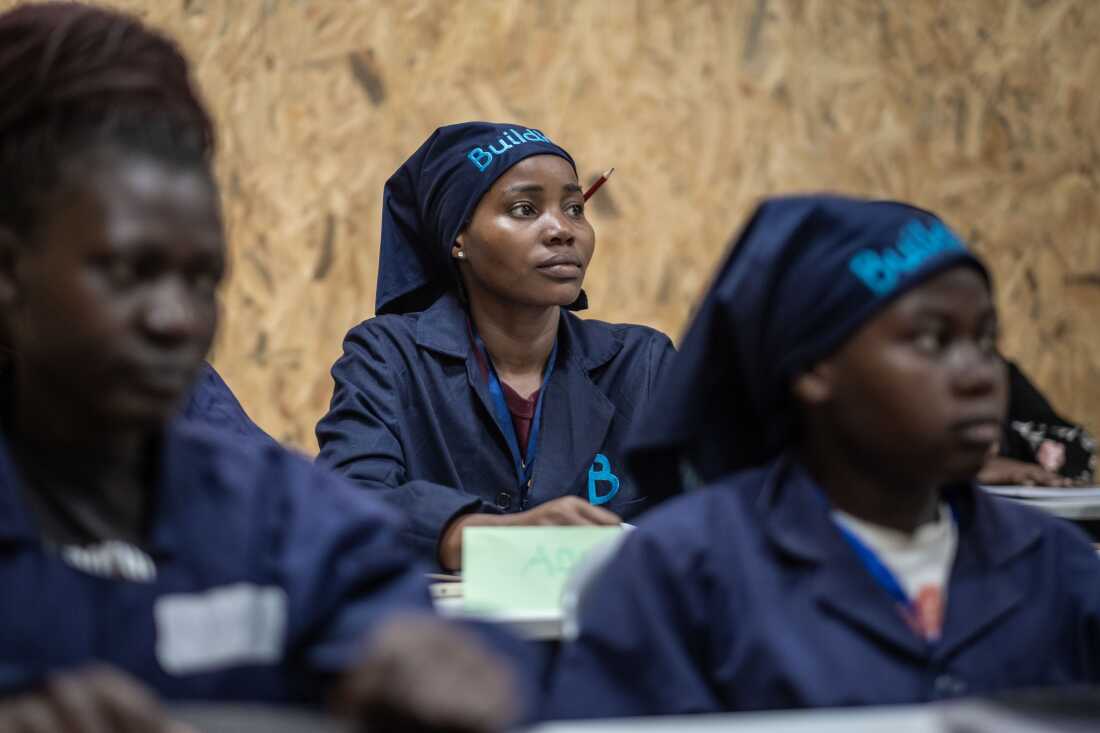
Students at a Buildher Academy class.
“These women come here knowing nothing about tiling. By the end of this training, they are able to work, earn money and improve the life of their family,” Ndungu says. “That really inspires me.”
But Buildher cofounder Gatere says learning a trade is often only one part of the challenge facing women. Many arrive here carrying pressures that extend far beyond the workshop floor — from childcare and deep financial instability to resistance at home from husbands or parents uneasy about women doing construction work.
Others find it difficult to imagine themselves feeling safe in male-dominated workplaces where harassment is often rife. Reflecting on her experiences as an architect, Gatere notes that even as women increasingly entered leadership positions within their firms, construction sites remained hostile environments. “You’re supposed to be a decision-maker, but you’d still be getting catcalled and harassed by men,” she says.
Those experiences, combined with feedback from trainees and employers, have helped shape Buildher’s broader approach to preparing women not only technically but also emotionally and physically for work in the industry.
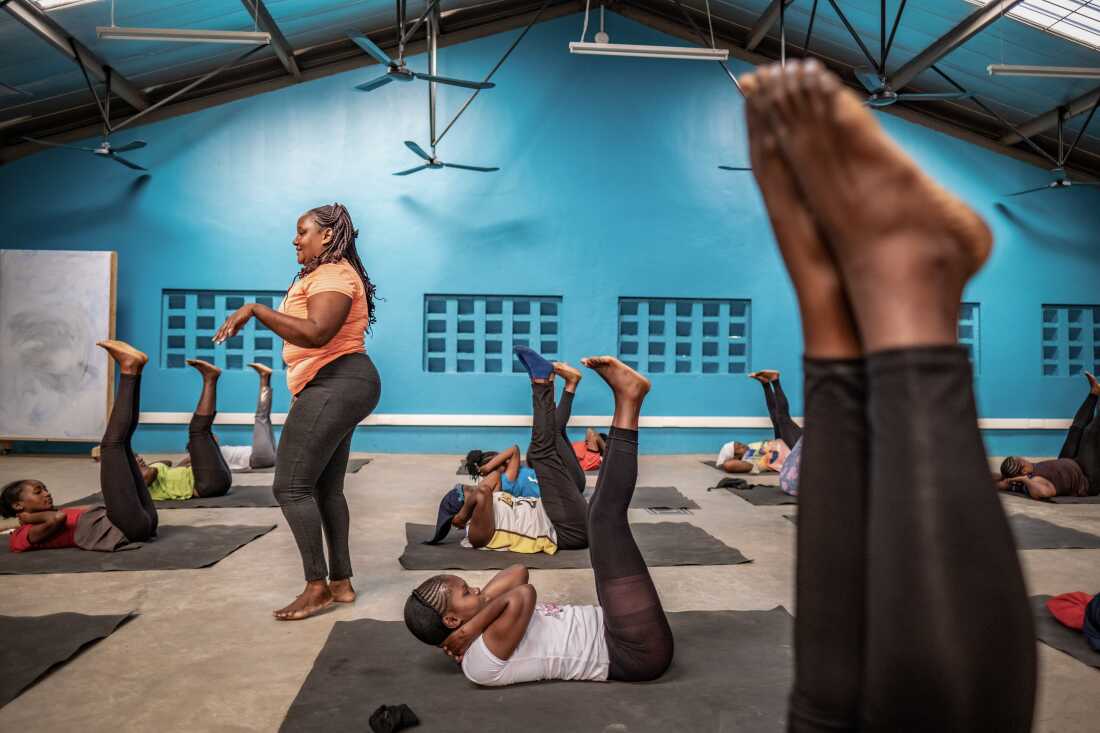
Yoga classes (shown above) and callisthenics are part of the training to prepare women for construction jobs.
Elsewhere on campus, bass-heavy dance music pulses from a crowded gym class, where an energetic instructor leads around 30 trainees through squats, stretches and lifting drills. Across the courtyard, a similarly sized group gathers in a large warehouse for a yoga and mindfulness session, sitting cross-legged on their mats as another instructor shares tips on staying focused and remaining calm under pressure.
Buildher also employs a mental health coach and on-site nutritionist, while trainees attend group wellness sessions every two weeks – support systems shaped directly by feedback about the difficulties many women faced both at home and in the workplace.
Dalberg’s research, which surveys 354 women working in the construction industry, shows that such investments are paying off. BuildHer graduates reported not only higher incomes after completing the programme but also greater participation in household decision-making and stronger community support.
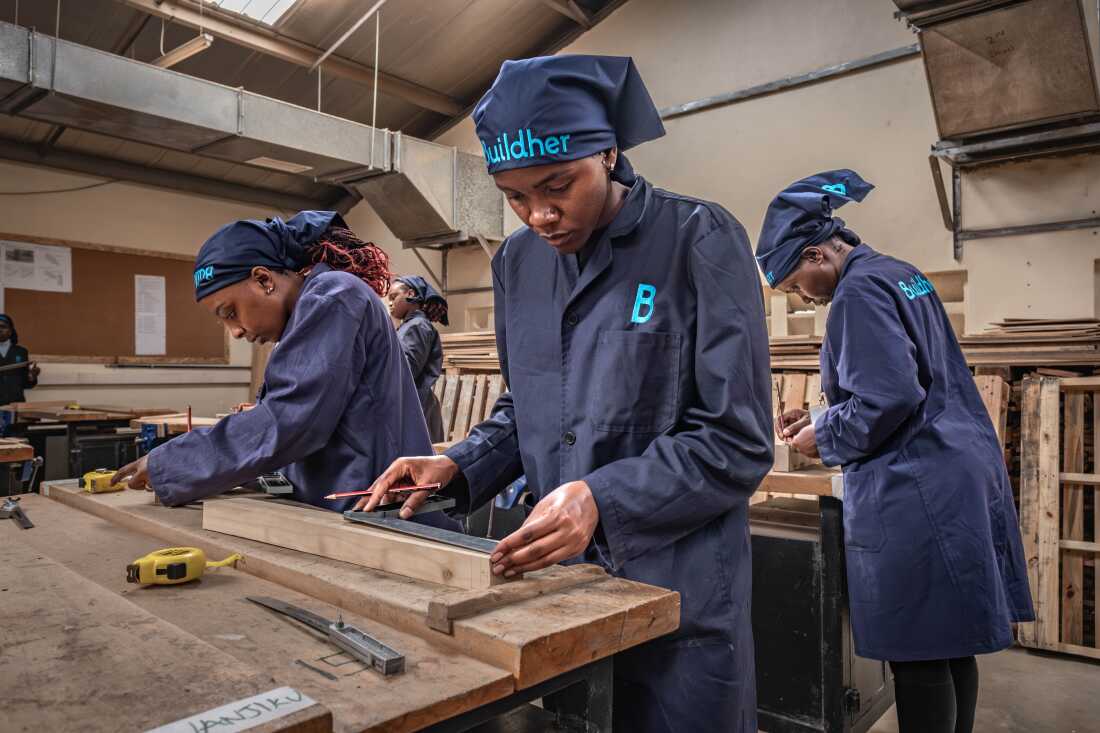
Students hone their carpentry skills.
“They also take more pride in what they do,” says Naoko Koyama, a Dalberg partner who worked on the report, adding that the combination of technical and soft-skills training offers a model for other male-dominated industries.
One of the women taking part in today’s yoga class is 27-year-old Ruth Kiarie.
a single mother who joined Buildher’s painting and decorating cohort just two weeks earlier. Kiarie first became interested in painting while helping to renovate classrooms in Kibera, where she also lives, as part of a community leadership project.
At the same time, caring for her autistic daughter has made her think differently about colour and space. One day, she hopes to work in colour psychology, advising families and businesses on how different colours affect mood and behaviour. “You don’t have to just do blue or pink,” she says. “We can create more colours.”
“All about the mindset.”
Sprawling across 5,000 acres of former coffee plantations about 12 miles north of Nairobi, Tatu City is a private mixed-use development of housing estates, factories, schools and office parks and the most ambitious symbol of Kenya’s rapidly changing urban landscape.

At Tatu City, a construction site where trainees worked and several graduates are now employed.
For Buildher, developments like Tatu City have become an important testing ground for its broader ambitions. Around 50 trainees worked on finishing and interior jobs inside Eneo at Tatu Central, a sleek glass-fronted office complex near the development’s entrance that now houses a growing cluster of Kenyan and international companies.
“The tiling contractor was so impressed with the quality of the women’s work that he then employed seven of them full-time,” says Pumi Lukhele, head of stakeholder engagement at Gateway Real Estate Africa, or GREA, which developed the building. She says contractors were equally impressed by the women’s professionalism and ability to take feedback, which she attributes to Buildher’s broader approach to training. Tatu City is one of roughly 150 employers that Buildher currently works with in and around Nairobi, as the organisation pushes to expand women’s participation in a far larger share of the construction industry. The hope is to increase women’s participation in skilled construction jobs from the current level of roughly 3% to 10% by 2030.
For Gatere, achieving those goals will require broader structural changes to an industry that, until last year, was not even required by law to provide separate toilets for women. Alongside its training programmes, Buildher now works with dozens of firms on issues ranging from harassment and equal pay to basic conditions for women on construction sites.
Looking ahead, Gatere sees a future where ensuring women’s safety, dignity and inclusion in the industry is no longer a constant struggle, allowing more of them to focus on bigger ambitions. “I see more and more women starting their own businesses. I see women’s collectives bidding for contracts independently,” she says. “We shouldn’t still be advocating for breadcrumbs.”
Further inside the development, a few residents lean over the metal balconies of newly completed apartment blocks, topped with solar water heaters, watching workers move through the exposed concrete interiors of a neighbouring building still wrapped in scaffolding and green mesh sheeting.
In a first-floor unit that overlooks a gravel footpath and a small wetland area, 22-year-old Margaret Klamaitha kneels on the floor, cutting and fitting bathroom tiles.
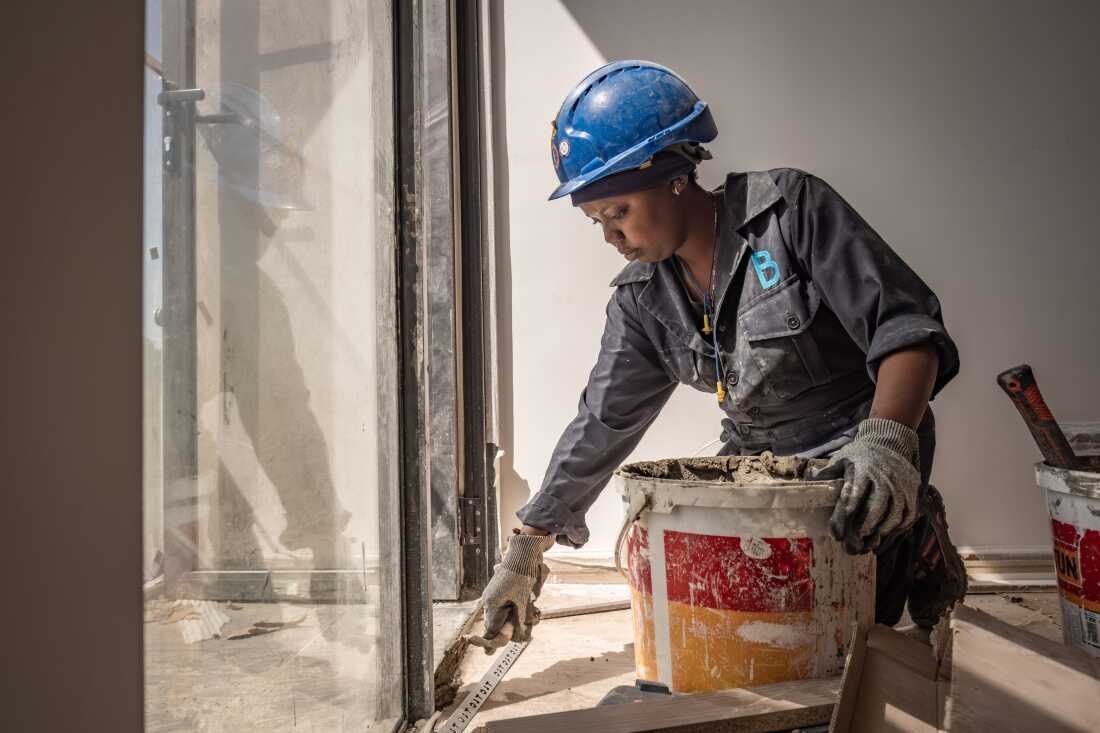
Tiler Margaret Klamiatha works at a construction site at the Tatu City development on the edge of Nairobi.
Klamaitha completed Buildher’s six-month tiling programme last year and now works on a rolling three-month contract at Tatu City, her first full-time construction job. Though she says she enjoys the work, she views it as a way to gain experience. One day, she hopes to move into quality control, then eventually start her own construction-related business.
“It’s all about the mindset,” she says. “Once you start to do something as a woman, don’t let anyone put you down.”
Christopher Clark is a freelance journalist based in France. He reports on power, inequality and social change across Africa and Europe.
Tommy Trenchard is an independent photojournalist based in Cape Town, South Africa. He has previously contributed photos and stories to NPR on the Mozambique cyclone of 2019, Indonesian death rituals and illegal miners in abandoned South African diamond mines and won a World Press Photo prize for the images in his story for NPR on clashes between elephants and people in Zambia.



.jpg?w=1068&resize=1068,0&ssl=1 "Tamil Nadu’s Ancient Temples Are the Soul of South India")
