The Indian rupee’s slide past Rs 90 per US dollar for the first time ever has shifted sentiment in the equity market and raised fresh concerns for investors. The breach of this psychological level has come on the back of weak capital flows, steady demand for dollars from importers, and uncertainty around the India–US trade agreement, reported ET. The currency touched Rs 90.43 on Thursday, marking its fifth straight day of losses despite the Reserve Bank of India’s rreported interventions. Although it appreciated by 26 paise to close at 89.89 on Thursday.
Why the fall beyond 90 matters
Currency traders cited by Reuters said that once the rupee slipped past Rs 88.80—a level the RBI had been defending—the currency became more sensitive to long-standing pressures such as soft capital inflows and a rise in speculative positions. Anindya Banerjee of Kotak Securities was quoted by ET as saying that the move toward Rs 90 was driven by short-covering and importer demand, calling the 90-mark a “major psychological barrier” reinforced by buy-stop orders. “If the pair starts sustaining above this zone, the market could quickly shift into a higher trending phase toward 91.00 or even higher,” he said.Banerjee also pointed to foreign portfolio investor outflows, early signs of unwinding yen carry trades, and the delayed Indo-US trade deal as factors weighing on the rupee. A clear close above 90, he said, could encourage fresh speculative flows.
Investor sentiment takes a hit
The currency’s decline has already begun affecting domestic equities. As per ET, Dr VK Vijayakumar of Geojit Investments said the Nifty’s roughly 300-point correction from its record high has more to do with technical adjustments, including changes in Bank Nifty weightage, but warned that “continued depreciation in the rupee” is prompting FIIs to sell despite strong fundamentals such as rising corporate earnings and robust GDP growth. He added that the rupee could stabilise once the long-awaited India-US trade deal is sealed, possibly this month.Market watchers say the rupee’s direction will have a direct bearing on import costs, inflation trends, and foreign portfolio flows. Weakness in the currency could push up costs for sectors dependent on imported goods—such as petroleum, electronics, and gems and jewellery—putting pressure on margins. However, Chief Economic Adviser V Anantha Nageswaran said on Wednesday that the recent fall has not affected inflation or exports, as per PTI.
What lies ahead for the Rupee
The US dollar index eased to 99.22 in Asian trade as expectations built that Kevin Hassett may become the next US Federal Reserve chair.. Emkay Global expects the rupee to trade between Rs 88 and Rs 91 for the rest of FY26, noting that it has been far weaker than its Asian peers this year. The brokerage said currency movements will hinge on the outcomes of the US–India and US–RoW trade deals.On Thursday, the rupee briefly recovered to Rs 89.89, supported by a softer US dollar and possible RBI intervention, PTI reported. Earlier in the day, it had hit another record low of Rs 90.43 amid foreign selling and firm crude oil prices. Analysts say elevated oil prices, fragile investor sentiment and persistent FII outflows may keep the rupee under pressure, although a weaker US dollar and the possibility of a Federal Reserve rate cut in December may offer some relief.With the currency hovering around a level last seen never before in Indian markets, investors remain on edge. Analysts warn that without clear intervention or a breakthrough on the trade front, speculative momentum could push the rupee toward Rs 91, making the coming weeks critical for D-Street.
India’s central bank will allow the rupee to weaken as the country’s external position comes under strain from slowing dollar inflows, widening trade pressures and heavy foreign selling in domestic markets, according to sources cited by news agency Reuters. The Reserve Bank of India (RBI), which had been actively supporting the currency until last month through sizeable dollar sales, has let the rupee depreciate 1.3% in the last seven trading sessions, taking it to a record Rs 90.42 per dollar. The rupee is now down 5.5% this year, making it Asia’s worst-performing currency.According to three people familiar with the RBI’s thinking, the central bank is no longer inclined to defend any specific exchange-rate level and will focus instead on preventing disorderly movements or speculative pressure. “It doesn’t make sense to spend reserves when fundamentally everything is against the currency,” one of the sources said, as per Reuters. Another source said the RBI “does let the rupee move more than it normally would” whenever the underlying demand for dollars warrants it. The central bank has not commented on the matter.India has witnessed significant portfolio outflows, with foreign investors selling $17 billion worth of equities so far this year, Reuters reported. Foreign direct investment, external trade flows and offshore fundraising have all slowed. While the rupee’s fall below the psychologically sensitive Rs 90 mark has attracted attention, the RBI is prepared to counter attempts at speculative build-ups, a third source said.Market participants remain cautious. A weaker currency gives the RBI more room in policy terms but risks making Indian assets less attractive to overseas investors. “A weakening Indian rupee is definitely a negative when it comes to investing in Indian equities,” said Sam Kongrad of Jupiter Asset Management, adding that his firm remains “neutral weight” on India, as per Reuters.MSCI’s India index has gained 7% this year, but rupee weakness has cut dollar returns to below 2%, far behind South Korea and Hong Kong.Some investors believe the impact could ease if a resolution to trade frictions with the United States emerges and fresh foreign flows come through potential global index inclusion. Others argue India’s strong domestic fundamentals — including 8.2% GDP growth in July–September — may help offset currency weakness over time.“I’m not losing sleep over it,” chief economic adviser V Anantha Nageswaran said on Wednesday. He added that the rupee’s slide has not fed into inflation and said he expects a recovery in 2026.Meanwhile, the rupee staged a brief rebound on Thursday, rising 26 paise to Rs 89.89 on reports of supposed RBI intervention and a softer US dollar, as per PTI. Earlier in the day, it hit another record low of Rs 90.43 amid foreign selling and costlier crude oil. Traders said uncertainty around the India-US trade deal, elevated oil prices and persistent FII outflows continue to weigh on sentiment, though a weaker dollar and expectations of a US rate cut may offer some support.The market is now awaiting the RBI’s monetary policy announcement on Friday, which comes at a time of rising GDP growth, easing inflation and ongoing geopolitical uncertainties.
A man has been arrested in connection to two pipe bombs placed outside the headquarters of the Republican and Democratic national committees on the eve of the 6 January Capitol riot nearly five years ago.
The arrest was confirmed on Thursday by two sources familiar with the case to BBC’s US partner, CBS News. He is expected to face charges in DC federal court later Thursday, though the charges are unclear.
It ends a long-running manhunt in the case, which involved an extensive investigation and a $500,000 (£375,000) reward.
The pipe bombs were safely deactivated and did not explode.
Law enforcement sources told the BBC’s US partner CBS that the suspect is 30-year-old Brian Cole of Woodbridge, Virginia.
Earlier this year, the FBI released CCTV footage of the alleged suspect. It appears to show an individual with a backpack, a light grey hooded sweater, placing something near a bench outside the Democratic National Committee building in Washington. The person is shown later walking to place the second bomb.
Both were placed the night before the 6 January riot, and were only discovered as rioters began to storm the Capitol.
At the time, US senators were meeting there to certify the results of the 2020 presidential election, which Joe Biden had won, defeating Donald Trump.
Trump, who was president at the time, addressed a large crowd of supporters at a rally near the White House, where he urged them to march “peacefully” to the Capitol, but also made unsubstantiated claims of massive voter fraud.
The crowd numbered between 2,000 and 2,500 people, and included members of far-right groups such as the Proud Boys and the Oath Keepers. Many were carrying weapons.
Hundreds then forced their way into the Capitol building through windows and doors, overwhelming police. It took law enforcement almost four hours to restore order.
As the riot began, a passerby discovered the two pipe bombs, police said at the time. The items allegedly left behind included pipes, wires, kitchen timers, and homemade black powder, according to the FBI.
According to a CBS report, the bombs had one method of detonation: a 60-minute kitchen timer. But they ultimately did not explode for unknown reasons.
Police had been searching for a suspect ever since.
Many of those convicted or charged in relation to the riot have since been pardoned by Trump earlier this year, shortly after he took office for his second term in January.
Pardons or commutations were issued for more than 1,500 people. Trump also ordered the US Department of Justice to drop all pending cases against other suspects.
At the time, Trump referred to the accused and convicted as “the hostages”, and said that their lives had been “destroyed”.
“What they’ve done to these people is outrageous. There’s rarely been anything like it in the history of our country,” he had said.
Every January brings a wave of nutrition predictions—some backed by science, others fueled by social media hype. So how do you know which trends are actually worth your attention?
We asked MyFitnessPal’s team of registered dietitians to share their insider take on what’s coming in 2026. These are the experts who review food data, analyze nutrition research, and see firsthand what’s resonating with real people trying to eat better. Here’s what they’re predicting—and what they’d skip.
Before we look ahead, let’s acknowledge what 2025 got right—and wrong.
The Best: Fibermaxxing
The clear winner among our dietitians? The rise of fiber awareness. “I am a firm believer that fiber is your friend, and any opportunity to shine a spotlight on this important nutrient that many of us don’t get enough of is key,” says Melissa Jaeger, RD, LD, MyFitnessPal’s Head of Nutrition. Stephanie Saletta, Senior Lead Nutrition Scientist, agrees: “We love to see fiber getting the love and attention that it deserves!”
The caveat? Both experts emphasize going slow. Ramping up fiber too quickly can cause bloating and discomfort, so gradual increases (plus plenty of water) are key. (1)
A Smarter Focus on Protein
Several dietitians also praised the increased attention on protein, particularly for preserving muscle mass. “With the rise of weight loss medications, protein has been in the spotlight with the focus being to preserve muscle mass in a caloric deficit,” notes Joanna Gregg, MS, RD, Food Data Curator. Lauren Cuda, MS, RD, CSP, LD, adds that “a smarter focus on protein” that includes balance with quality carbs and healthy fats was one of the best developments of the year. (2)
The Worst: Dirty Soda, Dry-Scooping, and Extreme Diets
Not everything that trended deserved the attention. Jaeger calls out dirty soda—soda mixed with flavored syrups and creamers—as a trend that “can add up to a lot of calories very quickly” while packing in added sugars and fats we should limit.
And then there’s “dry scooping,” the practice of consuming protein powder directly in its dry form—literally scooping it into their mouth and swallowing it without mixing it with water or any liquid first. Saletta flags dry-scooping as “unpleasant and unnecessary.”
Meanwhile, Gregg points to the carnivore diet as “not sustainable and lacking in fiber and many other important nutrients.” Cuda adds that using beef tallow, another ingredient trending on social media, as an everyday cooking fat is problematic due to its high saturated fat content.
Based on our dietitians’ predictions, here are the nutrition trends most likely to shape the year ahead.
Fiber Takes Center Stage
The dietitians predict fiber will be a major focus in 2026. “I believe that fiber is becoming the new protein and will emerge as a broader trend,” says Jaeger. Saletta expects to see “fiber find its way into more products, like drinks, snacks, and frozen meals” along with “more viral recipes and hacks for getting more fiber through fruits, vegetables, beans, oats, and seeds.”
Cuda anticipates both “more fiber-fortified options and practical, food-first strategies (beans, vegetables, whole grains, nuts, and seeds) aimed at better digestion, satiety, and metabolic health.” The connection to gut health research is driving this interest. As scientists learn more about the gut-brain axis, consumers are increasingly curious about how fiber affects more than just digestion. (3)
Protein Stays Strong (With a Plant-Based Twist)
Protein isn’t going anywhere. “The protein obsession will likely live on,” says Jaeger, pointing to the continued rise of GLP-1 medications and the proliferation of protein-enhanced products from coffee add-ons to protein pretzels and popcorn.
But expect a shift in sources. Jaeger predicts “a higher emphasis on plant-based protein sources such as beans,” driven partly by rising animal protein prices.
Saletta hopes 2026 brings a focus on balance: “Yes protein, but also the right amount of protein alongside all the other important nutrients and foods we need.” Gregg emphasizes that the focus should remain on whole food sources: “Think lean meats, low-fat dairy, nuts and legumes as opposed to protein chips and bars.”
GLP-1 Medications Shape Food Choices
The influence of GLP-1 weight loss medications on eating patterns is impossible to ignore. Multiple dietitians note that these medications are driving demand for higher-protein, smaller-portion meals.
Cuda predicts “a wave of ‘GLP-1-friendly’ foods marketed to shoppers using these medications,” but warns that “this term isn’t standardized.” Her advice: develop label literacy and consider working with a registered dietitian to interpret these claims for your individual needs.
Saletta adds that we’ll see continued interest in protein and fiber “especially as more people try GLP-1s (and come off of them and want to preserve their progress).”
Beans and Budget-Friendly Eating
With food costs rising globally, budget-conscious protein sources are having a moment. “Beans might have an extra special moment for costing less than other protein/fiber options,” predicts Saletta.
Jaeger agrees that beans are a standout: “Not only are beans a cost-effective source of protein as we continue to see the price of animal-based protein sources rise in the grocery store, but they also contain fiber and valuable nutrients that offer many health benefits.” (4)
This aligns with broader interest in canned and shelf-stable foods. Gregg notes that while the obsession with tinned fish may fade, “the focus of using canned and processed foods (think canned beans and high-protein dairy) as a part of a healthy diet will remain.”
Personalized Nutrition Goes Mainstream
Multiple dietitians predict that personalized nutrition will continue expanding. “From food logging to wearables and AI advancements, consumers have access to tools that can shed significant light on their current habits,” says Jaeger. “Unlocking insight into their own diet by leveraging these tools will be key in supporting the development of their personalized nutrition plan.”
Gregg agrees. “With the rise in AI, I think personalized nutrition assisted by AI will likely emerge as a trend soon,” she says.
Creatine Beyond the Gym
An under-the-radar trend to watch: creatine supplementation moving beyond athletes. “I am curious to see how creatine evolves beyond athletes and reaches more general consumers,” says Jaeger, “especially due to recently published research causing a buzz in the media.” Gregg also flags creatine as a supplement that “could become popular or trendy in the general population.”
Other Trends Worth Watching
A few additional predictions from our team:
“Girl Dinners” evolve: Jaeger hopes this snack-plate concept will grow beyond its current form to include “more balanced combinations that focus on key nutrients like protein and fiber, all while reducing items that are higher in saturated fat and salt.”
Bold flavors stick around: Jaeger predicts “swicy” (sweet and spicy) and other bold flavor combinations are “here to stay,” evolving beyond hot honey as people experiment with home cooking to save money.
Ingredient transparency: Saletta expects “a push for more transparency about what ingredients are in packaged foods, and whether those ingredients are helping or hurting our health.”
The Bottom Line
If there’s one theme running through these predictions, it’s balance. Fiber is rising to meet protein’s popularity. Plant-based options are growing alongside animal proteins. Personalized approaches are replacing one-size-fits-all advice.
The dietitians’ collective advice for 2026? Focus on whole foods, prioritize both protein and fiber, be skeptical of unregulated label claims, and use the tools available to you—whether that’s food logging, wearables, or working with a registered dietitian—to find what works for your body and your goals.
As Saletta puts it, the hope for 2026 is that we all get “obsessed with balance.”
Travis Kelce reacts after a deadly threat claim turns an NFL game into chaos (Image Via Getty)
Travis Kelce spoke about a serious claim that came out after another NFL game turned tense. On Thanksgiving Day, the Kansas City Chiefs played the Dallas Cowboys in Dallas and lost 31-28. The loss pushed the Chiefs to a 6-6 record. Even after that close game, another matchup from the weekend drew even bigger attention. On Sunday in Nashville, Tennessee Titans running back Julius Chestnut said Jacksonville Jaguars punter Logan Cooke told him, “I’m going to kill you,” during their Week 14 game. The Jaguars beat the Titans 25-3, but the fight after a tackle became the top story from the field.
Travis Kelce and Jason Kelce react to Julius Chestnut’s claim about Logan Cooke
Travis Kelce talked about the moment on his “New Heights” podcast on Wednesday. He spoke with Jason Kelce and said players hear wild things on the field all the time. Travis said, laughing, “A Tennessee player said the Jacksonville punter told him he’d kill him… Jags players, you guys are in the head of the opponent.” He joked that some punters “look creepy enough” to make the comment sound real, even if it was not. Jason Kelce then shared his own view and said most of these lines are not meant as real threats. “You’re not being serious. You’re not actually going to kill him,” Jason said as he explained how emotional games can get. He added that players often say things in anger but never mean actual harm.The claim came after Julius Chestnut made a hard tackle on Logan Cooke during a return to Nashville. Logan Cooke charged toward Julius Chestnut after the hit, and players from both sides stepped in. Officials threw a flag for unnecessary roughness on Julius Chestnut. The penalty could lead to a fine if the league decides the hit was too much.Right now, the NFL is still looking at the play. The league already reviewed the tackle but has not said whether it will investigate the spoken threat. Julius Chestnut stands by his claim, while Logan Cooke has not publicly confirmed any of the words. Players from both the Titans and the Jaguars call it a heated moment, but the league will decide if more action is needed.Also Read: Taylor Swift Reveals A Private Phone Call With Travis Kelce As Her End Of An Era Docuseries Trailer Takes A Sudden Turn
The road to the 2025 NBA Finals promises to be one of the most competitive and unpredictable battles in recent memory. With parity reigning across the league, the NBA totem pole is shifting.
As the season heats up, it’s clear that a handful of teams are emerging as clear contenders, while others lurk as dangerous dark horses ready to upset the balance of power. Bettors and fans alike are watching closely as championship aspirations collide with high-stakes wagers. Let’s break down the favorites and darkhorses shaping the title chase.
Favorites: The Teams to Beat in 2025
The NBA’s top contenders are already asserting their dominance this season, combining star power, system cohesion, and playoff pedigree. These favorites aren’t just winning games. They’re setting the standard for what it takes to lift the Larry O’Brien trophy.
Denver Nuggets: The Gold Standard
The Denver Nuggets remain the benchmark of excellence at the top of the NBA totem pole. Led by Nikola Jokić, the reigning MVP candidate, the Denver Nuggets continue to blend elite efficiency with unmatched chemistry. Their inside-out offense, complemented by Jamal Murray’s perimeter shot-making and Cameron Johnson’s scoring punch, makes them a nightmare matchup.
Defensively, Denver has tightened up, anchored by a unit that excels in half-court containment and transition balance. With championship experience and depth across the roster, the Nuggets operate with confidence, resilience, and a calm that few teams can replicate in crunch time.
Bettor takeaway: The Nuggets combine proven championship DNA with elite stability, making them a safe and popular choice among bettors evaluating the latest NBA Finals odds. Jokić’s leadership and postseason mastery position Denver as a reliable favorite for bettors seeking both safety and upside in 2025.
Oklahoma City Thunder: Youth With Bite
The Oklahoma City Thunder are rewriting expectations and redefining their place on the NBA totem pole. Fueled by youthful exuberance and strategic precision, they’ve transformed from rebuilders to genuine contenders. Shai Gilgeous-Alexander’s all-around brilliance drives their attack, while Chet Holmgren’s two-way versatility anchors their defense.
The Thunder’s blend of athleticism, unselfish play, and relentless energy allows them to outpace even veteran-laden squads. Their three-point efficiency and top-tier defensive rotations create a formidable formula for sustained success. This balance, alongside one of the deepest benches in basketball, ensures they’re more than just a feel-good story.
Bettor takeaway: As oddsmakers adjust to OKC’s rapid rise, bettors are increasingly seeing value in their momentum and matchups. Backed by youth, depth, and a star-driven system, OKC offers value but also volatility. Bettors should recognize that the Thunder’s blend of speed, defense, and confidence positions them as a formidable favorite.
Boston Celtics: Tradition Meets Modern Dominance
The Boston Celtics embody balance, blending historic pedigree with a forward-thinking approach that keeps them in the conversation for the NBA Finals. With Jayson Tatum and Jaylen Brown leading a dynamic two-way attack, Boston plays with precision on both ends. Their offense flows through spacing, unselfish passing, and lethal perimeter accuracy.
On defense, the Celtics continue to shine with switch-heavy schemes, rim protection, and perimeter discipline. The addition of savvy veterans has enhanced their late-game composure, transforming close contests into decisive victories. In the Eastern Conference landscape, Boston’s combination of depth, versatility, and big-game experience makes it the team to beat.
Bettor takeaway: The Celtics’ steadiness across long seasons, with two-way consistency, elite spacing, and star leadership, offers predictable returns. Their ability to dominate regular-season metrics while maintaining postseason endurance underpins their strong standing in current odds for the NBA Finals.
Dark Horses: Sleeper Picks With Serious Upside
Beyond the spotlight lies a group of hungry, high-ceiling teams capable of crashing the Finals conversation. These dark horses may not top the odds today, but their momentum, depth, and rising stars make them dangerous postseason threats.
Orlando Magic: The Rising Challenger
The Orlando Magic are climbing fast on the NBA totem pole, embodying the spirit of a true dark horse. Led by Paolo Banchero’s versatile scoring and Franz Wagner’s playmaking poise, Orlando’s young core has matured into a cohesive, disciplined unit.
With a top-10 defense and emerging offensive identity, they’re crafting an underdog narrative built on grit and growth. Their relentless defense and interior presence frustrate opponents, while their improved shooting stretches defenses thin. Against top seeds, they’ve already proven capable of dictating tempo and capitalizing on mismatches.
Bettor takeaway: Orlando’s rapid rise and defensive tenacity present intriguing longshot value. They’re unafraid of the spotlight and increasingly confident in crunch-time moments, a hallmark of teams poised to surprise in spring, particularly if their young stars continue translating potential into postseason poise.
Minnesota Timberwolves: Defense-First Disruptors
The Minnesota Timberwolves are reshaping the Western hierarchy through elite defense and relentless intensity. Anchored by Rudy Gobert and spearheaded by Anthony Edwards’ scoring brilliance, Minnesota’s identity is clear: toughness, depth, and an unshakable belief that they belong among the NBA totem pole’s upper tier.
Their physical style neutralizes finesse teams, while their half-court offense thrives on balanced spacing and timely shot creation. The Wolves’ growth is most evident in their clutch execution, turning late-game situations from liabilities into strengths.
With Edwards emerging as a bona fide superstar and their supporting cast gaining cohesion, Minnesota is more than a defensive juggernaut; they’re a legitimate Finals dark horse.
Bettor takeaway: Minnesota’s elite defense and maturing offense create strong darkhorse potential. Climbing the NBA totem pole, they blend star power with discipline, offering bettors a balanced wager with both floor stability and ceiling-breaking upside in the 2025 postseason race.
Navigating the 2025 NBA Totem Pole
As the playoff picture becomes clearer, bettors face a landscape rich with opportunities. The Nuggets, Thunder, and Celtics dominate discussions as established favorites, while the Magic and Timberwolves offer thrilling upside for value seekers.
The 2025 NBA Finals will reward not just talent, but resilience, chemistry, and timing. On this evolving NBA totem pole, smart bettors should weigh pedigree against momentum, and remember that champions often emerge from the unexpected.
The family of a Colombian fisherman killed in a US strike in the Caribbean has filed a formal complaint against such attacks with the Inter-American Commission on Human Rights.The petition was filed on Tuesday by US human rights lawyer Dan Kovalik. It alleges that Alejandro Carranza was killed when the United States struck his boat off the coast of Colombia on September 15. Kovalik told CNN that the family seeks compensation and an end to similar killings: “These killings are against international law. They are against US law. We want this to stop, and we think this is at least a first step to having that happen.”The complaint names US secretary of defence Pete Hegseth as responsible for ordering the bombing of boats like Carranza’s and claimed that his conduct was ratified by US President Donald Trump.Since early September, US has carried out at least 22 strikes on alleged drug trafficking boats in the Caribbean and Pacific, killing at least 83 people. The US maintains the strikes comply with the Law of Armed Conflict and has said the boats were linked to armed drug cartels. Trump claimed that the September 15 strike killed three “narcoterrorists from Venezuela” transporting drugs to the United States.However, Kovalik says Carranza was simply fishing for marlin and tuna when he was killed. “That is what he was doing. That was his profession and his vocation.” Colombian President Gustavo Petro has described Carranza as a lifelong fisherman with no ties to the drug trade. He added that Carranza may have occasionally carried prohibited goods due to financial pressures, but “his actions don’t deserve the death penalty.”Kovalik has also represented President Petro, who was sanctioned by the US on October 24 over alleged involvement in the global drug trade. Petro has denied the allegations.
Rebecca Joynes, 31, was jailed for six-and-a-half years in July after having sex with two pupils she groomed while working as a maths teacher
16:29, 04 Dec 2025Updated 16:29, 04 Dec 2025
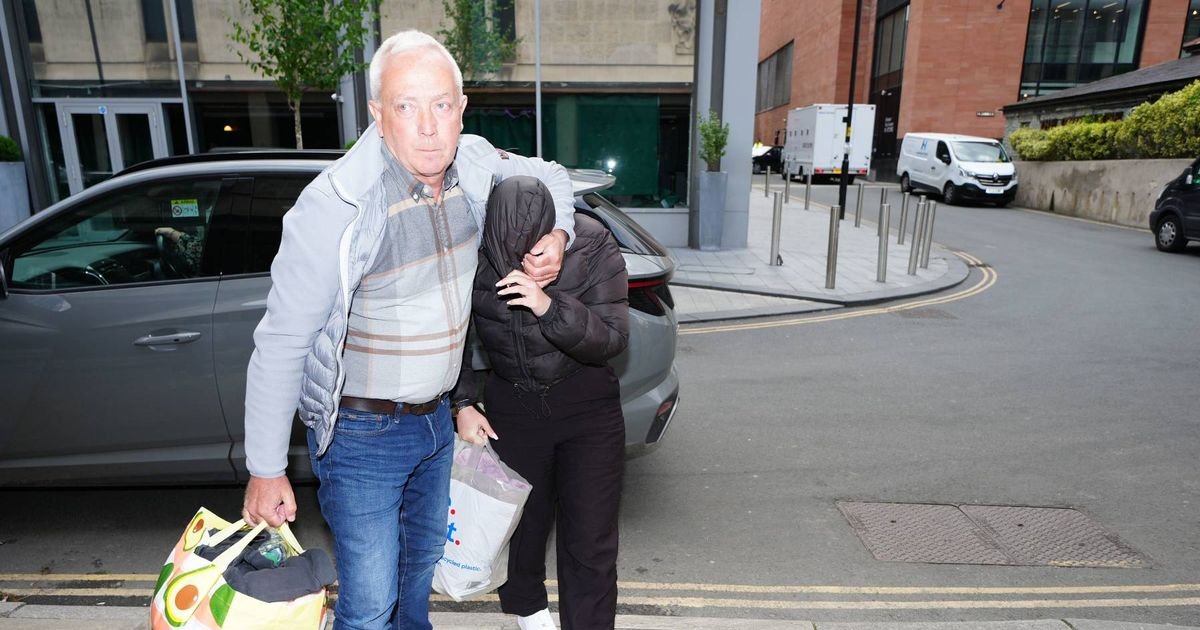
Rebecca Joynes arriving at Manchester Crown Court in July(Image: PA)
Imprisoned paedophile teacher Rebecca Joynes could face a lifetime ban from teaching following a professional conduct panel’s verdict of ‘unacceptable conduct’. She was absent from the conduct hearing, which heard that she had inflicted ‘enormous damage’ on two students.
Joynes, 31, was sentenced to six-and-a-half years in prison in July for engaging in sexual relations with two pupils. She lured one 15 year old lad with a trip to the Trafford Centre, where she bought him a £345 Gucci belt from Selfridges.
She subsequently became pregnant by another teenage student, whom she also initiated a sexual relationship with when he was 15. Joynes was convicted of six counts of sexual activity with a child, including two counts of sexual activity with a child while in a position of trust, following a trial at Manchester Crown Court.
The offences involved two teenage boys she encountered through her role as a teacher at a Greater Manchester school. The identities of the boys and the school are protected by law and cannot be disclosed.
Today (Thursday, December 4), a professional conduct panel hearing found her guilty of ‘unacceptable conduct’, a judgement that could result in her being permanently excluded from the education sector. Joynes, who remains incarcerated, declined an invitation to attend the remote hearing and did not have anyone present to represent her interests, the panel was informed, reports the Manchester Evening News.
Shirley Duckworth, speaking on behalf of the Teaching Regulation Agency (TRA), informed the panel that Joynes’ convictions were ‘of the utmost severity’, highlighting her ‘lack of engagement’ in conduct panel proceedings.
Ms Duckworth stated that Joynes had ‘committed sexual offences against two boys she had direct contact with in the course of her profession’.
Detailing her crimes against one of the victims, referred to as Pupil A, Ms Duckworth said the teacher was guilty of an ‘abuse of trust’. She also noted how the trial judge had remarked on the ‘significant disparity’ in their ages.
Furthermore, Joynes had ‘deleted’ the content of her phone when an investigation commenced, according to Ms Duckworth.
Her crimes against the second boy, known as Pupil B, were marked by ‘grooming and an abuse of trust’, Ms Duckworth added. She pointed out that ‘the most serious’ aspect of the crimes against Pupil B was that they occurred while she was on bail for offences against Pupil A.
The hearing was informed that Joynes, a maths teacher, was sacked for gross misconduct in July 2022 following her initial court appearance.
Ms Duckworth revealed that police visited the school where Joynes taught in 2021 and notified the principal that an investigation into allegations concerning Pupil A was underway, following a complaint to Childline.
The barrister mentioned that Joynes couldn’t deny a relationship with Pupil B due to the ‘existence of a child’, which she described as a ‘significant aggravating feature’.
Ms Duckworth stated that whilst the ‘notion of a Mrs Robinson figure’ was one that ‘permeates’, she emphasised that her offences against the two pupils had created a ‘lasting impact’.
She explained that fatherhood was ‘thrust upon’ Pupil B, who she noted had observed: “I will forever be Rebecca’s victim and will be forever be linked to her through our child.”
The acquisition of a £345 Gucci belt, she continued, had constituted a ‘manipulative form of flattery’, noting that Pupil B had ‘felt deceived by a teacher she should have been able to trust’.
She continued: “It’s right to identify Miss Joynes as a paedophile.”
It was ‘inconceivable’ that Joynes wasn’t aware she was doing something wrong, she stated, before adding: “The damage done here is enormous.”
Following the TRA hearing, panel chairman Phil Thompson announced that the panel had determined Joynes’ conduct constituted ‘unacceptable behaviour’ which had ‘brought the profession into disrepute’.
Ms Duckworth contended that the ‘necessary and proportionate’ subsequent action would be for the panel to contact the Secretary of State for Education, recommending that Joynes be permanently prohibited from returning to the education sector as her actions had been ‘fundamentally incompatible’ with teaching.
Prior to entering private deliberations to determine whether to make such a recommendation, Mr Thompson indicated that should one be issued, it would require several days before the Secretary of State would publicly declare their decision. Joynes received a prison sentence in July at Manchester Crown Court.
Her two victims were identified as Boy A and Boy B during media coverage of the case.
The court was told she accompanied Boy A to the Trafford Centre and purchased him a £345 Gucci belt from Selfridges, before taking him back to her flat in Salford, where they engaged in sexual activity.
She was suspended from her position and was subsequently found to be expecting a child with a second boy – Boy B – whom she first encountered when he was aged 15 before they shared a kiss.
The relationship became sexual, with Joynes becoming pregnant and eventually giving birth to his child, despite informing him it was ‘almost impossible’ for her to conceive due to a medical condition. He discovered she was expecting after she arranged a ‘date night’ complete with rose petals and romantic messages.
She also presented him with a baby grow bearing the words ‘I love my daddy to the moon and back’ on it.
A victim impact statement read on behalf of Boy B stated: “I was coerced, controlled and sexually abused, it was very upsetting this happened to me and I had little to no support from organisations.
“For months after the abuse it was a very dark time. I felt backed into a corner, I had just lived a double life for 18 months, and it had a massive mental toll on me and my family.
“It tore my family apart, they struggled to come to terms with the fact they brought me to school which was supposed to be a safe environment. My parents broke down every day and night.”
Joynes, who has no prior criminal record, refuted the charges during her trial. Taking the witness stand over several days, she rejected any claims of sexual contact with the first lad, though acknowledged she ‘liked the attention’ he provided.
When questioned about why she brought him to the Trafford Centre before letting him stay overnight at her apartment, she responded: “I was stupid, I don’t know.”
Regarding the second pupil, she maintained nothing occurred between them until he reached 16 and after her dismissal from the school. She insisted she was ‘in love with’ the teenager and described their bond as founded on a ‘strong friendship’.
The jury was presented with correspondence where she wrote to the boy stating ‘every inch of you is perfect’.
Joynes informed the court that just 24 hours following their child’s birth, the infant was ‘taken away’ from her. Throughout proceedings, she kept a baby’s bonnet concealed in her clothing.
Her defence counsel, Michael O’Brien, explained his client battles with anxiety and depression, having been deemed ’emotionally fragile’ by probation officers.
“The defendant understands her own conduct has seen her miss out on the early years of her baby’s life. The baby will miss out on very important contact with her mother. The defendant understands that’s entirely of her making – and it’s not the baby’s fault,” he stated.
“The shorter the time, the better for the baby,” the barrister continued. He described how the infant was removed from her at birth, calling the experience ‘harrowing’ for Joynes.
In her sentencing, Judge Kate Cornell accused the defendant of ‘breathtaking arrogance’, stating: “You have shown an unwilling inability to face up to wrongdoing. This does you no favours, Ms Joynes.
“You were the adult, the one in control and should have known better. You were trusted by the school, the boys and the parents – for caring and protecting their sons. You abused that trust and exploited that role for your sexual gratification. It is inconceivable you did not realise that too.
“You deliberately transgressed them and encouraged boys to breach that too. You turned a blind eye.”
Joynes, from Pensby Avenue, the Wirral, received a prison sentence of six-and-a-half years. Restraining orders were put in place against both boys.
Joynes will be on the Sex Offender Register for life.