
Home Blog Page 14

Cindy Crawford’s Son Presley Gerber Dies at 27 as Police Investigate Suspected Overdose

0
Cindy Crawford’s Son Presley Gerber Dies at 27 as Police Investigate Suspected Overdose

Presley Gerber’s Death Being Investigated as Suspected Overdose

The Presley Gerber death is being investigated as a suspected overdose after Cindy Crawford and Rande Gerber’s son died at the age of 27.

Gerber died on Sunday, 20 September 2026, at a rehabilitation facility in California.

Santa Monica Police said officers responded at approximately 9:35am to a report of a possible overdose.

When officers arrived, they found an adult man who had died. The Los Angeles County Department of Medical Examiner subsequently identified him as Presley Gerber.

Police have said detectives are investigating the death as a suspected overdose and that there is currently no indication of foul play.

However, an important distinction remains: an overdose has not yet been officially confirmed as Gerber’s cause of death.

That determination will be made by the Los Angeles County Department of Medical Examiner following its investigation and testing.

What Police Have Said About Presley Gerber’s Death

According to Santa Monica Police, emergency services were called on Sunday morning following a report of a possible overdose.

Gerber was pronounced dead at approximately 9:45am.

The investigation remained ongoing on Monday as authorities worked to establish exactly what happened.

Police said there was no indication of foul play at this stage.

The medical examiner is responsible for officially determining both the cause and manner of death.

Until that process is complete, reports describing Gerber’s death as an overdose should make clear that the case remains the working line of investigation rather than a final medical conclusion.

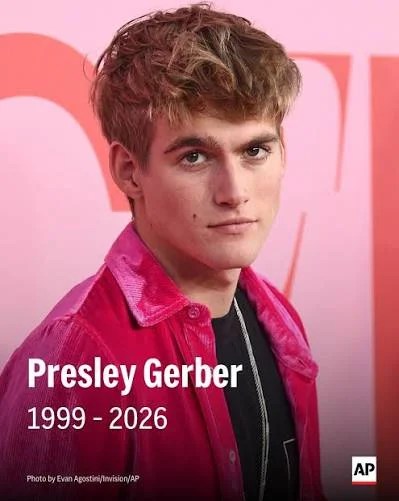
Presley Gerber, son of Cindy Crawford and Rande Gerber, who died aged 27.

Medical Examiner Has Not Confirmed Cause of Death

Initial reports about a suspected overdose quickly circulated following Gerber’s death.

But the official medical investigation remains crucial.

The Los Angeles County Medical Examiner confirmed that the investigation was continuing and that limited information was initially available.

Further examination, including toxicology testing where appropriate, can be required before a definitive cause of death is established.

That process can take time.

It means headlines saying Gerber “died from an overdose” would currently go further than the confirmed evidence.

The accurate description is that police are investigating his death as a suspected overdose.

Family Asks for Privacy

Gerber’s family confirmed his death through a representative.

His parents, Cindy Crawford and Rande Gerber, and his younger sister, Kaia Gerber, have asked for privacy as they deal with the loss.

The family’s statement described it as a very difficult and painful time.

The family has not released any detailed public statement about the circumstances surrounding Gerber’s death.

Their request for privacy comes as international attention focuses on the tragedy because of the family’s prominence in the fashion and entertainment industries.

Cindy Crawford with Rande Gerber and their children Presley and Kaia Gerber.

Who Was Presley Gerber?

Presley Walker Gerber was born in California in 1999.

He was the eldest child and only son of supermodel Cindy Crawford and businessman Rande Gerber.

His younger sister, Kaia Gerber, also became a successful model and actress.

Growing up with one of the world’s most recognisable supermodels as his mother meant that Presley was familiar with the fashion industry from an early age.

He eventually followed his mother into modelling, too.

Gerber made his runway debut as a teenager and went on to work with several internationally recognised fashion houses.

His modelling credits included major brands such as Burberry and Dolce & Gabbana.

He also appeared alongside his mother in a Pepsi advertisement connected with the 2018 Super Bowl.

Following Cindy Crawford Into Modelling

Crawford became one of the defining supermodels of the 1980s and 1990s.

Both of her children eventually entered the fashion industry.

While Kaia developed a particularly high-profile international modelling career, Presley also appeared on major runways and in fashion campaigns.

His distinctive appearance and family connection meant attention followed him from the beginning of his career.

But Gerber also became increasingly open about aspects of his private life that were considerably more difficult.

In later years, he publicly discussed mental health and substance-use struggles.

Presley Spoke Openly About Mental Health

One of the most important parts of Gerber’s public life recently was his willingness to discuss mental health.

He created a social media series called Mental Health Mondays, using the platform to encourage more open conversations about emotional wellbeing.

Gerber discussed some of his difficulties and the tools he had used to manage them.

Rather than presenting himself as someone who had everything figured out, he talked about struggling and trying to learn from his experiences.

He expressed hope that speaking publicly about his mistakes and difficulties might help other people going through similar situations.

That openness became an increasingly significant part of his public identity.

Presley Gerber previously spoke publicly about mental health and personal struggles.

Remembering Presley Beyond the Circumstances of His Death

The intense interest surrounding Gerber’s death is understandable, particularly because he was part of such a famous family.

But his life should not be reduced solely to the circumstances in which he died.

He was a son, brother and model who also attempted to use his public platform to encourage conversations about mental health.

His Mental Health Mondays project reflected a willingness to discuss subjects many people find difficult to address publicly.

Gerber spoke about personal difficulties because he hoped other people might feel less alone.

That part of his story deserves recognition alongside the continuing investigation into his death.

Conclusion

The Presley Gerber death remains under investigation following the 27-year-old model’s death at a rehabilitation facility on Sunday, 20 September 2026.

Santa Monica Police say officers responded to a report of a possible overdose at approximately 9:35am.

Detectives are now investigating Gerber’s death as a suspected overdose, and police say there is currently no indication of foul play.

However, the official cause and manner of death have not yet been determined.

That responsibility rests with the Los Angeles County Department of Medical Examiner.

Gerber was the only son of Cindy Crawford and Rande Gerber and the older brother of model and actress Kaia Gerber.

He followed his mother into modelling while also becoming increasingly open about his mental health and personal struggles.

His family has requested privacy during what their representative described as a very difficult and painful time.

Until the medical examiner completes its investigation, the precise cause of Presley Gerber’s death remains unconfirmed.

Frequently Asked Questions

How old was Presley Gerber when he died?

Presley Gerber was 27 years old.

When did Presley Gerber die?

He died on Sunday, 20 September 2026.

Where did Presley Gerber die?

According to the Los Angeles County Medical Examiner and media reports, Gerber died at a rehabilitation facility in California.

Was Presley Gerber’s death caused by an overdose?

That has not yet been officially confirmed. Santa Monica Police say they are investigating the death as a suspected overdose. The medical examiner will determine the official cause and manner of death.

Is foul play suspected?

Police said there is currently no indication of foul play.

Who are Presley Gerber’s parents?

His parents are supermodel Cindy Crawford and businessman Rande Gerber.

Who is Presley Gerber’s sister?

His younger sister is model and actress Kaia Gerber.

David Grey Hibernian: Painful Endgame as Stale Hibs Slump

0
David Grey Hibernian: Painful Endgame as Stale Hibs Slump

Pressure Builds Around David Grey at Hibernian

The situation surrounding David Grey and Hibernian is becoming increasingly uncomfortable as a poor run of results leaves the Easter Road club searching for answers.

Hibs’ latest setback — a 1-0 defeat away to St Mirren on Sunday — extended their winless run to six matches in all competitions. It was another frustrating afternoon in which Grey’s side struggled to turn possession and attacking opportunities into the result they desperately needed.

For a manager who holds legendary status at Easter Road because of his playing career, particularly his unforgettable 2016 Scottish Cup-winning goal, the current situation is painful.

Grey’s connection with Hibernian is unquestionable. But football management is ultimately judged on results, and those results are creating increasing scrutiny around his position.

St Mirren Defeat Deepens Hibs’ Problems

Hibernian travelled to Paisley knowing a victory could ease some of the pressure building around the team.

Instead, St Mirren took all three points.

Jonah Ayunga scored the only goal of the match in the second half, leaving Hibs without the response they needed. The defeat continued a difficult sequence and added to concerns that the team has become predictable and short of confidence.

The result was particularly damaging because Hibs had opportunities to influence the match but again failed to make enough of them.

That has become one of the recurring frustrations surrounding the team.

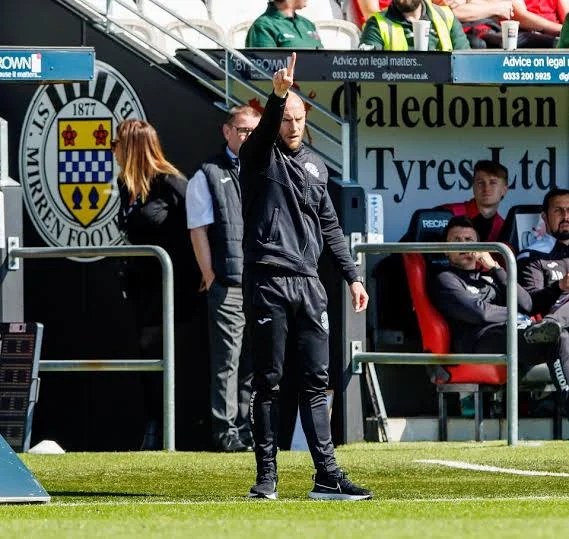
David Grey watches Hibernian during their Scottish Premiership defeat to St Mirren.

Why Has Hibernian Become Stale?

Calling a football team “stale” can mean several things.

For Hibs, the concern is not simply one bad performance. It is the sense that familiar problems are appearing repeatedly without an obvious solution.

Grey’s team have struggled to create enough decisive moments in attack, while mistakes and lapses at the other end have proved expensive.

When confidence drops, players can become more cautious. Passes that would normally be played quickly become delayed, attacking runs become less frequent, and teams start looking predictable.

That appears to be part of the challenge facing Hibernian.

Opponents know what to expect, while Hibs have not consistently found alternative ways to hurt them.

Six Games Without a Win Raises Serious Questions

The statistic that matters most is straightforward: Hibernian are now six matches without a victory in all competitions.

A short winless run can happen to almost any team.

But when poor results continue, the conversation inevitably shifts from individual performances towards bigger questions about tactics, confidence, recruitment and management.

For Grey, that means scrutiny over whether he can find a way to reverse the decline.

Football can change quickly. Two or three victories can completely alter the atmosphere around a club.

The difficulty lies in finding that first victory when confidence is already low.

David Grey’s Special Relationship With Hibernian

What makes the situation especially difficult is Grey’s history with the club.

He is not simply another Hibernian manager.

Grey became permanently associated with one of the greatest moments in the club’s modern history when he scored the winning goal against Rangers in the 2016 Scottish Cup final.

His stoppage-time header secured a 3-2 victory and ended Hibernian’s 114-year wait to win the Scottish Cup.

For supporters who experienced that afternoon at Hampden Park, Grey will always occupy a special place in the club’s history.

But legendary status as a player cannot protect any manager indefinitely from the pressures created by poor results.

Management presents an entirely different challenge.

Has Grey Reached the Endgame?

That is now the uncomfortable question hanging over Easter Road.

It would be premature to state that Grey’s departure is inevitable unless the club itself makes that decision. However, the combination of disappointing performances and a prolonged winless run inevitably increases speculation about his future.

The next few fixtures could therefore become critical.

Grey needs more than improved performances. Hibernian needs victories.

Managers often discuss fine margins, and there is truth in that. One goal, one defensive mistake or one refereeing decision can transform a match.

But over a longer period, results create their own story.

If Hibs cannot reverse their current trajectory, pressure on the manager will continue to increase.

Hibs Needs More Cutting Edge

One obvious problem is attacking effectiveness.

Possession is useful only when a team turns it into meaningful chances and goals.

Hibernian have talented attacking players, but the team needs greater movement, quicker decision-making and more composure around the penalty area.

There also needs to be greater variety.

If opponents can comfortably anticipate how Hibs intend to attack, defending against them becomes much easier.

Grey must find ways of making his side less predictable, whether through changes in formation, personnel or attacking patterns.

Hibernian struggle to find a breakthrough during their latest Scottish Premiership defeat.

Confidence May Be as Important as Tactics

Football problems are not always purely tactical.

Confidence can have an enormous influence on performance.

When a team is winning, players attempt difficult passes, take shots earlier and make aggressive runs because they expect something positive to happen.

During a losing run, the opposite can occur.

Players hesitate. Supporters become anxious. Every mistake feels more significant.

That psychological pressure can create a cycle in which poor results lead to nervous performances, which then lead to further poor results.

Breaking that cycle is one of Grey’s biggest immediate challenges.

Supporters Want Signs of Progress

Hibernian supporters have ambitious expectations for their club.

They want to see Hibs competing strongly in the Scottish Premiership, challenging for European qualification and making serious runs in domestic cup competitions.

Those expectations are reasonable for a club with Hibernian’s history and support.

The current frustration is therefore not simply about losing individual matches.

Supporters want evidence that the team is progressing.

If performances begin improving and results follow, the mood around Easter Road can change quickly.

But continued stagnation would inevitably make questions about the manager increasingly difficult for the club’s hierarchy to ignore.

The Players Also Carry Responsibility

It would be too simplistic to place everything on David Grey.

Managers select the team and determine tactics, but players must deliver on the pitch.

Experienced members of the Hibernian squad now have an important responsibility.

They need to provide leadership when confidence is low, maintain standards in training and help younger teammates through a difficult period.

The technical area cannot always solve individual mistakes, missed opportunities and poor decisions.

If Hibernian are going to recover, it will require a collective response from the manager and his squad.

What Does David Grey Need to Change?

Grey’s immediate priority must be finding a formula that makes Hibs more dangerous while maintaining defensive stability.

That may require tactical changes.

It could mean altering the formation, introducing different players or simplifying the team’s approach until confidence returns.

Most importantly, Hibs need energy.

A team described as stale must rediscover intensity — pressing opponents, moving the ball faster and attacking with greater conviction.

Occasionally one victory is enough to trigger that transformation.

The challenge for Grey is ensuring it arrives soon.

A Painful Situation for a Hibs Legend

There is something particularly uncomfortable about watching a club legend struggle as manager.

Grey’s contribution to Hibernian history cannot be erased by what happens during his managerial career.

His 2016 Scottish Cup winner will remain one of the most celebrated goals in the club’s history regardless of future results.

But professional football rarely allows sentiment to override performance indefinitely.

The board must ultimately judge Grey on whether he can deliver the results and progress expected from the current Hibernian team.

That makes the coming period potentially decisive.

Conclusion

The pressure surrounding David Grey and Hibernian has intensified after the 1-0 defeat to St Mirren extended the club’s winless sequence to six matches in all competitions.

The biggest concern is not simply the number of defeats. It is the growing feeling that Hibs have become stale, predictable and short of confidence.

Grey remains one of the most important figures in Hibernian’s modern history, but his achievements as a player cannot answer the questions he now faces as manager.

The situation is not necessarily beyond recovery. Football changes rapidly, and a couple of victories could transform the atmosphere around Easter Road.

But the next step is clear: Hibernian need a response, and they need it quickly.

For Grey, the coming matches could determine whether this difficult period becomes the beginning of a revival — or the painful endgame of his time in charge

Vermont Jury Convicts Man of Attempted Murder in Shooting of Three Palestinian Students

0
Vermont Jury Convicts Man of Attempted Murder in Shooting of Three Palestinian Students

Jury Convicts Jason Eaton in Vermont Palestinian Students Shooting

A Vermont jury has convicted Jason Eaton of three counts of attempted second-degree murder for shooting and seriously injuring three Palestinian college students in Burlington in November 2023.

The verdict was delivered on Monday, 21 September 2026, in Chittenden Superior Criminal Court. Jurors deliberated for a little under two hours following a six-day trial before finding Eaton guilty on all three counts.

The three victims — Hisham Awartani, Kinnan Abdalhamid and Tahseen Aliahmad — were long-time friends who were visiting Burlington over the Thanksgiving holiday when they were shot while walking near Eaton’s home on 25 November 2023.

The Vermont Palestinian students shooting attracted international attention, particularly because it occurred weeks after the Israel-Hamas war began and amid heightened concerns about anti-Palestinian and anti-Muslim violence in the United States.

However, authorities did not bring hate-crime charges, and investigators have not established a clear bias motive for the attack.

Three Palestinian students were wounded in a 2023 shooting in Burlington, Vermont.

What Happened to the Three Palestinian Students?

The three young men were walking in Burlington when Eaton opened fire.

All three survived but suffered gunshot injuries. The consequences were particularly severe for Awartani, who became paralysed from the waist down.

The victims were university students studying at different institutions in the United States and had travelled to Vermont to spend Thanksgiving with friends and family.

The case immediately generated widespread concern because of their Palestinian identity and the timing of the shooting.

Questions about motive consequently became an important part of public discussion surrounding the case.

But it is important to distinguish that discussion from what prosecutors proved in court: Eaton was prosecuted for attempted second-degree murder, rather than a hate crime.

Three Palestinian students were wounded in a 2023 shooting in Burlington, Vermont.

Jason Eaton Did Not Deny Carrying Out the Shooting

A central feature of the trial was that Eaton did not deny shooting the three students.

Instead, the dispute concerned whether he should be held criminally responsible for what he had done.

His lawyers presented an insanity defence, arguing that Eaton was suffering from serious delusions at the time of the attack.

During the trial, jurors heard evidence that Eaton claimed he believed he was receiving instructions from intelligence agencies, including the CIA and Israel’s Mossad, as well as what he regarded as divine commands.

There is no evidence that those agencies instructed him to carry out the shooting.

The defence argued that his claimed beliefs demonstrated he was legally insane at the time of the attack.

Prosecutors disputed that conclusion.

Jury Rejects Insanity Defence

The central question facing the jury was therefore not simply whether Eaton fired the shots, but whether he was legally responsible for his actions.

Mental-health experts offered differing assessments during the proceedings.

A defence expert testified that Eaton was legally insane at the time of the shooting. The prosecution presented expert evidence reaching a different conclusion and arguing that Eaton did not meet the legal standard for insanity.

After hearing the competing testimony and other evidence presented during the six-day trial, the jury rejected Eaton’s insanity defence.

Jurors found him guilty of all three attempted second-degree murder charges.

That verdict means the jury concluded he could be held criminally responsible for the shootings.

Eaton Had Previously Been Ruled Competent to Stand Trial

The question of Eaton’s mental condition had been examined well before the trial began.

In April 2026, Judge John Pacht ruled that Eaton was competent to stand trial following conflicting expert testimony about his mental state.

That issue was legally distinct from the insanity defence that was eventually presented to the jury.

Competency concerns whether a defendant is capable of understanding the legal proceedings and participating rationally in their defence at the time of the trial.

An insanity defence, by contrast, concerns the defendant’s legal responsibility for their actions at the time the alleged crime occurred.

Judge Pacht subsequently allowed Eaton to pursue an insanity defence, setting the stage for the competing psychiatric testimony heard by jurors.

What Evidence Did the Jury Hear?

The trial included testimony from the three students and psychiatric experts, as well as evidence related to the weapon used in the shooting.

According to the Associated Press, investigators linked the .380-calibre Ruger handgun to the attack.

Jurors were also played portions of a recording in which Eaton described the alleged voices and instructions he said he had experienced before the shooting.

The defence relied heavily on this material to argue that Eaton’s actions were the result of a serious psychiatric condition.

Prosecutors challenged that interpretation.

Ultimately, the jury accepted the prosecution’s case that Eaton remained criminally responsible.

Jason Eaton appears in court during the Vermont Palestinian students shooting trial.

Why Were Hate-Crime Questions Raised?

The identities of the victims and the timing of the attack prompted immediate questions about whether the students had been deliberately targeted because they were Palestinian.

The shooting happened on 25 November 2023, during an intense period of international tension following the start of the Israel-Hamas war the previous month.

The case consequently generated calls for authorities to investigate whether bias had played a role.

But despite those concerns, Eaton was not charged with a hate crime, and reporting on the case has said that no clear motive for the shooting was established.

That distinction matters. Describing the attack as definitively motivated by anti-Palestinian hatred would go beyond what has been established in the criminal case.

Victims Testified During the Trial

The students themselves played an important role in the proceedings.

During the trial, they provided evidence about the attack and its consequences.

Nearly three years had passed between the November 2023 shooting and the September 2026 verdict, drawing the conclusion of the trial a significant moment in a case that had moved through competency hearings, disputes over Eaton’s defence and several scheduling changes.

Awartani continues to live with particularly serious injuries after the shooting left him paralysed.

The physical and emotional consequences for all three victims remain an important part of the story beyond the courtroom verdict.

What Sentence Could Jason Eaton Receive?

Eaton has now been convicted of three counts of attempted second-degree murder.

Each charge carries the possibility of a severe sentence, and reporting from before the verdict indicated that Eaton could face up to life imprisonment.

His exact punishment has not yet been determined.

A sentencing hearing will therefore be the next major stage of the case.

Until the judge formally imposes a sentence, reports should avoid stating precisely how long Eaton will spend in prison.

A Case That Drew International Attention

The Vermont Palestinian students shooting became much more than a local criminal case.

It occurred during a period of heightened fear among Jewish, Muslim, Arab and Palestinian communities in the United States as the war in Gaza intensified political and social tensions.

The Palestinian identities of the victims brought international attention to the shooting almost immediately.

At the same time, the eventual trial focused heavily on a different legal question: whether Eaton’s claimed psychiatric condition meant he could be held criminally responsible for opening fire.

After hearing evidence from both sides, the Vermont jury answered that question by returning guilty verdicts on all three attempted-murder counts.

Conclusion

A Vermont jury has convicted Jason Eaton in the Vermont Palestinian students shooting, nearly three years after Hisham Awartani, Kinnan Abdalhamid and Tahseen Aliahmad were shot while walking in Burlington.

Eaton admitted carrying out the November 2023 shooting. Instead, his defence argued that he was legally insane and therefore should not be held criminally responsible.

After a six-day trial and less than two hours of deliberation, jurors rejected that defence and convicted the 51-year-old of three counts of attempted second-degree murder.

The verdict resolves the central question of Eaton’s criminal responsibility, but the legal process is not finished. His sentence has yet to be imposed.

The case also leaves an important distinction in place: although the shooting prompted widespread concern that the Palestinian students may have been targeted because of their identity, Eaton was not charged with a hate crime and a clear bias motive has not been established in court.

Ozempic and Wegovy May Have an Unexpected Mental Health Benefit

0
Ozempic and Wegovy May Have an Unexpected Mental Health Benefit

Ozempic and Wegovy Mental Health Benefits Attract Researchers’ Attention

Ozempic and Wegovy mental health benefits are attracting increasing scientific interest after new research linked semaglutide—the active ingredient in both medicines—to better outcomes among people with certain psychiatric conditions.

Ozempic is best known as a treatment for type 2 diabetes, while Wegovy is prescribed for weight management. Both contain semaglutide, a drug belonging to a class known as GLP-1 receptor agonists.

However, researchers are increasingly investigating whether semaglutide could have effects extending beyond blood sugar control, appetite and body weight.

A large Swedish study published in The Lancet Psychiatry found semaglutide use was associated with a lower risk of worsening mental-health outcomes among people who already had depression, anxiety or substance-use disorders.

Importantly, this finding does not mean Ozempic or Wegovy has been proven to treat depression, anxiety or other psychiatric disorders. The findings show an association, and researchers say further clinical trials are required.

What Did the Study Find?

Researchers examined Swedish health data involving tens of thousands of people with diabetes who also had existing mental-health conditions.

Among the most striking findings, semaglutide use was associated with a 44% lower risk of worsening depression and a 38% lower risk of worsening anxiety. Researchers also reported a 47% lower risk of worsening substance-use disorder.

The broader research found fewer psychiatric hospital visits and less sickness absence related to mental health problems during periods when some patients were receiving GLP-1 medicines, particularly semaglutide.

These are substantial associations, but they need to be interpreted carefully. Observational research can identify patterns between medication use and health outcomes, but it cannot by itself prove that semaglutide directly caused the improvements

Ozempic and Wegovy mental health benefits investigated in new semaglutide research.

Another Study Looked Specifically at Bipolar Disorder

The research has become even more interesting following a separate large Swedish study involving people with bipolar disorder.

According to Griffith University, researchers analysed data from nearly 15,000 people with bipolar disorder and found semaglutide was associated with a 21% lower risk of psychiatric hospitalisation.

This finding is particularly noteworthy because bipolar disorder can involve episodes of depression and mania that sometimes require hospital treatment.

But again, the result should not be interpreted as evidence that semaglutide is a treatment for bipolar disorder.

Researchers are investigating the association and possible biological mechanisms, but dedicated randomised clinical trials would be needed before doctors could determine whether the drug has a direct psychiatric benefit.

How Could Semaglutide Affect the Brain?

The obvious question is why a medicine associated with diabetes and weight loss might have anything to do with mental health.

GLP-1 is involved in more than appetite.

Researchers believe GLP-1 signalling may influence biological processes in the brain, including inflammation and cellular stress. Scientists are therefore studying whether these pathways could partly explain the associations seen in mental-health research.

There may also be indirect explanations.

For some patients, losing excess weight or achieving better blood-sugar control could improve physical health, mobility, sleep or quality of life. Those changes could potentially influence psychological wellbeing.

Separating these indirect benefits from a possible direct effect of semaglutide on the brain will require considerably more research.

What Are Ozempic and Wegovy?

Ozempic and Wegovy are different branded medicines, although both contain semaglutide.

Ozempic is primarily used to help manage blood glucose in adults with type 2 diabetes. Wegovy is designed for chronic weight management in eligible patients.

Semaglutide mimics the naturally occurring hormone GLP-1. Among other effects, it can reduce appetite and slow gastric emptying, helping people feel fuller for longer.

The extraordinary popularity of these medicines has made semaglutide one of the world’s most closely studied drugs.

Researchers are now exploring potential effects well beyond weight loss—including cardiovascular disease, addiction, neurological conditions and mental health.

Could Ozempic Treat Depression or Anxiety?

At present, patients should not view Ozempic or Wegovy as substitutes for established mental health treatment.

Neither medicine is approved specifically as an antidepressant or anti-anxiety treatment. Current research does not establish that someone without an appropriate metabolic indication should take semaglutide to improve their mental health.

That distinction is especially important when headlines describe the findings as a mental-health “benefit.”

The studies suggest an association worth investigating. They do not establish a new approved use for the medications.

Anyone taking medication for depression, anxiety, bipolar disorder or another psychiatric condition should not stop or change their existing treatment because of these findings without discussing it with their healthcare professional.

What About Previous Concerns Over Mental Health?

The findings are interesting partly because researchers and regulators have previously investigated whether GLP-1 weight-loss medicines could negatively affect mental health.

Earlier studies did not find evidence that these medicines were associated with an increased risk of psychiatric hospitalisation or new mental illness.

The newer research goes further by asking whether certain GLP-1 medicines might actually be associated with better outcomes in some patient groups.

Scientists still need to determine exactly which patients might benefit and whether the associations represent a genuine drug effect.

Not All GLP-1 Medicines Produced the Same Results

Another important detail is that GLP-1 medicines should not automatically be treated as interchangeable.

In the bipolar-disorder research, the association with reduced psychiatric hospitalisation was seen with semaglutide, while researchers reported that other GLP-1 drugs did not show the same association.

That makes the results particularly interesting because it raises the possibility that semaglutide itself—or differences in how individual GLP-1 medicines work—could matter.

Researchers will need more evidence to understand why.

Why Scientists Are Excited but Cautious

There is a potentially important clinical question behind the Ozempic and Wegovy mental health benefits research.

Physical and mental-health conditions frequently overlap. Someone living with diabetes or obesity may also experience depression or anxiety.

If a medicine prescribed for an existing metabolic condition were eventually shown to provide an additional mental-health benefit, that could have meaningful implications for patient care.

But researchers have stressed the need for stronger evidence.

Reviews of GLP-1 medicines and psychiatric conditions have described the evidence as promising but preliminary, with well-designed randomised controlled trials needed to establish effectiveness and long-term safety

The Dual Pathways of GLP-1 Brain Signalling

   ┌────────────────────────────────────────────────────────┐
   │             GLP-1 RECEPTOR AGONISTS                    │
   └───────────────────────────┬────────────────────────────┘
                               │
            ┌──────────────────┴──────────────────┐
            ▼                                     ▼
   ┌─────────────────┐                  ┌───────────────────┐
   │ DIRECT PATHWAY  │                  │ INDIRECT PATHWAY  │
   │ (Neurobiology)  │                  │   (Metabolism)    │
   └────────┬────────┘                  └─────────┬─────────┘
            │                                     │
            ├─► Dopamine/Glutamate modulation     ├─► Significant weight loss
            │   (Reduces reward/cravings)         │   (Reduces weight stigma)
            │                                     │
            ├─► Neuroinflammation reduction       ├─► Improved glycemic control
            │   (Mitigates cell damage)           │   (Stabilizes brain energy)
            │                                     │
            └─► Neurogenesis in Hippocampus       └─► Systemic inflammation drop
                (Enhances synaptic plasticity)        (Alleviates somatic stress)
            │                                     │
            └──────────────────┬──────────────────┘
                               │
                               ▼
   ┌────────────────────────────────────────────────────────┐
   │           IMPROVED PSYCHIATRIC OUTCOMES                │
   │     (Reduced risk of worsening depression/anxiety)     │
   └────────────────────────────────────────────────────────┘
Researchers investigate how semaglutide and GLP-1 medicines could influence mental health.

What Should Patients Know?

The research is encouraging, but it should not change someone’s treatment plan by itself.

Ozempic and Wegovy are prescription medicines that have recognised side effects and risks. They should be used under appropriate medical supervision and for clinically appropriate indications.

The latest findings therefore do not mean people should start taking semaglutide specifically for depression or anxiety.

Instead, they provide scientists with another reason to investigate how GLP-1 signalling affects the brain and whether semaglutide might eventually have applications beyond its established metabolic uses.

Conclusion

The emerging evidence around Ozempic and Wegovy mental health benefits adds another intriguing chapter to the story of semaglutide.

Large observational studies have linked semaglutide to lower risks of worsening depression and anxiety, while separate research involving people with bipolar disorder has found an association with fewer psychiatric hospitalisations.

Those findings are promising, but they do not prove that Ozempic or Wegovy directly treat mental illness.

The next major step will be controlled clinical research capable of determining whether semaglutide genuinely produces psychiatric benefits, which patients might benefit and how those effects occur.

For now, the safest conclusion is also the most interesting one: a medicine famous for diabetes and weight

Kate Beckinsale and Len Wiseman Divorce Timeline: Wedding to Final Split

0
Kate Beckinsale and Len Wiseman Divorce Timeline: Wedding to Final Split

Few Hollywood love stories have been as intertwined with the movies as the relationship between Kate Beckinsale and Len Wiseman.

They met on the set of a vampire action film, fell in love while both were in other relationships, married within a year of going public as a couple, and continued working together across multiple blockbuster projects.

Then, after 11 years of marriage, it all unravelled over the course of a slow, quiet separation that stretched across four more years before the paperwork was finally complete.

The Kate Beckinsale/Len Wiseman divorce timeline spans from their November 2015 separation to the finalisation in November 2019, but the full story of their relationship begins more than a decade earlier on a Budapest film set. is the complete chronological account of how they came together, the years they spent as one of Hollywood’s most visually striking power couples, and the events that brought their marriage to its end.

Kate Beckinsale and Len Wiseman together at a premiere during their marriage

How Kate Beckinsale and Len Wiseman Met on the Underworld Set

In 2002, Len Wiseman was preparing to direct his first feature film, a vampire-versus-werewolf action movie called Underworld. He cast British actress Kate Beckinsale in the lead role of Selene, a vampire warrior.

By Beckinsale’s own account, she initially turned the role down, believing a film about vampires and werewolves was not the type of project she was looking for. Wiseman called her back, and when she saw character drawings he had made that were clearly based on her likeness, she accepted.

At the time, both were in committed relationships. Beckinsale had been with Welsh actor Michael Sheen since 1995. The couple shared a daughter, Lily Mo Sheen, born on January 31, 1999. Wiseman had been married to his first wife, Dana, a kindergarten teacher, since 1994.

Kate Beckinsale and Len Wiseman Divorce Timeline: From Marriage to Final Split
Kate Beckinsale and Len Wiseman share a loving gaze during happier times before their 2015 split and 2019 divorce.

The film was shot in Budapest, and in a detail that has been widely noted in the years since, Beckinsale personally asked Wiseman to cast Sheen in the film so that her family could join her on location. Wiseman agreed. Sheen auditioned and impressed the director enough to land a major role as the Lycan leader Lucian.

Both Beckinsale’s relationship with Sheen and Wiseman’s marriage to Dana ended in 2002 during or shortly after the production. By January 2003, Beckinsale and Wiseman were publicly seen together as a couple. They were engaged by June of that year.

Beckinsale has repeatedly pushed back against the narrative that she left Sheen for Wiseman. In a 2012 interview with Entertainment Weekly, she said the popular version of the story, in which she was on set and simply ran off with the director, was “just not true”.

She said that if it had happened that way, it would have been very difficult to maintain a positive relationship with Sheen afterward, which they demonstrably did.

For his part, Sheen said in interviews that while the situation was “obviously not easy”, he never felt anything had happened behind his back. He praised Wiseman as a good man and a wonderful stepfather to Lily.

The 2004 Wedding and a Decade of Professional Collaboration

Kate Beckinsale and Len Wiseman married on May 9, 2004, in Bel-Air, Los Angeles. It was Beckinsale’s first marriage and Wiseman’s second.

The couple had no children together, though Wiseman took on a stepfather role with Beckinsale’s daughter Lily, who was five years old at the time of the wedding.

Their marriage was defined in part by an unusually close professional collaboration. They worked together across multiple high-profile films during the course of their relationship:

  • Underworld (2003): Where they met. Wiseman directed; Beckinsale starred.
  • Underworld: Evolution (2006): The sequel, again directed by Wiseman with Beckinsale reprising her role as Selene.
  • Total Recall (2012): Wiseman directed this remake of the 1990 Arnold Schwarzenegger film, with Beckinsale playing the antagonist opposite Colin Farrell and Jessica Biel.
  • Underworld: Blood Wars (2016): The fifth instalment in the franchise. While Wiseman did not direct this entry, he contributed to writing and production, and Beckinsale returned as Selene.

In a 2012 interview with Parade, Beckinsale spoke positively about their working relationship. She said one of the things they liked least about their careers was the forced separation that different projects could create and that working together allowed them to avoid that.

She also joked during a Tonight Show appearance around the same period that her secret to working with her husband was to “always argue over text so other people aren’t embarrassed,” adding, “You’d be amazed how fast you can type ‘douchebag’.”

Early Signs of Trouble: The Wedding Ring and the Hesitation of Children

Looking back, there were subtle public signals that the marriage was not entirely smooth, even during its seemingly stable middle years.

In July 2012, Beckinsale told Glamour UK that she was going “back and forth” on whether to have a child with Wiseman. She was 39 at the time and already the mother of a teenager. The remark was not explosive on its own, but it suggested a lack of settled agreement on a major life decision.

By July 2015, Beckinsale was photographed without her wedding ring at the ITV Summer Party in London. The couple had not been spotted together in public since Memorial Day 2015, when they were seen leaving Joel Silver’s annual party hand in hand. That May appearance turned out to be their last public outing as a couple.

In October 2015, a source told Entertainment Tonight that Wiseman had been staying at the Sunset Marquis hotel in Los Angeles. His last social media mention of Beckinsale had come in May, when he retweeted a photo from a group celebration of the upcoming Underworld 5.

Also Read: Judy Markey, Chicago Radio Legend, Dies at 82, Her Marriage and Career

The CJ Franco Sightings and the November 2015 Separation

The separation between Beckinsale and Wiseman became a public story not through an official announcement, but through a series of paparazzi photographs.

Len Wiseman drives while CJ Franco smiles in her black fedora during a low-key night out.

Beginning in early October 2015, Wiseman was spotted out in Los Angeles with CJ Franco, a 24-year-old model. They were photographed together on October 6, again on October 19, and once more on November 17, when they were seen leaving The Nice Guy, a popular West Hollywood restaurant, together at 2 AM. In all of these outings, Wiseman was not wearing his wedding ring.

Meanwhile, Beckinsale was in Prague filming “Underworld: Blood Wars”, the fifth instalment in the franchise she and Wiseman had built together.

On November 20, 2015, the separation was officially confirmed. A source told People at the time, “They are still friendly and spend time together in L.A. when Kate is there. There has been no drama. It’s just not Kate’s style. They have both had complicated schedules and have grown apart.”

Another source confirmed that neither Beckinsale nor Wiseman had been wearing their wedding rings for months by the time the separation was announced. Their last appearance together at a public event was the January 2015 Golden Globe Awards, where Beckinsale was already ringless.

The 2016 Divorce Filing and Three Years of Waiting

Despite the separation becoming public in November 2015, no divorce papers were filed for nearly a year. It was not until October 2016 that Wiseman officially filed for dissolution of the marriage in Los Angeles, citing irreconcilable differences.

The filing included several notable details:

  • The couple’s date of separation was listed as “to be determined”
  • Wiseman requested that the court terminate its ability to award spousal support to either party
  • He asked that both sides pay their own legal fees

Reports at the time indicated that neither party was seeking spousal support, which initially led some outlets to speculate that a prenuptial agreement existed. However, when the divorce was later finalised, it was revealed that the couple had no prenup.

Beckinsale retained the services of Laura Wasser, one of Hollywood’s most prominent divorce attorneys, whose previous clients have included Angelina Jolie and Kim Kardashian.

In the settlement, Beckinsale asked to keep her personal effects and jewellery, as well as all earnings she had accumulated after the date of separation. She also deeded a home in the Hollywood Hills to Wiseman as part of the asset division.

The divorce was finalised in November 2019, almost exactly four years after the separation was first announced. The lengthy timeline was not unusual by Hollywood standards but reflected the lack of urgency on either side to formalise an ending that had already taken effect in practice years earlier.

Life After Divorce: Kate Beckinsale’s Relationships and Career

Following the separation, Beckinsale entered a series of high-profile relationships that attracted significant media attention, partly because of the age gaps involved.

  • Matt Rife (2017): The comedian was 21 at the time, while Beckinsale was 43. The relationship lasted approximately one year.
  • Pete Davidson (January to April 2019): The Saturday Night Live cast member was 25. Their brief romance generated substantial tabloid coverage, particularly given that Davidson had recently ended his engagement to Ariana Grande.
  • Various other links: Beckinsale has also been linked to comedian Jack Whitehall and, in later years, to other younger men, though she has been characteristically private about the specifics of her personal life.

Professionally, Beckinsale continued working steadily in film and television. Notable projects include her role in the Amazon series “The Widow” (2019) and the action thriller “Wildcat” (originally titled “Lioness”), released in 2025.

She has also been remarkably open on social media about topics ranging from her sense of humour to her health. In recent years, she revealed a hospitalisation that sparked public concern, but she later addressed it directly on Instagram. Her relationship with daughter Lily, now 27, and her continued friendship with Michael Sheen have remained visible parts of her public life.

Life After Divorce: Len Wiseman’s New Chapter

Wiseman’s post-divorce life has been defined by both a new relationship and a career resurgence.

His relationship with CJ Franco, the model he was first photographed with in October 2015, developed into a long-term partnership. On July 4, 2023, Wiseman proposed to Franco during a dinner at their favourite restaurant in Cabo San Lucas, Mexico. Franco, then 32, described the moment to People, saying Wiseman got down on one knee just as fireworks began. They have remained engaged since, with Franco noting that the couple has chosen to maintain separate professional lives rather than the collaborative working relationship Wiseman had with Beckinsale.

Professionally, Wiseman directed “Ballerina” (2025), a spinoff of the John Wick franchise starring Ana de Armas and featuring Keanu Reeves. The film earned $140.2 million at the global box office against a $90 million budget and represented a significant comeback for Wiseman in the action genre.

The Complete Kate Beckinsale and Len Wiseman Relationship Timeline

YearEvent
1994Len Wiseman marries his first wife, Dana.
1995Kate Beckinsale begins a relationship with Michael Sheen.
1999Daughter Lily Mo Sheen, born to Kate and Michael
2002Kate casts in Underworld; she suggests Michael Sheen for a role.
2002Both Kate’s relationship with Sheen and Len’s marriage to Dana end.
January 2003Kate and Len first appear publicly as a couple.
June 2003Kate and Len become engaged.
May 9, 2004Wedding in Bel-Air, Los Angeles
2006Collaborate on Underworld: Evolution
2012Collaborate on Total Recall.
July 2012Kate says she is “back and forth” on having a child with Len.
January 2015Last public event together (Golden Globes); Kate ringless
May 2015Last sighting together at Joel Silver’s Memorial Day party
July 2015Kate spotted without a wedding ring in London.
October 2015Len is spotted with model CJ Franco and is also ringless.
November 17, 2015Len and CJ Franco photographed leaving The Nice Guy at 2 AM.
November 20, 2015Separation officially announced
October 2016Len files for divorce citing irreconcilable differences.
2017Kate dates comedian Matt Rife.
January to April 2019Kate dates Pete Davidson.
October 2019Divorce settled; Kate deeds Hollywood Hills home to Len.
November 2019Divorce finalised after nearly four years
July 4, 2023Len proposes to CJ Franco in Cabo San Lucas.

Frequently Asked Questions

When did Kate Beckinsale and Len Wiseman get married?

Kate Beckinsale and Len Wiseman married on May 9, 2004, in Bel-Air, Los Angeles, California. It was Beckinsale’s first marriage and Wiseman’s second.

When was the Kate Beckinsale-Len Wiseman divorce finalised?

Their divorce was finalised in November 2019, approximately four years after their separation was first announced in November 2015 and three years after Wiseman filed the paperwork in October 2016.

Did Kate Beckinsale and Len Wiseman have children together?

No. The couple had no children together. Beckinsale has one daughter, Lily Mo Sheen (born 1999), from her previous relationship with actor Michael Sheen.

Why did Kate Beckinsale and Len Wiseman split?

Wiseman cited irreconcilable differences in his divorce filing. A source close to the couple told People that they had “complicated schedules and have grown apart.” The separation became public after Wiseman was spotted with model CJ Franco while Beckinsale was filming in Prague.

Did Kate Beckinsale and Len Wiseman have a prenup?

No. According to TMZ, the couple did not have a prenuptial agreement. In the settlement, Beckinsale kept her jewellery, personal effects, and post-separation earnings, while she deeded a Hollywood Hills home to Wiseman.

Is Len Wiseman engaged to CJ Franco?

Yes. Wiseman proposed to CJ Franco on July 4, 2023, during a dinner in Cabo San Lucas, Mexico. The couple has been together since approximately 2015.

Saudi Arabia-Houthi Conflict Escalates as Missile Targets Riyadh

0
Saudi Arabia-Houthi Conflict Escalates as Missile Targets Riyadh

Saudi Arabia-Houthi Conflict Escalates With Riyadh Missile Attack

The Saudi Arabia-Houthi conflict has entered a dangerous new phase after Saudi Arabia said its air defences intercepted and destroyed a ballistic missile launched by Yemen’s Houthi movement towards the capital, Riyadh, early on Saturday.

The Saudi-led coalition said it destroyed the missile in the air. Residents reported hearing explosions, while photographs and video showed a large plume of black smoke near Riyadh’s King Khalid International Airport. The Saudi authorities said there were no casualties or damage from the intercepted ballistic missile.

The Houthis, meanwhile, claimed they had carried out attacks using missiles and drones against what they described as “sensitive” targets in Riyadh. They also claimed to have carried out an operation against facilities belonging to Saudi Aramco in Yanbu, an important Red Sea oil and industrial centre. Those specific Houthi claims had not been independently verified at the time of reporting.

The latest developments are raising concerns that fighting between Saudi Arabia and the Houthis could further destabilise Yemen, threaten regional energy infrastructure and create additional risks for shipping through the Red Sea.

Saudi Arabia Says Ballistic Missile Was Intercepted

Saudi officials said the Royal Saudi Air Defence Forces intercepted the ballistic missile before it could reach its intended target in Riyadh.

The Saudi-led coalition also reported that it thwarted attempted attacks against Yanbu, Taif, Baysh, and Farasan.

Saudi Civil Defence had earlier issued warnings to residents about potential aerial threats. Alerts were issued for Riyadh and Al-Kharj, and authorities later lifted them.

Saudi Arabia-Houthi conflict escalates after ballistic missile targets Riyadh.

The developments were particularly significant because Riyadh had largely avoided direct targeting during the latest phase of fighting. Reuters reported that the alerts were the first in the capital since the recent Saudi-Houthi escalation began in July

What Did the Houthis Claim?

The Houthis presented a different account of Saturday’s events.

Houthi military spokesman Yahya Saree said the group had used ballistic missiles, cruise missiles and drones in operations against Saudi Arabia.

The group claimed to have targeted sensitive locations in Riyadh as well as Saudi Aramco facilities in Yanbu. However, independent confirmation of the claimed strikes was not immediately available.

The Houthis said their operation was a response to attacks in Sanaa, Yemen’s capital.

This distinction is important when reporting the story: Saudi Arabia has confirmed the interception of a missile aimed towards Riyadh, but some of the Houthis’ claims about targets and damage remain claims rather than independently established facts.

Smoke and Flames Seen Near Riyadh Airport

One of the most striking developments was the appearance of smoke near Riyadh’s main international airport.

Reuters photographs and video showed a large column of black smoke in the area of King Khalid International Airport, with flames visible near what appeared to be fuel tanks. Reuters also reported hearing explosions in Riyadh.

The precise connection between the smoke and the Houthi attack claims was not immediately established in the reporting.

The incident nevertheless showed how serious the security situation around the Saudi capital is.

Smoke seen near Riyadh airport amid Saudi Arabia-Houthi tensions.

Why Yanbu Matters

Yanbu is particularly important as it is a major industrial and energy centre on Saudi Arabia’s Red Sea coast.

The city contains significant oil infrastructure and provides Saudi Arabia with access to the Red Sea for energy exports.

That makes any threat to Yanbu important far beyond Saudi Arabia itself.

The Houthis claimed to have targeted Aramco facilities there, while Saudi authorities said they had thwarted an attempted attack on Yanbu.

Energy infrastructure has increasingly become part of the wider confrontation.

If attacks disrupt major oil facilities or shipping routes, the consequences could potentially extend to international energy markets and supply chains.

Red Sea Shipping Faces Another Security Risk

The Saudi Arabia-Houthi conflict is also important because of Yemen’s position beside the Red Sea.

The Houthis have increased pressure on Saudi Arabia since declaring a naval blockade against Riyadh in July, according to Reuters. Their operations have included threats to vessels, cities and energy infrastructure.

The Red Sea is an important international trade corridor connecting Asia and the Middle East with Europe through the Suez Canal.

A prolonged escalation therefore creates concerns extending beyond the immediate Saudi-Yemeni conflict.

Commercial shipping companies pay close attention to security developments in the region because attacks or military activity can force vessels to change routes, increasing journey times and transport costs.

The Yemen Conflict Is Intensifying Again

The current confrontation comes against the background of Yemen’s long-running conflict.

The Houthis control Yemen’s capital, Sanaa, as well as large areas of northern Yemen. Saudi Arabia has historically supported Yemen’s internationally recognised government in its fight against the movement.

The conflict caused a devastating humanitarian crisis before a period of relative calm reduced cross-border attacks.

Recent developments threaten to reverse that progress.

The Associated Press reported that renewed fighting has intensified inside Yemen as well, including along the strategically important Red Sea coast.

That means the current crisis is not limited to missile exchanges between Saudi Arabia and the Houthis. This crisis is part of a broader struggle over territory, regional influence, and control of important maritime routes.

UN Security Council Condemns Houthi Attacks

The escalation has also attracted international attention.

The United Nations Security Council issued a statement condemning continued Houthi attacks against Saudi Arabia, including attacks affecting civilian and energy infrastructure.

It also condemned the Houthi military escalation inside Yemen.

International concern is likely to grow if attacks continue against major cities, airports, energy facilities or shipping.

The priority for outside governments will be preventing the confrontation from expanding further while protecting civilians and keeping major trade routes operating.

Could the Fighting Lead to a Wider Regional Conflict?

This issue is now one of the biggest questions surrounding the Saudi Arabia-Houthi conflict.

The Houthis align with Iran, while Saudi Arabia stands as a major regional power with extensive international security partnerships. The Saudi-Houthi confrontation is also unfolding amid wider regional conflict involving Iran.

However, escalation is not inevitable.

Reuters reported that Mohsen Rezaei, secretary of Iran’s Supreme National Security Council, said Tehran wanted the war between Saudi Arabia and the Houthis to end and believed Yemenis also wanted a settlement with Saudi Arabia.

For now, though, the military situation remains volatile.

What Happens Next?

Attention will focus on whether the Houthis launch further missiles or drones towards Riyadh and other Saudi cities and whether Saudi Arabia intensifies military action in Yemen.

Another key question is whether diplomatic channels can reduce the fighting before it develops into a prolonged cross-border conflict.

The safety of Saudi energy infrastructure will also be closely watched. Yanbu and other facilities are important components of the country’s oil export network, making attacks against them internationally significant.

Developments around the Red Sea will be equally important because continued military activity could affect commercial shipping.

Conclusion

The Saudi Arabia-Houthi conflict has become significantly more serious following the attempted ballistic missile attack on Riyadh.

Saudi Arabia says its air defences intercepted and destroyed the missile, while the Houthis have claimed broader missile and drone operations against Riyadh and Saudi Aramco facilities in Yanbu. Some of those Houthi claims remain unverified.

The immediate danger goes beyond a single missile.

Continued attacks could threaten civilians, Saudi energy infrastructure and shipping through the Red Sea while worsening Yemen’s already severe humanitarian and security situation.

With military operations continuing and diplomatic efforts yet to produce a ceasefire, Saudi-Houthi developments will remain a key story in the Middle East.

Carabao Cup Draw: Fleetwood Town to Host Arsenal in Huge Fourth-Round Tie

0
Carabao Cup Draw: Fleetwood Town to Host Arsenal in Huge Fourth-Round Tie

Fleetwood Town vs Arsenal Carabao Cup Fourth-Round Tie Confirmed

The Fleetwood Town vs Arsenal Carabao Cup fourth-round fixture will provide one of the most intriguing matches of the next stage, with League Two Fleetwood earning a home tie against Premier League champions Arsenal.

Fleetwood will welcome Mikel Arteta’s side to Highbury Stadium after reaching the fourth round of the League Cup for the first time in the club’s history. Their reward is a glamour home fixture against one of English football’s biggest clubs.

The fourth-round matches are scheduled for the week commencing 26 October 2026, with the EFL confirming the schedule for round four.

For Fleetwood, the match represents an opportunity to produce another memorable cup upset. Arsenal, meanwhile, will be expected to take the competition seriously as they attempt to move within three victories of the final.

Fleetwood Town celebrate reaching the Carabao Cup fourth round before facing Arsenal.

How Fleetwood Town Reached the Fourth Round

Fleetwood secured their historic place in the last 16 by beating Championship side Sheffield United 1-0 at Highbury Stadium.

An own goal from Rhys Norrington-Davies proved decisive as Fleetwood eliminated opposition from two divisions above them. The victory marked Fleetwood’s first appearance in the fourth round of the League Cup.

That achievement makes their meeting with Arsenal particularly significant.

Fleetwood are also the lowest-ranked club remaining in the competition, meaning another victory would represent one of the biggest results in their recent history.

Arsenal beat Ipswich to reach the last 16.

Arsenal booked their place in the fourth round with a 4-2 victory over Ipswich Town at Portman Road.

Teenager Max Dowman scored twice as Arsenal progressed, demonstrating the squad depth available to Arteta in the competition.

The result set up another away fixture for the Gunners, although their next destination will provide a dramatically different setting.

Rather than playing at a Premier League stadium, Arsenal will visit Fleetwood’s compact Highbury Stadium in Lancashire.

That contrast is part of what makes domestic cup football so appealing: clubs operating at very different levels of the English pyramid can suddenly find themselves competing against each other in a knockout match.

Highbury Stadium Could Create a Special Atmosphere

The Fleetwood Town vs Arsenal Carabao Cup tie will take place at Fleetwood’s Highbury Stadium.

For Fleetwood supporters, the opportunity to welcome Arsenal should make this one of the most anticipated home matches in the club’s recent history.

The smaller surroundings will also create a very different challenge for Arsenal compared with a normal Premier League fixture at the Emirates Stadium.

Fleetwood will hope that a passionate home crowd, combined with the pressure of a knockout match, can help them compete with opponents possessing considerably greater resources.

Arsenal will need to approach the occasion professionally. Cup football has repeatedly demonstrated that league position alone does not guarantee progress.

Highbury Stadium where Fleetwood Town will host Arsenal in the Carabao Cup fourth round.

Will Arsenal Rotate Their Squad?

Team selection will be one of the biggest questions before the match.

Arteta could use the Carabao Cup to give minutes to younger players and members of his squad who have received fewer opportunities in Premier League and European matches.

Arsenal’s victory over Ipswich already demonstrated that emerging players can play important roles in the competition.

However, making too many changes could create an opportunity for Fleetwood.

The League Two club will have little to lose and will be able to approach the match knowing most of the pressure is on their Premier League opponents.

Arteta therefore faces the familiar cup challenge of balancing squad rotation with selecting a team strong enough to avoid an upset.

Arsenal Have Waited Decades for Another League Cup

Despite Arsenal’s long history of domestic success, the League Cup has not traditionally been their most successful competition.

Their most recent League Cup triumph came in 1993, when they defeated Sheffield Wednesday in the final. Arsenal have subsequently reached the final several times without adding another League Cup trophy.

That long wait gives the current campaign additional significance.

A victory over Fleetwood would send Arsenal into the quarter-finals, leaving them firmly in contention for another major domestic trophy.

Arsenal continue their Carabao Cup campaign with a fourth-round trip to Fleetwood Town.

Other Major Matches in the Carabao Cup Draw

The fourth-round draw produced several eye-catching fixtures.

Liverpool will host Chelsea at Anfield in one of the standout matches, while Manchester City will face Brighton after City progressed past Norwich. Everton have been paired with Newcastle, while Sunderland hosts Brentford.

Fulham face Crystal Palace and Bournemouth welcome Aston Villa in further all-Premier League ties.

Meanwhile, Bradford City host Peterborough United, guaranteeing that a League One club will reach the quarter-finals.

Those Premier League match-ups could be significant for Arsenal. Several leading teams will eliminate each other before the quarter-finals, although Arteta’s side must first deal with their own potentially awkward assignment in Lancashire.

Why the Match Is So Important for Fleetwood

For Fleetwood, this fixture means considerably more than simply attempting to reach the next round.

Hosting Arsenal provides the club with national exposure and gives supporters the opportunity to watch Premier League opposition at Highbury.

It is also a reward for Fleetwood’s impressive run through the competition.

Having already eliminated Championship opposition, the League Two side can approach Arsenal with confidence rather than treating the match merely as a special occasion.

A victory would send Fleetwood into the Carabao Cup quarter-finals and create one of the biggest cup stories of the season.

Arsenal Cannot Afford to Underestimate Fleetwood

Arsenal will naturally enter the Fleetwood Town vs Arsenal Carabao Cup tie with greater expectations, but knockout football can punish complacency.

Fleetwood have already shown their ability to defeat higher-ranked opposition by eliminating Sheffield United.

The home side are likely to defend aggressively, compete for second balls and attempt to make the match uncomfortable for Arsenal from the opening whistle.

For the Gunners, controlling possession while avoiding unnecessary defensive mistakes will be important.

An early Arsenal goal could settle the contest, whereas the longer Fleetwood remain level, the greater the belief inside Highbury is likely to become.

A Classic David vs Goliath Cup Tie

The attraction of this fixture is straightforward.

On one side are Fleetwood Town, a League Two club enjoying their best-ever League Cup campaign. On the other are Arsenal, the reigning Premier League champions with ambitions of competing for major trophies domestically and in Europe.

The difference in resources is enormous.

But for 90 minutes, Fleetwood will have the opportunity to test themselves against Arsenal in front of their supporters.

That is precisely the kind of match that gives England’s domestic cup competitions their character.

Conclusion

The Fleetwood Town vs Arsenal Carabao Cup fourth-round match promises to be one of the most fascinating ties of the competition.

Fleetwood have already made club history by reaching this stage for the first time, following their 1-0 victory over Sheffield United. Their reward is a home meeting with Premier League champions Arsenal at Highbury Stadium.

Arsenal will be strong favourites on paper, but Arteta will know that cup matches against lower-league opposition require concentration and professionalism.

For Fleetwood, there is little pressure and plenty to gain. For Arsenal, victory would secure a place in the quarter-finals and bring them closer to ending their long wait for another League Cup triumph.

With a packed Highbury expected and two clubs arriving with very different expectations, this Carabao Cup occasion promises to be a classic.

Brentford 3-0 Chelsea: Bees Stun Blues With Dominant Second-Half Display

0
Brentford 3-0 Chelsea: Bees Stun Blues With Dominant Second-Half Display

Brentford 3-0 Chelsea as Bees Produce Superb Second Half

Brentford 3-0 Chelsea was a painful result for Xabi Alonso’s side as the Bees produced a devastating second-half performance to win the west London derby at the Gtech Community Stadium.

Chelsea had enjoyed the better of an evenly contested opening half, but everything changed after the break.

Jaidon Anthony opened the scoring in the 61st minute before Igor Thiago doubled Brentford’s advantage late in the game.

Substitute Fábio Carvalho then completed the victory deep into stoppage time.

The result extended Brentford’s impressive unbeaten start to the Premier League season and gave Keith Andrews’ side their best five-game start to a Premier League campaign.

For Chelsea, however, the evening raised more questions about their defensive organisation.

Chelsea Start Brightly

The 3-0 scoreline does not tell the entire story of the match.

Chelsea actually began reasonably well.

Pedro Neto produced the visitors’ first major opportunity after Danny Welbeck controlled a cross and found his team-mate.

Neto’s first-time effort forced Caoimhín Kelleher into an important save.

Morgan Rogers was also involved in several promising Chelsea attacks.

The Blues enjoyed periods of control during the opening 45 minutes and limited Brentford’s opportunities.

Cole Palmer attempted to influence proceedings from advanced areas, while Chelsea tried to stretch the Brentford defence.

But they could not convert their possession into a goal.

That failure became increasingly costly after half-time.

Brentford Raise Their Intensity

Brentford emerged for the second half with noticeably greater attacking purpose.

The Bees began pushing Chelsea deeper and creating problems through their physicality, movement and set pieces.

Anthony gave Chelsea an early warning when his header struck the top of the crossbar, although an offside flag had already been raised.

The warning was not heeded.

Just after the hour mark, Brentford finally broke through.

Jaidon Anthony Opens the Scoring

Brentford’s opening goal came from a well-worked corner.

Mikkel Damsgaard delivered the ball towards the back post, where Jannik Schuster headed it back across the face of goal.

Anthony was completely free.

From only a few yards out, he headed past Emiliano Martínez to put Brentford 1-0 ahead in the 61st minute.

It was Anthony’s first goal for Brentford.

For Chelsea, it was another frustrating goal to concede from a set-piece situation.

Suddenly, a match the visitors had looked capable of winning was moving away from them.

Jaidon Anthony celebrates scoring during Brentford's 3-0 win over Chelsea.
Jaidon Anthony celebrates scoring during Brentford’s 3-0 win over Chelsea.

Chelsea Push for an Equaliser

Chelsea attempted to respond immediately.

They increased the pressure and began winning corners.

There was a dangerous moment when a delivery caused confusion inside the Brentford penalty area, but the hosts managed to clear.

Chelsea also had several shots blocked during a spell of sustained pressure.

Yet that attacking ambition created another problem.

As Chelsea committed more players forward, space began appearing behind their defence.

Brentford had exactly the kind of pace needed to exploit it.

Kevin Schade became increasingly dangerous on the counter-attack.

And eventually Chelsea were punished.

Igor Thiago Makes It 2-0

The decisive second goal arrived late in the contest.

Brentford broke quickly through Chelsea’s defensive line and Schade raced towards goal.

Martínez managed to save the initial attempt.

Unfortunately for Chelsea, the ball fell perfectly for Igor Thiago.

The striker reacted quickly and converted the rebound from close range.

Brentford were 2-0 ahead.

The goal effectively ended Chelsea’s hopes of rescuing the match.

It was also an important personal moment for Thiago, ending his seven-game goal drought.

He celebrated passionately before embracing manager Keith Andrews on the touchline.

Igor Thiago celebrates scoring Brentford's second goal against Chelsea.
Igor Thiago celebrates scoring Brentford’s second goal against Chelsea.

io Carvalho Completes the Rout

Brentford were not finished.

Deep into stoppage time, Schade again caused problems down the left.

His dangerous low cross travelled through the Chelsea penalty area towards the far post.

Carvalho had timed his run perfectly.

The substitute converted from close range to make it Brentford 3-0 Chelsea.

It was virtually the final action of the match.

For Brentford supporters, it provided the perfect ending to a memorable derby night.

For Chelsea, it turned a disappointing defeat into a heavy one.

Brentford Make History Against Chelsea

The victory carried additional significance for Brentford.

It was their first home league victory against Chelsea since 1938.

Brentford have frequently caused Chelsea problems since returning to the Premier League, but beating their neighbours 3-0 at home represented another memorable chapter in the rivalry.

The Bees also reached nine points from their opening five Premier League matches.

That represents their best five-game start since reaching the Premier League.

Perhaps most impressively, Brentford remained unbeaten.

For a club competing against teams with significantly greater financial resources, their organisation and efficiency continue to make them extremely difficult opponents.

Chelsea’s Defensive Problems Continue

The defeat again highlighted Chelsea’s problems without the ball.

Alonso’s side have now conceded 12 goals in their opening five Premier League matches.

At the time of this result, that was the highest total in the division.

They have also failed to keep a clean sheet in the league this season.

The concern is not simply the number of goals.

Chelsea have been vulnerable in different situations.

Brentford’s opener came from a corner.

The second arrived after Chelsea were exposed on the counter-attack.

The third came after another dangerous transition.

That suggests Alonso has several different defensive issues to address.

Xabi Alonso Faces Important Work

Alonso acknowledged after the match that Chelsea’s second-half performance was not good enough.

The defeat means the Blues have gone three Premier League matches without a victory.

After an encouraging beginning under their new manager, momentum has slowed.

Chelsea were also missing several important players against Brentford.

João Pedro was unavailable, while Moisés Caicedo and Reece James were among other significant absentees.

Danny Welbeck started in attack, while Jordan Henderson made his Chelsea debut against the club he represented last season.

But injuries alone cannot explain the defensive difficulties.

Alonso now has an extended international break to work on those problems.

Fábio Carvalho celebrates Brentford's third goal against Chelsea.
Fábio Carvalho celebrates Brentford’s third goal against Chelsea.

Chelsea Fail to Score for First Time This Season

Chelsea’s problems were not limited to defence.

This was their first match of the season in all competitions in which they failed to score.

Neto had the best early opportunity, while Rogers and Palmer showed moments of danger.

But Kelleher and the Brentford defence were rarely placed under sustained pressure.

The absence of João Pedro was noticeable.

Chelsea possessed talented attacking players but struggled to create clear chances.

Levi Colwill later admitted the team cannot simply rely on its leading attackers to rescue difficult situations.

The entire side, he argued, needs to improve collectively.

Brentford’s Team Performance Deserves Credit

It would be easy to describe this match entirely in terms of Chelsea’s mistakes.

That would underestimate Brentford.

Andrews’ team were organised, patient and ruthless.

They survived Chelsea’s strongest period during the first half.

They increased their intensity after the interval.

Then they punished mistakes.

Damsgaard’s delivery helped create the opening goal.

Schuster’s intelligent header set up Anthony.

Schade’s pace played a crucial role in both the second and third goals.

Thiago worked tirelessly through the middle.

Kelleher made important saves when required.

This was a complete team performance.

Jannik Schuster Impresses

Schuster deserves particular praise.

The young defender played a key role in the opening goal by heading Damsgaard’s corner back across the penalty area for Anthony.

But his contribution went beyond that assist.

He made important blocks and helped Brentford deal with Chelsea’s attacking pressure.

Performances like this demonstrate why Brentford have developed such a strong reputation for identifying and developing players.

Kevin Schade Changes the Game

Schade did not score, but his influence on the closing stages was enormous.

His pace exposed Chelsea as they pushed forward searching for an equaliser.

He broke through before Thiago scored the second goal.

Then his cross created Carvalho’s stoppage-time finish.

That direct attacking threat gave Chelsea an impossible problem once they fell behind.

Attack aggressively and leave space for Schade.

Or remain cautious and allow Brentford to protect their lead.

Neither option worked.

Brentford 3-0 Chelsea Goals

61 minutes – Brentford 1-0 Chelsea: Jannik Schuster heads Mikkel Damsgaard’s corner back across goal and Jaidon Anthony scores from close range.

83 minutes – Brentford 2-0 Chelsea: Kevin Schade breaks through and Martínez saves his initial attempt, but Igor Thiago converts the rebound.

90+4 minutes – Brentford 3-0 Chelsea: Schade sends a dangerous ball across goal and substitute Fábio Carvalho finishes at the far post.

What the Result Means for Brentford

Brentford can take enormous confidence from this victory.

Nine points from five matches represents their strongest start to a Premier League season.

More importantly, the performance demonstrated that the Bees can compete effectively against opponents with greater individual resources.

They defended with discipline and attacked with purpose.

Their unbeaten home league run at the Gtech also extended to eight matches.

If they maintain that level of organisation, Brentford could make life extremely uncomfortable for plenty of Premier League opponents this season.

Brentford supporters celebrate their 3-0 Premier League victory over Chelsea.

What Next for Chelsea?

Chelsea now have time to analyse what went wrong.

Their next Premier League fixture is scheduled against Bournemouth at Stamford Bridge on 10 October following the international break.

That gap could be valuable for Alonso.

He needs to improve the defensive structure, address Chelsea’s vulnerability at set pieces and find greater consistency across an entire 90 minutes.

There is plenty of attacking talent within the squad.

But Premier League success requires balance.

Unless Chelsea become harder to score against, their forwards will repeatedly find themselves trying to rescue matches.

Conclusion

Brentford 3-0 Chelsea was one of the Bees’ most impressive recent Premier League victories and another memorable result in the west London derby.

Chelsea competed well during the first half, but Brentford completely changed the direction of the match after the interval.

Jaidon Anthony opened the scoring in the 61st minute before Igor Thiago punished Chelsea on the counterattack.

Fábio Carvalho then completed the victory in stoppage time.

The result gave Brentford their best five-game start to a Premier League season and their first home league victory over Chelsea since 1938.

Chelsea, meanwhile, have now gone three league matches without a win and continue to struggle defensively under Xabi Alonso.

The international break has arralmost no reason to want a breaks.

For Brentford, however, there is little reason to want a break at all.

The Bees are unbeaten, confident and showing once again why nobody enjoys visiting the Gtech Community Stadium.

Frequently Asked Questions

What was the Brentford vs Chelsea score?

Brentford beat Chelsea 3-0 in the Premier League at the Gtech Community Stadium.

Who scored for Brentford against Chelsea?

Jaidon Anthony, Igor Thiago and Fábio Carvalho scored all three of Brentford’s goals.

When did Brentford score?

Anthony scored in the 61st minute, Thiago in the 83rd minute, and Carvalho scored in the fourth minute of stoppage time.

Did Chelsea score against Brentford?

No. Brentford became the first team to prevent Chelsea from scoring this season.

Who is Chelsea’s manager?

Xabi Alonso is Chelsea’s head coach for the 2026-27 season.

Who is Brentford’s manager?

Keith Andrews is Brentford’s head coach.

Where was the Brentford vs Chelsea match played?

The match was played at the Gtech Community Stadium in west London on 18 September 2

Cardiff 3-1 Charlton: Jack Moylan Double Fires Bluebirds to First Championship Win

0
Cardiff 3-1 Charlton: Jack Moylan Double Fires Bluebirds to First Championship Win

Cardiff 3-1 Charlton as Bluebirds Finally Get Their Reward

Cardiff 3-1 Charlton was the result the Bluebirds had been desperately waiting for as Jack Moylan produced an outstanding individual performance to help Cardiff City claim their first Championship victory of the season.

Moylan scored twice and created another as Brian Barry-Murphy’s side secured all three points at Cardiff City Stadium.

Cardiff made a strong start, with Moylan scoring the first goal after just eight minutes.

Yousef Salech doubled the advantage in the 24th minute before Tyreece Campbell pulled one back for Charlton five minutes later.

That left the contest finely balanced at 2-1 going into half-time.

But Moylan struck again in the 61st minute with an excellent finish to restore Cardiff’s two-goal advantage.

This time, Charlton could find no response.

For Cardiff, the victory was particularly important after a difficult beginning to life back in the Championship.

Jack Moylan Gives Cardiff the Perfect Start

Charlton actually created some of the earliest danger, but once Cardiff settled into the game, the home side began moving the ball with greater confidence.

Their reward arrived in the eighth minute.

Chris Willock helped start the attacking move before the ball eventually reached Yousef Salech.

Salech returned it to Moylan, who finished confidently to put Cardiff 1-0 ahead.

It was precisely the kind of start the Bluebirds needed.

Having struggled to turn encouraging performances into victories earlier in the campaign, scoring first allowed Cardiff to play with greater freedom.

Moylan’s influence on the match was only beginning.

Jack Moylan celebrates scoring during Cardiff 3-1 Charlton in the Championship.

Yousef Salech Makes It 2-0

Cardiff continued pushing forward rather than sitting on their early advantage.

In the 24th minute, Moylan turned provider.

He delivered an excellent ball across the six-yard area, allowing Salech to finish from close range.

The goal put Cardiff 2-0 ahead inside the opening 24 minutes and appeared to place the home side firmly in control.

Salech’s contribution was important beyond his goal.

He had already helped create Moylan’s opener, while his movement provided Cardiff with a focal point in attack.

The combination between Salech and Moylan proved particularly difficult for Charlton to handle.

Tyreece Campbell Gives Charlton Hope

Charlton refused to allow the match to get away from them.

Only five minutes after Salech’s goal, the visitors found a route back into the contest.

Tyler Bindon produced an excellent through ball that opened up the Cardiff defence and released Tyreece Campbell.

Campbell found himself one-on-one with goalkeeper Nathan Trott and kept his composure to finish.

Suddenly it was Cardiff 2-1 Charlton.

The goal changed the atmosphere.

What had looked like a comfortable afternoon for Cardiff became considerably more uncertain.

Charlton had arrived in Wales after an encouraging start to the season and began to demonstrate why they had been competing towards the upper part of the Championship table.

But Cardiff survived the remainder of the first half without conceding again.

Cardiff Take a 2-1 Lead Into Half-Time

The half-time whistle arrived with Cardiff holding a narrow advantage.

For Barry-Murphy, the message would have been straightforward: keep playing with the same attacking confidence but avoid giving Charlton opportunities to turn the match around.

Charlton, meanwhile, knew the next goal could entirely change the contest.

An equaliser would have put Cardiff under significant pressure given their winless start.

Instead, it was Moylan who delivered the decisive moment.

Moylan Scores Brilliant Second Goal

The biggest moment of the second half arrived in the 61st minute.

Ollie Tanner provided the assist and Moylan produced a superb right-footed strike into the upper part of the goal.

Charlton goalkeeper Arthur Okonkwo had little chance.

The finish made it Cardiff 3-1 Charlton and capped a memorable afternoon for Moylan.

Two goals.

One assist.

And, most importantly, Cardiff secured three points.

Moylan’s performance showed why the Republic of Ireland international could become an important player for the Bluebirds.

He had already scored Cardiff’s first goal.

He created their second.

Then, when Charlton were threatening to make the match uncomfortable, he scored the third goal.

It was a genuine match-winning display.

Jack Moylan celebrates his second goal as Cardiff City beat Charlton Athletic 3-1.

Cardiff Controls the Closing Stages

After restoring their two-goal advantage, Cardiff managed the remainder of the match effectively.

Charlton attempted to find another route back into the contest, but Cardiff’s defence remained well organised.

Barry-Murphy was able to make changes as the second half progressed, introducing fresh legs and helping his team protect the advantage.

The final whistle confirmed a 3-1 Cardiff victory.

It was not simply another three points.

It ended Cardiff’s long wait for a first league victory since returning to the Championship.

Cardiff’s First Championship Win of the Season

The importance of the result becomes clearer when looking at Cardiff’s start to the campaign.

The Bluebirds had gone seven league matches without winning.

That run had equalled an unwanted club record for the longest wait for a first league victory at the beginning of a season.

There had been encouraging performances during that period, but Cardiff had repeatedly failed to convert them into enough points.

Against Charlton, Cardiff finally delivered a complete performance.

Cardiff were dangerous going forward, clinical when opportunities appeared and strong enough defensively to protect their advantage after Campbell’s goal.

The victory gives Barry-Murphy something tangible to build on.

Cardiff City supporters celebrate the Bluebirds' 3-1 Championship victory over Charlton.
Cardiff City supporters celebrate the Bluebirds’ 3-1 Championship victory over Charlton.

Moylan Looks Like an Important Signing for Cardiff

Moylan’s display will understandably dominate discussion of this match.

The Irish attacker joined Cardiff from Lincoln City during the summer and is beginning to make a significant impact.

Against Charlton, he demonstrated several different qualities.

His first goal showed composure.

His assist for Salech showed awareness and creativity.

His second goal showed his shooting ability.

Players capable of both scoring and creating goals are particularly valuable in the Championship, where tight matches are common and individual moments can decide results.

If Moylan can consistently produce performances anywhere close to this level, Cardiff will have an important attacking weapon.

Salech Continues to Provide a Goal Threat

Moylan was not Cardiff’s only important attacking performer.

Salech also played a major role.

His assist helped Moylan open the scoring before the striker got himself on the scoresheet in the 24th minute.

It was Salech’s fifth goal of the season in all competitions.

That return provides Cardiff with encouragement.

Having a reliable centre-forward who can finish chances and link effectively with the players around him could be crucial as the season develops.

The partnership between Salech and Moylan was one of the clearest positives from the victory.

Charlton Punished for Difficult Opening Period

For Charlton, the main frustration will be the opening 24 minutes.

Nathan Jones’ team arrived at Cardiff having made an encouraging start to their Championship campaign.

Before this match, they had suffered only one league defeat and were in sixth position at the start of the day.

Yet conceding twice so early left them chasing the game.

Campbell’s goal gave the visitors an opportunity to recover, but Moylan’s second-half strike ultimately ended their hopes.

Charlton showed flashes of their quality, particularly with their pressing and physical approach, but they were unable to create enough clear opportunities after Cardiff restored the two-goal lead.

Cardiff 3-1 Charlton Goals

The scoring unfolded as follows:

8 minutes – Cardiff 1-0 Charlton: Jack Moylan opens the scoring after combining with Yousef Salech.

24 minutes – Cardiff 2-0 Charlton: Salech finishes from close range following Moylan’s delivery.

29 minutes – Cardiff 2-1 Charlton: Tyreece Campbell races onto Tyler Bindon’s through ball and beats Nathan Trott.

61 minutes – Cardiff 3-1 Charlton: Moylan scores his second with a powerful right-footed finish following an assist from Ollie Tanner.

Jack Moylan and Ollie Tanner celebrate Cardiff City’s third goal against Charlton.

What the Victory Means for Cardiff

One victory does not solve every problem, but Cardiff badly needed this result.

Football teams can quickly lose confidence during a long winless run.

Even when performances are reasonable, players can begin feeling additional pressure when results do not follow.

Beating a Charlton side that had started the season strongly could therefore provide a valuable psychological lift.

Cardiff now have proof that their approach can produce Championship victories.

The challenge is to build on it.

Consistency will be essential if they want to move away from the lower end of the table and establish themselves after promotion.

Man of the Match: Jack Moylan

There can be little argument about Cardiff’s standout performer.

Jack Moylan was the decisive figure.

His contribution to all three Cardiff goals tells the story.

He scored the opener.

He assisted Salech.

And he scored the goal that effectively secured the victory.

Beyond the statistics, Moylan looked confident whenever Cardiff attacked.

It was the kind of individual performance supporters remember — particularly because it helped deliver the club’s first Championship victory of the campaign.

Conclusion

Cardiff 3-1 Charlton finally gave the Bluebirds the result their supporters had been waiting for.

Jack Moylan was the standout player, scoring twice and assisting Yousef Salech as Cardiff secured their first Championship victory of the season.

Salech’s goal put the hosts 2-0 ahead before Tyreece Campbell briefly revived Charlton’s hopes.

But Moylan’s superb second-half strike restored the two-goal advantage and secured the three points.

For Cardiff, the result could represent an important turning point after seven league games without a win.

For Charlton, this match served as a reminder of how quickly Championship matches can slip away from a team when they fail to take early opportunities.

Cardiff will now hope this victory provides the confidence needed to climb the table.

And after his match-winning performance, Moylan may have established himself as one of their most important players this season.

Frequently Asked Questions

What was the Cardiff vs Charlton score?

Cardiff City beat Charlton Athletic 3-1 in the Championship on 19 September 2026.

Who scored for Cardiff against Charlton?

Jack Moylan scored twice, in the eighth and 61st minutes, while Yousef Salech scored Cardiff’s other goal in the 24th minute.

Who scored Charlton’s goal?

Tyreece Campbell scored for Charlton in the 29th minute.

Who was Cardiff’s best player?

Jack Moylan produced the standout performance, scoring two goals and assisting Salech’s strike.

Was this Cardiff’s first league win of the season?

Yes. The 3-1 victory ended Cardiff’s seven-game wait for their first Championship win of the 2026-27 season.

Where was Cardiff vs Charlton played?

The match took place at Cardiff City Stadium on Saturday, 19 September 2026.

Seven Bombshell Claims From Earl Spencer’s Memoir as He Says Charles Was ‘Giddily Elated’ After Diana’s Death

0
Seven Bombshell Claims From Earl Spencer’s Memoir as He Says Charles Was ‘Giddily Elated’ After Diana’s Death

Earl Spencer Memoir Claims to Put Diana and Charles Back in Spotlight

The Earl Spencer memoir claims have put the turbulent relationship between Princess Diana and King Charles back under intense scrutiny almost three decades after Diana’s death.

Charles Spencer, 9th Earl Spencer, and Diana’s younger brother, has written a deeply personal account of his sister’s life titled Swan Song: Diana, My Sister.

The book is due to be published on 22 September 2026, ahead of the 30th anniversary of Diana’s death next year.

Excerpts released before publication contain a series of striking allegations concerning Diana’s marriage, her struggles with an eating disorder, her mental health and the tense days following her death in Paris on 31 August 1997.

Perhaps the most explosive allegation concerns a telephone conversation Spencer says he had with the then-Prince Charles shortly after Diana died.

Spencer claims Charles sounded “giddily elated” during the conversation.

Buckingham Palace has pushed back against the memoir’s portrayal, saying that grief can affect reason, judgement and memory.

It is therefore important to distinguish Spencer’s recollections and interpretations from independently facts.

Here are seven of the biggest claims to have emerged from the memoir so far.

The Earl Spencer memoir claims about Princess Diana and King Charles revealed ahead of Swan Song publication.
arl Spencer memoir claims about Princess Diana and King Charles revealed ahead of Swan Song publication.

Charles Allegedly Sounded ‘Giddily Elated’ After Diana’s Death

The allegation attracting the most attention concerns the hours immediately following Diana’s death.

Spencer says his telephone was constantly ringing as relatives, friends and others attempted to offer condolences.

According to his account, most callers sounded shocked and struggled to find the right words.

He claims Charles sounded noticeably different.

Spencer describes him as sounding “giddily elated”, and compares his impression of the then-Prince of Wales to someone who had just won the lottery.

Charles reportedly told Spencer that he had already informed William and Harry of their mother’s death at Balmoral.

Spencer says he found the conversation unusually matter-of-fact considering the enormity of what had happened.

Looking back, Spencer speculates that Charles may initially have considered how Diana’s death could affect his future relationship with Camilla Parker Bowles.

That last point is explicitly Spencer’s interpretation rather than an independently verified account of Charles’s thoughts.

King Charles and Princess Diana whose relationship is discussed in Earl Spencer’s new memoir.

Charles Allegedly Told Diana He Was Not in Love With Her

Another major claim concerns the period immediately before Charles and Diana married in July 1981.

Spencer says Diana confided in a close friend that her future husband had told her he was happy to marry her but was not actually in love with her.

According to Spencer’s account, doubts about the relationship had emerged even earlier.

He says Diana became so concerned about the engagement that she considered ending it approximately two months after the announcement.

However, Spencer claims their father told her that withdrawing from such an enormous public commitment was no longer realistically possible.

Charles and Diana married at St Paul’s Cathedral on 29 July 1981 in a ceremony watched by hundreds of millions of people around the world.

Their marriage later deteriorated publicly.

They separated in 1992 and their divorce was finalised in 1996.

Diana Was Allegedly Already Struggling With an Eating Disorder at Her Wedding

Spencer’s memoir also revisits Diana’s well-documented struggle with bulimia.

He claims Diana told him that by the time she walked down the aisle at St Paul’s Cathedral, she had already been dealing with an eating disorder for around five months.

According to Spencer, Diana became deeply concerned about her appearance following photographs taken around the time of her engagement.

He also recalls an alleged comment from Charles about her waist shortly after their engagement, which Spencer believes worsened her insecurity.

Spencer writes that Diana later told him her waist measurement fell dramatically between her engagement and wedding.

Diana herself discussed her struggle with bulimia publicly during her lifetime, most famously in her 1995 BBC Panorama interview.

The new memoir attempts to provide Spencer’s perspective on how early those difficulties developed and the circumstances surrounding them.

 Lady Diana Spencer and Prince Charles following their engagement announcement in 1981.
Lady Diana Spencer and Prince Charles following their engagement announcement in 1981.

Spencer Says Diana Considered Taking Her Own Life

One of the most sensitive sections of the book concerns Diana’s mental health.

Spencer claims his sister experienced periods of severe emotional distress and contemplated suicide on multiple occasions.

He writes that Diana sometimes drove to Beachy Head in East Sussex while experiencing suicidal thoughts.

According to Spencer, her love for William and Harry prevented her from going further.

These claims concern an intensely private and painful period of Diana’s life.

Diana had previously spoken publicly about self-harm, bulimia and the psychological difficulties she experienced during her marriage.

Spencer’s book provides his recollections and interpretation of those struggles.

For publishers covering this section, it is important to handle the subject carefully rather than sensationalising it.

Spencer Claims There Were Tensions Inside the Palace Before Diana’s Funeral

The memoir also provides Spencer’s version of the chaotic days between Diana’s death and funeral.

He says there were “grave tensions” between the teams surrounding Queen Elizabeth II and the then-Prince Charles.

Spencer served as the main point of contact for his family while they discussed funeral arrangements.

Yet he claims senior members of the Royal Family did not communicate with him directly about many of the arrangements.

Instead, discussions were handled through courtiers.

Spencer attributes some of those tensions to what he describes as Charles’s frustrations about still waiting to become king while already in middle age.

Charles was 48 when Diana died.

He eventually became King Charles III following the death of Queen Elizabeth II in September 2022.

The memoir’s description of Charles’s motivations is Spencer’s interpretation and has not been independently established.

Spencer Claims Some Palace Figures Were ‘Pleased’ Diana Had Gone

Another particularly serious allegation concerns attitudes inside the Royal Household after Diana’s death.

Spencer praises Lieutenant Colonel Malcolm Ross, who was responsible for ceremonial events involving Queen Elizabeth II, for treating him courteously during preparations for the funeral.

But he contrasts that behaviour with how he perceived others around the Palace.

Spencer claims that he believed some people within the institution felt relieved by Diana’s death.

He goes further, alleging that some were even pleased she was gone.

No individuals are identified in the excerpt as having explicitly expressed such feelings, and the allegation should therefore be understood as Spencer’s account rather than a proven description of the attitudes of Palace staff.

Diana’s relationship with the Royal Family had become increasingly complicated following the breakdown of her marriage.

By the time of her death, she and Charles had been divorced for approximately a year.

Even so, her death produced an extraordinary wave of public grief in Britain and around the world.

Spencer Claims Charles Said ‘We’ll Forget Her Soon Enough’

Perhaps the most confrontational section of the memoir concerns the decision for Princes William and Harry to walk behind their mother’s coffin.

William was 15.

Harry was just 12.

Spencer says he strongly opposed the idea.

According to his account, he told one of Queen Elizabeth II’s senior aides that Diana would never have wanted her sons placed in such a difficult public situation.

Spencer claims Charles then telephoned him and argued that he himself had walked in the funeral procession for his great-uncle Lord Mountbatten.

Spencer reportedly pointed out that Charles had been around 30 when Mountbatten died, whereas Harry was only 12.

The conversation allegedly became increasingly heated.

Spencer then makes one of the memoir’s most striking claims: that Charles told him the public would eventually forget Diana.

Spencer says he immediately ended the telephone conversation.

Buckingham Palace has not accepted Spencer’s broader portrayal of these events.

Prince William and Prince Harry walking behind Princess Diana’s coffin during her 1997 funeral procession.

Buckingham Palace Issues Rare Response

The allegations have produced an unusually direct reaction from Buckingham Palace.

The Palace generally avoids commenting on books about the Royal Family.

However, following publication of the first excerpts, a spokesman said that while the Palace does not normally comment on books, the King is mindful that fraternal grief can affect reason, judgement and memory.

The statement is significant because it challenges the reliability of Spencer’s recollections without attempting to respond individually to every allegation.

The Palace referred journalists back to that statement when further claims emerged.

That leaves readers with two very different perspectives.

Spencer presents his memories of an intensely traumatic period.

The Palace argues, in effect, that grief may have shaped those memories.

Why the Funeral Procession Remains So Controversial

The image of William and Harry walking behind their mother’s coffin remains one of the defining photographs of Diana’s funeral.

They were accompanied by Prince Philip, Charles and Earl Spencer.

The decision has been debated repeatedly in the years since.

Harry has spoken about how difficult the experience was, while accounts from those involved have differed over exactly how the final decision was reached.

That historical debate lends Spencer’s latest account additional significance.

His memoir portrays him as strongly opposed to the boys participating.

Whatever happened during the private discussions, the public image became unforgettable.

Millions watched as two grieving children walked through London behind their mother’s coffin.

Earl Spencer Says the Book Is About Remembering Diana

Despite the explosive headlines the extracts generated, Spencer has presented the memoir as something broader than an attack on Charles.

He intends the book as a personal account of his relationship with Diana.

It explores their childhood, her marriage, her international fame and the private difficulties behind her public image.

Spencer has said he wants to challenge what he regards as misconceptions about his sister.

The timing is also significant.

Diana died on 31 August 1997, meaning 2027 will mark 30 years since the Paris crash.

Interest in her life remains enormous.

Decades later, people continue to debate her influence on the monarchy, celebrity culture, charity work and public attitudes towards the Royal Family.

Why the Claims Need Careful Treatment

Memoirs are valuable historical sources, but they are also personal accounts.

Memories can differ.

People who experienced the same event may remember conversations, motives and emotions differently.

That is especially important when discussing conversations that allegedly occurred privately almost 30 years ago.

Several of Spencer’s allegations concern words supposedly spoken when only a small number of people were present.

Some involve Spencer’s interpretation of another person’s tone or motivation.

Those distinctions matter.

It is accurate to report that Spencer says Charles sounded “giddily elated.”

It would not be accurate to state as an established fact that Charles was delighted Diana had died.

The first describes what Spencer says he remembers.

The second draws a conclusion about Charles’s emotions that cannot be independently established from the excerpts.

That difference is particularly important for responsible royal reporting.

What Happens Next?

Swan Song: Diana, My sister is scheduled for publication on 22 September 2026.

Additional excerpts could therefore emerge before the complete book becomes available.

Once readers and journalists can examine the memoir in full, they may find considerably more context for some of the most controversial passages.

Further responses from Buckingham Palace or people connected to the events are also possible.

For now, the excerpts have already reopened arguments about Diana’s marriage, her relationship with the monarchy and the decisions made in the extraordinary days following her death.

Conclusion

The claims in Earl Spencer’s memoir are certain to generate considerable debate as the publication of Swan Song: Diana, My Sister approaches.

Among the seven major allegations to emerge so far, Spencer says Charles sounded “giddily elated” after Diana’s death, claims Diana was told before her wedding that Charles did not love her, describes her struggles with an eating disorder and suicidal thoughts, alleges tensions within the Palace after her death, and recounts a fierce dispute over William and Harry walking behind their mother’s coffin.

Perhaps the most controversial allegation is Spencer’s claim that Charles suggested Diana would soon be forgotten.

Buckingham Palace has responded by warning that the pain of grief can affect judgement and colour memory.

That response is important.

Nearly three decades have passed since the events Spencer describes, and many of the conversations remain unverifiable.

The memoir therefore offers one deeply personal perspective on Diana’s life and death rather than an undisputed historical record.

What cannot be disputed is Diana’s continuing cultural impact.

Almost 30 years after her death, new accounts of her life continue to attract worldwide attention — and to reopen some of the most painful chapters in modern royal history.

Frequently Asked Questions

What is Earl Spencer’s new book called?

The memoir is titled Swan Song: Diana, My Sister.

When will Earl Spencer’s memoir be released?

The book is scheduled for publication on 22 September 2026.

What did Earl Spencer claim about Charles after Diana died?

Spencer claims the then-Prince Charles sounded “giddily elated” during a telephone conversation shortly after Diana’s death. This is Spencer’s recollection and interpretation, and Buckingham Palace has challenged the reliability of his account.

What did Buckingham Palace say?

The Palace said it does not normally comment on books, but it noted that the pain of fraternal grief can affect reason, judgement and memory.

Did Earl Spencer oppose William and Harry walking behind Diana’s coffin?

According to his memoir, yes. Spencer says he strongly objected because William and Harry were only 15 and 12.

When did Princess Diana die?

Diana died following a car crash in Paris on 31 August 1997, aged 36.