
Home Blog Page 20

Patient Deaths and Harm at Northern Care Alliance Could Become ‘Next Major NHS Scandal’

0
Patient Deaths and Harm at Northern Care Alliance Could Become ‘Next Major NHS Scandal’

Northern Care Alliance Patient Deaths Raise Serious Questions

Northern Care Alliance patient deaths and allegations of serious harm have raised fears that one of England’s largest NHS trusts could be at the centre of the next major healthcare scandal in the country.

A joint investigation by The Independent and Channel 4 News, published on 19 August 2026, reports allegations from whistleblowers who say patients have died or suffered serious harm amid problems including overcrowded emergency departments, delayed cancer diagnoses, pressure on services and concerns about how safety incidents are investigated.

The claims concern the Northern Care Alliance NHS Foundation Trust (NCA), which provides services across Greater Manchester and runs Salford Royal Hospital, Royal Oldham Hospital, Fairfield General Hospital and Rochdale Infirmary. The Care Quality Commission (CQC) says the trust employs more than 20,000 staff and serves a population of around one million.

Crucially, many of the most serious claims currently being reported are whistleblower allegations, rather than findings of a completed independent inquiry. They should therefore be described as allegations while investigations and official scrutiny continue.

Northern Care Alliance patient deaths and safety concerns are under scrutiny in Greater Manchester

What Is the Northern Care Alliance NHS Foundation Trust?

The Northern Care Alliance is a major NHS organisation that is responsible for acute hospital, community health and social care services across Salford, Oldham, Bury and Rochdale.

Its four main hospitals are:

  • Salford Royal Hospital
  • Royal Oldham Hospital
  • Fairfield General Hospital
  • Rochdale Infirmary

The current trust was formed in October 2021 when Salford Royal NHS Foundation Trust legally acquired Pennine Acute Hospitals NHS Trust.

Its size makes the latest allegations particularly significant. Problems affecting such a large organisation could potentially involve services that hundreds of thousands of patients across Greater Manchester rely on.

The controversy is also striking because Salford Royal once enjoyed an especially strong reputation within the NHS. Channel 4’s investigation describes it as one of England’s leading hospitals in the past.

What Are Whistleblowers Alleging?

The investigation contains a series of grave allegations.

Around a dozen current and former employees reportedly spoke about their experiences, with some claiming they had raised concerns internally for years without seeing adequate action.

Among the allegations reported are patients dying following surgery without adequate investigation, delayed cancer diagnoses, individuals left in pain or dying in overcrowded A&E corridors, and delays that allegedly resulted in some patients requiring more invasive treatment than might otherwise have been necessary.

Some staff also allege that the hospital did not always properly investigate concerns about serious harm or deaths.

That last issue is particularly important.

Every large hospital will experience deaths and serious incidents simply because it treats seriously ill people. The critical patient-safety question is whether avoidable harm is identified, incidents are investigated properly and lessons are then used to prevent similar events from happening again.

Claims Patients Were Left Dying in A&E Corridors

One of the most disturbing allegations concerns emergency care.

Whistleblowers have described patients allegedly left dying or suffering serious pain in overcrowded A&E corridors.

Corridor care has become one of the most visible symptoms of pressure on the NHS.

When emergency departments run out of appropriate clinical space, patients can spend long periods on trolleys in corridors while waiting for beds.

The problem is not simply about dignity.

Patients in inappropriate spaces may be more difficult to monitor, and privacy, infection control, and access to equipment can become more challenging.

However, it is important to distinguish the wider national problem of corridor care from the specific allegations against the Northern Care Alliance. The latter require proper investigation to determine exactly what happened in individual cases.

Patient safety concerns include allegations involving overcrowded emergency departments at Northern Care Alliance hospitals.

Cancer Diagnosis Delays Among the Most Serious Claims

The allegations concerning delayed cancer diagnoses could prove particularly important.

Cancer treatment can be highly time-sensitive. Delays do not automatically mean a patient’s outcome will worsen, but for some cancers an extended wait can allow disease to progress and potentially require more complicated treatment.

The investigation reports claims that some patients experienced delayed diagnoses and that care delays meant others underwent invasive treatment that might potentially have been avoided.

This is precisely why waiting-list management is a patient-safety issue rather than merely an administrative problem.

A missed appointment or lost referral can appear to be paperwork.

For the patient waiting for a diagnosis, it can have much more serious consequences.

Around 12,000 Cases of Delayed Treatment Reported

Separate reporting by the Manchester Evening News says there were around 12,000 cases of delayed treatment at the NCA last year, while the trust has identified persistently high sickness absence among staff as one of the pressures it faces.

That figure needs context: a delay is not automatically evidence of serious harm or negligence.

Large NHS trusts carry out enormous numbers of appointments and procedures, and delays can arise for many different reasons.

Nevertheless, when delays occur alongside whistleblower claims about serious patient harm, the numbers deserve close examination.

Investigators will need to establish whether particular delays caused or contributed to poorer outcomes and whether management systems were capable of identifying patients at greatest risk.

Staff Claim Safety Concerns Were Not Properly Heard

Another major theme is the experience of whistleblowers themselves.

Some staff reportedly claim they were discouraged from submitting reports when safety problems arose. Others allege that reports concerning serious harm or deaths were closed down or not adequately investigated.

These allegations have not yet been established through a final independent investigation.

But the ability of NHS employees to raise concerns safely is fundamental to patient protection.

Doctors, nurses and other frontline staff often notice dangerous patterns before senior management does.

One incident might look isolated.

Several similar incidents reported by different staff members can reveal a systemic problem.

If workers believe that reporting concerns will achieve nothing—or could damage their careers—they may miss important warning signs.

Previous CQC Inspection Found Problems With Staff Raising Concerns

The whistleblower allegations also need to be considered alongside previous regulatory findings.

In its 2022 inspection, the CQC rated the Northern Care Alliance overall as “requires improvement.” Safety, effectiveness, responsiveness and leadership were all rated as requiring improvement, while caring was rated as good.

The regulator found that some staff had reservations about raising concerns and did not always feel listened to. It also identified inconsistencies in governance and said that it had identified and escalated risks, but that it had not always taken actions to reduce their impact.

The CQC additionally said complaints and incidents were investigated, but investigations were sometimes delayed, and lessons were inconsistently shared across relevant departments.

Those findings date from 2022, so they should not be presented as proof of the allegations made in 2026.

They do, however, provide important historical context.

CQC Previously Identified Patients Lost to Follow-Up

One particularly relevant finding from the 2022 inspection involved waiting-list systems.

The CQC said different systems were being used to track patients and that it had identified examples in which people were lost to follow-up because of errors in manual tracking.

In one serious incident identified in March 2022, an inaccurate spreadsheet-based report resulted in 261 patients being lost from a waiting list for a period, according to the regulator.

Again, this incident happened years before the current allegations and should not be conflated with them.

But it demonstrates why reliable administrative systems matter clinically.

When patients disappear from waiting lists, the consequences can extend beyond longer waits. People awaiting diagnostic procedures or treatment may have conditions that worsen while they wait.

Royal Oldham Hospital Has Also Faced Regulatory Concerns

More recent regulatory information provides another important piece of context.

The CQC published an assessment of Royal Oldham Hospital in December 2025. Medical care, including older people’s care, was rated as requiring improvement. Existing ratings for maternity, surgery and urgent and emergency services were also listed as requiring improvement.

This report does not establish trust-wide failure, nor does it prove the specific whistleblower allegations now being reported.

NHS trusts contain many departments, and standards can differ considerably between services.

Nevertheless, the regulatory history strengthens the case for careful examination of whether current problems are isolated or systemic.

Why the Words ‘Next Major Health Scandal’ Matter

Describing something as the next major NHS scandal is an extremely serious claim.

Britain has experienced previous healthcare scandals in which concerns were raised over extended periods before the full scale of patient harm became clear.

That history explains why whistleblower allegations receive intense scrutiny.

But comparisons should be handled carefully.

It is too early to know whether the Northern Care Alliance allegations will ultimately prove comparable with previous national scandals.

A credible investigation needs to establish the number of affected patients, whether deaths were preventable, whether management knew about safety problems, what actions were taken, and whether opportunities to protect patients were missed.

Until that work is completed, the phrase “could be the next major health scandal” should be understood as a warning rather than an established conclusion.

What Does the Trust Say?

Fair reporting is particularly important with allegations this serious.

The Northern Care Alliance has acknowledged significant operational pressures and says it takes patient safety seriously. Reporting on the developing story notes staffing pressures, including persistently high levels of sickness absence.

The organisation should be allowed to respond fully to each specific allegation, and any subsequent independent findings should be given more weight than claims from either side.

For readers, the key distinction is simple:

An allegation is not the same as a proven finding.

That does not mean whistleblower accounts should be dismissed. It means they should trigger rigorous examination.

Why Whistleblowers Are So Important to NHS Safety

Healthcare organisations are unusually reliant on internal reporting.

Patients often see only one small part of a hospital.

A nurse or doctor may work there for years and notice repeated patterns across hundreds of cases.

This gives frontline employees a unique perspective on whether a problem is an isolated mistake or something more serious.

An effective NHS safety culture, therefore, needs staff to feel able to say the following:

Such incidents keep happening.

And management must be able to determine why.

The CQC’s previous finding that some Northern Care Alliance employees did not always feel listened to makes the current whistleblower claims especially important to investigate.

Not Every Patient Death Indicates Poor Care

This point is essential when covering the story.

Hospitals care for people who are seriously ill, and many patients die despite receiving appropriate treatment.

A raw number of hospital deaths therefore tells readers very little by itself.

Investigators need to examine individual cases and ask whether treatment met expected standards, whether deterioration was recognised promptly, whether delays affected outcomes and whether different care could reasonably have prevented death or serious harm.

The current controversy is not simply about whether patients died.

It concerns allegations that some harm may have been preventable and that warning signs were not handled adequately.

That distinction will be crucial as scrutiny develops.

What Happens Next?

The immediate question is whether the allegations lead to stronger external scrutiny of the Northern Care Alliance.

The CQC already monitors the organisation and has previously identified areas that require improvement.

Political pressure could also increase rapidly because the trust serves such a large part of Greater Manchester.

Any investigation will need to look beyond headline statistics and examine individual cases.

That could include patient records, incident reports, waiting-list data, internal emails, complaints, mortality reviews and testimony from current and former employees.

Families will also need answers.

For relatives who believe a loved one suffered avoidable harm, broad assurances about NHS pressures will not resolve questions about what happened in a particular case.

Could This Incident Become a Major NHS Scandal?

At this stage, nobody can responsibly answer that question with certainty.

The allegations are serious enough to justify substantial scrutiny.

There are also historical regulatory concerns involving governance, waiting-list management, incident handling and whether staff felt listened to.

But evidence, not simply the seriousness of allegations, establishes a major healthcare scandal.

The next phase therefore matters enormously.

If independent scrutiny finds that preventable deaths or serious harm occurred repeatedly, that warnings were ignored, or that investigations failed to identify known risks, the consequences could be significant.

If the evidence does not support the most serious allegations, that must be reported just as clearly.

Patient safety concerns include allegations involving overcrowded emergency departments at Northern Care Alliance hospitals

Conclusion

The allegations regarding patient deaths at the Northern Care Alliance have placed one of England’s biggest NHS organisations under intense scrutiny.

Whistleblowers have alleged that patients suffered serious harm amid overcrowded A&E departments, delayed cancer diagnoses and wider pressures on services. Some also claim concerns involving deaths and patient safety were not always investigated adequately.

There is historical context that cannot be ignored. In 2022, the CQC rated the trust as requiring improvement and identified weaknesses in governance, incident handling, and staff confidence in raising concerns. It also documented cases where patients lost to follow-up because of waiting-list management problems.

But there is an equally important caution.

The newest and most serious claims remain allegations, and the existence of patient deaths does not by itself demonstrate unsafe or negligent care.

The central question now is whether independent scrutiny establishes a pattern of preventable harm—and, if so, whether warnings were missed or ignored.

That is what will determine whether the Northern Care Alliance is dealing with serious but remediable service failures or with something that ultimately deserves the description “major NHS scandal”.

Frequently Asked Questions

What is the Northern Care Alliance?

The Northern Care Alliance NHS Foundation Trust provides hospital, community health and social care services across parts of Greater Manchester. It runs Salford Royal, Royal Oldham, Fairfield General and Rochdale Infirmary, serving around one million people.

What are whistleblowers alleging?

Current and former employees have alleged serious problems, including delayed cancer diagnoses, patients suffering in overcrowded A&E departments, avoidable harm and inadequate handling of some safety concerns and deaths.

Have the allegations been proven?

Not as a whole. They are allegations reported through a journalistic investigation and require independent scrutiny. Previous CQC findings provide relevant background but do not prove the specific 2026 claims.

What is the CQC rating for the Northern Care Alliance?

The CQC’s trust-level page currently shows an overall rating of ‘requires improvement’, based on its December 2022 report.

Which hospitals are part of the Northern Care Alliance?

The trust’s four main acute hospitals are Salford Royal Hospital, Royal Oldham Hospital, Fairfield General Hospital and Rochdale Infirmary.

Why are delayed cancer diagnoses particularly concerning?

Some cancers can progress during delays, potentially affecting treatment options. However, the effect of a delay depends on the individual patient’s cancer and circumstances, so individual cases need clinical review

Soaring energy prices see inflation rise to highest level since March

0
Soaring energy prices see inflation rise to highest level since March

Soaring Energy Prices Push UK Inflation Higher

Soaring energy prices have pushed UK inflation to its highest level since March, bringing fresh cost-of-living pressure for households and complicating the outlook for interest rates.

The Consumer Prices Index (CPI) rose by 2.9% in the 12 months to July 2026, up sharply from 2.6% in June, according to figures released by the Office for National Statistics (ONS) on Wednesday, 19 August. The increase took inflation to a four-month high.

The ONS’s broader CPIH measure, which includes owner-occupiers’ housing costs, increased from 2.8% to 3.1%. The ONS said this was the first increase in the annual CPIH rate since March.

The biggest factor behind the jump was household energy. A substantial increase in the regulated energy price cap in July pushed gas and electricity bills higher, reversing some of the progress households had previously seen on inflation.

And there could be another difficult development ahead: analysts at Cornwall Insight now expect Britain’s energy price cap to rise again in October.

Soaring energy prices push UK inflation to 2.9% in July 2026.

Why Did UK Inflation Rise to 2.9%?

Energy costs were the central reason for July’s acceleration.

The regulated energy price cap for households increased by around 13% in July, feeding directly into consumers’ gas and electricity costs. Reuters reports that the energy increase was the main driver of CPI inflation rising from 2.6% to 2.9%.

This matters because energy has an unusually broad effect on household finances.

Unlike many discretionary purchases, households cannot simply stop using electricity or gas. People need energy for cooking, lighting, hot water and, during colder months, heating.

Higher energy costs can also affect businesses.

Factories, shops, restaurants and other companies consume electricity and gas. If their costs rise significantly, some may eventually pass part of that increase on to customers through higher prices.

That creates the possibility that an initial energy shock gradually affects other parts of the economy.

What Does 2.9% Inflation Actually Mean?

An inflation rate of 2.9% does not mean prices rose by 2.9% between June and July.

It means the average price of goods and services measured by CPI was 2.9% higher in July 2026 than in July 2025.

That distinction is important.

Lower inflation normally means prices are rising more slowly. It means prices are increasing more slowly than before.

For example, if an item rose substantially in price during previous years, an inflation rate closer to 2% does not reverse those earlier increases.

This is one reason households can continue feeling financially squeezed even when headline inflation is far below the levels experienced during the worst of the previous cost-of-living crisis.

Soaring energy prices push UK inflation higher as household gas and electricity bills increase.

Energy Price Cap Drives Household Costs Higher

The July energy-price increase was particularly significant because it affected millions of households at broadly the same time.

Britain’s energy price cap limits the unit rates and standing charges that suppliers can charge households on standard variable tariffs. It does not place a fixed maximum on the total bill: the amount a household pays still depends on how much energy it uses.

The July increase therefore means households with higher consumption will generally experience a larger cash impact.

Middle East Conflict Remains an Inflation Risk

Developments in the Middle East have closely connected the outlook for energy costs.

Conflict involving Iran has disrupted energy markets and created uncertainty around supplies and shipping. Earlier this year, oil and gas prices surged after escalating conflict disrupted production and shipping through the region.

That matters enormously for Britain because it trades energy internationally.

Even when the UK produces some of its own oil, gas and electricity, domestic consumers and businesses remain exposed to movements in international wholesale markets.

The effect can travel through the economy in several stages.

Higher wholesale gas prices can eventually affect household energy bills. Higher oil prices can increase petrol, diesel and transport expenses. Businesses can face higher production and distribution expenses.

The International Monetary Fund warned earlier this year that the Middle East conflict could contribute to higher inflation and weaker global economic growth.

The important caveat is that energy markets can move quickly. An easing of geopolitical tensions could reduce prices, while renewed disruption could push them higher.

Another Energy Bill Increase Could Arrive in October

For households, one of today’s most important developments may actually concern what happens next.

Cornwall Insight expects the domestic energy price cap to increase by approximately 4% in October, which would take it to its highest level in around three years. The forecast reflects elevated wholesale energy prices associated with the continuing conflict involving Iran.

Ofgem sets the final cap, so forecasts can change before the official announcement.

Nevertheless, the projection suggests July’s increase may not be the end of the pressure on household energy bills.

That would be particularly painful because an October increase arrives as households begin using more energy.

Summer energy consumption is generally lower because homes need very little heating. During autumn and winter, gas and electricity use typically rises.

A higher price cap combined with higher seasonal consumption could therefore place renewed pressure on household budgets.

UK household energy costs under the Ofgem price cap as soaring energy prices affect inflation.

Core Inflation Holds at 2.6%

There was better news beneath the headline number.

Core inflation remained unchanged at 2.6%, according to Reuters. Core inflation removes volatile components such as food and energy and can therefore provide a clearer indication of underlying price pressure.

This distinction is important for the Bank of England.

If headline inflation rises almost entirely because of an external energy shock while underlying inflation remains relatively stable, policymakers may respond differently than they would to broad-based price increases across the economy.

The July figures therefore tell two stories.

Headline inflation increased noticeably.

But underlying inflation did not accelerate at the same rate.

Services Inflation Eases to 3.4%

There was also some encouraging movement in services inflation, which eased slightly to 3.4%.

Services inflation receives considerable attention from the Bank of England because it can reflect domestic pressures such as wages.

Energy prices can rise and fall rapidly according to international markets.

Services inflation can be more persistent.

A restaurant, hairdresser, hotel or professional services business facing permanently higher wage and operating expenses may raise prices and keep them elevated.

The combination of stable core inflation and slightly lower services inflation could therefore provide some reassurance despite the headline CPI increase.

Food Inflation Falls to 1.3%

Households also received better news at the supermarket.

Inflation for food and non-alcoholic drinks fell to 1.3%, with strong competition between supermarkets helping restrain prices.

Food prices are especially important to perceptions of inflation because people encounter them constantly.

A household might buy a television only once every few years, but groceries are purchased every week.

Changes in food inflation are therefore immediately visible to consumers.

However, slower food inflation again does not necessarily mean groceries have returned to their prices from several years ago. It primarily means prices are currently rising at a slower annual rate.

Wage Growth Has Slowed

Another important part of the economic picture is wages.

Reuters reports that wage growth has slowed to around 3.2%.

For households, what ultimately matters is the relationship between wage growth and inflation.

Purchasing power can improve in real terms when wages rise faster than prices.

But when inflation accelerates while wage growth slows, those gains can become smaller.

With CPI inflation at 2.9% and wage growth at 3.2%, the gap has become relatively narrow.

That makes further increases in energy costs particularly important.

If inflation climbs while earnings growth continues weakening, households could once again feel a stronger squeeze on disposable income.

What Does Higher Inflation Mean for Interest Rates?

The July figures complicate the outlook for the Bank of England.

The bank targets an inflation rate of 2%.

At 2.9%, CPI remains above that target, and today’s figure was slightly higher than the Bank’s recent forecast of 2.8%.

However, monetary policymakers will consider a wider range of factors than just the headline figure.

Stable core inflation, easing services inflation, and slower wage growth suggest that domestic inflationary pressure is not accelerating dramatically.

Energy creates the complication.

Central banks cannot control international oil or gas prices by changing interest rates. Raising borrowing costs does not produce more natural gas or resolve geopolitical conflict.

But policymakers also need to prevent an energy shock from spreading into wages and prices elsewhere in the economy.

That leaves the bank facing an uncomfortable balancing act.

Will the Bank of England Raise Interest Rates?

Financial markets currently see some possibility of further tightening, although economists are not united on the outlook.

Reuters reported on Wednesday that rate markets expect at least one Bank of England increase during 2026, while most economists surveyed expect the Bank to leave Bank Rate at its current 3.75%.

The difference illustrates the uncertainty surrounding monetary policy.

If energy prices continue rising and inflation moves substantially above 3%, pressure for tighter policy could increase.

If the energy shock proves temporary while wages’ and services’ inflation continue easing, the Bank may be more willing to hold rates steady.

Future inflation, employment and wage data will therefore matter enormously.

UK household energy costs under the Ofgem price cap as soaring energy prices affect inflation.

Inflation Could Reach 3.2% Later This Year

Today’s 2.9% figure may not represent the peak.

Current projections suggest inflation could rise to around 3.2% later in 2026, with energy costs remaining a significant risk.

That would move inflation further away from the Bank’s 2% target.

But the composition of any increase will be crucial.

If inflation rises because of temporary energy effects while underlying measures continue improving, policymakers may tolerate a period above target.

If higher energy costs begin feeding into wages, services and wider consumer prices, the situation becomes more concerning.

This is why the next several inflation releases could be unusually important.

What Higher Inflation Means for Mortgages

Inflation does not directly determine mortgage rates, but it heavily influences expectations for Bank of England policy.

If markets believe interest rates will remain high for longer—or rise further—fixed mortgage pricing can remain elevated.

Borrowers approaching the end of existing fixed-rate deals should therefore pay attention not only to today’s CPI number but also to expectations about future inflation.

A sustained return towards 2% would make it easier to justify lower borrowing costs.

A renewed inflation surge could delay that process.

For households with mortgages, soaring energy prices can therefore hurt twice: directly through utility bills and indirectly if they contribute to higher borrowing costs.

Renters Could Also Feel the Pressure

Renters are not insulated from inflation either.

Landlords facing higher mortgage, maintenance, insurance and energy-related costs may attempt to pass some of those expenses through in rents where market conditions allow.

Meanwhile, renters themselves still face household utility bills unless energy is included in their tenancy.

The cost-of-living impact therefore extends well beyond homeowners.

Lower-income households are particularly exposed, as essential spending—including housing, food and energy—takes up a larger proportion of their income.

Businesses Face Their Own Energy Challenge

Businesses are also watching energy prices closely.

Higher electricity, gas and fuel costs can reduce profit margins.

Energy-intensive industries face the most direct exposure, but almost every business uses energy somewhere in its operations.

A restaurant needs refrigeration and cooking equipment.

A retailer needs lighting and heating.

Manufacturers may require large amounts of electricity.

Fuel costs affect delivery companies.

When businesses cannot absorb those increases, they may raise prices.

That is one route through which an energy shock can eventually become broader inflation.

There was some encouraging news in July’s producer-price figures, however. Reuters reported that factory-gate inflation declined to 3.1%, while manufacturers’ input costs also fell, partly because of lower crude-oil prices during the measured period.

The Pound Holds Firm After Inflation Figures

Financial markets did not react dramatically to Wednesday’s inflation release.

Sterling held around $1.3552 against the US dollar after the figures, with the 2.9% CPI number matching economists’ consensus forecast.

That relatively muted reaction is important.

Markets generally respond most strongly when economic data delivers a major surprise.

Because economists had already expected inflation to rise to approximately 2.9%, they had anticipated much of the increase.

The bigger market question is now what happens next.

If inflation exceeds forecasts in coming months, expectations for Bank of England policy could shift more substantially.

Cost of Living Returns to Political Spotlight

The latest figures also put renewed pressure on the government.

Prime Minister Andy Burnham has made easing household financial pressures an important priority, but the government faces limited fiscal room ahead of the autumn budget.

Energy prices are particularly politically difficult because governments have limited control over global wholesale markets.

They can change taxes, subsidies and regulations, but large international energy shocks can quickly overwhelm domestic efforts to reduce bills.

The expected October increase in the energy price cap could therefore become a major political issue as autumn approaches.

Is Britain Heading Back Into a Cost-of-Living Crisis?

Not necessarily.

Today’s situation remains very different from the extraordinary inflation shock Britain experienced earlier in the decade.

Inflation at 2.9% is above the Bank of England’s target but far below the double-digit levels reached during the previous cost-of-living crisis.

Core inflation remains stable, services inflation has eased, and food inflation remains relatively subdued.

Those are meaningful differences.

Nevertheless, households may experience the situation differently from the headline statistics.

Energy bills are highly visible, unavoidable expenses.

Another substantial increase can therefore feel severe even when overall inflation remains relatively moderate.

The risk is not simply that inflation is currently 2.9%.

The bigger concern is whether another energy shock will cause it to keep climbing.

What Should Households Watch Next?

Three developments will be particularly important over the coming months:

  • The energy price cap for October: Cornwall Insight currently expects another increase of around 4%.
  • Middle East energy markets: further disruption could raise wholesale oil and gas prices, while easing tensions could provide relief.
  • Bank of England policy: policymakers will be watching whether the energy shock spreads into wages, services and underlying inflation.

Households should also remember that the energy price cap is not a cap on their total bill. Reducing consumption still reduces costs, although many households have limited ability to cut essential energy use.

Conclusion

Soaring energy prices have interrupted Britain’s recent progress on inflation.

UK CPI inflation rose from 2.6% in June to 2.9% in July 2026, reaching its highest level since March. The ONS’s CPIH measure also climbed, from 2.8% to 3.1%.

The biggest driver was the sharp increase in household energy costs following July’s approximately 13% rise in the energy price cap.

There are reasons not to panic. Core inflation remained at 2.6%, services inflation eased to 3.4%, and food inflation fell to 1.3%. Those figures suggest the inflation increase is currently concentrated heavily in energy rather than representing a dramatic acceleration across the entire economy.

But households may face another challenge in October.

Cornwall Insight expects the energy price cap to rise by around 4%, potentially taking it to a three-year high.

That means the central question has changed.

It is no longer simply whether UK inflation can return to the Bank of England’s 2% target.

It is whether another wave of higher energy costs will delay that return and how much households will have to pay in the meantime.

Frequently Asked Questions

What is the UK inflation rate in July 2026?

UK CPI inflation was 2.9% in July 2026, compared with 2.6% in June.

Why did UK inflation rise?

Higher household energy costs were the main driver. The regulated energy price cap increased by around 13% in July.

Is 2.9% inflation the highest this year?

No. It is the highest since March 2026, making it a four-month high.

What is core inflation?

Core inflation excludes particularly volatile categories such as food and energy. UK core inflation remained at 2.6% in July.

Will UK energy bills rise again?

They could. Cornwall Insight currently forecasts an approximately 4% increase in the energy price cap in October, although the official cap is determined by Ofgem.

Will the Bank of England raise interest rates?

The outlook remains uncertain. Market pricing points towards the possibility of at least one increase during 2026, while most economists surveyed by Reuters expect the Bank to keep its current 3.75% rate unchanged

Make sure our latest headlines always appear at the top of your Google searches by adding us as a favourite source. Click here to activate. Or add us as your preferred source to your Google Search settings.

Patriots & Eagles Joint Practice Report: A.J. Brown was ‘all business’ against former team

0

Dan Roche joins CBS Sports. HQ from Patriots and Eagles joint practice to talk AJ Brown against former team, Christian Gonzalez injury/contract and more.

SUBSCRIBE TO OUR CHANNEL:
https://www.youtube.com/user/CBSSports

WATCH
CBS Sports HQ: https://www.cbssports.com/live/
Paramount Plus: https://www.paramountplus.com

FOLLOW US ON:
Facebook – https://www.facebook.com/CBSSports/
Instagram – https://www.instagram.com/cbssports/
Twitter – https://twitter.com/CBSSports

#nfl #eagles #patriots

Gurkhas Deployed to Help Fight UK Wildfires as South Wales Battles Major Blazes

0
gurkhas-uk-wildfires-wales-2026.jpg

Gurkhas Deployed to Fight UK Wildfires

Gurkhas have been deployed to fight UK wildfires as the British Army joins exhausted emergency crews battling a series of serious fires across South Wales.

Around 200 military personnel from the 10th Queen’s Own Gurkha Logistic Regiment and 22nd Engineer Regiment are supporting the response as firefighters deal with multiple large wildfires. Troops are helping create firebreaks, move water and equipment across difficult terrain, and provide logistical and planning assistance.

The deployment comes after an exceptionally hot and dry summer left vegetation across large parts of Britain vulnerable to fire. Fire services have been stretched by simultaneous incidents, with South Wales among the areas facing the greatest pressure.

The scale of the emergency makes the military deployment particularly significant. The Guardian reports that it is the first time since 2018 that the UK military has been deployed to help fight wildfires.

Major wildfire burning across hillsides in South Wales during the August 2026 UK wildfire crisis.

Why Have Gurkhas Been Deployed to South Wales?

The military was brought in because of the extraordinary pressure on civilian emergency services.

Personnel from the 10th Queen’s Own Gurkha Logistic Regiment (10 QOGLR) are operating under Military Aid to the Civil Authorities arrangements, which allow the Armed Forces to support civilian organisations during serious emergencies.

An initial group of around 100 personnel was sent to South Wales, with the deployment subsequently increased to approximately 200 troops. Personnel from 22 Engineer Regiment are also involved.

The soldiers are not simply standing alongside conventional firefighting crews.

Their work includes physically demanding tasks designed to prevent fires spreading further.

Troops are digging trenches and creating firebreaks, which remove combustible vegetation and can slow or stop an advancing wildfire. They are also carrying water to areas that are difficult for vehicles to reach and helping transport essential equipment.

This allows specialist firefighters to concentrate more resources on tackling the flames and protecting communities.

Around 200 Military Personnel Join Wildfire Response

The size of the military deployment illustrates how unusual the situation has become.

Forces News reports that 200 personnel from the Queen’s Own Gurkha Logistic Regiment and 22 Engineer Regiment are supporting local crews.

Their involvement is particularly valuable in the steep and difficult landscape of South Wales.

Moorland and hillside wildfires can occur far from roads. Firefighters may need to carry heavy equipment considerable distances while working in heat and smoke.

Water presents another challenge.

Fire engines cannot necessarily reach every active fire front, meaning water sometimes has to be transported manually or moved using specialist equipment.

Gurkha logistics personnel are well suited to providing this kind of operational support.

Firefighters Facing a “Long Fight” in South Wales

The military deployment does not mean the fires can be extinguished quickly.

One of the most difficult incidents is around Blaenavon, where a huge fire has been burning for more than three weeks.

The Guardian reported on 16 August that the fire had affected more than 4,000 hectares of peat-covered hillside, threatening homes and farmland.

Peat fires present a particularly difficult challenge because fire can continue burning beneath the surface.

Even when visible flames disappear, heat can remain underground. Dry and windy weather can then cause apparently extinguished areas to reignite.

This helps explain why crews may spend days or weeks at a wildfire site after the most dramatic flames have passed.

Firefighters are therefore not simply extinguishing visible fire. They must identify hotspots, prevent reignition and construct defensive lines capable of protecting nearby communities.

Major wildfire burning across hillsides in South Wales during the August 2026 UK wildfire crisis.

Ten Large Fires Put Emergency Services Under Pressure

The army deployment was organised as emergency services dealt with around 10 large wildfires across South Wales, according to reports on the military response.

Other reporting has subsequently described 14 active fires in southern Wales, demonstrating how quickly the situation has been changing.

Among the locations affected have been areas around Dowlais, Cwmavon and the Rhondda Valley.

This creates an enormous logistical problem.

A fire service dealing with one major wildfire can concentrate personnel, engines and specialist equipment in a single location.

Multiple simultaneous fires require those same resources to be divided.

Crews from other parts of Britain have consequently travelled to Wales to provide assistance, while military support gives local fire services additional manpower.

Gurkhas Dig Firebreaks to Stop Flames Spreading

One of the most visible roles being performed by soldiers is constructing firebreaks.

A firebreak is an area where vegetation and other combustible material are removed.

Wildfires need fuel to continue spreading. If the flames reach an area without enough vegetation to burn, their progress can slow significantly.

Firebreaks can therefore provide firefighters with a defensive line.

Images released by the Ministry of Defence show Gurkha personnel using hand tools to clear vegetation and dig into the ground in wooded terrain.

This is demanding physical work, particularly during hot weather.

But it can be extremely valuable where machinery cannot safely operate.

The troops’ role also demonstrates why a logistics regiment can be useful during a civilian emergency. Wildfire response requires far more than simply spraying water onto flames.

Moving people, water, equipment and supplies across a large emergency zone can be just as important.

Dry conditions and extreme heat contribute to severe wildfire risk across Wales in August 2026.

What Happens Next?

The immediate priority is containment.

Firefighters and military personnel will continue constructing defensive lines, extinguishing hotspots and protecting homes and infrastructure.

Weather conditions will play a major role in determining how quickly progress can be made.

Lower temperatures, increased humidity and sustained rainfall would help.

But emergency services are unlikely to relax immediately.

Large peat and moorland fires can reignite, while Britain’s drought means vegetation may remain unusually dry even after short periods of rain.

The military could therefore remain involved until civilian authorities determine that additional support is no longer required.

Conclusion

Gurkhas deployed to fight UK wildfires are now playing an important supporting role in one of Britain’s most serious wildfire emergencies in recent years.

Around 200 personnel from the 10 Queen’s Own Gurkha Logistic Regiment and 22 Engineer Regiment have been sent to South Wales, where they are helping firefighters create firebreaks, move water and equipment and operate across difficult terrain.

Their deployment comes as multiple large fires continue burning across Wales following weeks of extreme heat and drought.

The massive Blaenavon fire alone has affected thousands of hectares, while simultaneous incidents elsewhere have placed extraordinary pressure on fire and rescue services.

The immediate task is to bring those fires under control.

The longer-term question is bigger: is Britain prepared for wildfire seasons of this scale becoming more common?

The involvement of the Gurkhas and other Army personnel shows that the country can mobilise additional resources when civilian services are overwhelmed.

But the extraordinary summer of 2026 may also become a turning point in how the UK prepares for extreme heat, drought and wildfire risk.

Frequently Asked Questions

Why have Gurkhas been deployed to UK wildfires?

Gurkha soldiers have been deployed to support overstretched firefighters dealing with major wildfires in South Wales. They are helping create firebreaks, transport water and equipment, and provide logistical assistance.

How many soldiers are helping fight the Wales wildfires?

Around 200 military personnel from the Queen’s Own Gurkha Logistic Regiment and 22 Engineer Regiment are involved in the South Wales response.

Are Gurkhas directly fighting the fires?

Their primary role is supporting specialist firefighters through tasks including digging firebreaks, transporting water and moving equipment across difficult terrain.

Why are there so many UK wildfires in 2026?

Prolonged drought and extreme heat have left vegetation exceptionally dry, creating conditions in which fires can ignite and spread more easily. Strong winds can further increase the risk.

When was the British Army last deployed to fight UK wildfires?

The current operation is reported to be the first UK military deployment specifically supporting wildfire response since 2018.

Will the UK wildfire risk decrease soon?

Forecast cooler conditions should help, but drought and extremely dry vegetation mean the risk may not disappear immediately. Recent assessments have continued to show particularly high fire danger across southern England and Wales.

Xabi Alonso’s Chelsea New Era: Enzo Fernández’s Future, Transfers and Stamford Bridge Rebuild Analysed

0
Xabi Alonso begins new Chelsea era at Stamford Bridge ahead of the 2026/27 Premier League season.

Xabi Alonso’s Chelsea project is about to face its first serious examination as the Blues prepare for the 2026/27 Premier League season following another summer of significant change at Stamford Bridge.

Alonso arrived with a reputation as one of Europe’s most highly regarded coaches, but the scale of the Chelsea job goes well beyond tactics. He inherits a large and expensive squad, several major summer signings and unresolved questions surrounding the futures of established players.

None is more intriguing than Enzo Fernandez.

The Argentina midfielder has been linked with Manchester City; his role under Alonso has been debated throughout the summer, and his appearance in Chelsea’s final pre-season friendly added another layer to the uncertainty. Chelsea had reportedly given City a deadline to make an offer amid speculation that Pep Guardiola’s former club could pursue the midfielder.

At the same time, Chelsea have continued reshaping the squad around Alonso.

The challenge now is turning years of enormous transfer expenditure into something supporters have wanted for a long time: a stable football team capable of consistently challenging England’s best.

Xabi Alonso begins a new era at Chelsea ahead of the 2026/27 Premier League season.

Xabi Alonso Gets Encouraging Stamford Bridge Start

Chelsea’s final pre-season game provided Alonso with an encouraging introduction to Stamford Bridge.

The Blues defeated Real Sociedad 3-1 on Saturday, with new signing Morgan Rogers scoring his first Chelsea goal before João Pedro struck twice in the second half. Chelsea’s official report said Alonso was pleased with the team’s performance and described his reception from supporters as emotional.

It was only a friendly game.

But for a club beginning another managerial era, the atmosphere mattered almost as much as the score.

Chelsea need supporters to believe there is finally a coherent project developing at Stamford Bridge.

Alonso also needs time.

Recent Chelsea managers have worked under enormous pressure while trying to manage a squad repeatedly transformed by transfer activity. A strong relationship between Alonso, the players and supporters could therefore become one of the most important ingredients in any revival.

The early signs were encouraging.

What Will Xabi Alonso Change at Chelsea?

Alonso’s arrival should bring substantial tactical change.

His previous teams became known for structured possession, intelligent movement between defensive and midfield lines, aggressive pressing and flexible use of wing-backs.

Premier League analysis of his Chelsea appointment has highlighted the possibility of Alonso implementing a system based around three central defenders, with considerable responsibility placed on wide players to provide width and attacking support.

That structure potentially suits several players already at Stamford Bridge.

Chelsea possess technically strong central defenders, energetic midfielders and attackers capable of operating between the lines.

But tactical quality isn’t Chelsea’s biggest problem on paper.

The difficult part is deciding which players actually belong in the team.

Years of recruitment have created intense competition for places. Alonso must turn a collection of talented individuals into a clear starting XI with defined roles.

That is where the Enzo Fernandez question becomes particularly interesting.

Enzo Fernandez’s Future Remains Chelsea’s Biggest Question

Few Chelsea players have generated as much discussion this summer as Enzo Fernandez.

Manchester City have been linked with the Argentine midfielder, and Chelsea reportedly established a deadline for City to make a formal move.

The deadline passed without a completed transfer, and more recent reporting indicates Fernandez is expected to remain a Chelsea player for the 2026/27 campaign.

But that doesn’t completely resolve the situation.

The bigger question is where he fits into Alonso’s team.

Chelsea already has considerable midfield competition, while Alonso’s preferred structure may demand very specific qualities from his central players.

Fernandez returned to action during Saturday’s victory over Real Sociedad, making his first appearance of the Alonso era.

That was important.

If he stays, Alonso needs to determine whether Fernandez is a central figure in his plans or simply another highly valuable player competing for minutes.

Enzo Fernandez's Chelsea future remains a major question under Xabi Alonso.
Enzo Fernandez’s Chelsea future remains a major question under Xabi Alonso.

Why Enzo Fernandez’s Position Is Complicated

Fernandez remains an exceptionally talented midfielder.

His passing range allows him to progress possession through midfield, while his technical ability makes him comfortable receiving the ball under pressure.

But Chelsea’s midfield contains other high-level options.

Moises Caicedo provides defensive intensity and ball-winning ability. Romeo Lavia offers another potential option when fit, while Chelsea’s attacking structure includes players who naturally want to occupy advanced central areas.

Alonso therefore has to find balance.

Playing too many creative midfielders could leave Chelsea vulnerable during transitions. Building the midfield too defensively could reduce the team’s ability to control possession and create chances.

This is why Fernandez’s future cannot be understood purely as a transfer story.

It is also a tactical problem.

If Alonso discovers a system that maximises Fernandez alongside Caicedo and Chelsea’s attacking players, keeping him could become hugely valuable.

If he doesn’t, transfer speculation is unlikely to disappear permanently.

Chelsea Have Already Spent Heavily Again

Transfer activity has once again dominated Chelsea’s summer.

The club has continued recruiting young players while also attempting to reduce an oversized squad.

One of the most eye-catching additions is Morgan Rogers, who is expected to become a significant part of Alonso’s attacking plans.

Rogers immediately provided supporters with something to get excited about by scoring against Real Sociedad in the final friendly.

Chelsea have also strengthened other areas, with multiple arrivals forming part of Alonso’s first summer rebuild.

Yet buying players has rarely been Chelsea’s problem during the current ownership era.

The question is whether those players fit together.

Successful recruitment isn’t measured by how many talented individuals arrive.

It is measured by whether the manager can build a balanced team from them.

Morgan Rogers Could Become Central to Alonso’s Attack

Rogers is particularly interesting because of his versatility.

He can operate centrally, drift into wider areas and carry the ball aggressively towards defenders.

Those qualities could make him ideal for Alonso.

A three-at-the-back system can create freedom for attacking players positioned behind the striker. If Chelsea used that structure, Rogers could operate in one of those advanced positions alongside another creative attacker.

His goal against Real Sociedad provided an encouraging glimpse of what he might offer.

But expectations need to remain realistic.

A large transfer fee creates immediate pressure, especially at Chelsea, where every expensive signing is compared with the club’s enormous spending over recent years.

Rogers does not need to justify his price in August.

He needs to become an important player over an entire season.

João Pedro Gives Chelsea a Serious Goal Threat

Another encouraging development from pre-season has been João Pedro’s finishing.

His two goals against Real Sociedad helped Chelsea complete a 3-1 victory and provided Alonso with further evidence that his attack has significant potential.

Chelsea have often suffered from inconsistency in front of goal during recent seasons.

Creating chances has not always been the problem.

Converting them has.

A reliable central striker can completely change the complexion of a team. Defenders become more cautious, attacking midfielders receive additional space, and close matches are more likely to turn into victories.

If João Pedro can consistently provide goals, Alonso’s rebuilding job becomes considerably easier.

Chelsea Still Need to Sell Players

Incoming transfers generate headlines, but outgoing business may be equally important.

Chelsea’s squad remains extremely large.

Sky Sports’ recent transfer analysis highlighted several players whose futures required resolution as the club attempted to reduce numbers before the end of the window.

That matters for more than financial reasons.

An oversized squad creates problems on the training ground.

Players outside the matchday team still expect opportunities. Established internationals can become frustrated when they are consistently excluded, while young players need competitive minutes to develop.

Alonso cannot realistically keep everyone happy.

Chelsea therefore needs to distinguish between genuine first-team options, players who should leave permanently and younger prospects who would benefit from loans.

This may be the least glamorous part of the rebuild, but it could be one of the most important.

Alonso Must Bring Stability Back to Stamford Bridge

Chelsea defender Wesley Fofana has spoken publicly about the need for stability as the club begins another new era.

That word—stability—may ultimately define Alonso’s first season.

Chelsea has experienced extraordinary change in recent years.

Managers have changed.

Squads have changed.

Recruitment strategies have evolved.

Hundreds of millions have been invested.

But constant change can make it difficult to establish a clear identity.

Successful Premier League teams generally develop continuity. Players understand the system, partnerships become automatic, and managers know which individuals they trust when matches become difficult.

Alonso needs to create that environment.

Chelsea doesn’t necessarily need another revolution.

They need the latest revolution to finally settle down.

Stamford Bridge Supporters Need Something to Believe In

The reception Alonso received during his first Stamford Bridge match was therefore significant.

Chelsea’s official website described the manager as emotional about the welcome, while Alonso spoke positively about reconnecting the team with supporters.

Supporters can tolerate rebuilding when they can see progress.

What becomes frustrating is rebuilding without a clear destination.

Chelsea’s fanbase has historically been accustomed to winning major trophies. The club won Premier League titles, Champions Leagues, domestic cups and European trophies during the previous two decades.

Expectations therefore remain high even after several disappointing domestic seasons.

Alonso doesn’t need to recreate Chelsea’s greatest teams immediately.

But supporters will want to see evidence that the club is moving back towards that level.

Chelsea’s New System Could Transform Several Players

One fascinating aspect of Alonso’s arrival is how his system could change the perception of individual players.

A footballer who struggles in a conventional 4-3-3 can thrive in a back-three structure.

Wing-backs receive different responsibilities from traditional full-backs.

Central defenders have different passing angles.

Midfielders can receive more protection.

Attacking players can operate closer together between opposition lines.

Premier League tactical analysis suggests Alonso’s approach could significantly reshape Chelsea’s structure.

This makes pre-season selection particularly interesting.

Players who appeared peripheral under previous managers may suddenly become important.

Others who previously seemed automatic starters could discover that their skill set doesn’t perfectly suit Alonso.

That competition should ultimately improve the squad—provided Alonso is given authority to make difficult decisions.

Chelsea’s First Premier League Test Comes Against Fulham

Chelsea begin their 2026/27 Premier League campaign with a West London derby away to Fulham on 24 August.

That is an awkward opening fixture.

Derbies rarely provide comfortable introductions for new managers, and Fulham will have little interest in allowing Alonso’s Chelsea project to begin smoothly.

The match will also immediately answer several selection questions.

Who starts in midfield?

Does Fernandez make the XI?

How does Alonso structure his defence?

Where does Rogers play?

And who leads the attack?

After weeks of experimentation, Alonso will finally have to reveal what he currently believes is his strongest Chelsea team.

Chelsea supporters prepare for a new Premier League era under Xabi Alonso.

Why Xabi Alonso Could Be the Right Manager for Chelsea

Alonso arrives with characteristics Chelsea desperately need.

He has tactical authority.

He understands elite football environments.

He has experience managing high-profile players.

And his teams have demonstrated a clear identity.

But Chelsea will test another side of his management.

Can he control chaos?

Managing Chelsea requires more than designing an intelligent tactical system.

It requires navigating transfer politics, enormous expectations, a crowded squad and an ownership model built heavily around young talent.

If Alonso can combine tactical sophistication with strong squad management, Chelsea could finally have the foundation for a sustainable rebuild.

That is why this appointment feels so important.

Conclusion

The Xabi Alonso Chelsea era begins with excitement but also with significant unanswered questions.

The 3-1 victory over Real Sociedad provided an encouraging final pre-season performance, with Morgan Rogers opening his Chelsea account and João Pedro scoring twice.

Yet the bigger challenges begin now.

Alonso must reduce and organise a huge squad, integrate expensive new signings, establish a clear tactical identity and determine exactly where Enzo Fernandez fits.

Recent reporting suggests Fernandez is set to remain at Stamford Bridge despite Manchester City transfer speculation.

That could be good news if Alonso finds the right role for him.

Chelsea have rarely lacked talent during the past few years. What they have lacked is continuity, clarity and consistency.

Alonso’s job is to provide all three.

If he succeeds, this really could become a new era at Stamford Bridge rather than simply the beginning of another short-lived rebuild.

Frequently Asked Questions

Is Xabi Alonso Chelsea’s manager?

Yes. Alonso has taken charge of Chelsea for the 2026/27 season, with the club beginning a new managerial era at Stamford Bridge. His final pre-season match ended in a 3-1 victory over Real Sociedad.

Is Enzo Fernandez leaving Chelsea?

The midfielder has been linked with Manchester City, but recent reporting indicates he is expected to remain at Chelsea for the 2026/27 season.

Did Enzo Fernandez play against Real Sociedad?

Yes. Fernandez returned during Chelsea’s final pre-season match, his first appearance under Alonso.

Who scored in Chelsea’s final pre-season match?

Morgan Rogers scored his first Chelsea goal, and João Pedro scored twice as Chelsea beat Real Sociedad 3-1.

When is Chelsea’s first Premier League game?

Chelsea are scheduled to begin their league campaign away against Fulham on 24 August 2026.

What formation could Xabi Alonso use at Chelsea?

Alonso is strongly associated with a three-centre-back structure and wing-backs, although he can adjust his system according to his players and opponents. Premier League analysis has examined how that approach could translate to Chelsea

+

Europe Wildfires Latest: Two Die in Greece as Belgium Fights Record Blaze

0
Europe Wildfires Latest: Two Die in Greece as Belgium Fights Record Blaze

The Europe wildfires’ latest update brings grim news from Greece and Belgium as extreme heat and prolonged dry conditions continue to fuel dangerous fires across the continent.

An elderly couple has died on the Greek island of Salamina, west of Athens, after fast-moving flames swept through communities on Sunday, 16 August. More than 500 people were evacuated, while homes were damaged or destroyed.

At the same time, Belgium is fighting what authorities describe as the country’s largest wildfire on record. Around 3,000 hectares have burnt in the High Fens nature reserve in eastern Belgium, with the fire advancing towards the German border.

The simultaneous emergencies underline the extraordinary wildfire conditions affecting Europe this summer.

Europe wildfires latest as Greece and Belgium battle major fires in August 2026.

Greece Wildfire Kills Two on Salamina

The Greek emergency unfolded on Salamina, an island in the Saronic Gulf close to Athens.

An elderly couple died as fires spread rapidly through the island. Several other people were injured, with five taken to a local clinic for treatment.

The timing made the situation particularly difficult.

The fires struck during one of Greece’s busiest summer holiday periods, immediately around the August 15 Assumption Day celebrations. Salamina’s proximity to Athens makes it a popular destination, increasing the number of people potentially exposed to the emergency.

Strong winds helped the flames spread, threatening homes and forcing authorities to organise evacuations.

Around 192 firefighters were deployed alongside volunteers and municipal resources, while 14 aerial units joined the operation.

More Than 500 People Evacuated in Greece

The evacuation effort was substantial.

The Greek coast guard said more than 500 people were evacuated from Salamina as authorities attempted to move residents and visitors away from threatened areas.

Firefighting and coast guard vessels were used as part of the response, highlighting the particular challenges of dealing with a major fire on an island.

Sea evacuations can become essential when roads are threatened or when people gather on beaches and coastal areas to escape advancing flames.

Associated Press reported that around 260 firefighters, together with aircraft and helicopters, were involved in the wider response.

The cause of the fire has not yet been established, and it would therefore be premature to attribute the outbreak to any specific source.

Firefighters and aircraft battle the Salamina wildfire near Athens in Greece.

Homes Damaged as Flames Sweep Across Salamina

For residents, the consequences extend beyond the immediate danger.

Reuters reported that houses were destroyed as flames moved across parts of the island.

The loss of two lives makes the Salamina incident particularly serious, but the destruction of homes means some survivors will face a much longer recovery.

Once fires are brought under control, authorities must assess damaged buildings, electricity networks, roads and other infrastructure before evacuated residents can safely return.

Wildfires can also continue posing a threat after the visible flames have disappeared.

Hotspots can remain beneath vegetation or soil and reignite when winds increase. Fire crews therefore often remain in affected areas long after the main front has passed.

Belgium Battles Largest Wildfire on Record

Hundreds of kilometres away, Belgium is confronting a wildfire on a scale rarely experienced in the country.

The fire began on Friday in the High Fens nature reserve, an environmentally important area in eastern Belgium close to Germany.

By Sunday, approximately 3,000 hectares had burnt.

That makes it Belgium’s biggest recorded wildfire, surpassing a 2011 blaze that burnt approximately 1,400 hectares.

For comparison, the new fire has therefore burnt more than twice the area affected by the previous record incident.

The High Fens blaze is especially challenging because of the landscape.

The reserve contains forests, heathland and peat bogs. Peat fires can be exceptionally difficult to extinguish because burning can continue below the surface and later re-emerge.

Belgium Wildfire Moves Towards German Border

One of the biggest concerns on Sunday was the direction of the fire.

Authorities said the front was moving towards the German border, forcing firefighters to concentrate resources on preventing further expansion.

The German town of Monschau, near the border, warned some residents to evacuate because of smoke concerns, although officials did not expect the flames themselves to cross into Germany at that stage.

This demonstrates how quickly a wildfire can become an international emergency in densely connected parts of Europe.

Fire does not respect administrative boundaries, and smoke can travel considerable distances even when flames remain within one country.

Firefighters from Germany and Luxembourg have consequently joined Belgian crews.

Around 600 People Evacuated in Belgium

The Belgian fire has forced large-scale evacuations.

Approximately 600 people were evacuated from areas close to the High Fens as authorities attempted to protect communities from flames and smoke.

Officials said on Sunday that the defensive line protecting evacuated villages was holding, although residents had not yet been permitted to return.

More than 250 emergency personnel have been involved, including firefighters, police, military personnel and civil protection teams.

Farmers have also assisted the firefighting operation.

That level of mobilisation reflects just how unusual the event is for Belgium.

Countries such as Greece, Spain and Portugal have extensive experience managing large Mediterranean wildfires. Belgium historically faces a very different level of wildfire exposure, meaning an incident of this magnitude creates different logistical challenges.

EU Sends Aircraft to Help Belgium

Belgium has called on its European neighbours for help.

The European Union deployed three helicopters and two water-bombing aircraft after Belgium requested international assistance through the EU’s Civil Protection Mechanism.

Sweden sent two water-bombing aircraft, while helicopters from the Netherlands have also participated in the operation.

International aerial assistance can make a major difference during large fires.

Water-bombing aircraft can attack areas that are difficult or dangerous for ground crews to reach, while helicopters can make repeated targeted drops around active fire fronts.

Aircraft cannot extinguish enormous wildfires alone, however. Their primary role is often to slow the fire enough for firefighters on the ground to establish containment lines.

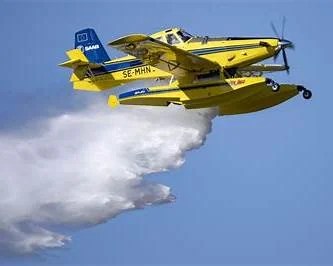
Water-bombing aircraft deployed to fight Belgium's record High Fens wildfire.
Water-bombing aircraft deployed to fight Belgium’s record High Fens wildfire.

Why Is the High Fens Fire So Difficult to Fight?

The terrain is one of the biggest problems.

High Fens contains wetlands, forests and extensive peat areas.

Peat can burn differently from ordinary vegetation. Fire can penetrate organic material beneath the surface and smoulder for long periods, making it difficult to determine whether an area is genuinely extinguished.

Access can also be challenging.

Heavy firefighting vehicles cannot necessarily reach every part of a protected nature reserve, increasing dependence on personnel working on foot and aerial firefighting.

Weather remains another critical factor.

Officials expressed hope that cooler and more humid conditions would help firefighting efforts.

A change in wind direction or speed, however, can rapidly alter a fire’s behaviour.

Wildfires Are Burning Across Europe

Greece and Belgium are only part of a much larger European wildfire emergency.

Major fires have affected France, Spain, Croatia, Germany and the UK during an exceptionally hot and dry summer.

In Britain, South Wales has been particularly badly affected, with multiple active fires stretching emergency resources.

France has faced another significant fire in the Landes region after suffering major outbreaks earlier in the summer.

Croatia has also experienced deadly fires and evacuations, while Spain has suffered particularly severe wildfire disasters during 2026.

The geographic spread is noteworthy.

Europe’s wildfire problem can no longer be viewed solely as a Mediterranean issue affecting Greece, Spain, Portugal and southern France.

Major incidents in Belgium, Germany and Britain demonstrate that serious fire conditions can increasingly develop much farther north.

Heat and Drought Create Dangerous Conditions

A wildfire requires an ignition source, but weather determines how easily vegetation burns and how rapidly flames can spread.

Europe has endured repeated periods of extreme heat during the summer of 2026.

High temperatures dry vegetation and remove moisture from soils. Prolonged drought intensifies the effect, creating landscapes capable of burning rapidly once a fire begins.

Strong winds add another danger by pushing flames forward and carrying embers ahead of the main fire front.

Those embers can ignite new fires some distance away.

The result can be a blaze that expands faster than firefighters can establish containment lines.

This combination of heat, drought, dry vegetation and wind has contributed to the exceptionally dangerous conditions across parts of Europe this summer.

What Role Does Climate Change Play?

Climate change does not directly ignite an individual wildfire.

Most fires require a specific ignition source, which may be accidental, deliberate or natural.

But climate change can alter the environmental conditions in which fires occur.

Hotter temperatures and more severe drought can dry vegetation, lengthen fire seasons and increase the likelihood that an ignition develops into a large and destructive wildfire.

Officials involved in Belgium’s response have warned that events of this kind may become more frequent as climate change increases the likelihood of extreme heat and drought.

The distinction is important.

It is scientifically more accurate to say climate change can increase wildfire risk and severity than to claim it directly started a particular fire.

European Countries Rely on Each Other During Wildfire Emergencies

One encouraging aspect of this summer’s crisis has been the level of international cooperation.

Belgium’s request for assistance demonstrates how the EU Civil Protection Mechanism can rapidly move specialist resources between countries.

Water-bombing aircraft and helicopters are expensive and limited resources.

A country experiencing relatively few major wildfires may not maintain the same permanent aerial firefighting fleet as a Mediterranean country.

European coordination allows aircraft, crews and equipment to be redirected when a member state faces an emergency beyond its domestic capacity.

The Belgian response has involved support from neighbouring countries as well as Sweden and other EU resources.

As wildfire seasons become more demanding, that system may become increasingly important.

Nature Reserves Can Take Decades to Recover

The High Fens fire is not only a public-safety emergency.

It is also an ecological disaster.

Nature reserves contain habitats that can take years or decades to recover after severe fire.

Peatlands are particularly valuable because they store large amounts of carbon and support specialised plants and wildlife.

When peat burns, stored carbon can be released into the atmosphere.

Intense fires can also damage soils, destroy habitats and leave landscapes more vulnerable to erosion.

The true environmental cost of the Belgian wildfire therefore will not be known immediately after the flames are extinguished.

Researchers will likely monitor the reserve for years to understand how ecosystems recover.

What Happens Next in Greece and Belgium?

In Greece, emergency crews will continue securing affected areas on Salamina, extinguishing hotspots and assessing damaged properties.

Authorities will also investigate how the fire started.

For families affected by the blaze, attention will gradually shift towards damaged homes and recovery.

Belgium faces an even larger containment operation.

Firefighters need to prevent the High Fens blaze from advancing further towards Germany while ensuring evacuated communities remain protected.

Weather will be crucial.

Cooler temperatures, higher humidity and rain could provide badly needed assistance. Strong winds or renewed heat could make containment much more difficult.

Conclusion

The Europe wildfires’ latest developments demonstrate how widespread the continent’s 2026 fire crisis has become.

On the Greek island of Salamina, an elderly couple have died as flames swept through communities and forced more than 500 people to evacuate.

In Belgium, approximately 3,000 hectares of the High Fens nature reserve have burnt, making the incident the country’s biggest wildfire on record. Around 600 people have been evacuated, while European aircraft and international firefighting teams have joined the effort.

The two emergencies are very different in scale and geography, but they share a broader context: unusually hot and dry conditions have left landscapes across Europe increasingly vulnerable to fire.

And with serious incidents stretching from Greece and Spain to Belgium and Britain, the wildfire threat is no longer confined to Europe’s traditional Mediterranean fire zones.

Frequently Asked Questions

How many people have died in the latest Greece wildfire?

Two people, an elderly couple, died in the wildfire on Salamina, according to authorities.

Where is Salamina?

Salamina, also known as Salamis, is a Greek island in the Saronic Gulf, west of Athens.

How many people were evacuated from Salamina?

The Greek coast guard reported that more than 500 people were evacuated.

How large is the Belgium wildfire?

Approximately 3,000 hectares of the High Fens nature reserve have burnt.

Is this Belgium’s biggest wildfire?

Yes. Authorities describe it as Belgium’s largest wildfire on record, surpassing a 2011 fire that burnt about 1,400 hectares.

Has Belgium received international help?

Yes. EU resources and assistance from several European countries have been deployed, including water-bombing aircraft and helicopters.

Is the Belgian wildfire moving towards Germany?

The fire front has been advancing towards the German border, although officials said on Sunday they did not expect the flames themselves to cross into Germany at that point.

Natalie Imbruglia Net Worth 2026: From Living in a Chelsea Basement to the Success of “Torn”

0
Natalie Imbruglia\'s net worth in 2026 and the story of her Chelsea basement struggle.

Natalie Imbruglia Net Worth in 2026

Natalie Imbruglia’s net worth is currently estimated at $16 million, according to Celebrity Net Worth, although—as with most celebrity wealth estimates—the figure is not independently verified and should be treated as an approximation rather than a confirmed account of her finances.

That multimillion-dollar estimate makes a recent revelation from the Australian-British singer particularly striking.

Before “Torn” transformed her into an international music star, Imbruglia says she ran out of money and ended up living in a friend’s basement in Chelsea, London.

The 51-year-old singer opened up about that difficult period during an appearance on Davina McCall’s Begin Again podcast, describing how the money she earned after becoming famous on Neighbours disappeared as she struggled to establish a new career in Britain.

Her experience provides a fascinating contrast between celebrity and financial security. Imbruglia had already been famous, had earned considerable money and was recognised by the public—yet still found herself effectively starting again.

What happened next would completely alter the direction of her life.

Natalie Imbruglia whose net worth is estimated at $16 million in 2026.

How Much Is Natalie Imbruglia Worth Today?

The most widely cited current estimate puts Natalie Imbruglia’s net worth at approximately $16 million. Celebrity Net Worth updated its estimate in August 2026.

Another celebrity-wealth source has previously estimated her fortune at $14 million, demonstrating why these numbers should not be presented as audited facts.

Her wealth has potentially been built through several areas of a career spanning more than three decades, including music sales, songwriting and recording income, touring, acting, television appearances and other entertainment work.

But Imbruglia’s financial story has certainly not been a straight line from fame to fortune.

Her recent account reveals that her first experience of celebrity did not provide lasting financial security.

Natalie Imbruglia Became Famous on Neighbours

Long before “Torn”, Imbruglia was known to television viewers as Beth Brennan on the Australian soap opera Neighbours.

She appeared on the programme from 1992 to 1994, becoming a recognisable television personality at a very young age.

Success brought money quickly.

Speaking to McCall, Imbruglia recalled earning cash through appearances at clubs and autograph-signing events. She described receiving substantial amounts of money in envelopes during this early period of fame.

For someone in her late teens and early twenties, it must have seemed as though the opportunities would continue indefinitely.

They didn’t.

After leaving Neighbours, Imbruglia decided to pursue something bigger.

That decision eventually produced extraordinary success—but first, it left her broke.

Why Natalie Imbruglia Moved to London

Imbruglia moved to Britain after leaving Neighbours, hoping to develop the next stage of her career.

London was an obvious destination. It was one of the world’s major centres for television, music and entertainment, and Australian soap stars already had considerable recognition among British audiences.

But turning Australian fame into a British career proved much harder than she expected.

Imbruglia has explained that she struggled to obtain a visa that would allow her to work as an actress in Britain. She said there was resistance at the time to Neighbours actors taking roles that could go to British performers.

Suddenly, the opportunities that had previously arrived relatively easily stopped coming.

She still had money from her earlier fame.

But without a reliable new source of income, it wasn’t going to last forever.

How Natalie Imbruglia Ran Out of Money

Imbruglia’s account of what happened next is refreshingly candid.

After years in which opportunities seemed to arrive naturally, she wasn’t prepared for a period when nothing appeared to be working.

She told McCall that she partied during this uncertain period.

Eventually, the money disappeared.

That left Imbruglia in an extraordinary position.

She had experienced national fame in Australia.

People knew her face.

She had earned significant amounts from television and celebrity appearances.

But she no longer had enough money to maintain the lifestyle that had accompanied that success.

It is a useful reminder that fame and wealth are not the same thing.

A celebrity can have substantial income for a short period without building long-term financial security—particularly when that income suddenly stops.

Natalie Imbruglia Ended Up Living in a Chelsea Basement

The most memorable part of Imbruglia’s story concerns where she lived after running out of money.

She moved into the basement of a friend’s home in Chelsea.

Chelsea is now synonymous with some of London’s most expensive property, which makes the image particularly unusual: a formerly successful television star living downstairs in somebody else’s Chelsea house because her money had run out.

Entertainment Weekly reports that Imbruglia remembered trying to maintain perspective during the experience, focusing on the fact that she still had somewhere to live even though her circumstances had deteriorated dramatically.

The experience appears to have been both financially and emotionally difficult.

But it also became a turning point.

Instead of ending her entertainment career, the basement period helped precede the work that would make her much more famous than Neighbours ever had.

Natalie Imbruglia has revealed that she lived in a friend's basement in Chelsea after running out of money.
Natalie Imbruglia has revealed that she lived in a friend’s basement in Chelsea after running out of money.

Her Father’s Phone Call Became a Turning Point

One particularly decisive moment came from Imbruglia’s father.

According to her account, he challenged her over what she was doing with her life.

That conversation forced Imbruglia to confront the reality that her career momentum on television had disappeared.

She needed another direction.

Music provided it.

The significance of that decision is difficult to overstate when looking back nearly three decades later.

The young actress, struggling for work in London, would soon be responsible for one of the most recognisable pop recordings of the 1990s.

Meditation and Songwriting Helped Her Start Again

Imbruglia has also spoken about turning to meditation during this period.

Instead of focusing entirely on what she had lost, she began reassessing her circumstances and working creatively.

She started writing music.

This was not necessarily an obvious route to success. Former soap stars attempting pop careers faced considerable scepticism, and Imbruglia was conscious of comparisons with another enormously successful Neighbours graduate: Kylie Minogue.

But the difficult period gave her something important.

She had been forced to stop relying on fame simply continuing by itself.

She now needed to build a career deliberately.

And then came “Torn”.

“Torn” Changed Natalie Imbruglia’s Life

In 1997, Imbruglia released her version of “Torn”, originally written by Scott Cutler, Anne Preven and Phil Thornalley.

The song became an enormous international success.

It helped transform Imbruglia from a former Australian soap actress trying to restart her career into a global recording artist.

Celebrity Net Worth notes that the single sold well over one million copies in the UK alone, while her debut album Left of the Middle subsequently sold millions of copies internationally.

Entertainment Weekly reports that “Torn” sold well over four million copies globally and earned Imbruglia a Grammy nomination.

The contrast with her basement period could hardly have been greater.

Only shortly beforehand, she had been worrying about money and struggling to determine what came next.

Now her voice was playing on radio stations around the world.

“Left of the Middle” Established Her as More Than a Soap Star

The success wasn’t limited to one single thing.

Imbruglia’s debut album, Left of the Middle, established her as a credible recording artist and provided the foundation for the career that followed.

That distinction mattered.

The transition from soap actor to pop singer can be difficult, as audiences and critics often view such moves sceptically.

“Torn” was big enough to overcome much of that baggage.

Its longevity has arguably been even more impressive than its original commercial performance.

Nearly three decades later, younger artists continue performing the song.

Imbruglia recently spoke about her gratitude to artists including Olivia Rodrigo, Gracie Abrams and Camila Cabello for introducing “Torn” to younger audiences. Rodrigo famously invited Imbruglia onstage in London in 2022 to perform it with her.

That continuing cultural relevance potentially helps maintain streaming, performance and catalogue interest decades after the song’s original release.

Where Did Natalie Imbruglia’s Wealth Come From?

Although her private financial records are not public, Imbruglia has developed multiple potential income streams during her career.

Her recorded-music catalogue is the most obvious.

Beyond “Torn”, she released songs including “Big Mistake”, “Wishing I Was There”, “Shiver” and “Wrong Impression”. She has released multiple studio albums and continued touring.

Acting has remained another part of her career, while television appearances and other entertainment projects have broadened her professional work.

Her longevity is particularly important when considering the Natalie Imbruglia net worth estimates circulating today.

A long career can be financially valuable, even without producing another single that matches the extraordinary scale of “Torn.”

An artist’s catalogue can continue generating income through streaming, radio play, licensing and other uses, while touring provides another potentially significant revenue source.

Still, without access to her contracts, expenses, investments, taxes and assets, no outside website can calculate her precise personal wealth.

That is why the $16 million figure should always be described as an estimate.

Natalie Imbruglia achieved international success with Torn and her debut album Left of the Middle.

Natalie Imbruglia Is Still Making New Music in 2026

This isn’t simply a nostalgia story.

Imbruglia remains professionally active at 51 and is preparing to release her seventh studio album, Algorithm, on 4 September 2026.

The new record comes five years after her previous studio album and includes tracks such as “Upside Down”, “Just Drive” and the title track.

That makes the timing of her recent interview particularly interesting.

Rather than simply revisiting her past, Imbruglia is reflecting on the financial insecurity of her early career while entering another stage of a career that has lasted more than 30 years.

The basement story therefore looks completely unique with hindsight.

At the time, she didn’t know “Torn” was around the corner.

Today, we do.

Why Natalie Imbruglia’s Basement Story Resonates

Celebrity success stories are often told backwards.

Once someone becomes wealthy and internationally famous, their eventual success can appear inevitable.

It wasn’t.

Imbruglia had no guarantee that her attempt to move beyond Neighbours would work.

She had already experienced fame once and watched it disappear.

She had spent her money.

She couldn’t establish the acting career in Britain that she initially expected.

She was living in someone else’s basement.

And she was trying to decide what to do next.

Knowing that “Torn” would eventually become a global hit can make those circumstances seem like a colourful chapter in a predetermined success story.

For Imbruglia at the time, there was no such certainty.

That is what makes the story so compelling.

From Broke in Chelsea to an Estimated $16 Million Fortune

The contrast between Imbruglia’s past and present financial circumstances is striking.

Today, one widely cited estimate values Natalie Imbruglia’s net worth at $16 million.

In the mid-1990s, she says she had run out of money.

Between those two points came “Torn”, millions of record sales, seven studio albums, acting work, television appearances and decades of touring and performing.

But perhaps the most revealing lesson isn’t simply that she eventually became wealthy.

It’s that her first experience of fame wasn’t enough.

She had already reached a level of success most aspiring performers never achieve through Neighbours. Yet when that chapter ended, she discovered how quickly celebrity income could disappear.

Her second breakthrough required reinvention.

Natalie Imbruglia’s Career Continues Nearly 30 Years After “Torn”

Few pop songs remain as closely associated with an artist as “Torn” is with Natalie Imbruglia.

That can be both an advantage and a burden.

A career-defining song creates recognition that lasts decades, but artists can also struggle to escape its shadow.

Imbruglia has continued recording and performing rather than attempting to distance herself from the song.

The fact that younger stars such as Olivia Rodrigo and Gracie Abrams have embraced “Torn” has introduced it to audiences who weren’t alive when it was originally released.

Her upcoming album provides another opportunity to add a new chapter to that story.

And her willingness to discuss the difficult period before her breakthrough gives audiences a much clearer picture of what came before the success.

Conclusion

Natalie Imbruglia’s net worth is estimated at $16 million in 2026, but that number tells only one part of her financial story.

Long before she became internationally famous for “Torn,” Imbruglia experienced an extraordinary reversal of fortune.

After leaving Neighbours, she moved to Britain, hoping to continue her entertainment career. Visa difficulties restricted her acting opportunities, the money she had earned during her early fame eventually disappeared, and she found herself living in a friend’s basement in Chelsea.

Instead of marking the end of her career, that period preceded its biggest transformation.

She turned towards music, recorded “Torn”, released Left of the Middle and became an international recording star.

Almost three decades later, “Torn” remains culturally relevant, younger artists continue performing it, and Imbruglia is preparing to release another album.

Her journey from receiving cash for celebrity appearances to running out of money to living in a Chelsea basement and eventually rebuilding a multimillion-dollar career makes her current net worth story far more compelling than the headline figure alone.

Frequently Asked Questions

What is Natalie Imbruglia’s net worth in 2026?

As of now, Celebrity Net Worth estimates Natalie Imbruglia’s net worth to be $16 million. The figure is an outside estimate rather than a publicly verified financial statement.

Did Natalie Imbruglia really live in a basement?

Yes. Imbruglia recently said that after running out of money, she stayed in a friend’s basement in Chelsea, London, during the difficult period between her Neighbours fame and music breakthrough.

Why did Natalie Imbruglia run out of money?

She has said that after leaving Neighbours and moving to England, she struggled to obtain a visa for acting work. She continued spending and partying until her earlier earnings eventually ran out.

What made Natalie Imbruglia famous?

She initially became famous playing Beth Brennan in Neighbours. Her international breakthrough came with “Torn” in 1997.

How old is Natalie Imbruglia?

Natalie Imbruglia was born on 4 February 1975, making her 51 years old in 2026.

Is Natalie Imbruglia still making music?

Yes. Her seventh studio album, Algorithm, is scheduled for release on 4 September 2026.

Jason Arday’s Death: Cambridge Defends Handling of Plagiarism Row as Questions Grow

0
Jason Arday’s Death: Cambridge Defends Handling of Plagiarism Row as Questions Grow

Jason Arday’s Death Puts Cambridge’s Handling of Plagiarism Row Under Scrutiny

Jason Arday’s death has intensified scrutiny of how the University of Cambridge handled the plagiarism controversy surrounding the prominent academic in the final weeks of his life.

Arday, who became Cambridge’s youngest Black professor when he was appointed Professor of Sociology of Education in 2023, died aged 41 after recently resigning from the university amid allegations concerning his academic work. Police found him unresponsive at a property in Battersea, south London. His death is being treated as unexpected but not suspicious.

Cambridge has now defended the support it provided to Arday before and after his resignation, amid criticism and questions about how both the university and the wider academic and media environment responded to the controversy.

His family has meanwhile strongly criticised what it described as years of abuse, harassment and misinformation directed at him. The competing accounts have transformed the story from a dispute about academic integrity into a much broader debate about institutional responsibility, media scrutiny, race, disability and the treatment of academics facing intense public pressure.

Professor Jason Arday, whose death has prompted scrutiny of Cambridge University’s handling of a plagiarism controversy.

Who Was Professor Jason Arday?

Jason Arday was a sociologist and education academic whose career attracted national attention long before the controversy surrounding his work.

Cambridge’s profile of Arday listed his research interests as including race and higher education, education policy, mental health and education, race and neurodiversity, and cultural studies. Before Cambridge, he held academic posts at the University of Glasgow and Durham University.

His appointment at Cambridge in 2023 was widely reported as historic because, at 37, he became the university’s youngest Black professor.

His personal story also attracted considerable public attention. Arday had spoken extensively about overcoming developmental and educational challenges before establishing an academic career.

He became a prominent voice in discussions about racial inequality, higher education, neurodiversity and access to universities.

That public profile ultimately became intertwined with the controversy that preceded his resignation.

What Were the Plagiarism Allegations Against Jason Arday?

The controversy centred partly on allegations that sections of Arday’s 2015 doctoral thesis contained material that had not been properly attributed.

Arday denied plagiarism while acknowledging errors in his doctoral work. The allegations subsequently developed into broader scrutiny of his academic record and aspects of the personal story that had accompanied his rise to prominence.

This distinction matters.

An allegation of plagiarism is not automatically proof that academic misconduct occurred. Determining plagiarism normally requires examining the material, attribution, context and applicable academic standards rather than relying simply on text similarities.

Cambridge itself explains that text-matching software cannot determine plagiarism automatically. Matches can have innocent explanations and require academic interpretation before anyone can reach conclusions about misconduct.

Cambridge defines plagiarism broadly as presenting material derived from others without appropriate acknowledgement and treats research misconduct allegations seriously under formal procedures.

In Arday’s case, however, the controversy rapidly expanded beyond a technical debate about citation practices.

Cambridge Opened an Investigation

As scrutiny intensified, Cambridge began examining questions surrounding Arday’s academic credentials and appointment.

That placed the university in a difficult position.

Universities have a clear obligation to protect academic integrity. Serious allegations concerning research or qualifications cannot simply be ignored because the individual involved is prominent or because investigating them may generate negative publicity.

Cambridge’s published research-integrity principles emphasise honesty, appropriate acknowledgement of other researchers’ work, care in research practice and transparency.

At the same time, employers have responsibilities towards their staff members who face extraordinary professional and public pressure.

It is this tension that has become central to the debate following Jason Arday’s death.

Jason Arday Resigned From Cambridge

Arday eventually resigned from his Cambridge position as the controversy intensified.

His resignation came only shortly before his death.

That sequence of events has inevitably prompted questions about the psychological and professional pressure surrounding him during his final weeks, although it would be inappropriate to assume a cause of death or direct causal relationship that authorities have not established.

Police have said his death was unexpected but is not being treated as suspicious.

This distinction should remain clear in any responsible reporting of the story.

The proximity between the controversy, resignation and death is unquestionably relevant to understanding the public debate. It does not establish precisely what caused his death.

Cambridge Defends Its Support for Jason Arday

Following criticism, Cambridge has defended its handling of the situation.

The university said it had offered Arday a range of support both before and after his resignation, according to its response.

The university’s position is significant because some of Arday’s friends, supporters and family members have questioned whether enough was done to protect him as the controversy intensified.

Cambridge therefore faces two separate questions.

The first concerns whether its academic and recruitment procedures were sufficiently robust.

The second concerns whether its duty of care and support mechanisms were adequate once one of its academics became the subject of extraordinary public scrutiny.

Those questions should not be treated as interchangeable.

A university can legitimately investigate academic concerns while simultaneously having an obligation to ensure the person being investigated receives appropriate support.

Arday’s Family Condemns Abuse and Misinformation

Arday’s family has provided one of the strongest responses following his death.

They said they were devastated and described him as a gentle person who had endured sustained attacks and misinformation.

The family argued that the pressure surrounding him had extended for years rather than beginning only with the most recent plagiarism controversy.

Their statement has shifted attention to the tone and intensity of the public scrutiny Arday experienced.

Supporters have similarly argued that legitimate questions about academic standards became entangled with attacks on his character and identity.

Others maintain that journalists and universities must still be able to scrutinise the credentials and published work of prominent academics.

Both issues can exist simultaneously: academic work can be legitimately scrutinised, while the manner and intensity of public scrutiny can also be examined.

The University of Cambridge has defended the support provided to Jason Arday during the plagiarism controversy

Calls for Reflection After Jason Arday’s Death

Arday’s death has prompted reactions extending beyond academia.

Prime Minister Andy Burnham described his death as a tragedy and called for reflection, while other senior political and public figures have expressed condolences and concerns about the circumstances surrounding the intense scrutiny he faced.

That reaction demonstrates how far the story has moved beyond a university employment dispute.

The debate now touches on the responsibilities of institutions, journalists, social-media users and public figures when allegations against an individual become the subject of sustained national attention.

It also raises an uncomfortable question: where should legitimate accountability end and disproportionate personal targeting begin?

There is no simple answer.

Public figures and academics occupying influential positions can reasonably expect their published research and professional claims to face scrutiny.

But scrutiny should remain evidence-based, proportionate and focused on matters genuinely relevant to the public interest.

Academic Integrity Remains Central to the Debate

The University of Cambridge has defended the support provided to Jason Arday during the plagiarism controversy

The tragedy surrounding Arday should not mean that the underlying questions about academic standards disappear.

Universities depend heavily on trust.

Research is expected to meet standards of attribution, transparency and intellectual honesty. Cambridge explicitly states that it takes allegations of research misconduct seriously and maintains a formal procedure for investigating them.

The university’s definition of plagiarism includes quoting without acknowledgement, inadequately attributed paraphrasing, using another person’s ideas without reference and submitting another person’s work as one’s own.

But academic integrity procedures also exist precisely because allegations require careful investigation.

They should establish facts through evidence rather than trial by headline or social media.

That principle matters not only for the institution but also for anyone accused of wrongdoing.

Questions About Cambridge’s Appointment Process

The controversy has also raised questions about how universities verify the qualifications and achievements of candidates appointed to senior academic positions.

Cambridge’s own profile of Arday listed a PhD in Education from Liverpool John Moores University, an MA in Education and Pedagogy from St Mary’s University and a BA in Education Studies and Physical Education from the University of Surrey.

Senior professorial appointments carry considerable prestige.

Universities therefore need recruitment systems capable of verifying relevant academic credentials while assessing research quality, teaching, leadership and wider contributions to a discipline.

If any appointment process reveals weaknesses, institutions should examine those systems independently of the individual case.

The objective should be improving governance rather than retrospectively turning one person into a symbol of a much broader institutional problem.

Race Has Become Part of the Conversation

Arday’s status as Cambridge’s youngest Black professor inevitably made race part of the discussion surrounding both his appointment and the subsequent controversy.

Some supporters have argued that the intensity of scrutiny directed at him cannot be separated from his race and his prominence in debates over diversity in British universities. Others contend that concerns about academic integrity should be investigated consistently regardless of an academic’s background.

The two arguments point out the importance of evidence and proportionality.

An institution should neither lower academic standards in the name of diversity nor permit an individual’s race or background to result in unfairly disproportionate scrutiny.

Cambridge had itself presented Arday as an academic whose work examined race, inequality and higher education.

Following his death, claims about racism and institutional treatment are likely to remain part of the wider discussion.

A Debate About Media Responsibility

The role of the media has also come under scrutiny.

Investigative journalism serves an essential democratic function. Universities, academics and other powerful institutions should be open to legitimate questioning.

But the digital media environment can dramatically amplify an investigation.

A newspaper article can immediately generate thousands of social-media posts, videos, comments and personal attacks. Allegations can spread internationally before formal investigations reach conclusions.

That distinction between reporting allegations and declaring someone guilty becomes especially important in cases involving reputational damage.

Arday’s family has explicitly criticised what it has described as a campaign of misinformation and harassment.

That allegation deserves consideration alongside the equally important principle that credible concerns about academic conduct can legitimately be investigated and reported.

Why Universities Need Stronger Crisis Support Systems

Jason Arday’s death has prompted wider questions about academic integrity, staff welfare and institutional responsibility.

One lesson universities may draw from the controversy is that conventional staff-support systems can be severely tested when an academic becomes the centre of a national media storm.

Normal workplace pressures are very different from having one’s career, qualifications and personal history debated publicly.

Universities therefore need systems capable of responding to exceptional circumstances.

Those systems may involve confidential welfare support, occupational health resources, legal advice, communications assistance and clear separation between an investigation into professional conduct and support for the person subject to that investigation.

Providing support does not mean prejudging an investigation.

Likewise, conducting an investigation does not remove an institution’s responsibility to consider the welfare of the people involved.

The debate following Jason Arday’s death is likely to force universities across Britain—not only Cambridge—to reconsider whether existing procedures adequately address that distinction.

Jason Arday’s death has prompted wider questions about academic integrity, staff welfare and institutional responsibility.

What Happens to the Cambridge Investigation Now?

Arday’s death changes the circumstances surrounding the controversy fundamentally.

The immediate priority for his family, friends and colleagues is to mourn his loss.

But Cambridge may still face questions about its internal processes, including how Arday was recruited, how concerns were handled and what support was provided once the controversy intensified.

The university’s wider academic-integrity procedures will also remain relevant because the issues raised by the case extend beyond one individual.

There may eventually be calls for independent examination of how institutions handled the events.

Any such review would need to distinguish carefully between several different questions: the substance of the academic allegations, Cambridge’s recruitment processes, its response once concerns emerged, its support for Arday, and the wider media environment.

Combining all of those into a single narrative risks obscuring rather than explaining what happened.

Jason Arday’s Academic Legacy

It would also be a mistake to let the final weeks of Arday’s life become the only lens through which people remember his career.

His academic interests included racial inequality, higher education, mental health, neurodiversity and cultural studies. Cambridge listed him as participating in research projects with organisations such as UK Research and Innovation and the National Institute for Health and Care Research.

His career was unusual and highly visible.

His appointment at Cambridge marked a significant moment in the university’s history and drew international celebration.

The subsequent controversy became equally public.

Both elements will inevitably form part of assessments of his legacy, but neither should automatically erase the other.

Jason Arday’s death has prompted wider questions about academic integrity, staff welfare and institutional responsibility.

What We Know About Jason Arday’s Death

Several facts are important to keep separate from speculation.

Arday was 41 years old.

He had recently resigned from Cambridge following intense scrutiny surrounding allegations about his academic work.

He was found unresponsive at a property in Battersea, south London.

Police attended and he was pronounced dead.

The Metropolitan Police have said the death was unexpected but is not being treated as suspicious.

His family has criticised the treatment he received before his death, while Cambridge has defended the support it provided.

Beyond those facts, claims about precisely what caused his death should not be presented as confirmed unless supported by official findings.

Conclusion

Jason Arday’s death has transformed an already contentious academic dispute into a much broader examination of responsibility.

Cambridge faces questions about its recruitment procedures, its handling of allegations against a senior academic and the support available to an employee experiencing extraordinary public scrutiny.

The university has defended its response and says Arday received support before and after his resignation.

At the same time, Arday’s family and supporters have described the attacks against him as prolonged and deeply damaging, while political figures have called for reflection on how the situation developed.

Academic integrity matters. So do fair procedures, proportionality and human welfare.

Those principles do not need to compete.

The most useful examination of this case will therefore resist attempts to reduce it to a simple story of heroes and villains. It should establish what happened, distinguish allegations from proven facts, examine institutional decisions fairly and recognise that behind a national controversy was a human being whose family is now grieving.

Frequently Asked Questions

Who was Jason Arday?

Jason Arday was a British academic and professor of sociology of education at Cambridge. His research covered areas including race, higher education, mental health and neurodiversity.

How old was Jason Arday when he died?

He was 41 years old.

What was Jason Arday accused of?

He faced allegations concerning plagiarism in his doctoral work and wider scrutiny of his academic record. He denied plagiarism while acknowledging some errors in earlier academic work.

Did Jason Arday resign from Cambridge?

Yes. He resigned shortly before his death as scrutiny of the allegations intensified.

What has Cambridge said about its handling of Jason Arday?

Cambridge has defended its response and said Arday was offered support before and after his resignation.

Is Jason Arday’s death being treated as suspicious?

The Metropolitan Police described the death as unexpected but said it is not suspicious.

Why has Jason Arday’s death caused a wider debate?

The case has raised questions about academic integrity, university recruitment and safeguarding, racial bias, media scrutiny and how institutions support people facing intense public criticism

Premier League Clubs Complete Final Pre-Season Preparations Ahead of 2026/27 Kick-Off

0
Premier League clubs complete final pre-season preparations ahead of the 2026/27 season.

Premier League Clubs Complete Final Pre-Season Preparations

Premier League pre-season preparations are reaching their final stage as England’s top-flight clubs complete their last warm-up matches before the 2026/27 campaign gets under way.

Saturday, 15 August, is part of the final weekend of pre-season action for Premier League teams. Clubs are using their remaining friendlies to assess fitness, integrate summer signings and give players returning from the World Cup valuable minutes before competitive football begins.

The new campaign starts on Friday, 21 August, with reigning champions Arsenal beginning their title defence against promoted Coventry City. The rest of the opening round takes place over the weekend and into Monday.

With only days remaining, results matter less than readiness. Managers now need to decide their preferred starting line-ups, determine which new signings are ready and make final decisions about players who could still leave before the transfer window closes.

Premier League clubs complete their final pre-season preparations ahead of the 2026/27 season.

Tottenham Complete Their Pre-Season Programme

Tottenham are among the clubs using this weekend for one final examination of their squad.

Spurs faced Bundesliga side Hoffenheim at the Tottenham Hotspur Stadium on Saturday, concluding a pre-season programme that included matches both at home and overseas.

The summer has been particularly important for Tottenham after a difficult previous league campaign.

Their priority during pre-season has been to adapt to the ideas of manager Roberto De Zerbi and to build a team capable of climbing back towards the European positions.

Friendlies cannot replicate Premier League intensity, but they allow coaches to experiment with formations and combinations without the pressure attached to competitive points.

For Spurs, the real test begins when they visit Brentford on the opening weekend.

Arsenal Prepare to Defend Their Premier League Crown

Expectations are very high at Arsenal.

Mikel Arteta’s side enter the season as defending Premier League champions after ending their 22-year wait for the English league title in 2025/26.

That changes the challenge completely.

For several seasons, Arsenal were the hunters trying to catch Manchester City and England’s other established powers. Now they are the team everyone else wants to beat.

Arteta received encouraging fitness news on Saturday, confirming that Declan Rice, Bukayo Saka and Martin Zubimendi are available for the Community Shield against Manchester City. Rice and Saka had been managing fitness issues after their World Cup involvement.

Jurrien Timber is still recovering from a groin problem, while William Saliba remains sidelined with a back injury.

Arsenal have also strengthened their squad, with midfielder Bruno Guimarães among their significant additions.

The champions begin their Premier League campaign at home to Coventry on Friday.

Community Shield Provides One Final Competitive Test

Before the league begins, Arsenal face Manchester City in Sunday’s Community Shield.

Although traditionally treated as the curtain-raiser rather than a major trophy, this year’s match is particularly compelling.

Arsenal want to demonstrate that last season’s title has not reduced their hunger. City, meanwhile, are entering a new era under Enzo Maresca, following Pep Guardiola’s decade in charge.

The match could provide an early indication of how quickly City’s players have adapted to their new manager.

However, supporters should avoid drawing sweeping conclusions from one August fixture.

Pre-season and the Community Shield can reveal tactical ideas and fitness levels, but the Premier League season is a 38-match test

Arsenal prepare to defend their Premier League title ahead of the 2026/27 season.

Liverpool Face Important Final Test Against Como

Liverpool’s final preparations have attracted particular attention after an inconsistent pre-season.

Manager Andoni Iraola described the club’s double-header against Italian side Como as an important test before competitive football returns. Liverpool have suffered pre-season defeats against Leeds United and Monaco, leaving room for improvement before their opening league fixture.

There is positive news in midfield.

Alexis Mac Allister has returned to training following his World Cup involvement, giving Iraola greater options as he attempts to implement a more energetic and high-intensity style.

Liverpool have also strengthened defensively by bringing Ronald Araújo on loan from Barcelona. Iraola believes the defender can make an important contribution.

Liverpool begin their Premier League campaign with a difficult trip to Newcastle United on 23 August.

For Iraola, the remaining pre-season work is therefore about more than fitness. He needs his players to understand a new tactical approach before facing one of the league’s toughest away fixtures.

Chelsea Look to Turn Pre-Season Promise Into League Form

Chelsea also enter the season with significant expectations.

Pre-season is often particularly useful for new signings and younger players attempting to force their way into a manager’s plans.

One player who has stood out this summer is João Pedro. The Premier League’s official website identifies him as the leading pre-season scorer among Premier League players, with seven goals, including one nine-minute hat-trick.

That sort of form doesn’t guarantee goals once competitive football starts, but it can significantly influence selection decisions.

Chelsea’s first Premier League match will be a west London derby away to Fulham on Monday, 24 August.

Nine Premier League clubs have new managers.

One reason this pre-season feels particularly important is the amount of managerial change across the league.

Nine Premier League clubs have appointed new managers, according to ESPN’s assessment of the summer.

That makes training-ground preparation especially valuable.

A new manager may want different pressing triggers, defensive positioning, attacking patterns and responsibilities from those used by his predecessor.

Those systems take time to develop.

Pre-season friendlies give managers a relatively low-risk environment in which to experiment. A mistake in August might result in losing a friendly; the same mistake a week later could cost three Premier League points.

World Cup Has Complicated Preparations

The 2026 World Cup has created another unusual challenge.

Players who reached the later stages of the tournament returned to their clubs later than teammates who enjoyed a full summer break. The Premier League had already highlighted that quarter-finalists, semi-finalists and finalists might not return until early August.

Managers therefore face a difficult balancing act.

Their best players need minutes before the league starts, but pushing them too hard after a shortened break could increase injury and fatigue risks.

This helps explain why squad rotation has been so important during the final pre-season matches.

A player may be technically available for the opening weekend without yet being ready to play 90 minutes at full Premier League intensity.

Pre-Season Results Don’t Tell the Whole Story

Supporters naturally pay attention to results, particularly when their club loses several friendlies.

But pre-season football can be deceptive.

Managers frequently make large numbers of substitutions, field academy players and experiment with formations they may never use in competitive matches.

Training loads can also affect performance. A team undergoing heavy fitness work might look slower than an opponent whose training programme is at a different stage.

The bigger indicators are usually individual fitness, tactical organisation and whether new players are beginning to understand their teammates.

That said, repeated defensive mistakes or difficulty creating chances can still provide warning signs.

Liverpool’s mixed summer, for example, gives Iraola obvious areas to work on before the trip to Newcastle.

New Signings Get Their Final Chance to Impress

The final friendlies are particularly important for summer signings.

Recruitment departments can spend months identifying players, but integration begins only after they join the squad.

New arrivals need to learn their manager’s tactical system while developing an understanding with unfamiliar teammates.

For supporters, these matches also provide a first opportunity to see whether expensive signings appear capable of immediately improving the team.

The pressure will increase dramatically once the Premier League starts.

A misplaced pass in a friendly is soon forgotten.

A similar mistake in a derby or title race can be analysed for days afterwards.

Premier League players train ahead of the opening weekend of the 2026/27 season.

Transfer Window Adds Another Layer of Uncertainty

Even though pre-season is almost finished, Premier League squads are not necessarily complete.

Transfer business can continue after the league begins.

That creates awkward situations for managers.

A player starting the opening fixture could potentially leave before the window closes, while a major signing arriving late may have little time to train with his new teammates.

Managers therefore have to prepare for the immediate challenge while knowing their squads may still change.

The final weeks of the transfer window could be particularly important for clubs that have identified weaknesses during pre-season.

Arsenal Start the Premier League Season on Friday

The waiting ends on Friday, 21 August, when Arsenal host Coventry City.

That fixture has an intriguing contrast.

Arsenal enter as defending champions, while Coventry return to the Premier League and immediately face one of the most difficult possible assignments.

The opening weekend then brings a series of matches on Saturday, Sunday and Monday, including Liverpool’s trip to Newcastle and Chelsea’s visit to Fulham.

By that point, friendly results will become irrelevant.

Every goal, mistake and tactical decision will count towards the league table.

What Should Fans Watch During the Opening Weekend?

There are several major questions.

Can Arsenal handle the pressure of defending the title?

How quickly will Manchester City’s players adapt to Maresca?

Can Liverpool translate Iraola’s high-intensity ideas into competitive performances?

Will Tottenham recover from their difficult previous league season?

And which summer signing will make the quickest impact?

Pre-season has provided hints.

The Premier League will provide the answers.

Conclusion

Premier League pre-season preparations are almost complete, with clubs using this final weekend to sharpen their tactics, improve their fitness and assess their squads before the 2026/27 campaign begins.

The circumstances are particularly unusual following the World Cup, which delayed the return of several leading players and gave managers less time with their strongest squads.

Arsenal enter as defending champions and will be looking to prove last season’s breakthrough was the beginning of a sustained period of success rather than a one-off triumph. Liverpool are adapting under Iraola, Manchester City are beginning a new era under Maresca, and Tottenham are trying to rebuild after a disappointing domestic campaign.

Nine Premier League clubs have new managers, making this one of the most intriguing starts to a season in recent years.

But pre-season can only reveal so much.

From 21 August, the experiments stop and the points start to count.

Frequently Asked Questions

When does the 2026/27 Premier League season start?

The first match takes place on Friday, 21 August 2026, when Arsenal host Coventry City.

Who are the defending Premier League champions?

Arsenal are the defending champions after winning their first league title in 22 years during the 2025/26 season.

Why has pre-season been unusual this year?

The 2026 World Cup meant players involved in the later stages returned to their clubs later than usual, shortening preparation time before the Premier League campaign.

Who do Liverpool play in their opening Premier League game?

Liverpool travel to Newcastle United on 23 August.

Who do Tottenham play on the opening weekend of the Premier League?

Tottenham begin their campaign away at Brentford.

What is Arsenal’s final major test before the Premier League?

Arsenal face Manchester City in the Community Shield, with Arteta confirming that Rice, Saka and Zubimendi are available.

UK Wildfires Latest: What’s Happening on 15 August 2026

0
UK Wildfires Latest: What’s Happening on 15 August 2026

The UK wildfires’ latest update for 15 August 2026 shows that Britain remains under severe pressure after days of extreme heat, drought and destructive fires across England and Wales.

Firefighters are continuing to deal with significant incidents in South Wales, where military personnel have been called in to support emergency services. Meanwhile, communities in Stourbridge in the West Midlands are assessing extensive damage after flames swept through residential areas.

Britain’s wildfire activity has already reached record levels. Reuters reported on 14 August that the number of wildfires recorded this year had passed the previous record of 1,017 incidents in 2025.

The government has responded with military assistance, additional support for emergency services, a temporary ban on sales of disposable barbecues and an unprecedented emergency phone alert warning millions of people across England and Wales about the danger.

ywAAAAAAQABAAACAUwAOw==

UK wildfires latest on 15 August 2026 showing wildfire damage in Stourbridge.

South Wales Wildfires: Military Called In

South Wales remains one of the biggest areas of concern today.

Firefighters dealt with three significant incidents on Saturday, and military personnel were brought in to provide additional support.

More than 200 military personnel were deployed to assist emergency services in South Wales, according to the government’s wildfire response announcement. Their role includes logistical support and helping provide water, allowing firefighters to concentrate resources on controlling the fires.

The deployment demonstrates how seriously authorities are treating the current conditions.

The military is not routinely used in Britain to support wildfire operations. Calling in personnel shows that multiple simultaneous incidents are putting a strain on local emergency services.

Stourbridge Counts the Cost of Devastating Wildfire

UK wildfires latest showing fire damage to homes in Stourbridge during the August 2026 heatwave

The destruction in Stourbridge has become one of the defining images of Britain’s wildfire crisis.

The fire spread from extremely dry vegetation towards residential properties in the intense heat.

Initial reports said six properties had been affected, with approximately 60 firefighters responding to the blaze.

Subsequent assessments revealed far greater damage.

The Guardian reported on Friday that 19 homes had been destroyed and another 18 damaged. At least 54 people required medical treatment, including 19 who went to hospital.

The blaze burnt across more than 40 acres and forced residents from their homes.

The scale of destruction is particularly significant for Britain, where wildfires have historically been more strongly associated with moorland, heathland and countryside than with residential neighbourhoods.

Homes damaged and destroyed by the Stourbridge wildfire in August 2026.

Emergency Wildfire Alert Sent Across England and Wales

One of the most extraordinary developments came on Friday evening.

At 7.01pm on 14 August, the UK government sent an emergency alert to mobile phones across England and Wales warning that there was a very high risk of wildfires nationally.

The message urged residents, landowners and visitors not to carry out activities that could start fires.

That included:

  • Disposable barbecues
  • Firepits
  • Garden incinerators
  • Fireworks

People were also told to call 999 immediately if they spotted a fire.

The alert stopped being transmitted at 11pm on Friday, and the government’s Emergency Alerts page currently shows no active national alert.

That does not mean the wildfire danger has disappeared. The alert was a warning message sent during a specific period rather than a permanent indicator of current fire conditions.

Why Did the Government Send an Emergency Alert?

The scale of the warning was unusual.

Emergency phone alerts are normally associated with situations involving an immediate or potentially life-threatening danger.

The government said the national wildfire risk remained very high and warned that even a small flame could rapidly become a major fire threatening homes, businesses, lives and emergency responders.

The decision attracted some criticism because the warning covered such a large geographical area.

However, fire authorities were simultaneously dealing with an exceptional number of incidents. The Guardian reported on Saturday that, as wildfire activity surged, authorities had declared 11 major incidents in a single day.

The intention was therefore largely preventative: stop new fires from starting while firefighters were already stretched.

Disposable Barbecues Temporarily Banned

The government has also introduced an immediate temporary ban on the sale of disposable barbecues.

Officials are particularly concerned about potential ignition sources because vegetation is so dry.

The government announced the measure alongside its emergency alert, military assistance and additional support for affected communities.

Disposable barbecues have long been controversial during periods of extreme wildfire danger because they can remain extremely hot after use and can ignite dry grass or vegetation.

During normal conditions, a small accidental fire might be relatively easy to contain.

In drought and extreme heat, that same spark can spread rapidly.

Britain has already broken its wildfire record.

Perhaps the most significant statistic is the number of fires recorded this year.

Britain experienced a record wildfire season in 2025, but that record has already been overtaken in 2026.

Reuters reported that wildfire numbers had exceeded the 1,017 incidents recorded during all of 2025.

That is particularly concerning because the wildfire season may continue for months.

Fire officials have warned that the danger could potentially extend into autumn if unusually dry conditions persist.

This means the fires currently dominating headlines may not represent the end of Britain’s 2026 wildfire crisis.

Extreme Heat Has Created Tinder-Dry Conditions

The wildfires are occurring after an extraordinary period of heat.

On 13 August, temperatures reached 38.1C at Kew Gardens in London, making it Britain’s hottest day of 2026 and the fifth-hottest day ever recorded in the UK.

High temperatures alone do not automatically create wildfires.

The bigger problem is their combination with prolonged drought and extremely dry vegetation.

England received only about 10% of its normal July rainfall, according to reporting on the continuing dry conditions.

That means grass, heathland and other vegetation can become highly combustible.

A discarded cigarette, barbecue, vehicle fire or other ignition source can then develop into a much larger incident.

Drought Is Making the wildfire risk worse.

Britain’s wildfire crisis is closely connected with the continuing drought.

According to Reuters, around 45 million people live in drought-affected areas, while approximately 27 million face water-use restrictions.

Reservoir levels are also becoming increasingly concerning.

Five reservoirs in England and Wales were reported to be at exceptionally low levels, raising concerns about water supplies if significant rainfall does not return during autumn.

The relationship between drought and wildfire can create a difficult cycle.

Dry weather increases the availability of combustible vegetation, while fires themselves require large quantities of water to control.

Dry vegetation caused by prolonged drought has increased Britain's wildfire risk.
Dry vegetation caused by prolonged drought has increased Britain’s wildfire risk.

Are People Causing the UK Wildfires?

Human activity is an important factor, but each individual fire needs to be investigated separately.

A fire chief speaking to Sky News said accidental human activity had been responsible for some recent outbreaks.

Potential accidental ignition sources can include barbecues, cigarettes, machinery and vehicles.

A useful example occurred in the New Forest earlier this month.

A heathland fire near the A31 began after a van caught fire on 9 August, with flames subsequently spreading into the surrounding countryside. Firefighters continued dealing with the incident for days.

This demonstrates why authorities are asking people to be exceptionally careful.

An incident that would normally remain relatively contained can become a significant wildfire when the surrounding vegetation is exceptionally dry.

Are UK Wildfires Becoming More Common?

Britain has always experienced grass, heathland and moorland fires, but severe wildfire seasons are becoming an increasingly important concern.

The UK Health Security Agency said last month that hotter, drier summers are becoming more common and highlighted the health risks associated with severe wildfires.

The current situation is particularly striking because Britain has now experienced record wildfire activity in consecutive years.

Climate change does not mean that we can directly attribute every individual fire to global warming. Fires still require an ignition source.

However, hotter and drier conditions can make vegetation easier to ignite and allow fires to spread more rapidly once they begin.

That distinction is important when explaining the relationship between climate change and wildfire risk.

Smoke Can Be Dangerous Even Far From the Flames

Wildfires can also pose a danger to people whose homes are not directly threatened.

Smoke contains fine particles that can irritate the eyes, throat and lungs.

People with respiratory or cardiovascular conditions can be particularly vulnerable, as can older people, young children and pregnant women.

Anyone close to a significant fire should follow instructions from local emergency services and avoid unnecessary exposure to smoke.

If authorities advise residents to close windows and doors or evacuate an area, those instructions should be followed promptly.

What Should People Do During the High Wildfire Risk?

The government’s message is straightforward: avoid anything that could start a fire.

Do not light disposable barbecues, campfires, firepits or fireworks in areas where vegetation could ignite.

Cigarettes should be extinguished completely and never thrown from vehicles or discarded on dry ground.

People should also avoid approaching an active wildfire to take photographs or videos. Fire behaviour can change rapidly, and approaching the scene may obstruct emergency vehicles.

If you discover a wildfire, move somewhere safe and call 999.

The official government wildfire alert specifically instructed people to report signs of fire immediately.

What Happens Next?

The immediate situation will depend heavily on the weather.

Significant rainfall would help reduce the wildfire danger, but forecasts and recent rainfall data have provided little reassurance after England and Wales experienced an exceptionally dry July.

Emergency services must therefore remain prepared for further outbreaks.

The government is also considering the longer-term resources Britain may need to cope with severe wildfire seasons, while the current crisis has already prompted military support and discussion of additional firefighting capabilities.

The bigger question is whether summers like 2026 represent the kind of wildfire conditions Britain must increasingly prepare for.

Conclusion

The UK wildfires’ latest situation on 15 August 2026 remains serious.

Firefighters are dealing with significant incidents in South Wales, supported by military personnel, while communities in Stourbridge are confronting the destruction left by a wildfire that damaged or destroyed dozens of homes.

Britain has already surpassed its previous annual wildfire record, while drought and extreme heat have left large areas highly vulnerable to new fires.

The nationwide emergency alert sent on Friday demonstrates how seriously the government views the threat.

For the public, the message remains simple: do not light fires or use anything capable of igniting dry vegetation, follow local emergency-service instructions, and report wildfires immediately.

With much of the summer still ahead and the ground exceptionally dry, Britain’s wildfire emergency may not be over yet.

Frequently Asked Questions

How many wildfires have there been in the UK in 2026?

The number has already exceeded the previous annual record of 1,017 wildfires recorded in 2025, according to Reuters.

Where are the major UK wildfires today?

South Wales remains a major area of concern, with firefighters dealing with three significant incidents on 15 August. Stourbridge is, meanwhile, recovering from a destructive wildfire that spread into residential areas.

Why did people receive an emergency alert?

The government sent an alert across England and Wales because of the very high national wildfire risk, urging people not to undertake activities that could start fires.

Has the military been deployed?

Yes. More than 200 military personnel have been deployed to support emergency services in South Wales.

Are disposable barbecues banned?

The government announced an immediate temporary ban on the sale of disposable barbecues as part of its wildfire response.

What should I do if I see a wildfire?

Move to a safe location and call 999. Do not approach the fire or try to tackle a substantial wildfire yourself.

Is climate change causing UK wildfires?

Individual fires have specific ignition sources, often involving human activity. However, hotter and drier summers increase the conditions in which vegetation can ignite and fires can spread. The UKHSA says hotter, drier summers are becoming more common in the UK