
Home Blog Page 13

Andy Burnham to detail social care plans in Labour Party conference speech

0
Andy Burnham to detail social care plans in Labour Party conference speech

Andy Burnham is set out plans for social care in what is being described as the most significant policy announcement of his leadership so far. In his first Labour Party conference speech as Prime Minister, Burnham will unveil an NHS-style National Care Service for England—free at the point of use and funded through taxation. The move represents a bold attempt to fix a system he describes as “broken” and as unfair as American healthcare, where the most vulnerable can be “wiped out” financially.

A Personal Mission Rooted in Loss

Burnham’s determination to reform social care is deeply personal. His father, Roy, died earlier this month after living with Alzheimer’s. In an emotional address, the Prime Minister will speak directly to care workers who looked after his father—people he says work “on poverty pay” yet do it with “huge skill, humour and humanity,” holding together a “threadbare system” while remaining “invisible to the political class.”

“I want to speak directly today to our care workers – you are not invisible to me,” Burnham is expected to say. “I see you, I thank you, and I am sorry that my profession has let down yours for so long.”

Social Care Reform Matters for the NHS

What the National Care Service Would Look Like

The proposed system would mirror the founding principles of the NHS: universal, taxpayer-funded, and free at the point of use. Burnham confirmed the plan would follow the Scottish model of covering personal care costs, though not accommodation, food, and everyday living expenses.

Under the plan, no one would have to sell their home or deplete their savings to pay for care. The Prime Minister has described the current system as one where “dementia taxes” force families to lose everything they have worked for.

“This is the national care service we will build,” Burnham said, describing it as “a landmark policy as significant as the creation of the NHS itself and utterly essential to securing its future.”

The plan would be put to voters in Labour’s next general election manifesto, with Burnham ruling out implementation before the scheduled 2029 election. He wants a “national consensus” built around the reforms, with Baroness Louise Casey’s ongoing review informing the final proposals.

Funding the Plan: The Triple Lock Trade-Off

To help pay for the ambitious care reforms, Burnham confirmed he will end the pensions triple lock from April 2030, replacing it with a “double lock” where pensions rise by the highest of inflation or 2.5%—removing the link to average wage growth.

The government estimates this change will save £15 billion a year by 2040, though the Institute for Fiscal Studies cautioned that savings would be “relatively small in the first few years” and warned it would not be enough to fund universal social care on its own.

Burnham acknowledged the political risk. “I accept I may pay a political price,” he said. “But someone has to go through the pain barrier and rip the plaster off.”

Where to add an image: A financial graphic showing the projected savings from the triple lock change versus the estimated cost of the National Care Service would work well here.

Why Social Care Reform Matters for the NHS

The Prime Minister has framed social care reform as essential to the NHS’s survival. On an average day last year, around 13,000 patients in England were medically fit to leave hospital but couldn’t be discharged because social care wasn’t available. The King’s Fund estimates these delays cost the NHS £2.7 billion annually.

“If we carry on like this, the broken social care system will break the NHS too,” Burnham warned. “We must never let that happen.”

A&E attendances by people over 65 have risen from 3.3 million in 2011/12 to 5.8 million in 2024/25, with research suggesting cuts to social care funding led to an additional half a million A&E visits each year.

Political Reaction and Challenges Ahead

The announcement has drawn immediate reactions from across the political spectrum:

  • Unite general secretary Sharon Graham called the triple lock change “morally wrong”, arguing the government should look at “the super rich” instead
  • Lib Dem leader Ed Davey said fixing social care is “too urgent to leave” until after the next election
  • Reform UK’s Nigel Farage claimed Burnham “will cut your pension”
  • Conservative leader Kemi Badenoch said the plan “won’t generate enough savings to fund a nationalised care system for another two decades.”

Beyond social care, Burnham will also signal support for proportional representation and announce plans to end the ban on public ownership of water companies. He will tell delegates, “Hope comes from honesty and from saying the things politicians usually avoid

Andy Burnham will make his first speech at Labour Party conference as leader on Tuesday
Andy Burnham will make his first speech at Labour Party conference as leader on Tuesday (Getty Images)

In his address, he will state, “We can’t carry on as we are. Politics-as-usual has taken Britain backwards. More of the same isn’t good enough and isn’t going to get us where we need to be.”

What Happens Next

Baroness Casey’s review was originally scheduled to report in 2028 but has been accelerated to next summer. Her findings will set out a plan for implementing the National Care Service with cross-party backing and public support.

For now, Andy Burnham’s plan to set out social care represents a defining moment in his leadership—a gamble that voters will reward honesty about difficult trade-offs over the political safety of avoiding tough choices. Whether the public backs his vision will ultimately be decided at the ballot box…”

RAF Fairford Live Updates: Five Suspects Released on Bail as Counter-Terror Investigation Continues

0
RAF Fairford Live Updates: Five Suspects Released on Bail as Counter-Terror Investigation Continues

RAF Fairford live updates: What has happened?

RAF Fairford live updates centre on a major counter-terrorism investigation after five men were arrested near the Gloucestershire airbase in the early hours of Sunday, 27 September.

Police responded to reports of three suspicious vehicles travelling towards the base. Armed officers arrested five men in nearby Whelford on suspicion of offences under the Explosives Act and, subsequently, for preparation of a terrorist act.

On Monday afternoon, Counter Terrorism Policing announced that all five would be released on police bail following interviews and enquiries. They have not been charged, and the investigation remains open.

Latest confirmed developments

28 Sep · 4pm

Five men released on police bail

Counter-terrorism chief Laurence Taylor said the suspects would remain under investigation and face restrictions on their movements and contact with others.

Possible foreign-state involvement examined

Investigators are considering several explanations, including whether anyone involved may have acted on behalf of a foreign state. Police have not established that such an event happened.

Home Secretary Shabana Mahmood said the scene was safe and residents near the base could return home. Police had earlier said they hoped to reduce the cordon after further checks.

Officers detained five men near RAF Fairford. Eighty-five households in Whelford were evacuated while specialist teams examined the scene.

Who are the five suspects?

Counter Terrorism Policing said all five men are British nationals from London, aged between 23 and 25.

Three are residents of Westminster, one lives in Camden and another in Willesden.

Police have not publicly established their motives. The men were arrested on suspicion of offences; an arrest is not proof that a crime was committed.

What did police find near the airbase?

The investigation began after a report was received at approximately 12.45am on Sunday regarding three vehicles near RAF Fairford.

Specialist officers examined the vehicles with support from forensic experts and military resources. A substantial police presence remained in the area on Monday while investigators pursued further lines of enquiry.

Authorities have not publicly established the full circumstances of the incident. Descriptions of a suspected bomb plot should therefore remain clearly attributed to the investigation and reporting, rather than presented as a proven account of what happened

Is Iran linked to the RAF Fairford incident?

Investigators are examining whether the incident could involve people acting for a foreign state. That possibility has attracted attention because RAF Fairford is used by the United States Air Force and has supported operations connected with the conflict involving Iran.

Police have not confirmed an Iranian connection. Iran has denied involvement, and investigators say they are considering a range of possible motives. It would be inaccurate to describe the incident as an Iranian attack or an established Iranian-directed plot.

 US Air Force aircraft at RAF Fairford in Gloucestershire.
US Air Force aircraft at RAF Fairford in Gloucestershire.

Why is RAF Fairford important?

RAF Fairford is a Royal Air Force station in Gloucestershire that serves as an important operating location for the U.S. Air Force in Europe.

The base has hosted American long-range bombers and has been used in military operations connected with the Middle East. Its role helps explain the security attention surrounding the incident, although the base’s military significance does not establish the suspects’ intentions.

How have local residents been affected?

The investigation caused significant disruption in Whelford, the village close to the airbase where the arrests took place.

Eighty-five households were evacuated on Sunday. Residents stayed with friends or family, in hotels or at temporary accommodation while police and specialist teams worked nearby.

On Monday, police said they hoped to reduce the cordon and allow people home. The Home Secretary subsequently said the scene was safe and residents could return. Anyone travelling through the area should still follow current local police advice rather than assume every road restriction has ended.

ywAAAAAAQABAAACAUwAOw==

What have UK officials said?

Senior counter-terrorism officer Laurence Taylor said the investigation was continuing despite the suspects’ release on bail. He explained that investigators were exploring multiple possibilities, including whether people had acted knowingly or unknowingly on behalf of a foreign state.

Defence Secretary Wes Streeting also responded to questions about whether security authorities had received information before the arrests. His comments suggested that a local resident who raised concerns did not have the complete picture of the security response.

These statements leave important questions unanswered about what investigators knew, when they knew it, and how they intended to use the vehicles.

What happens next?

Police will continue examining evidence gathered from the vehicles and the surrounding area. The five men remain under investigation and are subject to bail conditions.

The next significant developments would be an official update about the suspected materials, any decision to bring charges, or a confirmed finding about motive or foreign involvement.

Until then, reports should distinguish between confirmed police actions, suspicions under investigation and claims that have not been established.

Conclusion

The latest RAF Fairford live updates confirm that five men arrested near the Gloucestershire airbase have been released on police bail, but the counter-terrorism investigation is far from over.

Specialist officers have examined three vehicles, local residents have faced evacuations and investigators are considering several possible explanations for the incident.

The question of foreign-state involvement remains unresolved. Police have not confirmed an Iranian connection, and Iran has denied involvement. The next official police findings will be crucial to understanding what happened near RAF Fairford.

Frequently asked questions

What happened at RAF Fairford?

Five men were arrested near the base on 27 September following reports of suspicious vehicles. Police opened an investigation into suspected explosives and terrorism offences.

Have the five men been charged?

No. Police said on 28 September that they would be released on bail while enquiries continued.

Was RAF Fairford attacked?

have not confirmed that an attack took place. They are investigating a suspected plot near the base.

Is Iran responsible?

No such conclusion has been established. Investigators are examining possible foreign-state involvement, and Iran denies a connection.

Can residents return home?

The Home Secretary said on Monday that the scene was safe and residents could return, although local restrictions should be checked with police.

US-IRAN WAR | Hormuz Crisis Worsens: 6 Months Of War And Growing Regional Tensions

0
US-IRAN WAR | Hormuz Crisis Worsens: 6 Months Of War And Growing Regional Tensions

Trump rejects the Iranian ceasefire offer.

Trump rejecting the Iranian ceasefire offer is the latest development in efforts to end the conflict between the United States and Iran. President Donald Trump confirmed on Saturday, 26 September 2026, that he had rejected a proposal conveyed by Tehran through mediators during talks in New York.

Iran’s plan linked a ceasefire to the reopening of the Strait of Hormuz, the strategically important waterway used by Gulf oil and gas exporters. Tehran offered a timetable under which shipping could resume and broader negotiations could begin within seven days, provided Washington met several conditions.

Trump’s rejection does not necessarily mean all diplomatic contact has ended. A U.S. official described discussions through mediators as continuing, while Iran’s foreign minister said Tehran was awaiting a formal American response through those channels.

What did Iran offer?

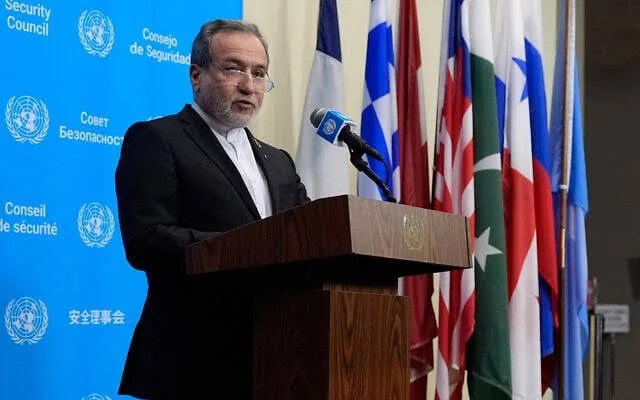
Iranian Foreign Minister Abbas Araghchi outlined the proposal during the United Nations General Assembly in New York.

Under the plan, Iran would begin steps towards reopening the Strait of Hormuz once the United States accepted the arrangement. Araghchi said the initial measures would take approximately four to five days, with the strait reopening on the sixth day and talks on a broader agreement beginning on the seventh.

Iran’s conditions included lifting the U.S. naval blockade of Iranian ports, easing restrictions on Iranian oil sales and observing a ceasefire that would extend to Lebanon. Tehran also indicated a willingness to resume discussions on its nuclear programme.

The seven-day timetable was therefore conditional on U.S. acceptance. It was not a promise to reopen Hormuz unconditionally within a week. Donald Trump discusses Iran’s ceasefire proposal amid Strait of Hormuz tensions.

Why did Trump reject the proposal?

Trump publicly confirmed that he had rejected Iran’s offer. The central disagreement appears to concern which concessions should come first and what the agreement should cover.

Iran wants immediate attention to the Strait of Hormuz and the U.S. blockade. Washington is also seeking concessions on Iran’s nuclear programme.

U.S. Ambassador to the United Nations Mike Waltz said on Sunday that Iranian officials had sought too much at the beginning of the proposed arrangement. That is the U.S. account of the disagreement; Iran argues that concrete American steps are necessary before it can reopen the waterway.

The two sides therefore remain divided over both the substance of a deal and the order in which commitments would be fulfilled.

Iran says negotiations remain possible.

Despite Trump’s rejection, Iranian officials have continued to call for a negotiated settlement.

Araghchi said on Sunday that Tehran had communicated its conditions to the United States through mediators. He maintained that reopening Hormuz depended on Iran meeting those conditions.

Iranian President Masoud Pezeshkian has also expressed a willingness to discuss the nuclear programme and other issues, but has rejected negotiations conducted under threats or coercion.

These statements suggest that Tehran has not withdrawn its offer of diplomacy. They do not, however, establish that a compromise is imminent. The two governments still disagree on important terms.

Why the Strait of Hormuz matters

Map showing the Strait of Hormuz between Iran and Oman.

The Strait of Hormuz connects the Persian Gulf with the Gulf of Oman. It is a crucial route for energy exports from several Gulf producers.

The conflict, which began in February 2026, has disrupted oil shipments through the waterway. Restrictions on shipping have added uncertainty to energy markets and increased the economic significance of negotiations between Washington and Tehran.

Reopening the strait could help restore more predictable shipping. Continued restrictions, by contrast, would leave exporters, shipping companies and importing countries facing uncertainty.

The situation also affects countries beyond the Middle East. Higher energy and transport expenses can feed into the prices paid by households and businesses worldwide.

Could the conflict escalate further?

Reports have raised the possibility of renewed U.S. military operations. The Wall Street Journal, citing unnamed U.S. officials, reported that Trump had discussed the prospect of another bombing campaign after the November U.S. midterm elections.

That is a report about private discussions, not an announced military timetable. It should not be presented as confirmation that new strikes will occur on a particular date.

The wider regional situation remains unstable. Reporting over the weekend described further attacks involving the Houthis in Yemen and continued fighting involving Hezbollah and Israeli forces in Lebanon.

Those developments complicate ceasefire negotiations because Iran’s proposal extends beyond the Strait of Hormuz to the broader regional conflict.

What happens next?

The immediate question is whether mediators can narrow the gap between the U.S. and Iranian positions.

Iran is seeking relief from the blockade and sanctions as part of an agreement to reopen Hormuz. Washington wants assurances about shipping access and concessions on nuclear issues.

Several outcomes remain possible: negotiators could revise the proposal, talks could continue without an immediate agreement, or the confrontation could intensify. None is a confirmed outcome.

A further complication is that public statements do not always reveal the full content of indirect negotiations. Araghchi has said Iran is waiting for Washington’s definitive position through mediators, even after Trump’s public rejection.

That makes the next formal exchanges important to watch.

Iranian Foreign Minister Abbas Araghchi discusses Tehran's ceasefire proposal.
Iranian Foreign Minister Abbas Araghchi discusses Tehran’s ceasefire proposal.

Conclusion

The news that Trump rejects the Iranian ceasefire offer marks a setback for the latest diplomatic initiative, but it does not establish that negotiations are over.

Iran has proposed a conditional seven-day process to reopen the Strait of Hormuz and begin wider talks. Trump has rejected the proposal, while U.S. and Iranian officials continue to describe diplomatic channels as active.

The central disputes concern the American blockade, sanctions, shipping access and Iran’s nuclear programme. Until those differences are resolved, uncertainty surrounding the strait and the wider conflict will continue.

Frequently asked questions

Did Trump reject Iran’s ceasefire offer? Yes. Trump confirmed on 26 September that he had rejected the latest Iranian proposal.

Did Iran offer to reopen the Strait of Hormuz? Yes, but only under a conditional plan involving U.S. action on the blockade, oil restrictions and a ceasefire.

Have U.S.-Iran talks ended? No formal end to all talks has been established. Officials have described continued communication through mediators.

Has a new U.S. attack been announced? No specific new attack date has been officially announced in the reporting reviewed. Accounts of possible future strikes should be distinguished from confirmed military orders.

Standoff Over Orange Order Parade in Portadown: Protesters Block Garvaghy Road

0
Standoff Over Orange Order Parade in Portadown: Protesters Block Garvaghy Road

What happened in Portadown?

The Orange Order parade in Portadown became the centre of a tense standoff on Sunday, 27 September 2026, after thousands of protesters gathered on Garvaghy Road to oppose a march through the predominantly Catholic and nationalist area.

The parade had received permission to use the contested route for the first time since 1998. But residents and supporters blocked the road, and police prevented Orange Order members from continuing when they attempted to march during the evening.

The marchers turned back. By late Sunday, protesters remained on Garvaghy Road, with Northern Ireland First Minister Michelle O’Neill urging the crowd to stay until midnight.

The events revived a dispute that became one of Northern Ireland’s most prominent flashpoints during the 1990s.

Why was the Orange Order allowed to march?

The dispute followed a series of legal decisions about the route from Drumcree Church along Garvaghy Road.

The Parades Commission had restricted the march from using the road since 1998. In August 2026, however, the High Court overturned a commission decision after finding procedural failings.

The commission subsequently approved a tightly restricted parade for 27 September. Under its determination, 35 Orange Order members could walk the route silently, without accompanying bands.

Residents pursued further legal challenges. After late-night court proceedings, the attempt to stop the parade was dismissed, leaving the commission’s permission in place.

Legal permission did not, however, resolve the disagreement between the march organisers and those living along the route.

Drumcree Church in Portadown, starting point of the disputed Orange Order parade.

Protesters gather on Garvaghy Road.

Crowds began assembling overnight, with supporters travelling from other parts of Northern Ireland and the Republic of Ireland.

By Sunday morning, protesters had occupied sections of Garvaghy Road. Reuters reported that around 2,000 people blocked the route.

The demonstration included local residents, community representatives and senior Sinn Féin figures. First Minister Michelle O’Neill and party president Mary Lou McDonald joined those opposing the march.

Protesters said the route carried painful memories of earlier confrontations and that residents should not be required to accommodate a procession they opposed.

Orange Order members, meanwhile, maintained that they should be able to complete their traditional route under the permission granted.

The two positions remained unresolved throughout the day.

Why is the Drumcree parade controversial?

The Orange Order is a Protestant fraternal organisation whose parades are part of Northern Ireland’s unionist and loyalist traditions. The Drumcree route historically passed through Garvaghy Road, but the surrounding neighbourhood became predominantly Catholic and nationalist as Portadown developed.

Orange Order representatives regard the route as an important tradition. Many Garvaghy Road residents see the proposed procession differently: they associate it with the intimidation, disorder and sectarian tensions that accompanied earlier disputes.

During the 1990s, confrontations over the march contributed to serious unrest across Northern Ireland. The route was prohibited from 1998 onwards, the year the Good Friday Agreement was signed.

That history explains why the 2026 decision carries significance beyond the movement of a small group of marchers along one road.

Police stop marchers on safety grounds.

Orange Order members waited near Drumcree Church while police assessed the situation.

During the evening, marchers began walking but were stopped by police a short distance from the church. They subsequently turned back.

The police intervention meant the authorised procession did not complete its planned route, despite the court decisions allowing it to proceed.

The situation remained tense as supporters of both sides gathered in different parts of Portadown.

Political leaders respond to the standoff.

The dispute also prompted disagreements among Northern Ireland’s political leaders.

Michelle O’Neill joined the Garvaghy Road demonstration and questioned what the situation meant for public confidence in the peace process. Mary Lou McDonald has criticised the decision to allow the parade.

DUP leader Gavin Robinson, by contrast, accused O’Neill of disregarding the rule of law by participating in the road protest.

Northern Ireland Secretary Chris Bryant appealed for compromise, while Irish Foreign Affairs Minister Helen McEntee urged political leaders to reduce tensions.

Earlier, Justice Minister Naomi Long called for respect for the Parades Commission’s determination and emphasised that people should express their disagreements through peaceful protest.

These responses reflect different views about the relationship between lawful parading, residents’ objections and the responsibility of public officials during a contentious demonstration.

Michelle O’Neill and Mary Lou McDonald join protesters on Garvaghy Road

What happens next?

The immediate question is whether the dispute can be resolved without further confrontation.

The Orange Order’s permission to march and the residents’ continued opposition have not produced an agreed arrangement. Police and political leaders face the challenge of maintaining public safety while those disagreements continue.

There are practical consequences, too. The Irish Times reported that a local primary school planned to close on Monday because of safety concerns linked to the dispute.

Any lasting resolution would likely require further discussions involving parade organisers, residents and relevant authorities. As of late Sunday, no such agreement had been announced.

Conclusion

The Orange Order parade and Portadown standoff have brought the historic Drumcree dispute back into the spotlight.

A series of legal decisions cleared the way for a restricted march along Garvaghy Road, but thousands of protesters opposed the procession. Police stopped marchers from proceeding, and the road remained the focus of demonstrations into Sunday evening.

The competing positions are clear: parade organisers want to follow a traditional route, while opposing residents argue that the route’s history makes the march unacceptable to their community.

The next priority for authorities and community representatives is to address those differences while preventing further disorder.

Frequently asked questions

Where did the standoff happen? The standoff took place on and around Garvaghy Road in Portadown, County Armagh, Northern Ireland.

Why was the parade controversial? The route passes through a predominantly Catholic and nationalist area and was the focus of serious confrontations during the 1990s.

Was the parade legally permitted? Yes. The Parades Commission approved a restricted procession, and a subsequent court challenge was dismissed.

Did the Orange Order complete the march? No. Police stopped marchers on Sunday evening, and they turned back.

Has the dispute been resolved? No agreement had been announced in the reporting available late on 27 September

Trump Rejects Iranian Ceasefire Offer as Strait of Hormuz Dispute Continues

0
US-IRAN WAR | Hormuz Crisis Worsens: 6 Months Of War And Growing Regional Tensions

Trump rejects the Iranian ceasefire offer.

Trump rejecting the Iranian ceasefire offer is the latest development in efforts to end the conflict between the United States and Iran. President Donald Trump confirmed on Saturday, 26 September 2026, that he had rejected a proposal conveyed by Tehran through mediators during talks in New York.

Iran’s plan linked a ceasefire to the reopening of the Strait of Hormuz, the strategically important waterway used by Gulf oil and gas exporters. Tehran offered a timetable under which shipping could resume and broader negotiations could begin within seven days, provided Washington met several conditions.

Trump’s rejection does not necessarily mean all diplomatic contact has ended. A U.S. official described discussions through mediators as continuing, while Iran’s foreign minister said Tehran was awaiting a formal American response through those channels

What did Iran offer?

Iranian Foreign Minister Abbas Araghchi outlined the proposal during the United Nations General Assembly in New York.

Under the plan, Iran would begin steps towards reopening the Strait of Hormuz once the United States accepted the arrangement. Araghchi said the initial measures would take approximately four to five days, with the strait reopening on the sixth day and talks on a broader agreement beginning on the seventh day.

Iran’s conditions included lifting the U.S. naval blockade of Iranian ports, easing restrictions on Iranian oil sales and observing a ceasefire that would extend to Lebanon. Tehran also indicated a willingness to resume discussions on its nuclear programme.

The seven-day timetable was therefore conditional on U.S. acceptance. It was not a promise to reopen Hormuz unconditionally within a week.

Donald Trump discusses Iran's ceasefire proposal amid Strait of Hormuz tensions.
Donald Trump discusses Iran’s ceasefire proposal amid Strait of Hormuz tensions.

Why did Trump reject the proposal?

Trump publicly confirmed that he had rejected Iran’s offer. The central disagreement appears to concern which concessions should come first and what the agreement should cover.

Iran wants immediate attention to the Strait of Hormuz and the U.S. blockade. Washington is also seeking concessions regarding Iran’s nuclear programme.

U.S. Ambassador to the United Nations Mike Waltz said on Sunday that Iranian officials had sought too much at the beginning of the proposed arrangement. That is the U.S. account of the disagreement; Iran argues that concrete American steps are necessary before it can reopen the waterway.

The two sides therefore remain divided over both the substance of a deal and the order in which commitments would be fulfilled.

Iran says negotiations remain possible.

Despite Trump’s rejection, Iranian officials have continued to call for a negotiated settlement.

Araghchi said on Sunday that Tehran had communicated its conditions to the United States through mediators. He maintained that reopening Hormuz depended on those conditions being met.

Iranian President Masoud Pezeshkian has also expressed a willingness to discuss the nuclear programme and other issues, while rejecting negotiations conducted under threats or coercion.

These statements suggest that Tehran has not withdrawn its offer of diplomacy. They do not, however, establish that a compromise is imminent. The two governments still disagree on important terms.

Why the Strait of Hormuz matters

Map showing the Strait of Hormuz between Iran and Oman.

The Strait of Hormuz connects the Persian Gulf with the Gulf of Oman. It is a crucial route for energy exports from several Gulf producers.

The conflict, which began in February 2026, has disrupted oil shipments through the waterway. Restrictions on shipping have added uncertainty to energy markets and increased the economic significance of negotiations between Washington and Tehran.

Reopening the strait could help restore more predictable shipping. Continued restrictions, by contrast, would leave exporters, shipping companies and importing countries facing uncertainty.

The situation also affects countries beyond the Middle East. Higher energy and transport expenses can feed into the prices paid by households and businesses worldwide.

Could the conflict escalate further?

Reports have raised the possibility of renewed U.S. military operations. The Wall Street Journal, citing unnamed U.S. officials, reported that Trump had discussed the prospect of another bombing campaign after the November U.S. midterm elections.

That is a report about private discussions, not an announced military timetable. It should not be presented as confirmation that new strikes will occur on a particular date.

The wider regional situation remains unstable. Reporting over the weekend described further attacks involving the Houthis in Yemen and continued fighting involving Hezbollah and Israeli forces in Lebanon.

Those developments complicate ceasefire negotiations because Iran’s proposal extends beyond the Strait of Hormuz to the broader regional conflict.

What happens next?

The immediate question is whether mediators can narrow the gap between the U.S. and Iranian positions.

Iran is seeking relief from the blockade and sanctions as part of an agreement to reopen Hormuz. Washington wants assurances about shipping access and concessions on nuclear issues.

Several outcomes remain possible: negotiators could revise the proposal, talks could continue without an immediate agreement, or the confrontation could intensify. None is a confirmed outcome.

A further complication is that public statements do not always reveal the full content of indirect negotiations. Araghchi has said Iran is waiting for Washington’s definitive position through mediators, even after Trump’s public rejection.

That makes the next formal exchanges important to watch.

Iranian Foreign Minister Abbas Araghchi discusses Tehran's ceasefire proposal.
Iranian Foreign Minister Abbas Araghchi discusses Tehran’s ceasefire proposal.

Conclusion

The news that Trump rejects the Iranian ceasefire offer marks a setback for the latest diplomatic initiative, but it does not establish that negotiations are over.

Iran has proposed a conditional seven-day process to reopen the Strait of Hormuz and begin wider talks. Trump has rejected the proposal, while U.S. and Iranian officials continue to describe diplomatic channels as active.

The central disputes concern the American blockade, sanctions, shipping access and Iran’s nuclear programme. Until those differences are resolved, uncertainty surrounding the strait and the wider conflict will continue.

Frequently asked questions

Did Trump reject Iran’s ceasefire offer? Yes. Trump confirmed on 26 September that he had rejected the latest Iranian proposal.

Did Iran offer to reopen the Strait of Hormuz? Yes, but only under a conditional plan involving U.S. action on the blockade, oil restrictions and a ceasefire.

Have U.S.-Iran talks ended? No formal end to all talks has been established. Officials have described continued communication through mediators.

Has a new U.S. attack been announced? No specific new attack date has been officially announced in the reporting reviewed. Accounts of possible future strikes should be distinguished from confirmed military orders.

Scientists find a new layer of Alzheimer’s hidden in the genome

0
Scientists find a new layer of Alzheimer’s hidden in the genome

The study, published in Science, found that the three-dimensional organisation of the genome differs in certain brain cells of people with Alzheimer’s disease. Scientists from SCS’s Ray and Stephanie Lane Computational Biology Department, Pitt’s Department of Neurobiology, and collaborating institutions linked these changes in genome folding to shifts in gene activity and the organisation of brain tissue.

To build this detailed picture, the team combined single-cell technology, spatial mapping of brain tissue, and a newly developed deep learning model.

Scientists find a new layer of Alzheimer's hidden in the genome
Scientists find a new layer of Alzheimer’s hidden in the genome

Looking Beyond Amyloid and Tau

“Alzheimer’s disease cannot be understood one layer at a time,” said Jian Ma, the Ray and Stephanie Lane Professor of Computational Biology who led and supervised the study. “The genome’s 3D structure is a fundamental regulatory layer that helps to connect DNA sequence to gene activity. By integrating genome folding, cell state, and tissue context, we can move beyond cataloguing disease-associated changes toward understanding how they fit together and which mechanisms to test next.”

DNA does not sit inside a cell as a simple straight strand. Instead, it folds into a complex three-dimensional structure that helps determine which genes are accessible and active. Changes in this physical organisation can therefore influence how cells function.

The researchers examined postmortem samples from the prefrontal cortex, an area at the front of the brain. The tissue came from people with and without Alzheimer’s disease who had taken part in a long-term dementia study and later donated their brains for research.

The team used GAUGE-seq, a technique that can measure both gene expression and three-dimensional genome contacts within the same individual cell. Those measurements were then combined with spatial transcriptomic maps, which preserve information about where gene activity occurs within intact brain tissue.

By bringing these datasets together, the researchers were able to connect the physical organisation of the genome with gene regulation, while also seeing where Alzheimer’s-related molecular and cellular changes appeared in the surrounding tissue.

A New Layer of Alzheimer’s Biology

“Our study represents a major advance in understanding what goes wrong in Alzheimer’s disease,” said Hansruedi Mathys, assistant professor of neurobiology at Pitt’s Department of Neurobiology, who directed the Pitt arm of the study. “We know the classic hallmarks of Alzheimer’s disease—accumulation of amyloid-beta plaques and tau tangles— but our results establish higher-order chromatin alterations as a component of the molecular pathology associated with the disease, which currently affects seven million Americans, a number that continues to grow.”

Scientists find a new layer of Alzheimer's hidden in the genome
Scientists find a new layer of Alzheimer’s hidden in the genome

Amyloid beta plaques and tau tangles are among the best known biological features of Alzheimer’s disease. The new findings suggest that changes in chromatin, the material made of DNA and associated proteins that packages the genome inside cells, should also be considered part of the disease’s molecular landscape.

AI Connects Genome Folding to Gene Activity

Another important part of the research was Hicformer, an artificial intelligence model developed to investigate how genome structure may influence cellular behaviour. The model combines DNA sequence information with broad patterns of genome folding and detailed maps showing where different sections of DNA physically contact one another.

Using these inputs, Hicformer predicts gene activity across different types of cells. Xinyue Lu, a doctoral student in computational biology who co-led the research, described the system as a computational testbed that can be used to explore how changes in genome folding might alter gene activity.

“Measuring gene activity and genome folding in the same cell allows us to directly connect chromosome structure with disease-related gene programs,” said Yang Zhang, a project scientist in the Computational Biology Department who co-led the research. Across several kinds of brain cells, this paired view revealed a consistent signature of 3D genome reorganisation in Alzheimer’s disease and helped us prioritise regulatory regions for future mechanistic and therapeutic investigations.

DNA Organisation Becomes Less Distinct

The researchers identified several consistent differences in the genome architecture of cells from people with Alzheimer’s disease.

Large sections of the genome are normally organised into relatively distinct active and inactive regions, which are known as compartments. In Alzheimer’s cells, those boundaries appeared less sharply defined. The researchers describe this pattern as “increased compartment mingling.”

Several kinds of brain cells also showed fewer interactions between nearby sections of the genome and more contacts between regions located farther apart. Cells with greater compartment mingling tended to have lower overall levels of gene activity.

The team also observed weaker interactions between genes and nearby regulatory elements that normally help control whether those genes are switched on or off. At the same time, some contacts across intermediate distances became stronger.

These structural differences were associated with reduced activity in programmes involved in neurones and synapses, as well as changes in metabolism and cellular stress responses. The researchers also found links to senescence-related programmes in microglia, immune cells in the brain that play important roles in maintaining brain health and responding to damage.

Structural vs. Coding DNA in Alzheimer’s

FeatureTraditional Coding FocusNewly Uncovered Genomic Layer
Genome Scope~2% of DNA (protein-coding genes)~98% of DNA (non-coding “junk” & structural architecture)
Primary MechanismMutations or variants in genes like APOE4.Physical 3D folding changes (compartment mingling) and faulty enhancer switches.
Cellular ImpactDirect production of toxic proteins (amyloid/tau).Total disruption of gene regulatory networks, cellular ageing (senescence), and altered physical arrangement of tissue.
Discovery ToolsStandard DNA sequencing.Advanced AI tools like Hicformer, single-cell GAUGE-seq, and CRISPRi

Potential Clues for Future Alzheimer’s Treatments

When the researchers mapped these molecular changes across intact brain tissue, they found that the reorganisation of the genome was connected not only to altered gene activity but also to differences in how brain cells were arranged within the tissue.

The results establish three-dimensional genome organisation as an important additional layer of Alzheimer’s disease biology. They also provide researchers with a framework for testing which changes in genome architecture might directly contribute to the disease.

Future studies can now investigate whether particular structural changes help drive Alzheimer’s progression and whether any of the affected regulatory regions could eventually become targets for new therapies.

The research was supported by grants from the National Institutes of Health. Other CMU authors included doctoral students Shahul Alam and Shike Wang and postdoctoral research associate Junjie Tang. Other Pitt authors include doctoral students Alexander K. Kunisky and Jude Baroudi, post-baccalaureate research fellows Sahar and Sahel Ghorbanikalateh, and visiting scholar Shihan Wang. The team included researchers from the Broad Institute of MIT and Harvard, the University of California, Los Angeles, the University of Washington, and the Rush Alzheimer’s Disease Center.

Childhood trauma may leave a lasting scar inside brain cells

0
Childhood trauma may leave a lasting scar inside brain cells

Severe stress during childhood can increase a person’s vulnerability to anxiety, depression, and other mood disorders when new challenges arise later in life. Scientists at Washington University School of Medicine in St Louis and Princeton University have now identified a biological process that may help explain how early trauma can have such long-lasting effects on the brain.

Researchers have known that stress during early development can alter gene activity in the brain. The new findings suggest that these changes stem partly from the way brain cells package their DNA. By making certain stress-related genes easier to activate, early adversity may leave the brain more reactive and less able to tolerate future stress.

The study was published Aug. 7 in Neurone.

“We have uncovered a new biological process linking experience of early-life adversity to this long-term vulnerability to mental illness,” said Meaghan Creed, PhD, an associate professor of anaesthesiology at WashU Medicine and the study’s co-corresponding author. “This finding reveals a physical scar left by trauma experienced during development inside brain cells, providing scientists with a concrete biological target to develop new treatments and interventions.”

Childhood trauma may leave a lasting scar inside brain cells

How Childhood Stress Changes DNA Packaging

More than half of children worldwide experience some form of early-life stress, including abuse, violence, or drug use within the household, and other traumatic events. Experiencing four or more of these adverse events is associated with a sharply higher risk of physical and mental health problems later in life.

To understand how these experiences can physically alter the developing brain, the researchers focused on the ventral tegmental area. This brain region contains neurones that produce dopamine, a chemical messenger involved in processing important experiences, including rewards and adversity. When stress causes these neurones to become abnormally active, it disrupts reward processing and potentially increases vulnerability to anxiety and depression.

The team then examined the epigenome inside these dopamine-producing neurones. The epigenome consists of molecular tags that help control whether genes are switched on or off, ultimately influencing how cells behave.

Catherine Jensen Peña, PhD, an assistant professor at the Princeton Neuroscience Institute and the study’s senior and co-corresponding author, said that DNA inside cells is like a coiled slinky. DNA is wrapped around proteins called histones, which help control how tightly or loosely it is packed. When this genetic slinky is tightly compressed, genes are less accessible and remain switched off. When the structure loosens and opens, the genes become easier for the cell to activate.

Childhood trauma may leave a lasting scar

SETD7 Primes Brain Cells for Future Stress

In young mice exposed to stress, the researchers found elevated levels of an enzyme called SETD7 in dopamine neurones compared with mice raised under typical conditions. SETD7 helps add a chemical marker called H3K4me1 to the DNA packaging system. According to Peña, this tag encourages the genetic structure to open, making the cell more responsive to what is happening in its environment.

To test whether SETD7 itself could produce these changes, the scientists artificially increased the enzyme in young mice that had not experienced early-life stress. As the animals matured, their dopamine-producing brain cells developed a more open DNA structure, making stress response genes easier to activate.

These mice also became less tolerant of stress as adults. Animals that had elevated SETD7 levels when they were young developed more reactive dopamine neurones and showed more anxious behaviour than those whose SETD7 levels remained normal throughout their lives.

Blocking the Molecular “Scar”

The researchers then tested the opposite approach. After early-life stress, they prevented SETD7 from adding excessive amounts of the H3K4me1 marker. This kept the DNA structure more tightly closed and protected the mice from becoming unusually sensitive to stress later in life.

Even after experiencing stress both early in development and again as adults, mice with reduced SETD7 activity behaved much like unstressed animals. They remained similarly social and exploratory, while activity in their dopamine neurones stayed at normal levels.

The results suggest that SETD7 and the changes it produces in DNA packaging may help create a lasting molecular memory of early adversity. They also give researchers a specific biological pathway to investigate as a possible target for future interventions.

“There are currently no treatments for what early-life stress does to the brain, partially because we have not had a clear picture of what molecular mechanisms to target,” Peña said. “This work is exciting because it reveals a clear mechanism and also helps explain why the impact of stress is both latent and broad. Additionally, if we can step in with supportive care, therapy or social resources to buffer children during those sensitive windows of development, we may be able to protect the epigenome — preventing the genetic slinky from locking into an open position and perhaps giving the developing brain a chance to build natural resilience.”

Burnham promises change amid ‘challenging’ economic outlook on eve of Labour conference

0
Burnham promises change amid ‘challenging’ economic outlook on eve of Labour conference

Andy Burnham has reaffirmed his pledge to deliver real change for people across Britain, insisting he is ready for the challenges as the country faces severe economic headwinds.

On arriving in Liverpool on the eve of the Labour Party conference, the prime minister acknowledged both he and Chancellor John Healey were working under a difficult set of circumstances in setting the autumn budget.

Global turmoil, including wars in Iran and Ukraine, has continued to push up borrowing costs, which will limit Mr Burnham’s room for manoeuvre ahead of the 28 October fiscal event.

While telling the Guardian it would be “crucial” to stabilise the public finances to put his agenda of national renewal on a good footing, Mr Burnham said he remained up to the challenge of bringing about radical change.

He was speaking as plans were unveiled for a new help-to-buy scheme for first-time buyers. It was also announced that young people on health benefits will be offered a guaranteed job funded by the government.

Mr Burnham said: “I think the public would respect us more if we went and took something difficult … and said ‘Right, we’re going to do something here’, rather than just playing the political game all the time before we deal with the problems.”

Andy Burnham in Liverpool of the eve of his first party conference as leader
Andy Burnham in Liverpool of the eve of his first party conference as leader (Getty)

“It’s challenging, definitely, but there are still things that you can do. Always in politics, there are things that you can do. The question is sometimes: Are you prepared to do them? Yeah, I am prepared to do them.”

Asked about the need for a buffer against his spending plans, the so-called fiscal headroom, Mr Burnham said,

I do think it is crucial to have stability and to show that there’s a willingness to confront some of these difficult issues.

“But actually, from that stability, the permission can come to make bigger changes that, in the end, could put the country in a stronger position in relation to the public finances.”

As he arrived at the conference, the prime minister promised to set the UK on a new course, saying the decade since the Brexit vote had been one of “drift and division”.

Mr Burnham said: “We’re going to make this conference a really important week where we set out a new direction for the country. We’ve had a decade since Brexit and it’s been a decade of too much drift and too much division, and we need to draw a line on that.”

He said his vision would leave “people able to have hope again that things will improve, that life will get better – and it will.”

Andy Burnham speaks to the media as he and his wife Marie-France Van Heel arrive for the Labour Party Conference at the ACC Liverpool
Andy Burnham speaks to the media as he and his wife Marie-France Van Heel arrive for the Labour Party Conference at the ACC Liverpool (PA)

Dressed in black jeans, T-shirt and jacket and accompanied by his wife Marie-France van Heel, Mr Burnham said it was a proud moment to attend the Labour conference for the first time as leader.

His arrival came as he also unveiled the Your First Home scheme, which will give first-time buyers the chance to buy a home with just a 2.5 per cent deposit. A loan worth 20 per cent of their property’s value will be available to help pay for the purchase as part of the scheme.

This equity loan will initially be interest-free to ensure it remains affordable.

Full details on the policy, which is similar to the Help To Buy launched in 2013, will be presented by Mr Healey at the Budget on 28 October.

Mr Burnham said: “We will step in to help more first-time buyers onto the housing ladder, especially those who can’t call on the bank of mum and dad.

Andy Burnham and John Healey
Andy Burnham and John Healey (PA)

“Your First Home will help them buy their own home and give builders the confidence to deliver the high-quality new homes the country needs. This Labour government is bringing back hope for people across the country.”

In another announcement on the eve of the conference, Labour revealed it was expanding its job guarantee scheme by giving young people on health benefits fast access to job opportunities in a bid to cut the welfare bill.

Through government funding, young people receiving health or disability support will be offered a guaranteed job three months after they start claiming benefits, down from 18 months.

Mr Healey is also expected to unveil a scheme aimed at encouraging foreign companies to buy more British goods and services.

The chancellor’s new UK Export Finance product, Flexible Finance, will provide loans to buyers in markets such as Brazil, Morocco and Mexico to incentivise them to purchase British products.

Meanwhile, Mr Healey, in an interview with the Sunday Times, said he would “take into account” the pressure on motorists from fuel prices when asked whether they were too high. Mr Healey could delay a planned 3p rise in fuel duty in January in his upcoming Budget.

On Sunday, chairman Bridget Phillipson, deputy leader Lucy Powell and deputy prime minister Louise Haigh will speak on the opening day of the party’s conference.

Parade leaves Drumcree after late-night hearing clears way

0
Parade leaves Drumcree after late-night hearing clears way

A ruling by the Parade Commission adjudication body permitting the march from Drumcree Church was upheld in an “unprecedented” late-night sitting of the High Court in Belfast just a few hours earlier.

Thousands of protesters have blocked a predominately nationalist road in the Northern Irish town of Portadown in a bid to prevent a highly controversial Orange Order parade from passing through.

Protesters, many of them wearing balaclavas, clustered in large groups in heavy rain along the Garvaghy Road on Sunday morning, delaying the scheduled 8am start of the parade.

Sinn Féin leaders were among those gathered on the road.

The march was finally approved at a hearing that ended at 2.15am on Sunday after opposing legal teams presented their arguments about the controversial parade.

Protesters pictured ahead of the march

PA

The hearing was one of three separate emergency legal cases heard before the courts in Belfast on Saturday and into early Sunday.

Justice Michael Humphreys presided over the final time-limited sitting, which began at 12.20am on Sunday.

During proceedings, he acknowledged the “unusual if not unprecedented circumstances, as it was now 1.45am, with a parade scheduled to begin in just over six hours’ time.”

Outlining his decision, Justice Humphreys cited case law that, as a public body, the courts must respect the commission’s judgement and that “their decisions will not be lightly interfered with”.

What is the Drumcree parade?

The Drumcree parade, which was associated with violent clashes during the Troubles, has been banned since 1998.

The stand-off at Drumcree made headlines in the 1990s, with nationalist residents of the Garvaghy Road opposed to the parade passing through the area, leading to violent clashes for several summers and political tension necessitating a major security operation.

The Orange Order has unsuccessfully applied for more than a quarter of a century to complete its 1998 walk along its traditional route.

On Friday, the commission reversed its long-standing determination, which was welcomed by unionist parties and met with outrage from nationalist and republican parties.

Permission was granted for a parade subject to strict restrictions, including a limit of 35 participants and the 8am start time. ywAAAAAAQABAAACAUwAOw==

Sinn Féin president Mary Lou McDonald and vice-president Michelle O’Neill were on the Garvaghy Road on Sunday (Peter Morrison/PA)

What is Sinn Féin’s reaction?

First Minister and Sinn Féin vice-president Michelle O’Neill said the reignition of the Drumcree dispute “brings into question how this whole peace process works.”

She said the people of the Garvaghy Road would “not be drawn back to the past”.

Ms McDonald said: “We have spent all night here, all night talking to people, listening to people, and seeking to reassure them that this issue can be resolved, and it must be.

“So here is what needs to happen now – the Secretary of State needs to intervene. The chief constable of the PSNI needs to intervene and put a stop to this behaviour.

“This is madness. This, in fact, is primitive treatment of any community in the year 2026. It is intolerable, and it will not be tolerated.

“The mood here has been peaceful. It has been united and orderly. ywAAAAAAQABAAACAUwAOw==

Protesters attended the Garvaghy Road in Portadown on Sunday (Peter Morrison/PA).

This is a dignified, united community, and they are determined not to be drawn back into the past.

“That is the message from Garvaghy Road today.”

DUP leader Gavin Robinson said, “A First Minister’s duty is to uphold lawful decisions, not inflame opposition to them. The rule of law cannot apply only when Sinn Féin likes the outcome. Our institutions are founded on respect for the police, the courts and the rule of law.”

Appeal for ‘calm on all sides’

Prime Minister Andy Burnham has appealed for “calm on all sides” over the Orange Order parade, saying there have been “big gains made in Northern Ireland, and we would rather not see things go backwards.”

Police repeatedly notified the protesters through a loudspeaker on Sunday that they are liable for arrest for taking part in an unnoticed parade. The Press Association understands more people entered the road in the belief the police were sending reinforcements.

The group of Orangemen, due to take part in the parade, waited at nearby Drumcree Church, having assembled early on Sunday. ywAAAAAAQABAAACAUwAOw==

A member of the Orange Order outside Drumcree Parochial Hall in Portadown (Peter Morrison/PA)

Police Service of Northern Ireland Chief Constable Jon Boutcher appealed to “those with influence to encourage people to comply with the law”, as his officers would detect any offences throughout the day.

He added, “It is incumbent on us all to come together at times like these to do all we can to preserve a peaceful Northern Ireland.”

The Irish Government said it is “very concerned about the situation.”

A government statement said, “Our primary concern remains to avoid a return to the divisions of the past, recalling the significant progress made over many years in furthering reconciliation under the Good Friday Agreement.”

Man City 115 Charges Latest: Reports Say 114 Proven as Club Prepares for Appeal.

0
Man City 115 Charges Latest: Reports Say 114 Proven as Club Prepares for Appeal.

Manchester City charges: What is the latest?

The Man City 115 charges case has reached a significant new stage, with reports claiming an independent commission has found 114 of the 115 alleged Premier League financial-rule breaches proven.

The development first emerged on Friday, 25 September 2026, and Reuters, BBC Sport and Sky Sports subsequently covered it.

However, the Premier League has not publicly released the commission’s full written decision. Manchester City maintain their position that they have done nothing wrong and say the disciplinary process is ongoing.

The club is expected to appeal the reported findings.

Most importantly, no punishment has yet been announced.

The Manchester City 115 charges case has reached the reported findings stage.
Manchester City 115 charges case reaches reported findings stage.

What are the 115 charges against Manchester City?

The Premier League referred Manchester City to an independent commission in February 2023 following an investigation into the club’s financial affairs.

The allegations concern financial information supplied over several seasons, principally between 2009 and 2018.

The charges cover several areas, including whether City provided accurate information about their revenue, sponsorship arrangements, operating costs and payments to certain individuals.

Other allegations concern compliance with UEFA financial regulations, Premier League profitability rules and cooperation with the league’s investigation.

The number 115 became widely associated with the case, although the charges involve different regulations and accounting periods rather than 115 identical allegations.

City have consistently disputed the Premier League’s case.

What has the independent commission reportedly decided?

According to reporting by The Athletic, subsequently carried by Reuters, the commission has found all but one of the 115 charges proven.

That is the basis of the widely circulated figure of 114 proven charges.

Sky Sports has independently reported that the tribunal has reached its decisions and that the process is now moving towards an appeal.

The distinction between a reported finding and a publicly completed disciplinary process matters.

The detailed judgement has not been published, so readers cannot yet examine the commission’s reasoning, the evidence it accepted or the precise treatment of every allegation.

A reported finding also does not mean the final disciplinary outcome is settled.

Any appeal may challenge the findings, the sanction or both, depending on the applicable procedure.

Manchester City’s response

Manchester City have not accepted the reported outcome as the end of the case.

In a statement issued after the reports emerged, the club said the Premier League process remained ongoing, with important stages still to be completed.

The club also reiterated its February 2023 position, when it denied the allegations and expressed confidence in the evidence available to it.

The club has stressed the importance of an independent and impartial process.

Chairman Khaldoon Al Mubarak reiterated the club’s confidence in its position on 26 September, according to Reuters.

For now, City’s public position is that the proceedings remain unfinished and the club continues to contest the case.

: Manchester City chairman Khaldoon Al Mubarak amid Premier League financial charges case.

Could Manchester City receive a points deduction?

A points deduction is one of the possible sanctions being discussed, but it is not an announced outcome.

The independent commission’s powers could also allow other sporting or financial penalties, depending on the final findings and the applicable Premier League rules.

Reports have discussed possibilities ranging from a fine to a points deduction or expulsion from the competition.

There is currently no confirmed number of points that will be deducted. Headlines claiming that City have already lost 30, 60 or 100 points would therefore be misleading.

The commission must determine any sanction, and an appeal could affect the final outcome.

Could Man City be relegated?

Expulsion from the Premier League has been discussed as a possible sanction. That is not the same as confirmation that Manchester City will be relegated.

There has been no official announcement removing City from the Premier League.

Nor has the league announced that City must begin a future season in a lower division.

Until a sanction is formally determined and the appeal process is addressed, relegation remains a hypothetical possibility rather than an established consequence of the reported findings.

Could Manchester City lose previous Premier League titles?

The case has prompted questions about City’s past achievements, including whether earlier league titles could be affected.

But no retrospective title removal has been announced.

There is also an important difference between a points deduction applied to a particular season and a decision to revise historical league tables.

The exact implications would depend on the sanction ultimately imposed.

It would be premature to report that previous trophies have been removed or that another club has been awarded a title.

Premier League trophy as Manchester City's financial case continues.
Premier League trophy as Manchester City’s financial case continues.

Could other Premier League clubs seek compensation?

Another development concerns clubs that believe they may have suffered financial losses.

BBC Sport reported on 25 September that several Premier League clubs had sought legal advice about possible compensation claims connected with the Manchester City case.

Such claims could involve arguments about lost league positions, qualification opportunities or associated revenue.

However, seeking legal advice is not the same as winning a compensation claim.

Any club pursuing damages would have to establish the legal basis for its claim and demonstrate the relevant losses.

Whether compensation proceedings follow will depend on the final disciplinary findings and subsequent legal decisions.

Why has the case taken so long?

The Premier League announced the charges in February 2023, but the underlying investigation had already taken several years.

The independent commission’s hearing concluded in December 2024.

The proceedings involve financial records, multiple regulatory provisions and allegations spanning different seasons.

They also operate under a confidential disciplinary process.

Those factors help explain why the case has taken substantially longer than an ordinary football disciplinary hearing.

The reported findings do not necessarily mark the end of that process because the sanction and appeal stages remain unresolved.

What is the difference between the Premier League case and City’s previous UEFA case?

Some supporters have confused the current Premier League proceedings with Manchester City’s earlier dispute with UEFA.

They are separate cases.

In 2020, the Court of Arbitration for Sport overturned City’s two-year ban from European competition.

That ruling did not automatically settle the Premier League’s subsequent allegations, which involve a separate disciplinary process and its own evidence and rules.

Likewise, the reported findings in the current case do not change what the Court of Arbitration for Sport decided in 2020.

What happens next?

The next stages are particularly important.

First, the commission’s findings and reasoning need to become publicly clear. This would allow the commission to examine the allegations and conclusions in detail.

Second, any sanction must be determined and communicated.

Third, Manchester City are expected to pursue an appeal. BBC Sport and Sky Sports have both reported that the case is moving in that direction.

Until those steps are completed, there is no reliable basis for announcing a final punishment or a date on which it will take effect.

Why this case matters to English football

The proceedings raise questions extending beyond one club.

Premier League financial regulations are intended to govern how clubs report their finances and operate within the competition’s rules.

The league’s case concerns whether those obligations were met.

City’s defence concerns both the allegations themselves and the fairness of the disciplinary process.

Other clubs, supporters and commercial partners have an interest in the outcome, as it may affect how financial regulations are enforced in future.

The eventual published decision should provide a clearer account of how the commission interpreted the evidence and rules.

Until then, reporting should distinguish between allegations, reported findings and formal decisions.

Conclusion

The Man City 115 charges case has reached a significant stage.

Reports published on 25 September say an independent commission found 114 of the 115 charges proven.

Manchester City continue to contest the case and are expected to appeal. The Premier League has not publicly released the complete ruling, and no sanction has yet been announced.

That leaves several questions unanswered: what penalty, if any, will ultimately be imposed; how will the appeal proceed; and when will the disciplinary process reach its conclusion?

For now, the most accurate summary is straightforward: 114 charges have reportedly been proven, the city is contesting the outcome, and the final consequences remain undecided.

Frequently asked questions

Have Manchester City been found guilty of 114 charges? Reports say the independent commission found 114 of 115 charges proven. The full written decision has not been publicly released.

Have Man City had any points deducted?

No points deduction has been announced.

Will Manchester City be relegated?

No relegation or expulsion has been announced.

Will Manchester City appeal?

Reports indicate that the city are expected to appeal the commission’s findings.

When were the charges brought?

The Premier League announced the charges in February 2023.

Have City’s previous titles been removed?

No retrospective title removal has been announced.