
Home Blog Page 107

Liverpool’s £60m French defensive star is undergoing treatment

0
Liverpool’s £60m French defensive star is undergoing treatment

Jeremy Jacket medical signals Liverpool’s long-term defensive strategy

Liverpool has signed Rennes defender Jeremy Jacquet, with the highly rated centre-back set to undergo a medical ahead of his proposed move to Anfield.

The deal represents another significant investment in youth and long-term planning, as the club continues to rebuild their squad for the next decade

According to reports from nytimes.com and The Athletic, Jackett is expected to arrive in northwest England to complete a medical before finalising a deal that will run until 2031, with an option for a further 12 months.

Transfer expert David Ornstein has consistently outlined Liverpool’s confidence in completing the deal, saying, “Jeremy Jackett is set to move to Merseyside for his medical; Liverpool moves towards finalising a long-term deal.”

He added that “individual terms are not expected to present any complications at this stage of negotiations”.

The proposed move signals Liverpool’s determination to secure elite young talent before the market value rises further.

ywAAAAAAQABAAACAUwAOw==

Jacket medical schedule and contract structure

Jackett’s treatment is set to take place early this week, with all parties aiming to complete the process quickly. Liverpool’s medical and performance staff are expected to make a full assessment given the length and scale of the proposed deal.

The deal is understood to be worth £55m, with a further £5m in potential add-ons. The payment structure and bonuses have already reached a principle agreement, according to sources close to the talks.

Ornstein reported: “Liverpool see Jacquet as a cornerstone signing and are prepared to commit significant resources to securing him early in the window.”

This reflects the club’s desire to finalise major contracts before starting pre-season preparations.

The defender is expected to sign a six-year contract, highlighting the club’s confidence in his development trajectory and physical profile.

Should the treatment proceed smoothly, formal confirmation could be imminent.

Liverpool recruitment model and defensive scheme

Liverpool’s pursuit of the jacket fits perfectly with their evolving recruitment model, which prioritises high-potential players capable of delivering value both on the pitch and in the market.

Last summer, the club explored a move for Marc Guehi, only for talks with Crystal Palace to collapse late in the window. That experience reinforces the need to act decisively when priority goals become available.

Ornstein explained, “Liverpool believes that Jacket’s model offers a long-term upside over previous defensive targets.” This belief drove their desire to meet Rennes’ assessment.

Recent signings, such as Florian Wirtz, Hugo Ektic, Milos Kerkej, and Aleksandar Isak, demonstrate a clear pattern:

investing in players entering or approaching their prime years. This emerging core views the jacket as an important addition.

Despite Joe Gomez and Giovanni Leone’s impressive performances this season, Liverpool have consistently encountered issues in their central defence.

The absence of Ibrahima Konate and Virgil van Dijk restricts options, and Konate’s contract situation exacerbates the uncertainty.

Securing the jacket now provides both immediate depth and long-term security.

Rennes’ development path and Ligue 1 impact

Jaquet’s rise through the Rennes academy has been steady and impressive. After coming through the club’s youth system,

He established himself in the first team in the second half of the 2024–25 campaign and has continued his progress this season.

Before his suspension in December, he played every available minute in Ligue 1, indicating his durability and consistency.

His performances combined consistency with physical authority, highly valued traits in Liverpool’s defensive system.

A successful loan spell with Clermont Foot in Ligue 2 accelerated his development, while sustained excellence in France’s top flight attracted the interest of several Premier League clubs.

Chelsea held talks with Rennes in January, while Arsenal closely monitored Jaquet before signing Cristian Mosquera from Valencia.

Despite this competition, Liverpool decisively went on to secure pole position.

Ornstein noted, “Several clubs tracked Jaquet’s progress, but Liverpool moved quickly into negotiations when Rennes indicated a willingness to negotiate.”

That momentum proved crucial in shaping the outcome.

Competition for signings and future roles

Liverpool did not conduct its move for Jacquet in isolation. Several elite clubs have identified him as a future international-level defender, capable of operating in high-possession systems and under intense tactical demands.

With France’s youth caps up to the under-21 level, Jaquet is already regarded as a senior international prospect.

His profile aligns with Liverpool’s preference for technically skilled defenders who can contribute to build-up play.

In the short term, Jackett is expected to compete for minutes as he adapts to the intensity of the Premier League.

In time, he is projected to become a central figure in the defensive unit, especially as senior players move on to the later stages of their careers.

Ornstein succinctly summed up Liverpool’s thinking: “This is a strategic signing, not just a squad addition. Liverpool sees Jacquet as their defensive core for years to come.”

If the medical goes ahead as planned, the move will represent another statement of intent for a club determined to mix elite youth with sustained competition.

Source link

London’s Poems on the Underground celebrates 40 years of bringing verse to passengers

0
London’s Poems on the Underground celebrates 40 years of bringing verse to passengers

London — Could a few lines of verse improve the journey?

In short, this is the question asked four decades ago by Judith Chernack, an American writer in London, who wondered whether posting poems inside subway cars could enlighten, entertain, and inspire riders.

Poems on the Underground,

A project celebrating its 40th anniversary this year has become a global phenomenon. Since 1986, many millions of London Underground commuters have seen posters decorated with poems amidst advertisements on their daily journeys.

More than a dozen poets whose work is featured in the project gathered on Friday at a subway station — where else? – A subway station to celebrate the milestone and pay tribute to Chernack, the man who started it all.

The New York native moved to London in the 1970s and “absolutely fell in love with the city—including its transportation system,” which she compared favourably to her home city’s subway.

“I used the subway all the time in New York,” he said. “It was not one of my enjoyable activities.”

Chernyak, a novelist and essayist, was also interested in London’s rich literary culture and history.

“Poetry is part of every Londoner’s heritage,” he said.

With two poet friends, Gerard Benson and Cecily Herbert, he planned to combine literature and transcendence. The subway operator was supportive, and the first poems were published in January 1986.

“Somehow the idea worked and here we are, 40 years later,” said Chernack, now 91.

Poems from the first year included works by William Shakespeare, Robert Burns, W. B. Yeats, Percy Bysshe Shelley—including “Ozymandias,” a reflection on the transience of power—and William Carlos Williams’s imagist poem, “This Is Just to Say,” with its famous opening:

“I have eaten

Berry

who were inside

Icebox”

The choices soon expanded to include poems from around the world by Wole Soyinka, Pablo Neruda, Derek Walcott, Anna Akhmatova, and many others.

The selection is changed three times a year, and Chernack is still on the panel that selects the poems, along with poets George Szirtes and Imtiaz Dharkar.

“From Shakespeare and Sappho to poets who are really contemporary,” said Ann Gavaghan, who oversees cultural projects at Transport for London; the productions mix modern verses with centuries-old classics.

There are sonnets and haiku, love poems, sad poems, funny poems, and other poems highly related to travellers, such as “Overcrowding” by Hungarian poet Katalin Szlukovényi.

Nick Makoha, whose poem “BOM”—the airport code for Mumbai—featured on the Underground in 2020, said the program takes poetry into the everyday world.

He said, “Poetry can often be taught as if it’s something you need to have a high intellect for, but we’re normal people.” “Poets are ordinary people who sometimes write about ordinary things and sometimes about surprising things.

“Poetry is about the community,” Makoha said. “It should be part of our daily life, and the Underground is part of daily life. So, just as it connects us to places, it also connects us to people. You could be sitting on Turnpike Lane (tube station), and suddenly I’ve taken you to Bombay.”

London’s transit network isn’t perfect – commuters are often frustrated by delays, overcrowding and dirty trains – but it has long been recognised for its artistic brilliance. its map. It is considered a design classic, and for a century it has enlisted top artists to design its posters.

Poems on the Underground is now a much-loved tool of the system that has produced several books and inspired similar projects in cities, including New York, Dublin, Oslo, and Shanghai.

Gavaghan said the key to its success is to give travellers something that “takes them off their journey.”

“If you’ve had a hard day and you’re lost in your worries and anxieties, to be able to see something on the Underground that makes you think, that kind of jolts you out of it, is a really good thing.” “And it can make you laugh; it can make you think. It really makes you empathise.

“It’s really powerful. And it’s important to have it, and that’s why it’s still going on after 40 years.”

Source link

Iran says it is ready for ‘fair’ talks with US, but not ‘under the shadow of threat’ – Donald Trump News

0
Iran says it is ready for ‘fair’ talks with US, but not ‘under the shadow of threat’ – Donald Trump News

Iran’s foreign minister says the missile programme is not up for negotiation as Trump says he is sending more ships to the region.

Iran’s foreign minister says his country is ready.

Iran’s foreign minister says his country is ready for “fair and equitable” talks with the United States amid rising tensions as US President Donald Trump refuses to take military action against Tehran.

During his visit to Turkey on Friday, Iran’s Foreign Minister Abbas Araghchi told journalists, ‘Iran has no problem with talks, but talks cannot be held under the shadow of threats.’

Recommended Stories

list of 3 itemsend of list

“I must also say clearly that Iran’s defensive and missile capabilities – and Iran’s missiles – will never be the subject of any negotiations,” Araghchi said during a news conference with his Turkish counterpart, Hakan Fidan.

“The security of the Iranian people is no one else’s job, and we will preserve and expand our defensive capabilities to whatever extent necessary to protect the country.”

Tensions have been rising between Tehran and Washington for weeks amid Trump’s repeated threats to attack Iran over its recent crackdown on anti-government protests and his pressure to curtail Iran’s nuclear programme.

Earlier this week, US President Said A “vast armada”—led by the USS Abraham Lincoln aircraft carrier—was headed toward Iran and prepared to use “violence if necessary” if Iranian leaders did not agree to negotiate a nuclear deal.

Speaking to reporters at the White House on Friday, Trump said his administration was sending “a large number of ships” to Iran.

“And hopefully we will get a deal done,” he said. “If we make a deal, that’s beneficial. If we don’t make a deal, we’ll see what happens.”

Reporting from Washington, DC, Al Jazeera’s Kimberly Halkett said Trump said he gave Iran a deadline, but “only Iran knows what that deadline is”.

“So he’s leaving the world waiting and trying to figure out what the next step is,” Halkett said.

Trump, who in 2018 unilaterally withdrew from a previous agreement in which Iran agreed to curb its nuclear programme in exchange for the lifting of international sanctions, is pressuring Iran to halt all uranium enrichment.

Washington has accused Tehran of seeking nuclear weapons – a claim Iranian leaders have repeatedly denied.

Amid the latest tensions, senior Tehran officials have repeatedly said they are ready for talks, but only if Trump ends his military threats against the country.

He also stressed that Iran’s armed forces are ready to respond if attacked.

Meanwhile, regional allies, including Turkey, the United Arab Emirates, and Saudi Arabia, are engaging in diplomatic efforts to try to prevent a military confrontation between Washington and Tehran.

Turkish President Recep Tayyip Erdogan told his Iranian counterpart Massoud Pezeshkian in a call on Friday that Ankara was ready to play the role of “facilitator” between the two sides.

Turkish Foreign Minister Fidan also said he had a long discussion on the issue with US special envoy Steve Witkoff on Thursday and would keep in contact with Washington.

Speaking alongside Araghchi on Friday, Fidan said US-Iran nuclear talks should resume and would pave the way for lifting sanctions on Iran.

“We call the parties to the negotiating table to resolve the issues “one by one,” he said.

Source link

Starmer hopes his trip to China will trigger a thaw after the recent ice age

0
Starmer hopes his trip to China will trigger a thaw after the recent ice age

The last British Prime Minister to visit China was Theresa May in 2018. Before the trip, he and his team were advised to wear camouflage clothing, as there was a risk of hidden cameras being installed in their hotel rooms to record objectionable material.

Keir Starmer was more optimistic about his privacy in Beijing this week, even though security risks have, if anything, increased since the former Tory prime minister was in the city.

China has been accused of spying on Parliament, has imposed sanctions on British MPs and peers, has engaged in serious cyberattacks, has adopted aggressive trade practices and generally, in the government’s own words, is an “era-defining challenge”.

“I can confirm that I did not do that,” Starmer responded when asked whether he had taken refuge while wearing clothes. “I have always said that we need to take advantage of opportunities while keeping our national security in mind.”

Connected: Starmer says China has lifted sanctions on six serving British MPs and peers

The Prime Minister’s instincts indicate his comprehensive approach to balancing the risks on this visit – one of the most important visits of his time in office.

relations between the UK and China,

Starmer intended to begin a thaw in relations between the UK and China, after years of what he described as an “ice age.”.

Beijing does not open its doors without reason, despite the possibilities that closer ties with the world’s second-largest economy offer to a country desperate for growth.

Although officials insisted there was no political involvement, Britain’s decision to greenlight the new Chinese mega-embassy in London smoothed the way.

After that, Starmer was given the whole thing: a formal welcome, a military march-past, a lavish banquet, praise from his host and, crucially, a more than three-hour conversation with President Xi Jinping.

One could see the Prime Minister becoming excited. When Xi’s trade secretary greeted him with a bow, Starmer looked quizzically at his British counterpart, Peter Kyle. Kyle nodded politely.

Although the visit brought some concrete benefits – visa waivers, whisky tariff cuts, investment in China by British companies – it was the 10 individual agreements signed that would really make a difference.

A British official described them as “jammed tomorrow” deals. But the Chinese state is such a bureaucratic monolith that unless the person at the top is signed up, British businesses will struggle to access the market.

So while some at home may have asked, “Was that it?”, what mattered in Number 10’s view was change – and a “more sophisticated” future relationship.

“This journey is just the beginning,” Kyle said at a reception at the British Embassy on Thursday night.

But a more sophisticated relationship does not mean adjusting to China just for the sake of its domestic economy – and ending up in a second “golden age” despite Beijing’s aggression.

Ahead of the visit, the prime minister promised he would “raise issues that need to be raised” – including the fate of pro-democracy activist Jimmy Lai and the persecuted Uyghur community.

They did make him stand, but whether it will have any effect or not is yet to be seen. There was one clear success: China lifted sanctions on six serving British MPs.

While Starmer leaves China on Saturday for the next leg of his trip, he will feel the job is done.

Of course, deepening bilateral ties does not happen in a vacuum, as Donald Trump reminded Britain with his usual candour. Starmer’s efforts were “very dangerous”, he warned.

However, it is the US President’s unreliability that encourages “middle powers” such as Britain, France and Canada to consider their options. China spies an opportunity.

But the biggest challenge awaits the Prime Minister at home. Although he is at his most comfortable – and some say most effective – on the international stage, it is no surprise to his team that he is seen as quite the opposite in the UK.

Although the speculation about leadership has reduced after his stay out of the country, it has not ended. Many political and policy problems await him when he returns to Westminster on Monday.

His confidence in China has increased and he is more determined than ever to move forward peacefully. But it may not take long for him to do so.

On Wednesday afternoon, as the British Airways plane carrying Starmer and his delegation began landing in Beijing, a familiar voice came over the cabin public address system.

This was the Prime Minister. He joked, “Sit back, enjoy the rest of the flight – I’ll get the plane out of here.” It is unclear whether he will be able to make a safe landing at home or not.

Source link

Lindsey Vonn crashes in final downhill before Winter Olympics

0
Lindsey Vonn crashes in final downhill before Winter Olympics

Crans-Montana, Switzerland – Lindsey Vonn crashed in her final downhill before the Milan Cortina Winter Olympics on Friday and was left limping and bearing weight on her left knee.

Vonn lost control during a jump in the World Cup race and became entangled in the safety net at the top of the course.

After finally receiving medical attention, she got up and walked quietly, taking weight off her left knee and using her cane to steady herself. She then pulled her skis back on but stopped to check her left knee.

ski-alpine-world-needle-women-downhill
Lindsey Vonn reacts after a crash while competing in the women’s downhill race at the FIS Alpine Ski World Cup 2025-2026 in Crans Montana, Switzerland, on January 30, 2026.

Last month, Vaughn won surprisingly fast in ups and downs at the World Cup in St. Moritz to secure his first win in almost eight years – and his first in his return with a titanium implant in his right knee after a five-year retirement.

Vonn finally reached the finish area on Friday.

Vonn finally reached the finish area on Friday and limped to a tent for medical care. The race was later cancelled after three of the first six racers crashed.

Before entering the tent, Vonn had a worried expression on her face and her eyes were closed during a prolonged hug with teammate Jacqueline Wills, who was on the front lines when the race was cancelled.

Vonn, 41, has been the circuit’s leading downhiller this season with two wins and three other podium finishes, returning from a partial right knee titanium replacement last season.

The accident occurred just a week before the Milan Cortina opening ceremony.

Vonn’s first Olympic race is the women’s downhill on February 8. She also planned to compete in the super-G and new team combined events at the Games.

Women’s skiing at the Olympics will be held in Cortina d’Ampezzo, where Vonn holds a record 12 World Cup wins.

Vonn was also planning a super-G race in Crans-Montana on Saturday, which would have been her final race before the Games.

Vonn had recorded the fastest time at the first checkpoint and then jumped off balance, raising her left arm and pole high in the air in an attempt to regain her balance. Then as he tried to apply the brakes, Vaughan spun and got caught in the net.

Vonn was the sixth racer to start and two other skiers also crashed before her: Austria’s Nina Ortlieb and Norway’s Marte Monsen.

Ortlieb crashed at the top in the same area as Vonn and Monsen hit the net just before the finish area and had to be carried in a sled. The race was delayed after both of those accidents. But then two racers – Wills and Olympic champion Corinne Suter – completed their race.

Romain Miradoli of France, who finished his race, said visibility was a problem due to snowfall.

“You can’t see,”, Miradoli said, “and it’s bumpy everywhere.”

Asked if it was dangerous, Miradoli said, “We couldn’t see properly.”

Vaughan has faced many setbacks in his career. His worst performance came during a super-G at the 2013 World Championships in Schladming, Austria, which was also held in difficult conditions. After this, Vaughan had to be airlifted from the road and his right knee got torn. She returned the following season, was injured again and missed the 2014 Sochi Olympics.

Source link

New update released on food poisoning toxin found in infant formula – full list UK | news

0
New update released on food poisoning toxin found in infant formula – full list UK | news

The food safety regulator has confirmed the existence of a food poisoning toxin within certain limits of Nestlé baby formula. The multinational food corporation recalled several batches of its SMA infant formula and follow-on formula products earlier this month over concerns they contained the ceruleid toxin, which can cause nausea, vomiting and stomach pain if consumed.

The Food Standards Agency

The Food Standards Agency (FSA) subsequently identified the compromised ingredient in SMA products as arachidonic acid (ARA) oil. This substance plays an important role in baby’s development and is included in formula to ensure that bottle-fed babies are healthy.

Jody Wild, head of the incidents unit at the FSA, said: “The ongoing investigation has revealed that the contamination originated from a shared, third party, ingredient supplier. The affected ingredient is an oil called arachidonic acid (ARA).

“We are immediately tracing all products that used ingredients from this supplier to ensure that any affected products are removed from sale.”

Nestle products affected by recall

Affected categories include SMA Advanced First Infant Milk, SMA Advanced Follow-On Milk, SMA Anti Reflux, SMA Alphamino, SMA First Infant Milk, SMA Small Steps First Baby Milk, SMA Relax, and SMA Lactose Free. The exact batch codes and best-before dates that are affected are on the FSA website.

On January 23, Danone also recalled a batch of its Aptamil baby formula product due to concerns that it may contain cerulide.

At the time, the FSA said only one batch sold in the UK was affected, but additional batches in other countries were also affected. Earlier this week it emerged that the contamination that caused both recalls originated from a shared, third-party, component supplier.

The batch recalled was Aptamil First Infant Formula, 800 g with batch code 31-10-2026. Its earliest date was October 31, 2026.

Ms Wild said: “Both recalls are due to the presence of ceruleide, a toxin that can cause vomiting and nausea. If further recalls are required, we will announce them immediately.”

The FSA urged people with any affected products to stop using them and switch to an alternative, and to contact their GP or NHS 111 if their baby has already consumed formula.

If formula is prescribed, parents should talk to pharmacists or doctors before switching, the FSA said. Further details about which batches have been recalled can be found on food.gov.uk or the Nestlé website.

A Nestlé spokesperson said, “There is no change in the status of this recall. Nestlé acted quickly and decisively to issue a voluntary recall notice on January 5, 2026. This was due to the possible presence of cerulide in some products due to an ingredient used in specific batches.

“We want to reassure everyone that there has been no change in the scope or nature of this recall and we thank everyone who contacted us for their patience and apologize again that we had to take this action.”

Source link

Top Stocks to Buy Today: Stock Recommendations for January 30, 2026 – Checklist

0
Top Stocks to Buy Today: Stock Recommendations for January 30, 2026 – Checklist
Top Stocks to Buy (AI Image)

stock market recommendations:

According to Bajaj Broking Research, the top stock picks for January 30, 2026, are State Bank of India (SBI) and Jaiswal Neco Industries.

Its outlook on Nifty and Bank Nifty is as follows: Index View: Nifty Indian benchmark indices witnessed a bullish rise during the current week, with Nifty extending its gains, reflecting the continued rally in domestic markets.

Sentiment remained positive, supported by optimism around the India-EU Free Trade Agreement, which is expected to improve trade prospects and support medium-term economic growth. In the global market, the US Federal Reserve kept rates steady at 3.50%–3.75% in a 10-to-2 vote.

upgrade its growth outlook to solid expansion, taking into account stabilising labour conditions, modest job growth, and increased uncertainty.

Due to the Union Budget on February 1, 2026, and choppy global cues, we expect volatility to remain high in the coming season.

The index has jumped more than 500 points in the last three sessions from the key support zone of 24,800–25,000, which is aligned with the lower end of the seven-month ascending channel and the 52-week EMA.

Overall, the index is likely to consolidate in the range of 25,000-25,550, with stock-specific moves dominating. A move above 25,550 will open it towards 25,700-25,800 levels in the coming sessions. On the downside,

We find immediate support at 25,150 levels and key support at 25,000-24,900 levels. Bank Nifty extended its outperformance, displaying clear relative strength.

It currently remains around the level of 60,000. Volatility is likely to increase in the coming sessions due to the Union Budget on February 1, 2026, and uncertain global cues.

In the short term, the index is likely to consolidate in the range of 60,400–58,500; only a move above the recent high of 60,400 will open it to 61,500 levels.

As mentioned in the earlier edition, the key support is placed at the levels of 58,000-57,500, which is the confluence of the 100-day EMA and the key breakout zone.

Stock Recommendations:

state Bank of India Buy in the range of ₹1030-1070

Target return time limit
₹1150 11% 12 months

The stock has generated a breakout above a bullish rounding formation and thus offers a fresh entry opportunity.

We expect the stock to maintain a positive trend and move towards the 1150 level in the coming quarters, which is the measuring implication of the rounding formation.

The weekly MACD uptrend remains above its nine-period moving average, confirming a positive bias. Jaiswal Neco Industries Buy in the range of 72-75

Target return time limit
₹ 86 15% 6 months

Jaiswal Neko has recovered from its recent high of 94 and is currently trading near its medium-term trendline support, which is also aligned with the 100-day EMA.

Historically, the stock has found support near the 100-day EMA and staged rebounds from these levels, indicating strong buying interest and conviction.

Immediate support is placed in the 68-70 area, which corresponds to the key trendline support zone. On the positive side,

The stock is expected to move towards the empty gap zone in the range of 80 and 86, which is likely to act as a resistance zone.

This area also aligns with the 61.8% retracement of the previous swing, increasing its technical significance. (Disclaimer: The recommendations and views given by experts on the stock market, other asset classes, or personal finance management are their own.)

These opinions do not represent the views of The Times of India.

Source link

New Zealand rejects Trump’s invitation to join Gaza peace board

0
New Zealand rejects Trump’s invitation to join Gaza peace board

Prime Minister Christopher Luxon has confirmed that New Zealand will not join the American President Donald Trump’s peace board amid caution among America’s Western allies over the Gaza initiative.

The New Zealand government said it would need more clarity on the board it aims to replace the United Nations with.  After this, the spark flared up, causing concern over its true intentions going forward. This issue is not addressed in the draft charter of the Gaza Confrontation board.

“The government has considered President Trump’s invitation and has decided not to join the peace board in its current form,” Mr Luxon said on Friday.

Mr Lakson said he agreed with the Foreign Ministry’s position in rejecting the invitation and said all three coalition parties were in alliance.

The US president last week launched the peace board, originally intended to help end the two-year war between Israel and Hamas and oversee the reconstruction of Gaza. But its true intentions have caused confusion and concern among America’s Western allies after Mr Trump said he envisioned a broader role involving other global powers.

The board’s broad language has raised concerns in other countries that it could be an attempt by Mr Trump to create an alternative to the UN at a time when he withdrew the United States from dozens of UN agencies, including the World Health Organization, earlier this month.

Donald Trump holds the charter during a signing ceremony on his Board of Peace initiative at the World Economic Forum (AP/Marcus Schreiber) (AP)

Foreign Minister Winston Peters said on X that it was important that the board’s work be “complementary and consistent” with the UN charter for Gaza.

“In particular, many states in the region have stepped forward to contribute to the Board’s role on Gaza, and New Zealand will not make any significant contribution to this,” he wrote.

“This is a new body, and we need clarity on this and other questions related to its scope now and in the future. New Zealand will not join the board in its current form but will continue to monitor developments.”

Labour leader Chris Hipkins called on the Prime Minister to be “too polite” about the invitation and described the delay as an “absolute disgrace”.

“Not joining the peace board is absolutely right; it is absurd that Christopher Luxon would even consider it.

It is absurd to think that Donald Trump and Vladimir Putin can sit around a table and make decisions about a country’s peace while they are fighting their own wars.

“The idea that Donald Trump and Vladimir Putin can sit around a table and make decisions on the peace of a country while they are fighting their own wars is absurd.”

Britain and many other key US allies were ignored at Mr Trump’s high-profile signing ceremony to launch his Gaza initiative.

Canada, Italy and several other Western powers overturned the World Economic Forum event in Davos. France, Norway and Sweden have indicated they will not attend.

The Board describes itself as “an international organisation that seeks to promote stability, restore credible and legitimate governance, and ensure lasting peace in areas affected or threatened by conflict”.

Membership is limited to states invited by President Trump and willing to contribute $1 billion toward permanent status, although members can still be removed at their discretion.

The US President has stressed that his board will work closely with the United Nations, but his assurances are struggling to achieve their goals after his threats. Greenland, which is part of the Kingdom of Denmark, a NATO ally.

Mr Trump will also serve as the first US representative on the board – a position his successor will inherit – but will remain chairman of the board for life.

However, several Middle Eastern and Asian countries have come on board, including Turkey, Egypt, Jordan, Indonesia, Pakistan, Qatar, Saudi Arabia and the United Arab Emirates. America says that 35 countries, including Israel, have agreed to participate in this project.

Source link

Are You Being Brainwashed? The Science Behind Viral ‘Hidden Messages’ in Sound

0
Are You Being Brainwashed? The Science Behind Viral ‘Hidden Messages’ in Sound

Description

Are you being brainwashed by hidden messages in music and audio? We explore the neuroscience of auditory illusions, viral conspiracies, and the real power of suggestion.

Are you being brainwashed by hidden messages in music and audio? We explore the neuroscience of auditory illusions, viral conspiracies, and the real power of suggestion.

Scrolling through social media, you’ve likely seen them: viral clips claiming a song, a speech, or a corporate logo contains a secret, sinister message when played backward. The claim is always the same—these are not accidents but deliberate tools for brainwashing. The question these videos scream at you is chilling: are you being brainwashed?  The truth behind these viral “hidden messages” is less about covert programming and more about the fascinating—and sometimes easily tricked—workings of your brain.

The Phenomenon: Backmasking and Auditory Illusion s

The technical term is backmasking: hiding a message in audio by recording it backward onto a track meant to be played forward. Since the 1960s, accusations have swirled around rock music, alleging everything from subliminal satanic commands to product placement.

The modern iteration floods TikTok and YouTube: a user isolates a muddy snippet of a pop song, plays it backward, and claims to hear, “Sign the deed,” or “Obey.” The presenter’s question is always, “Are you being brainwashed?” and the edit is designed to make the answer feel like “yes.”

The Neuroscience: Why Your Brain “Hears” What Isn’t There

This is where the real truth lies. You are not a passive recorder of sound. Your brain is an active, predictive processor. Your brain continuously processes incomplete sensory data, filling in the gaps to construct a coherent narrative. This is called ‘pareidolia’—the tendency to perceive a meaningful pattern (like a face in a cloud) where none exists. Auditory pareidolia is the same: when presented with chaotic, garbled sounds (like speech played in reverse), your brain desperately tries to match it to known language.

Key Factors at Play:

  • Priming: The video’s title tells you what to listen for (“Hear ‘sell your soul’ here!”). This primes your brain, setting an expectation that guides perception.
  • Top-Down Processing: Your beliefs and expectations (e.g., “this artist is controversial”) directly influence what you think you hear.
  • The Phonemic Restoration Effect: If a speech sound is missing or obscured by noise, your brain instinctively fills it in based on context.

In short, you often hear the message because you’ve been told to listen for it. This is not proof of brainwashing; it’s a demonstration of your brain’s powerful, sometimes gullible, pattern-seeking ability.

sometimes gullible, pattern-seeking

The History: From Moral Panic to Marketing Myth

There is a long-standing fear that hidden messages are brainwashing you. It’s a recurring moral panic.

  • 1970s-80s: Evangelical groups claimed backward messages in rock records were subliminal satanic propaganda, leading to congressional hearings and warning labels.
  • 1990s: Lawsuits alleged that subliminal messages in music led to suicide and violence. No scientific evidence ever substantiated these claims.
  • Today: The panic has evolved, finding fertile ground in the algorithm-driven outrage and curiosity cycles of social media.

The (Limited) Truth About Subliminal Influence

So, is there any scientific basis for the fear? Can you be influenced by messages you don’t consciously hear?

  • Subliminal Priming: In very controlled lab settings, flashing a word like “thirst” can briefly make a person more likely to choose a drink. The effects are extremely weak and short-lived and cannot make you do something against your will or beliefs.
  • No Brainwashing: The idea of a secret audio command making you abandon your morality or free will is pure science fiction.  Brainwashing, in the pop-culture sense, requires intense, prolonged coercion and isolation—not a three-second clip in a Spotify stream.

The real power isn’t in the hidden message itself, but in the fear of the message. The viral spread of these clips plays on a deep-seated anxiety about being manipulated, asking over and over, “Are you being brainwashed?” to drive engagement through fear.

How to Protect Your Perception: Critical Listening

  1. Seek the Original Source: Find the unedited, full-length audio. Does the “message” still appear without the video’s guiding text and isolated loop?
  2. Please consider using free audio software to reverse the original clip yourself. You’ll often find the “clear message” disappears without the creator’s selective editing.
  3. Question the Motive: Who posted this video and what do they gain? Are they seeking clicks, fame, selling a conspiracy theory, or discrediting a public figure?
  4. Understand Your Brain: Remember you have a built-in pattern detector that can be misled. Just because you hear it doesn’t mean it was put there.

The Final Verdict

So, are you being brainwashed by these viral hidden messages? The terrifying truth is not that shadowy forces are using reversed audio to control you. The truth is that our cognitive biases make us highly susceptible to suggestion and fear-based narratives. The machinery of brainwashing in the digital age isn’t hidden in backward guitar solos; it’s in the click-driven ecosystems that profit by making you question reality, one viral “reveal” at a time.

The greatest defence is awareness. When you hear the question, “Are you being brainwashed?” remember that the most powerful influencer is often the one holding the microphone—or the video editor—promising you a secret truth. The real hidden message is usually just an invitation to watch, share, and fear.

Source link

Would-be killer of Iranian dissident Masih Alinejad sentenced to 15 years in prison

0
Would-be killer of Iranian dissident Masih Alinejad sentenced to 15 years in prison

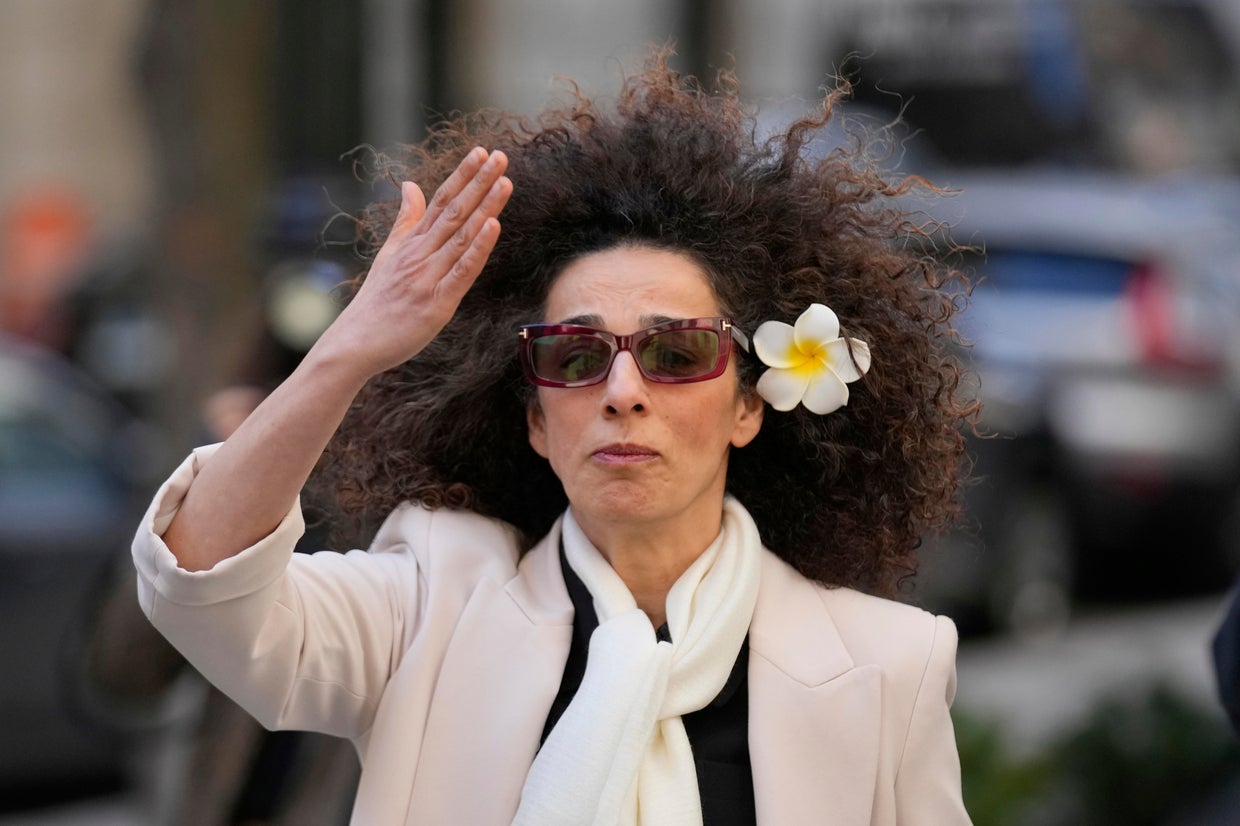
Farhad Shakeri, an Iranian operative, hired Carlisle Rivera as part of a murder-for-hire plot to assassinate Iranian dissidents, according to prosecutors. Masih Alinejad was sentenced to 15 years in prison on Wednesday.

Alinejad was saved from three conspiracies by Iran’s regime to kill or kidnap him. At his sentencing hearing in federal court in Manhattan, he confronted Rivera.

“Now I’m going to face the murderer, my would-be murderer,” Alinejad, an activist and critic of women’s oppression in Iran, said before the sentencing. “But in my view the main killer is the IRGC (Islamic Revolutionary Guard Corps).”

Prosecutors stated that the regime “tasked Shakeri with directing a network of criminal associates in furtherance of Iranian assassination plots against its targets.” Prosecutors alleged that Shakeri gave instructions to two men in New York, Rivera and Jonathan Loadholt, to murder Alinejad in exchange for $100,000. Shakeri told federal authorities that the IRGC had also tasked him with arranging to kill President Donald Trump before the 2024 election.

I have received videos from the Iranians.

Alinejad said, “The IRGC, the Revolutionary Guards, is behind the assassination plot. The same IRGC is currently directing the genocide in Iran. “I have received videos by the Iranians that show the IRGC using AK-47 military weapons to kill people. The same IRGC paid the killers to buy AK-47s to end my life.”

assassination plot iranian writer
Masih Alinejad kisses supporters outside a federal courthouse after testifying at the trial of his accused murderers in New York on March 18, 2025.

Prosecutors stressed the seriousness of the conspiracy perpetrated by the IRGC, which they said was “responsible for numerous conspiracies here and around the world.” He said its aim was to “kill the voices of those inside Iran who depend on people like Masih Alinejad to voice their hopes.”

An assassination attempt on Alinejad was scheduled to take place in February 2024 at Fairfield University in Connecticut, where she was scheduled to give a speaking engagement. The plot was foiled after months of surveillance. Rivera and Loadholt were arrested in November 2024 and pleaded guilty before the case went to trial.

The event was the second time Alinejad had to face someone who was plotting to assassinate him in the last year. Two men, who prosecutors said were members of a Russian mob hired by Iran, received 25-year prison sentences in October. An attempt was made to kill Alinejad in her Brooklyn home.

Alinejad burst into tears as she entered the courtroom on Wednesday. During an emotional sentencing, she said the Iranian government wanted to silence her.

“I had to face that because I live with fear,” Alinejad said, looking directly at Rivera. But she told the judge that what she wanted was to testify against the people who hired the killer, the Revolutionary Guards. “My job is to expose the genocide and the brutality of the regime,” he said, but “they are targeting freedom of speech here in America.”

Alinejad’s husband, Kambiz Forouhar, urged Judge Lewis Liman to impose the maximum sentence to send a message that “anyone who joins the Islamic Republic to do their dirty work will be held accountable.”

Forohar informed the court that the “threats from a hostile foreign government” have deprived his family of normalcy.

“On one occasion, Rivera missed my wife by only an hour,” Forougher said. “Dangers have forced us to leave our homes, our neighbourhoods, and our friends. Fear is a constant in our lives.”

Alinejad sat with her head in her hands as prosecutors talked about the voice notes exchanged between Rivera and Shakeri. They plotted how to assassinate Alinejad, which included breaking into her home in a home-invasion style or considering a drive-by shooting.

Prosecutors said Rivera and Shakeri met in the New York prison system. Shakeri was serving a sentence on murder charges. Rivera spent 18 years in prison after being found guilty of murder at the age of 18.

The judge described the interaction between Shakeri and Rivera as “exciting”.

Rivera, dressed in a grey prison uniform, cried while apologising “to my fellow Americans and to the woman and man who just spoke,” referring to Alinejad and Forouhar.

Rivera’s fiancée was crying, sitting a few rows behind him. During a break in the sentencing, Alinejad approached Rivera’s fiancée and hugged her. His fiancée apologised repeatedly.

After Rivera was sentenced, Alinejad told CBS News, “Justice is always beautiful. This is justice for me.”

“But, in the big picture, no,” she said, adding that merely putting her potential killers behind bars is not enough.

He pointed to a speech alleging Iran’s supreme leader Ayatollah Ali Khamenei had ordered her assassination, in which he referred to an “American agent” who compared the mandatory hijab to the Berlin Wall. Alinejad has made this exact comparison before.

“It’s kind of [Iranian]. The regime on American soil is threatening America’s national security; it is signalling that we can do whatever we want,” he said, referring to Khamenei, adding that real justice would be to put “the man who ordered my assassination… behind bars.” She wants to see him humiliated like former Venezuelan President Nicolas Maduro, who was captured by US forces in a military operation in Venezuela earlier this month and brought back to New York to face federal charges. ”

Reflecting on Shakeri’s alleged role in targeting both himself and Mr Trump, Alinejad said it is a “badge of honour” that “they want to get rid of me as much as they want to get rid of President Trump.”

She said, “President Trump has the army, everything, the power. I’m just an Iranian, unarmed woman with a lot of hair; I have a big voice. That’s all.” “And that shows you that the regime in Iran is really afraid of its people.

When she first learnt that the same man had conspired to kill her and Mr. Trump, Alinejad laughed and told her husband, “Wow, they think I’m as powerful as President Trump—just my voice.” My weapon is my voice. ” At the same time, he also remembered a feeling of fear, recalling how the Iranian regime had said for years that the US was “the great Satan” and “Iran’s greatest enemy.”

“The same group that targeted President Trump wanted to target me,” Alinejad said. “This means that now in their eyes I am the supreme devil. I am their greatest enemy.”

Loadholt’s sentencing is scheduled for April 23. Shakeri is believed to be in Iran.

Source link