



Official figures show that there is more money left in the public finances than ever due to higher taxes being paid.
The budget surplus in January was the largest since records began in 1993.
according to Office for National Statistics (ONS) data.
This means the government received more money than it spent last month, with £30.4 billion left over.
Money Blog: Every Michelin-starred restaurant with a meal under £50
This is £15.9 billion more than the January 2025 surplus, although the figures have not been adjusted for inflation.
The surplus is also larger than the independent forecaster Office for Budget Responsibility (OBR) had estimated – about £6.3 billion larger.
Why?
The ONS said that although there was little change in government spending, the highest ever surplus was recorded due to a “rapid rise” in revenues and low interest rates.
Self-assessment tax revenues were approximately £6 billion higher than planned, and capital gains tax receipts increased.
Lower interest rates mean lower borrowing costs.
Borrowing costs in the month were £1.5 billion, £5 billion less than the previous year.
A relief for Reeves
It has been described as a “welcome relief” and “good news” for Chancellor Rachel Reeves by analysts at Big Four accounting firm PwC and economic research firm Pantheon Macroeconomics.
“This decline poses immediate pressure on public finances,” said PwC economist Nabil Taleb.
Paying more on the debt may mean that public finances are more vulnerable to economic shocks.
But the path ahead for Ms Reeves is not without dangers.
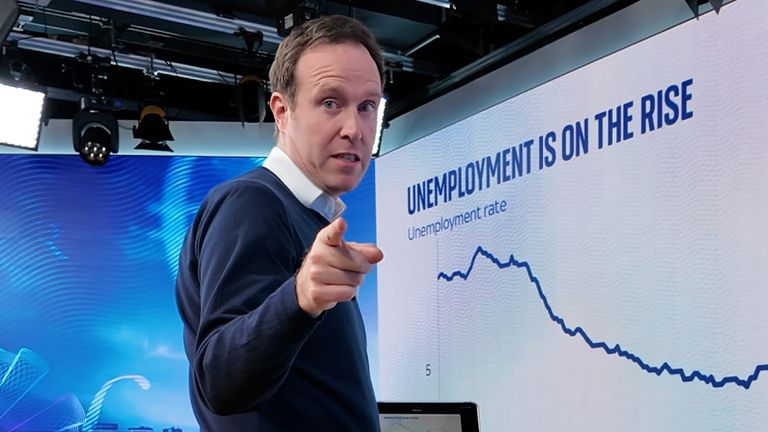
Youth unemployment is at the highest rate in 11 years
The scope for him to spend the money before breaking his self-imposed fiscal rules – to reduce government debt and balance the budget by 2030 – has narrowed since the November budget.
The low gross domestic product reading, a key economic measure, could already reduce the amount Ms Reeves has to spend before breaking her fiscal rules.
anemic economic growth and a rising unemployment rate This could mean that the tax will be stopped.
And January’s tax revenue figures may be one-sided.
This month is important for the government exchequer due to the influx of self-assessment income tax receipts.
‘Evidence economy forward’ picked it up carefully.
Good news for the economy also came in the form of retail sales, which were better than expected in January.
The ONS said the total volume of retail sales, which measures the quantity purchased, rose 1.8% last month.
This was the biggest increase since May 2024.
The ONS said online jewellers’ sales remained “strong” as they reported “demand has reached unprecedented levels”.
Art, furniture and technology also sold well.
Rob Wood, Pantheon’s chief UK economist, said the data provided “further evidence that economic growth has picked up pace in the new year as budget uncertainty eases”.
Retail sales figures matter because they measure household consumption, the largest expenditure in the UK economy.