



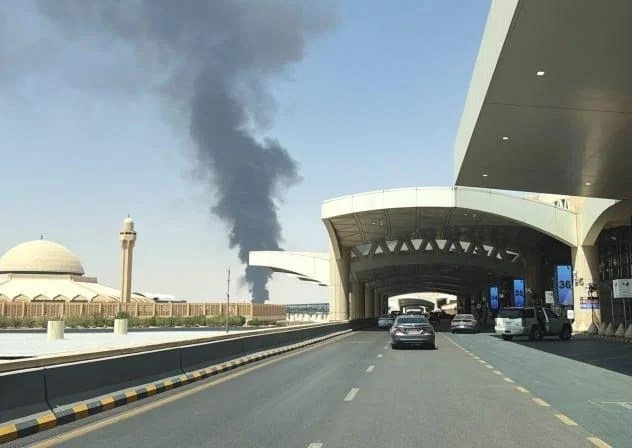
Houthi attacks on Riyadh airport have left at least 14 people dead across Saturday and Sunday, with more than 300 others injured, according to Saudi authorities and international news reports.
The strikes targeted King Khalid International Airport in Saudi Arabia’s capital, causing significant disruption to flights and raising concerns about the safety of civilian aviation.
The attacks come amid escalating fighting between Saudi Arabia and Yemen’s Iran-aligned Houthi movement, which has launched repeated missile and drone strikes against Saudi infrastructure.
Saudi authorities have condemned the attacks and promised a response, while international governments have expressed concern about the possibility of a wider regional conflict.
What Happened at Riyadh Airport?
On Saturday, 10 October 2026, a missile struck King Khalid International Airport, killing 12 people and injuring 309, according to Saudi Arabia’s General Authority of Civil Aviation.
The victims included Saudi citizens and foreign nationals, reflecting the airport’s importance as a major international transport hub.
Saudi authorities reported that several injured people were in critical condition and were receiving hospital treatment.
The attack caused damage to airport facilities and forced authorities to suspend operations while emergency teams assessed the situation.
On Sunday, 11 October, another projectile struck the airport, killing a Pakistani resident and injuring 11 people.
Indian officials also confirmed that an Indian national died from injuries sustained in Saturday’s attack, bringing the reported toll from that strike to 13.
The attacks have raised serious questions about aviation security and the potential consequences of further strikes.
Who Is Responsible for the Attacks?
Yemen’s Houthi movement has claimed responsibility for attacks targeting Saudi airports.
The group, which controls significant parts of Yemen, has used missiles and drones in its confrontation with Saudi Arabia and other regional opponents.
The Houthis say their operations are connected to Saudi military activities in Yemen.
Saudi Arabia, however, has condemned attacks on civilian infrastructure and accused the group of endangering innocent people.
The Saudi-led coalition has described the strikes as violations of international humanitarian law and warned that it will take measures to protect the kingdom.
The latest attacks represent another escalation in a conflict that has already caused extensive suffering in Yemen and heightened tensions throughout the Middle East.
Why Is King Khalid International Airport Important?
King Khalid International Airport is one of the most important aviation centres in Saudi Arabia.
Located in Riyadh, it serves millions of passengers and connects the Saudi capital with destinations across the Middle East, Europe, Asia and other parts of the world.
The airport plays a central role in business travel, tourism and international connections.
Any prolonged disruption can therefore affect thousands of travellers, airlines and businesses.
The attacks are particularly concerning because civilian airports are essential infrastructure used by people travelling for work, family visits, religious purposes and other activities.
Damage to terminals, aircraft or surrounding facilities can create serious safety risks even when airport authorities activate emergency procedures.

Flights Cancelled as Airlines Review Security
The attacks have caused major disruption to commercial aviation.
Several airlines suspended or cancelled services to Riyadh following the missile strikes.
Passengers have been advised to contact their airlines before travelling and to monitor official airport announcements.
Saudi aviation authorities have been conducting safety inspections and assessing damage to airport facilities.
The situation remains uncertain because further attacks could affect decisions about reopening terminals and resuming normal operations.
International travellers should not assume that a scheduled flight will operate until the airline confirms its status.
Saudi Arabia Responds to the Houthi Attacks
Saudi Arabia has strongly condemned the attacks and indicated that it intends to respond.
The Saudi-led coalition has already been conducting military operations against Houthi positions in Yemen.
Saudi officials argue that protecting civilian infrastructure and national security is essential.
However, further military action also raises concerns about escalation and the possibility of additional civilian casualties in Yemen.
The conflict has already created serious humanitarian problems, including displacement, economic disruption and pressure on essential services.
International observers are watching whether military action will intensify or whether diplomatic negotiations can reduce tensions.
Could the United States Become Involved?
The attacks have also attracted attention in Washington.
US President Donald Trump has indicated that he is considering whether American forces should become more directly involved in operations against the Houthis.
The United States has longstanding security relationships with Saudi Arabia and other Gulf countries.
However, direct American military involvement could increase the scale of the conflict.
Washington must also consider the consequences for regional stability, international shipping and relations with Iran.
At the time of writing, discussion about possible additional US military involvement should not be confused with confirmation that a new intervention has begun.
What Does This Conflict Mean for Global Oil Prices?
Saudi Arabia is one of the world’s largest oil producers, making security developments in the kingdom important to international energy markets.
The attacks have increased concerns about the vulnerability of airports, energy facilities and transport networks.
The Houthis have also threatened shipping routes connected to the Red Sea and the Bab al-Mandeb Strait.
These routes are important for international trade and energy transportation.
If commercial shipping faces additional restrictions, transport expenses and insurance premiums could increase.
However, oil prices depend on many factors, including global demand, production levels, available supplies and the duration of any disruption.
A single attack does not automatically determine the direction of energy markets.
International Reaction to the Riyadh Airport Attacks
The attacks have drawn condemnation from several governments.
Turkey, Pakistan, Egypt and Saudi Arabia issued a joint statement criticising the strikes and calling for an end to attacks on civilian infrastructure.
The governments expressed support for Saudi Arabia’s security and its right to protect its territory.
International concern has also focused on the safety of foreign nationals working and travelling in the kingdom.
Diplomatic efforts to prevent further escalation remain important, particularly because the Saudi-Houthi conflict is closely connected to wider tensions involving Iran and the United States.
What Happens Next?
The immediate priorities are medical care for the injured, airport safety inspections and the restoration of secure flight operations.
Saudi authorities are also reviewing the security situation, as the possibility of additional missile or drone attacks remains a concern.
Airlines will need to assess whether operations can resume safely.
Meanwhile, international governments are monitoring the conflict and considering diplomatic and security responses.
The coming days will be important in determining whether the attacks lead to further military escalation or renewed efforts to reduce hostilities.
Conclusion
The Houthi attacks on Riyadh airport have caused significant loss of life, injured hundreds of people and disrupted one of Saudi Arabia’s most important transport hubs.
The strikes on 10 and 11 October demonstrate how quickly regional conflicts can affect civilian infrastructure and international travel.
Saudi Arabia has promised to protect its security, while the Houthis continue to threaten further operations.
The situation also raises wider concerns about Yemen, Iran, international shipping and global energy supplies.
For now, the main priorities remain protecting civilians, treating the injured, restoring safe airport operations and preventing further escalation.
As the situation develops, accurate casualty figures, official aviation announcements and verified diplomatic statements will be essential for understanding what happens next.
Frequently Asked Questions
How many people were killed in the Riyadh airport attacks?
Reports available on 12 October indicate at least 14 deaths across the attacks on Saturday and Sunday, including a person who later died from injuries sustained on Saturday.
Who carried out the attacks?
Yemen’s Houthi movement claimed responsibility for strikes targeting Saudi airport facilities.
Is Riyadh Airport open?
Airport operations have been severely disrupted. Travellers should check directly with airlines and Saudi aviation authorities for the latest operational status.
Why are the Houthis attacking Saudi Arabia?
The continuing conflict involving the Houthis, Saudi Arabia, and other regional actors, including disagreements over military operations in Yemen, connects the attacks.
Could the attacks affect oil prices?
Further disruption to regional infrastructure and shipping routes could influence energy markets, although price movements depend on several economic and geopolitical factors.