



The Europe wildfires’ latest update brings grim news from Greece and Belgium as extreme heat and prolonged dry conditions continue to fuel dangerous fires across the continent.
An elderly couple has died on the Greek island of Salamina, west of Athens, after fast-moving flames swept through communities on Sunday, 16 August. More than 500 people were evacuated, while homes were damaged or destroyed.
At the same time, Belgium is fighting what authorities describe as the country’s largest wildfire on record. Around 3,000 hectares have burnt in the High Fens nature reserve in eastern Belgium, with the fire advancing towards the German border.
The simultaneous emergencies underline the extraordinary wildfire conditions affecting Europe this summer.

Greece Wildfire Kills Two on Salamina
The Greek emergency unfolded on Salamina, an island in the Saronic Gulf close to Athens.
An elderly couple died as fires spread rapidly through the island. Several other people were injured, with five taken to a local clinic for treatment.
The timing made the situation particularly difficult.
The fires struck during one of Greece’s busiest summer holiday periods, immediately around the August 15 Assumption Day celebrations. Salamina’s proximity to Athens makes it a popular destination, increasing the number of people potentially exposed to the emergency.
Strong winds helped the flames spread, threatening homes and forcing authorities to organise evacuations.
Around 192 firefighters were deployed alongside volunteers and municipal resources, while 14 aerial units joined the operation.
More Than 500 People Evacuated in Greece
The evacuation effort was substantial.
The Greek coast guard said more than 500 people were evacuated from Salamina as authorities attempted to move residents and visitors away from threatened areas.
Firefighting and coast guard vessels were used as part of the response, highlighting the particular challenges of dealing with a major fire on an island.
Sea evacuations can become essential when roads are threatened or when people gather on beaches and coastal areas to escape advancing flames.
Associated Press reported that around 260 firefighters, together with aircraft and helicopters, were involved in the wider response.
The cause of the fire has not yet been established, and it would therefore be premature to attribute the outbreak to any specific source.
Homes Damaged as Flames Sweep Across Salamina
For residents, the consequences extend beyond the immediate danger.
Reuters reported that houses were destroyed as flames moved across parts of the island.
The loss of two lives makes the Salamina incident particularly serious, but the destruction of homes means some survivors will face a much longer recovery.
Once fires are brought under control, authorities must assess damaged buildings, electricity networks, roads and other infrastructure before evacuated residents can safely return.
Wildfires can also continue posing a threat after the visible flames have disappeared.
Hotspots can remain beneath vegetation or soil and reignite when winds increase. Fire crews therefore often remain in affected areas long after the main front has passed.
Belgium Battles Largest Wildfire on Record
Hundreds of kilometres away, Belgium is confronting a wildfire on a scale rarely experienced in the country.
The fire began on Friday in the High Fens nature reserve, an environmentally important area in eastern Belgium close to Germany.
By Sunday, approximately 3,000 hectares had burnt.
That makes it Belgium’s biggest recorded wildfire, surpassing a 2011 blaze that burnt approximately 1,400 hectares.
For comparison, the new fire has therefore burnt more than twice the area affected by the previous record incident.
The High Fens blaze is especially challenging because of the landscape.
The reserve contains forests, heathland and peat bogs. Peat fires can be exceptionally difficult to extinguish because burning can continue below the surface and later re-emerge.
Belgium Wildfire Moves Towards German Border
One of the biggest concerns on Sunday was the direction of the fire.
Authorities said the front was moving towards the German border, forcing firefighters to concentrate resources on preventing further expansion.
The German town of Monschau, near the border, warned some residents to evacuate because of smoke concerns, although officials did not expect the flames themselves to cross into Germany at that stage.
This demonstrates how quickly a wildfire can become an international emergency in densely connected parts of Europe.
Fire does not respect administrative boundaries, and smoke can travel considerable distances even when flames remain within one country.
Firefighters from Germany and Luxembourg have consequently joined Belgian crews.
Around 600 People Evacuated in Belgium
The Belgian fire has forced large-scale evacuations.
Approximately 600 people were evacuated from areas close to the High Fens as authorities attempted to protect communities from flames and smoke.
Officials said on Sunday that the defensive line protecting evacuated villages was holding, although residents had not yet been permitted to return.
More than 250 emergency personnel have been involved, including firefighters, police, military personnel and civil protection teams.
Farmers have also assisted the firefighting operation.
That level of mobilisation reflects just how unusual the event is for Belgium.
Countries such as Greece, Spain and Portugal have extensive experience managing large Mediterranean wildfires. Belgium historically faces a very different level of wildfire exposure, meaning an incident of this magnitude creates different logistical challenges.
EU Sends Aircraft to Help Belgium
Belgium has called on its European neighbours for help.
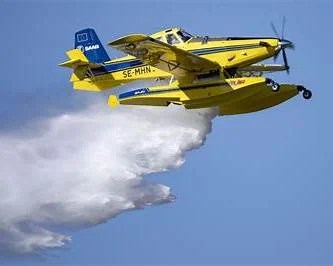
The European Union deployed three helicopters and two water-bombing aircraft after Belgium requested international assistance through the EU’s Civil Protection Mechanism.
Sweden sent two water-bombing aircraft, while helicopters from the Netherlands have also participated in the operation.
International aerial assistance can make a major difference during large fires.
Water-bombing aircraft can attack areas that are difficult or dangerous for ground crews to reach, while helicopters can make repeated targeted drops around active fire fronts.
Aircraft cannot extinguish enormous wildfires alone, however. Their primary role is often to slow the fire enough for firefighters on the ground to establish containment lines.
Why Is the High Fens Fire So Difficult to Fight?
The terrain is one of the biggest problems.
High Fens contains wetlands, forests and extensive peat areas.
Peat can burn differently from ordinary vegetation. Fire can penetrate organic material beneath the surface and smoulder for long periods, making it difficult to determine whether an area is genuinely extinguished.
Access can also be challenging.
Heavy firefighting vehicles cannot necessarily reach every part of a protected nature reserve, increasing dependence on personnel working on foot and aerial firefighting.
Weather remains another critical factor.
Officials expressed hope that cooler and more humid conditions would help firefighting efforts.
A change in wind direction or speed, however, can rapidly alter a fire’s behaviour.
Wildfires Are Burning Across Europe
Greece and Belgium are only part of a much larger European wildfire emergency.
Major fires have affected France, Spain, Croatia, Germany and the UK during an exceptionally hot and dry summer.
In Britain, South Wales has been particularly badly affected, with multiple active fires stretching emergency resources.
France has faced another significant fire in the Landes region after suffering major outbreaks earlier in the summer.
Croatia has also experienced deadly fires and evacuations, while Spain has suffered particularly severe wildfire disasters during 2026.
The geographic spread is noteworthy.
Europe’s wildfire problem can no longer be viewed solely as a Mediterranean issue affecting Greece, Spain, Portugal and southern France.
Major incidents in Belgium, Germany and Britain demonstrate that serious fire conditions can increasingly develop much farther north.
Heat and Drought Create Dangerous Conditions
A wildfire requires an ignition source, but weather determines how easily vegetation burns and how rapidly flames can spread.
Europe has endured repeated periods of extreme heat during the summer of 2026.
High temperatures dry vegetation and remove moisture from soils. Prolonged drought intensifies the effect, creating landscapes capable of burning rapidly once a fire begins.
Strong winds add another danger by pushing flames forward and carrying embers ahead of the main fire front.
Those embers can ignite new fires some distance away.
The result can be a blaze that expands faster than firefighters can establish containment lines.
This combination of heat, drought, dry vegetation and wind has contributed to the exceptionally dangerous conditions across parts of Europe this summer.
What Role Does Climate Change Play?
Climate change does not directly ignite an individual wildfire.
Most fires require a specific ignition source, which may be accidental, deliberate or natural.
But climate change can alter the environmental conditions in which fires occur.
Hotter temperatures and more severe drought can dry vegetation, lengthen fire seasons and increase the likelihood that an ignition develops into a large and destructive wildfire.
Officials involved in Belgium’s response have warned that events of this kind may become more frequent as climate change increases the likelihood of extreme heat and drought.
The distinction is important.
It is scientifically more accurate to say climate change can increase wildfire risk and severity than to claim it directly started a particular fire.
European Countries Rely on Each Other During Wildfire Emergencies
One encouraging aspect of this summer’s crisis has been the level of international cooperation.
Belgium’s request for assistance demonstrates how the EU Civil Protection Mechanism can rapidly move specialist resources between countries.
Water-bombing aircraft and helicopters are expensive and limited resources.
A country experiencing relatively few major wildfires may not maintain the same permanent aerial firefighting fleet as a Mediterranean country.
European coordination allows aircraft, crews and equipment to be redirected when a member state faces an emergency beyond its domestic capacity.
The Belgian response has involved support from neighbouring countries as well as Sweden and other EU resources.
As wildfire seasons become more demanding, that system may become increasingly important.
Nature Reserves Can Take Decades to Recover
The High Fens fire is not only a public-safety emergency.
It is also an ecological disaster.
Nature reserves contain habitats that can take years or decades to recover after severe fire.
Peatlands are particularly valuable because they store large amounts of carbon and support specialised plants and wildlife.
When peat burns, stored carbon can be released into the atmosphere.
Intense fires can also damage soils, destroy habitats and leave landscapes more vulnerable to erosion.
The true environmental cost of the Belgian wildfire therefore will not be known immediately after the flames are extinguished.
Researchers will likely monitor the reserve for years to understand how ecosystems recover.
What Happens Next in Greece and Belgium?
In Greece, emergency crews will continue securing affected areas on Salamina, extinguishing hotspots and assessing damaged properties.
Authorities will also investigate how the fire started.
For families affected by the blaze, attention will gradually shift towards damaged homes and recovery.
Belgium faces an even larger containment operation.
Firefighters need to prevent the High Fens blaze from advancing further towards Germany while ensuring evacuated communities remain protected.
Weather will be crucial.
Cooler temperatures, higher humidity and rain could provide badly needed assistance. Strong winds or renewed heat could make containment much more difficult.
Conclusion
The Europe wildfires’ latest developments demonstrate how widespread the continent’s 2026 fire crisis has become.
On the Greek island of Salamina, an elderly couple have died as flames swept through communities and forced more than 500 people to evacuate.
In Belgium, approximately 3,000 hectares of the High Fens nature reserve have burnt, making the incident the country’s biggest wildfire on record. Around 600 people have been evacuated, while European aircraft and international firefighting teams have joined the effort.
The two emergencies are very different in scale and geography, but they share a broader context: unusually hot and dry conditions have left landscapes across Europe increasingly vulnerable to fire.
And with serious incidents stretching from Greece and Spain to Belgium and Britain, the wildfire threat is no longer confined to Europe’s traditional Mediterranean fire zones.
Frequently Asked Questions
How many people have died in the latest Greece wildfire?
Two people, an elderly couple, died in the wildfire on Salamina, according to authorities.
Where is Salamina?
Salamina, also known as Salamis, is a Greek island in the Saronic Gulf, west of Athens.
How many people were evacuated from Salamina?
The Greek coast guard reported that more than 500 people were evacuated.
How large is the Belgium wildfire?
Approximately 3,000 hectares of the High Fens nature reserve have burnt.
Is this Belgium’s biggest wildfire?
Yes. Authorities describe it as Belgium’s largest wildfire on record, surpassing a 2011 fire that burnt about 1,400 hectares.
Has Belgium received international help?
Yes. EU resources and assistance from several European countries have been deployed, including water-bombing aircraft and helicopters.
Is the Belgian wildfire moving towards Germany?
The fire front has been advancing towards the German border, although officials said on Sunday they did not expect the flames themselves to cross into Germany at that point.