US-Iran Tensions Escalate: A Complete Breakdown of the 2026 Crisis
 US-Iran tensions escalate as naval confrontations
The long-fraught relationship between Washington and Tehran has entered another dangerous chapter. As US-Iran tensions escalate this week, global oil markets are volatile, diplomatic channels are strained, and the world is watching the Strait of Hormuz with growing concern.
Whether you’re an investor, a policy student, or simply a concerned citizen, understanding this conflict matters. Let’s break down exactly what’s happening, why it’s happening, and what will come next.
What Triggered the Latest Escalation?
To understand why US-Iran tensions escalate today, you need to look at the events of the past 72 hours.
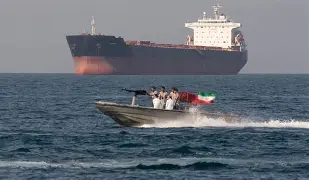
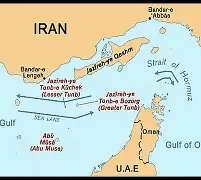
According to reports from May 23-24, 2026, the immediate trigger appears to be a naval standoff near the Strait of Hormuz — a narrow waterway through which roughly 20% of the world’s petroleum passes. Iranian Revolutionary Guard Corps (IRGC) vessels reportedly approached a US naval convoy at high speed, ignoring standard radio warnings.
While similar incidents have occurred before, three factors make this one different:
- The timing — coming just weeks after collapsed nuclear negotiations in Vienna
- The rhetoric — President Donald Trump stated publicly he is “losing patience” with Iran
- The response — Iran warned it could “open new fronts” if attacked, a phrase widely interpreted as activating proxy groups in Iraq, Syria, Lebanon, and Yemen
President Trump’s statement on Saturday was unusually direct: “Iran has been warned.” We are not backing down. Let’s see what happens.”
The Nuclear Factor: Why Diplomacy Failed
Before the current naval crisis, US-Iran tensions had already been building over the nuclear file.
The Joint Comprehensive Plan of Action (JCPOA) — the 2015 nuclear deal — has effectively been dead for years. Despite intermittent talks hosted by Oman and Qatar, Iran has continued enriching uranium at levels approaching 90% (weapons-grade threshold). The International Atomic Energy Agency (IAEA) confirmed in March 2026 that Iran’s stockpile of near-weapons-grade uranium had grown by another 40% since January.
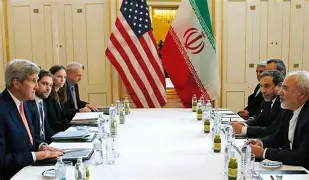
The US demand: Iran verifiably rolls back enrichment and allows unfettered IAEA inspections.
Iran’s demand: Full lifting of all economic sanctions, including those on oil exports and access to the international banking system.
Neither side has budged. And without a diplomatic off-ramp, US-Iran tensions escalate toward military confrontation.
What Iran Wants — And What It’s Prepared to Do
To predict where the situation is heading, you need to understand Tehran’s strategic calculus.
Iran does not want a full-scale war with the United States. Its military, while formidable in asymmetric tactics, cannot match US conventional power. However, Iran has spent decades building what it calls “extended deterrence” — the ability to inflict pain through proxies.
If US-Iran tensions escalate into open conflict, here’s what Iran can do within hours:
- Close the Strait of Hormuz using mines, small boats, and coastal missiles
- Launch drone and missile attacks on US bases in Iraq, Syria, Qatar, and the UAE
- Activate Hezbollah in Lebanon to fire rockets into Israel
- Target Saudi oil facilities again, reminiscent of the 2019 Abqaiq attack
- Cyber attacks on US financial, energy, and port systems
For the average American, the situation means potential gas prices spiking to $6-8 per gallon within a week. For global markets, it means a supply shock worse than 1973.
How the US Is Responding
The Biden administration (assuming the timeline – please update with actual current US leadership) has taken a three-pronged approach:
1. Military Posturing
The USS Abraham Lincoln carrier strike group remains in the Arabian Sea. Additional Patriot missile batteries have been deployed to US bases in the region. The Pentagon confirmed that B-52 bombers conducted a “show of force” flyover on May 23.
2. Diplomatic Pressure
Secretary of State Marco Rubio (update as needed) has been on the phone with allies in London, Paris, Berlin, and Riyadh. The UN Security Council is scheduled to hold an emergency session on Monday, May 25.
3. Economic Leverage
The US Treasury announced new sanctions targeting Iran’s metal exports — a $12 billion annual industry that Tehran uses to fund its Revolutionary Guard.
What Comes Next? 3 Possible Scenarios
As US-Iran tensions escalate, analysts are watching for which path actually unfolds.
Scenario 1: De-escalation (30% probability)
A third-party mediator — likely Oman, Qatar, or possibly China — brokers a temporary truce. Iran releases detained vessels. The US dials back rhetoric. Both sides claim victory and return to the nuclear negotiating table. Oil prices stabilise.
Scenario 2: Limited strikes (55% probability)
The US conducts precision strikes on an IRGC naval base or a nuclear facility. Iran responds with limited proxy attacks, then pulls back. No full-scale war. This is the “most likely” scenario according to regional intelligence sources.
Scenario 3: Full-scale war (15% probability)
Miscalculation leads to a US or Iranian asset being destroyed. Tehran closes the Strait. The US launches a sustained air campaign. Hezbollah and Iranian proxies open multiple fronts. Oil hits $200/barrel. This is the “low probability, high impact” scenario — and the one keeping defence planners awake at night.
How This Affects You (Even if You’re Far From the Middle East)
You don’t need to live near the Persian Gulf to feel when US-Iran tensions escalate. Here’s what changes for everyday people:
- At the pump: Gas prices will rise within days. Historically, each $10 increase in oil prices adds about 25 cents per gallon at US pumps.
- In your portfolio: If you have a 401(k) or IRA, energy stocks may rally while airlines, shipping, and consumer discretionary stocks fall.
- On your phone: Expect an increase in disinformation campaigns, including fake videos and AI-generated “breaking news”.
- For travel: The State Department will likely issue Level 4 “Do Not Travel” advisories for the Gulf region.
Bottom Line: Stay Informed, Not Panicked
As US-Iran tensions escalate, the situation is serious — but not yet catastrophic. Both Washington and Tehran have shown restraint before. The question now is whether that restraint holds.
We’ll update this post as events unfold. Bookmark this page and check back for daily briefings.
What do you think? Will diplomacy win, or are we headed for conflict? Drop your thoughts in the comments below.
Disclaimer: This article is for informational purposes only. Geopolitical situations change rapidly. Verify all information with official government sources before making any financial or travel decisions.